day sees deaths

Day 4 Sees 21 Deaths in Thailand as New Year Return Travel Intensifies

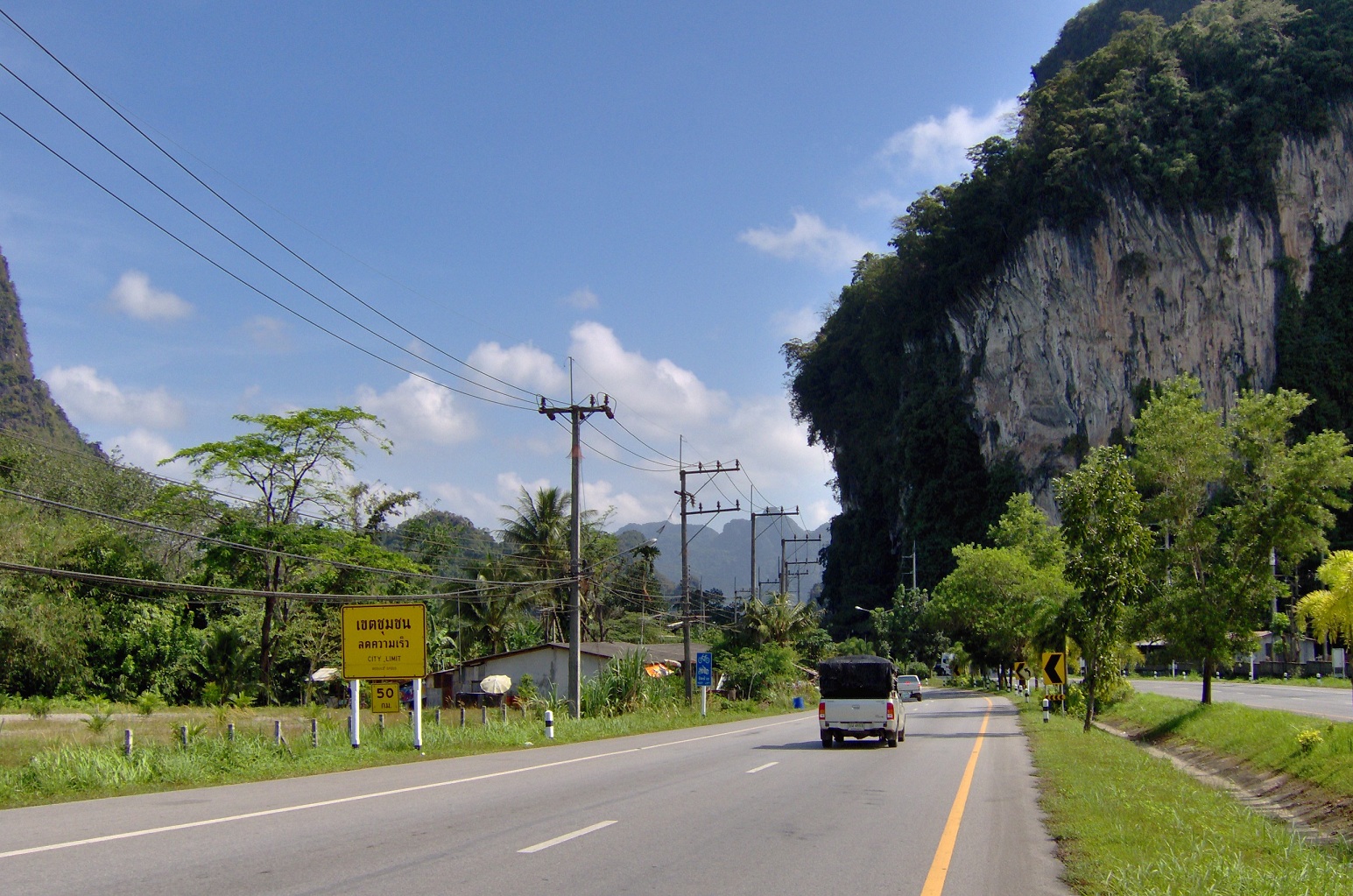
BANGKOK, Thailand – Road safety authorities have imposed stricter nationwide measures as a surge of travelers returns from New Year celebrations, warning that drunk driving will face severe penalties and may invalidate insurance coverage. The Road Safety Centre (RSC) reported 187 road accidents on January 2, 2026, resulting in 185 injuries and 21 fatalities, as traffic volumes swelled on major highways.

Holiday Road Carnage: Speeding and Drunk Driving Claim Dozens in Thailand

The figures were announced at a briefing held by the Department of Disaster Prevention and Mitigation (DDPM), highlighting persistent dangers during the holiday travel period. Officials urged motorists to avoid alcohol, excessive speed, and fatigue while on the road.

The New Year road safety campaign, which runs from December 30, 2025, to January 5, 2026, carries the slogan “Drive Safely, Reduce Speed, Reduce Accidents.” Cumulative data over the first four days recorded 991 accidents nationwide, causing 956 injuries and 171 deaths.

Justice Minister Pol Lt Gen Ruththapol Naowarat, who chaired the briefing, stated that speeding remained the leading cause of accidents on January 3, accounting for 35.29% of incidents, followed by drunk driving at 21.39%. Motorcycles were involved in nearly 73% of all crashes, with most occurring on straight sections of roads and highways under the Department of Highways’ jurisdiction.

The most dangerous time period was between 3:01 p.m. and 6:00 p.m., and the highest proportion of casualties were among individuals aged 20 to 29. Prachin Buri and Phatthalung provinces each recorded the most accidents on that day with 10, while Phatthalung reported the highest number of injuries at 12. Bueng Kan province had the highest single-day death toll with three fatalities.

Over the four-day period, Phuket recorded the highest cumulative number of accidents and injuries, while Bangkok reported the most deaths at 14. Pol Lt Gen Ruththapol emphasized that drunk driving continues to be a major cause of road harm, noting that on January 2 alone, 1,349 out of 1,401 probation cases were related to alcohol-impaired driving.

Repeat offenders within a two-year period now face up to two years’ imprisonment, fines of up to 100,000 baht, and license suspension or revocation. If drunk driving results in injury or death, courts may impose an additional half of the prescribed penalty.

Authorities also cautioned that motorists found over the legal alcohol limit may not be covered by insurance, and insurers may seek to recover compensation paid to victims. The Office of Insurance Commission further reported that more than half of the motorcycles involved in recent accidents lacked compulsory insurance.

Thailand Launches National Road Safety Command Centre for New Year 2026

Enhanced checkpoints, driver rest areas, and strict law enforcement will remain in place as return travel peaks over the coming days.

-Thailand News (TN)

Similar Posts

  • Hospital and Airline Tycoon Dr Prasert Prasarttong-Osoth Dies at 93

    BANGKOK — Dr Prasert Prasarttong-Osoth, the visionary founder of Thailand’s largest private hospital network and the airline that put Koh Samui on the global tourism map, has passed away at the age of 93. Bangkok Airways, Thai Airways rise in world rankings Dr Prasert died on Tuesday after being treated for an unspecified condition for […]

  • | |

    Four militants killed in Mastung Intelligence Oper…

    Pakistan’s security forces have intensified intelligence-based operations against militant groups in Balochistan under Operation Azm. The latest operation was carried out in the Khad Kocha area of Mastung district, where security personnel launched a targeted raid based on intelligence reports, according to security sources. During the operation, four militants allegedly associated with what security officials referred to as Fitna al-Hindustan were killed. Security sources said the operation was conducted after receiving credible information about the presence of armed militants in the area. A large quantity of weapons, ammunition and other military equipment was recovered from the militants. Officials said the recovered arms were believed to have been intended for use in future attacks. Security forces also seized several motorcycles that were reportedly being used by the militants for movement and logistical support. The vehicles have been taken into custody for further investigation. According to security sources, several other militants were injured during the exchange of fire. However, the exact number of those wounded has not been confirmed. The operation also led to the arrest of several suspected facilitators who were allegedly providing support, shelter and logistical assistance to the militants. The detained suspects are expected to be questioned as part of the ongoing investigation. Search and clearance operations are continuing across the surrounding areas to ensure that no militants remain hidden. Security forces have maintained a strong presence in the area and are closely monitoring the situation. Security officials said intelligence-based operations in Mastung have been intensified following recent militant activities in the Khad Kocha area. They added that such operations will continue to target militant networks and their support systems. According to security sources, Pakistan’s security forces remain committed to eliminating terrorism and will continue operations until peace and stability are fully restored in the region.

  • Thailand Ends 60-day Visa-free Scheme For 93 Countries

    BANGKOK, Thailand — Thailand’s Cabinet has approved the cancellation of the pre-travel 60-day visa exemption scheme for citizens of 93 countries, a policy introduced two years ago to stimulate tourism and economic recovery, according to Tourism and Sports Minister Surasak Phancharoenworakul following the Cabinet meeting. Thailand Prepares To Halve Visa-free Stay For Tourists From 60 […]

  • | | |

    Govt plans single gas tariff after scrapping 12 sl…

    ISLAMABAD: The government has decided to abolish the existing 12-slab gas tariff structure and introduce a uniform gas tariff for consumers. Under the proposed system, protected consumers will be shifted to an income-based subsidy mechanism. The government plans to protect low-income households through targeted subsidies rather than maintaining separate protected tariff slabs. The proposed reform is aimed at replacing the existing cross-subsidy mechanism with a simpler and more targeted system. The government and the International Monetary Fund (IMF) are expected to discuss and finalise a timeline for eliminating cross-subsidies and introducing a single gas tariff during the Fund’s fourth review of Pakistan’s economic programme, expected to take place in September or October 2026. Under the planned arrangement, subsidies would be directed specifically towards eligible low-income consumers, while the broader consumer base would be brought under a common gas pricing structure. The move is expected to form part of wider reforms aimed at improving the efficiency and transparency of the gas pricing system and reducing the financial burden created by the existing cross-subsidy structure.

  • |

    Nepal flood disaster deepens as new threat emerges

    KATHMANDU: Rescue teams in Nepal are digging through thick layers of mud and debris in search of survivors two days after a devastating flash flood swept through Himalayan communities, killing at least 469 people and leaving nearly 1,000 others missing in Nepal and neighbouring Tibet. The scale of the destruction has left entire villages cut off, roads and bridges destroyed and families desperately waiting for news of loved ones. With the possibility of another major flood looming, authorities are also racing to prevent a second disaster. The catastrophe began on Wednesday morning after a glacier collapse sent a massive torrent of water, rocks, ice and mud rushing through mountain river systems. The sudden surge tore through settlements along a major route connecting Nepal’s capital Kathmandu with Lhasa in Tibet. The affected region is also popular with trekkers and pilgrims, adding to concerns over the fate of foreign nationals caught in the disaster. Authorities said almost 1,000 people remained missing on both sides of the border. At least 540 of those reported missing are foreigners, according to officials. Rescue teams battle destroyed roads Nepalese rescue workers have been using heavy machinery, helicopters and sniffer dogs to search damaged areas. Helicopters have also been delivering emergency supplies to people stranded in remote towns and valleys where roads have disappeared beneath mud and debris. Rescue operations have been particularly difficult in the mountainous terrain, where landslides and damaged infrastructure have restricted access. In one of the most heartbreaking accounts from the disaster, Dibga Tamang was among the final people rescued from the badly affected town of Rasuwa on Thursday. He was airlifted with three others to an army camp in Nuwakot. Tamang described the devastation in deeply personal terms, saying that his community had been destroyed and that he had lost everyone who mattered to him. His account reflected the grief of hundreds of families still waiting for information about relatives who disappeared when the floodwaters swept through their communities. New flood threat raises alarm Even as rescuers continue searching for survivors, authorities are facing a dangerous new threat. Nepal’s disaster management authorities warned that a debris blockage had created a lake on the Bhotekoshi River. The water level is continuing to rise, raising fears that the natural barrier could collapse and unleash another destructive flood downstream. Across the border, Chinese authorities are also monitoring a rapidly filling barrier lake in Tibet. Chinese officials said around three million cubic metres of water could flow into the already dammed lake over the next three days. That volume is roughly equivalent to 1,200 Olympic-sized swimming pools. The situation could become particularly dangerous around September 1, when officials expect the water flow to reach its peak. Chinese state media reported that authorities had deployed an eight-member engineering team to carry out aerial surveys and three-dimensional modelling of the barrier lake. Engineers are studying whether a drainage channel can be constructed through the natural dam to lower the lake’s water level. However, the operation is complicated by steep cliffs and unstable terrain created by the glacier collapse. Engineer Chen Hanxiao told Chinese state broadcaster CCTV that experts needed precise calculations of the lake’s filling rate and the speed at which water could pass through a proposed drainage channel. Teams are also expected to monitor the lake floor, collect additional data and keep a close watch on weather conditions in the coming days. Gyirong border crossing badly damaged On the Chinese side, the Gyirong border crossing has emerged as one of the worst-hit locations. Chinese rescue teams had yet to reach the most severely affected area by Thursday evening, with crews concentrating on clearing debris from the road leading to Gyirong Port. Dramatic footage from the disaster showed huge torrents of muddy water and debris racing through the border crossing within seconds. Structures were engulfed while people scrambled to escape. Authorities said 558 people were missing in Gyirong County, including 260 foreign nationals. Three deaths had been confirmed on the Chinese side at the time of the report. The seriousness of the disaster was underscored by the visit of Chinese Premier Li Qiang to Gyirong on Thursday. His presence signalled the high priority Beijing has placed on the rescue and relief operation. Families wait desperately for news Far from the disaster zone, relatives of missing people have been searching for answers. Sneha Sudhir, from Chantilly, Virginia, is among those desperately waiting for news. Her husband was part of a group of 10 men from northern Virginia who travelled from Nepal towards Tibet’s Mount Kailash when the disaster struck. Several Americans are believed to be among those still missing. Sudhir said families were supporting one another while contacting officials, politicians, friends and relatives in the United States and India in an effort to locate their loved ones. Her account captured the painful uncertainty facing families who do not know whether their relatives survived. US President Donald Trump said the United States had offered assistance to Nepal following the disaster. “Nobody’s ever seen anything quite like that,” Trump said, describing the destruction and promising American support. Bodies recovered hundreds of kilometres away The force of the flood was so immense that bodies were carried far from the areas initially hit by the torrent. Ganesh Aryal, administrator of Nepal’s Chitwan district, said authorities had recovered 103 bodies from the river system in his district. Chitwan lies around 100 kilometres from the worst-hit areas around Trishuli, highlighting the extraordinary reach of the floodwaters. Local hospitals have struggled to accommodate the large number of bodies recovered. Authorities have therefore been preparing tents and other facilities where families can identify and claim the remains of their relatives. Government faces major test Nepal’s Prime Minister Balendra Shah visited flood-hit Nuwakot on Thursday and acknowledged the severity of the situation. He said government agencies were operating at full capacity, with the immediate priorities being the rescue of missing people, treatment of the injured and delivery of emergency assistance to affected families. The disaster presents a

  • | |

    Austria opens police station at house where Hitler…

    Austria has opened a police station inside the house in Braunau am Inn where Adolf Hitler was born, closing out years of debate over how to handle the building’s dark history. The 17th century structure once operated as an inn and served as the birthplace of the Nazi dictator in April 1889. Authorities have now completed a substantial renovation that changed the building’s facade, though managing the site has posed a persistent challenge for Austrian officials determined to prevent it from turning into a destination for neo Nazi pilgrimage. Hitler lived in the building, located at Salzburger Vorstadt 15, for only a few weeks before his family relocated to another address in Braunau. The family left the town permanently when Hitler was three years old. He briefly returned to Braunau in 1938 while traveling to Vienna after annexing Austria into Nazi Germany. Interior Minister Gerhard Karner attended the opening ceremony alongside other local officials, which featured police musicians performing on tuba and other brass instruments. Karner said Austria is taking responsibility for what he called the terrible legacy of the past, adding that although deciding the building’s fate proved difficult, he believes the new police station represents a fresh chapter for the site. He said the building will now stand as a place representing democracy, the rule of law, security, freedom and human dignity. A Catholic police chaplain then blessed two crosses that will hang inside the new station. For decades, Austria’s interior ministry rented the building from its former owner, a local woman named Gerlinde Pommer, paying her generous rent in an effort to keep the property from becoming a site for far right tourism. A local charity used the building for years as a day center and workshop for people with special needs, but the organization had to vacate in 2011 after Pommer blocked planned renovations. She also repeatedly declined to sell the property to the government, leaving the building empty for several years while she and authorities disputed terms. In 2016, Austria’s parliament passed legislation allowing the government to seize the property from Pommer, paying her compensation of 812,000 euros. She later challenged the amount in court, arguing it was too low, but ultimately lost the case. Wolfgang Sobotka, who served as interior minister at the time, suggested the building should be demolished and replaced with a new structure altogether, echoing an earlier proposal from a Russian lawmaker who had offered to purchase the house and destroy it. Both ideas drew significant criticism, with opponents arguing that tearing down the building would amount to denying Austria’s Nazi era history. In 2019, the government unveiled plans to convert the building into a police station and launched an EU wide competition inviting architects to submit design proposals. Officials subsequently spent millions of euros renovating the structure, transforming its appearance dramatically from its earlier state. The building, now painted white both inside and out, features extensive oak woodwork throughout, while an original winding staircase and arched entrance hall have been preserved from the earlier structure. The transformation marks a stark contrast to the building’s condition decades ago, when the Lebenshilfe charity operated a small shop in one of its front rooms. Police Chief Inspector Ludwig Heise said he feels fortunate to work in such a modern facility, noting the additional space compared to previous quarters, though he added that beyond its size, the station functions just like any other police facility in Austria. The reopening marks the culmination of a long and often contentious effort by Austrian authorities to neutralize the symbolic weight of Hitler’s birthplace, transforming a site once feared as a potential magnet for extremist sympathizers into a functioning symbol of the democratic institutions Austria has built in the decades since the Second World War.

Leave a Reply

Your email address will not be published. Required fields are marked *