cambodia repatriates 162

Cambodia Repatriates 162 Detained Thais via Chanthaburi Border

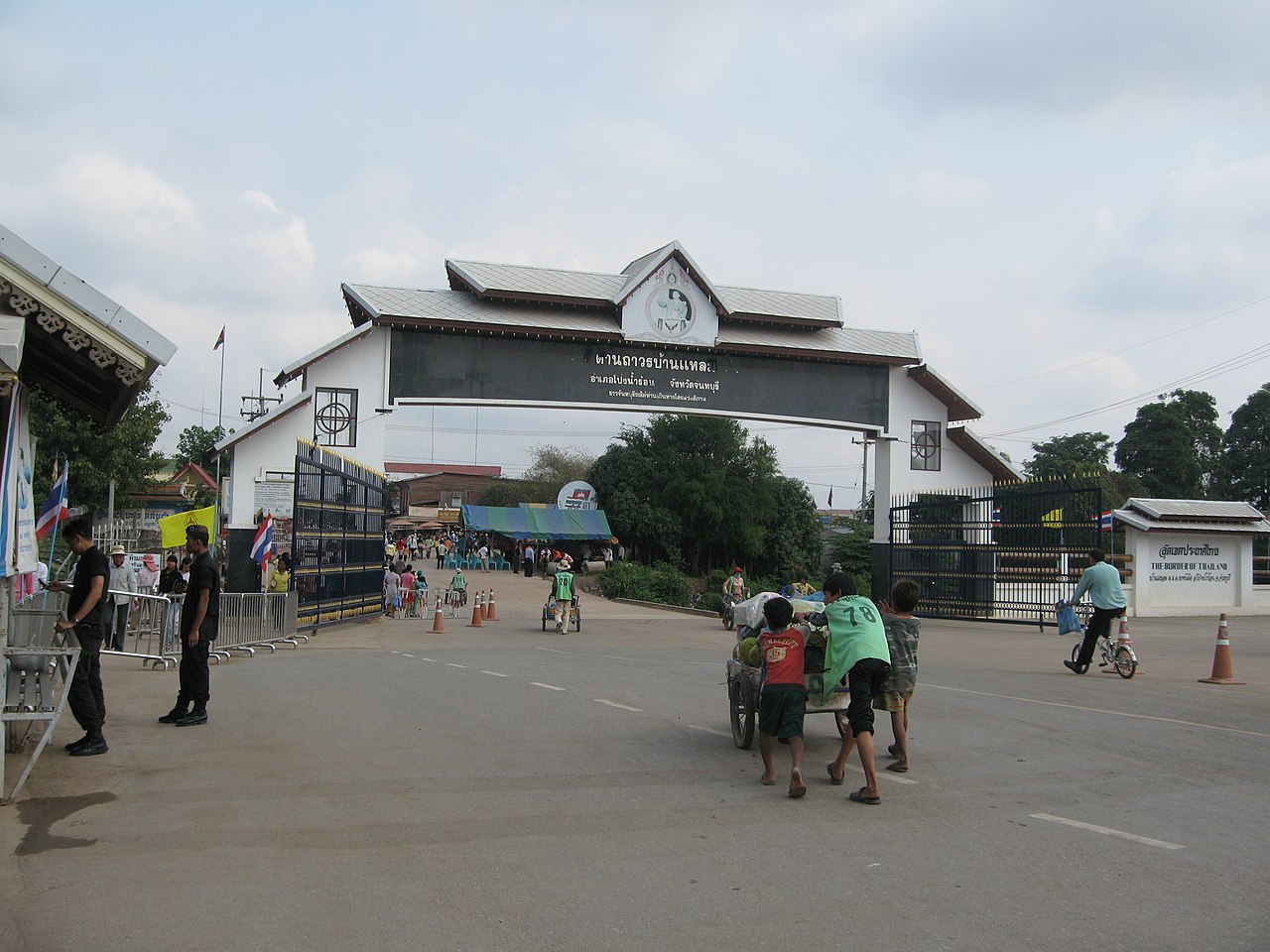
SIEM REAP/CHANTHABURI – Cambodian authorities on Saturday facilitated the return of 162 Thai nationals who had been detained in Siem Reap province, handing them over to Thai officials at the Ban Laem border checkpoint in Pong Nam Ron district, Chanthaburi.

Cambodia Blocks Return of Thais at Poipet Border Crossing Indefinitely

The group arrived on the Cambodian side in six buses under the escort of Cambodian military and government personnel to ensure an orderly transfer. The Thais had reportedly been stranded and subsequently detained amid recent heightened tensions and clashes along the Thai-Cambodian border. They remained in custody in Siem Reap until repatriation arrangements were finalized between the two nations.

On the Thai side, security was reinforced under the supervision of Deputy National Police Chief Pol Gen Thatchai Pitaneelabutr. Personnel from Chanthaburi provincial police, immigration, marine rangers, and border defense forces were deployed to oversee the operation.

Once escorted across the bridge into Thai territory, the returnees underwent health screenings, document verification, and legal processing coordinated by multiple agencies. Preliminary checks revealed that six individuals had outstanding criminal cases; they were immediately taken into custody for legal proceedings. The remaining individuals were transferred for further screening and background investigations.

Pol Gen Thatchai clarified that the repatriation resulted from coordination led by the Thai military attaché in Cambodia and involved Thais who had traveled through three locations: O’Smach, Chong Chom, and Siem Reap. He emphasized that this handover was unrelated to the return last month of 18 Cambodian soldiers following a ceasefire agreement, nor was it connected to the earlier movement of roughly 6,000 workers who sought to re-enter Thailand during border clashes near Poipet opposite Sa Kaeo province.

Thai Embassy Seeks Clearance as Cambodia Blocks Thais from Returning Home

The operation highlights ongoing bilateral cooperation in managing cross-border movements amid periodic regional instability, with both sides emphasizing orderly and lawful procedures for repatriation.

-Thailand News (TN)

Similar Posts

  • |

    CTD arrests two suspected RAW terrorists in Okara

    The Counter-Terrorism Department (CTD) has arrested two suspected terrorists allegedly linked to India’s intelligence agency, Research and Analysis Wing (RAW), during an intelligence-based operation in Okara. According to CTD officials, the suspects, identified as Abdul Aziz and Wilayat Shah, are residents of Peshawar, Khyber Pakhtunkhwa. During the operation, authorities recovered four kilograms of explosive material, three improvised explosive devices (IEDs), and three Kalashnikov rifles from their possession. Officials said the suspects allegedly planned to carry out terrorist activities in the Sahiwal and Okara districts. The CTD launched the operation after receiving intelligence about their alleged activities and detained both suspects before they could execute their plans. The department has started further investigations to determine the suspects’ alleged links, identify their network, and establish whether they had planned attacks on specific targets in the region.

  • | |

    President, PM vow action after Swat suicide blast

    ISLAMABAD: President Asif Ali Zardari and Prime Minister Shehbaz Sharif on Sunday strongly condemned the deadly suicide bombing in Kabal, Swat, expressing grief over the loss of lives and reaffirming the government’s commitment to eliminating terrorism. In separate statements, both leaders extended heartfelt condolences to the families of those killed in the attack and prayed for the departed souls. They also asked Allah Almighty to grant patience and strength to the bereaved families during this difficult time. President Zardari expressed deep sorrow over the tragedy and prayed for the speedy recovery of those injured in the explosion. He directed the relevant authorities to ensure that all injured victims receive the best possible medical treatment without delay. The president said terrorists would never succeed in weakening Pakistan’s peace, national unity or the writ of the state. He praised the sacrifices of Khyber Pakhtunkhwa Police and other law enforcement agencies, describing their bravery and commitment as a source of pride for the nation. He further called for a comprehensive investigation into the incident and directed authorities to identify those responsible for planning and carrying out the attack. He stressed that all perpetrators and their facilitators must be brought to justice. Prime Minister Shehbaz Sharif also condemned the suicide bombing and expressed profound grief over the loss of precious lives. He conveyed his sympathies to the families of the victims and prayed for the elevation of the martyrs’ ranks. The prime minister also wished a speedy recovery for those injured and instructed the relevant departments to provide them with the highest standard of medical care. Reaffirming the government’s resolve against militancy, Shehbaz Sharif said Pakistan’s fight against terrorism would continue until the menace was completely eradicated. He said those seeking to destabilise the country through acts of violence would not be allowed to succeed.

  • | |

    Poor internet access threatens girls’ education …

    PESHAWAR: Poor internet connectivity is creating serious problems for girls pursuing education in the merged districts of Khyber-Pakhtunkhwa. Students in remote areas often struggle to attend online classes. They also face difficulties downloading study material and submitting assignments. For 16-year-old Khadija Bibi from Kurram district, finding an internet signal has become part of her daily life. During the summer holidays, she often leaves her home and climbs a nearby hill. She carries her mobile phone with her. She stands on the rocky slope and searches for a stronger signal. She uses the limited connection to download lecture notes and complete academic tasks. She also tries to attend online classes from the hill. However, the weak network frequently disconnects. This causes her to miss lessons and submit assignments late. Khadija is a BS Computer Science student at Benazir Women University Peshawar. She said unreliable internet had become one of the biggest challenges in her education. She said students in remote areas were being left behind as education increasingly depended on digital technology. The problem is not limited to Kurram. Thousands of girls across the merged districts face similar difficulties. The region already has several major education challenges. Poverty remains a serious obstacle. Insecurity has also affected access to education. Many areas also lack proper schools and other educational facilities. The digital divide has added another challenge. Several schools in the merged districts either do not have computer laboratories or have laboratories without working computers. Some also lack internet connections. This prevents students from gaining basic computer skills. It also makes online education difficult. Official data highlights the wider education crisis in the region. Benazir Income Support Programme data shows that 66 per cent of children in North Waziristan are out of school. The rate stands at 63 per cent in Bajaur. It is 61 per cent in South Waziristan. Mohmand and Khyber each record an out-of-school rate of 51 per cent. Kurram and Orakzai each have a rate of 47 per cent. Girls face additional difficulties because of limited access to technology. The Khyber-Pakhtunkhwa Women Empowerment Policy 2026-2030 highlights the scale of the digital divide. According to the policy, only 11 per cent of women in the merged districts have access to the internet. The female literacy rate is also extremely low. It stands at only 17 per cent. Education and digital inclusion advocates say poor infrastructure is a major reason for the situation. Weak mobile networks make internet access unreliable. Many families also cannot afford smartphones or regular internet packages. Some girls have to borrow phones from family members. This makes it difficult for them to attend online classes regularly. Access to technology is also affected by social restrictions. In some communities, families remain concerned about girls using mobile phones and the internet. Concerns about online safety and social pressure often result in restrictions. Cultural norms can also limit girls’ access to digital technology. Experts say improving internet coverage alone will not solve the problem. Girls also need greater freedom to travel to schools, universities and training centres. Better transport facilities could help students reach educational institutions more easily. It could also improve access to vocational training and employment opportunities. Experts have urged the provincial government and telecommunications authorities to give greater attention to the merged districts. They say residents should receive reliable internet services similar to those available in settled areas. Improved digital infrastructure could transform educational opportunities for girls in remote communities. Reliable internet would allow students to attend online classes without travelling long distances. They could access digital libraries and educational resources. They could also develop computer skills and participate in online training programmes. For students like Khadija, internet access is more than a technological facility. It is directly linked to education and future opportunities. Without reliable connectivity, many talented girls may continue to struggle despite their willingness to study. Addressing the digital divide therefore requires investment in telecommunications infrastructure, schools, digital devices and affordable internet services. It also requires efforts to remove social barriers that prevent girls from using technology.

  • | | |

    PSX rallies over 5,000 points as regional tensions…

    The Pakistan Stock Exchange started the week with a strong rally on Monday. The benchmark KSE-100 Index gained more than 5,000 points during intraday trading. The sharp rise came as investors welcomed the pause in fighting between the United States and Iran. The index opened with strong buying activity. By 9:50am, it had risen 4,501 points to reach 175,522.53 points. The previous close was 171,021.20 points. The upward movement continued during the morning session. By 10:30am, the index had gained 5,069 points and reached 176,090.08 points. The improved geopolitical situation boosted investor confidence. The United States and Iran have paused their military strikes. The development has raised hopes for renewed diplomatic efforts. Investors also expect the easing of tensions to support shipping activity through the Strait of Hormuz. The waterway is important for global energy supplies. Any prolonged disruption can push oil prices higher and increase pressure on economies that depend on imported fuel. The latest development also affected global oil markets. Crude prices fell sharply as investors reacted to the temporary halt in hostilities. Brent crude briefly dropped below $90 per barrel. It fell more than 7% at one stage during early trading. US West Texas Intermediate crude also declined. The fall in international oil prices could provide some relief to Pakistan’s economy. Pakistan spends a significant amount on energy imports. Lower oil prices can therefore help reduce pressure on the country’s import bill and external account. Market analysts said the improvement in geopolitical conditions could also influence the State Bank of Pakistan’s monetary policy decision. Awais Ashraf, director of research at AKD Securities, said investors were expecting the central bank to maintain the policy rate. The State Bank is also expected to assess developments in the Middle East. The impact of recent floods on Pakistan’s economy will also remain under consideration. Analysts said the continuing decline in inflation and a relatively comfortable external account could support monetary easing in the coming months. However, economic activity and money supply trends remain important factors for policymakers. The strong rally follows a difficult week for the PSX. The KSE-100 Index had fallen by around 2.7% last week. The index lost 4,782 points and closed at 171,021.20 points. Rising tensions between the United States and Iran had increased uncertainty in financial markets. Higher international oil prices also added pressure. Investors had remained cautious because of concerns that the conflict could expand across the region. Monday’s sharp recovery shows how quickly market sentiment can change when geopolitical risks decline. Despite the strong gains, analysts remain cautious about the outlook. Further developments between Washington and Tehran will remain important. Global oil prices will also influence investor sentiment. The State Bank’s monetary policy decision is another key factor for the market.

  • | | |

    Security forces eliminate 7 militants in Kharan op…

    Security forces have killed seven militants during an intelligence-based operation in Balochistan’s Kharan district. According to security sources, the operation was conducted in the Lajay area of Kharan. The action was carried out on the basis of intelligence reports about the presence of militants in the area. Seven militants linked to Fitna al-Khawarij were killed during the operation. Several other militants were also wounded, according to the sources. Security forces conducted a search of the militants’ hideouts after the operation. A large quantity of modern weapons and ammunition was recovered. Other military equipment was also found at the sites. Security forces also recovered a motorcycle and two vehicles from the militants’ hideouts. The security forces subsequently destroyed the militants’ positions. The hideouts were completely dismantled during the operation. According to security sources, the militants were involved in several serious criminal and terrorist activities. These included extortion, kidnapping and target killings. The militants were also allegedly involved in planning suicide attacks. Their activities posed a security threat in the region, the sources said. The operation was conducted as part of Operation Radd-ul-Fitna 3. Security forces have been carrying out intelligence-based operations under the campaign to eliminate terrorist networks. Officials said such operations are aimed at disrupting militant activities before attacks can be carried out. Security forces are continuing operations against militant groups in different areas of Balochistan. Intelligence-based actions are being used to identify militant hideouts and target terrorist networks.

  • | |

    Dar highlights growing momentum in Pakistan-Russia…

    ISLAMABAD: Deputy Prime Minister and Foreign Minister Ishaq Dar has welcomed what he described as positive progress in relations between Pakistan and Russia. Dar made the remarks during a meeting with Russian Ambassador to Pakistan Albert Khorev in Islamabad on Tuesday. According to the Foreign Office, the two sides discussed bilateral relations and regional developments. Dar stressed the importance of maintaining the current momentum and expanding cooperation between the two countries. The foreign minister called for greater collaboration in key areas. He also emphasised the need for regular high-level engagement to further strengthen ties between Islamabad and Moscow. Dar said Pakistan remained committed to resolving regional disputes through dialogue and diplomatic efforts. He maintained that negotiations were the most effective way to address differences and promote peace and stability in the region. The meeting comes as Pakistan and Russia continue efforts to broaden their relationship beyond traditional areas of cooperation. Economic engagement has emerged as an important part of the bilateral relationship. Earlier this year, Energy Minister Awais Ahmed Khan Leghari said Pakistan and Russia had agreed to work towards an Economic Cooperation Programme extending until 2030. The programme is expected to provide a framework for expanding economic engagement and strengthening cooperation in areas of mutual interest. Officials have also been working to improve people-to-people contacts. A recently signed readmission agreement is expected to contribute to smoother visa arrangements and facilitate greater interaction between citizens of the two countries. Pakistan’s engagement with Russia is also taking place against the backdrop of wider regional changes. Islamabad has repeatedly emphasised the importance of diplomatic engagement and cooperation for addressing regional challenges. Dar’s latest meeting with the Russian ambassador reflects Pakistan’s efforts to maintain regular high-level contacts with Moscow and explore opportunities for deeper bilateral cooperation.

Leave a Reply

Your email address will not be published. Required fields are marked *