
demi lovato gets
|

Demi Lovato gets nostalgic as ‘Camp Rock 3’ nears release

Demi Lovato is taking a nostalgic trip back to where her career first began. Her tribute comes just days before “Camp Rock 3” premieres on August 13.

The 33-year-old singer and actress famously played Mitchie in both “Camp Rock” and its sequel, “Camp Rock 2: The Final Jam.” On August 10, she took to Instagram to share a heartfelt post about the franchise.

Lovato shared a mix of movie stills and behind-the-scenes photos from her time on the original films. She captioned the post simply, expressing that Mitchie will always hold a special place in her heart.

Fans quickly flooded the comments section, sharing their own emotional reactions to the throwback. Many expressed how much the character and franchise meant to them growing up.

One user wrote that Mitchie Torres would always remain a beloved character to them. Another said “Camp Rock” holds an irreplaceable spot in their heart, while a third called the photo a perfect snapshot of their childhood.

This nostalgic post follows Lovato’s earlier confirmation that she will officially be reprising her role as Mitchie in the upcoming third film. She made the announcement on X, sharing a personal photo alongside the caption.

In her message, Lovato playfully asked fans if they’d missed her, signing off in character as Mitchie herself. The announcement generated immediate excitement among longtime fans of the franchise.

Her return marks a major milestone, arriving 18 years after the original “Camp Rock” first introduced her to audiences back in 2008. That film played a key role in launching her career as both an actress and singer.

Lovato will not be returning alone either. She’ll be joined once again by the Jonas Brothers, who are reprising their roles as the band Connect 3.

Joe Jonas returns as Shane Gray, Nick Jonas as Nate Gray, and Kevin Jonas as Jason Gray. Beyond acting, the brothers are also serving as executive producers on the new film, adding another layer of involvement to the long-awaited reunion.

Similar Posts

  • |

    How K-pop stars turned concert stages into runways for luxury fashion

    Fashion and music have always crossed paths, but K-pop has taken that relationship to a whole new level. Red carpets and front-row seats used to be where haute couture made its mark, but now concert stages are doing the same job. Every costume change is planned down to the last detail, every embellishment is built to catch the light, and every custom outfit says something about who the artist is. BTS’s ongoing ‘ARIRANG’ tour and ‘BLACKPINK’s’ solo shows have both proven that concert fashion is officially having its moment. What is more, luxury houses are not just dressing these artists anymore, they are designing with them, turning performance costumes into genuine collector’s pieces. For brands, a sold-out world tour means access to a massive, engaged audience eager to study every seam and fabric choice, a crowd that’s often broader than the one watching from the front row at a runway show. K-pop concert looks now blend ready-to-wear, couture and performance-first design, and they have to survive far more than just a photo op. Outfits need to hold up through intense choreography while still fitting the artist’s public image and giving fans something to freeze-frame in fan edits. Stylists are increasingly pulling from designer archives or commissioning fully custom pieces to keep things exclusive. BTS’s Paris tour stop was a masterclass in this. V leaned into Celine’s Parisian tailoring, J-Hope brought youthful energy to Louis Vuitton’s classic menswear, and Jimin wore four custom Dior looks spanning fringed knitwear to Napoleon-inspired jackets. Jin and RM turned to Gucci for leather-and-crystal ensembles, Suga went with a beaded Givenchy suit, and Jungkook wore custom Balenciaga pieces pulled from the label’s latest collections. BLACKPINK’s members have been just as bold. Lisa’s Swarovski-crystal catsuit from her Chicago show later ended up on display at Swarovski’s own crystal museum in Austria. Jennie leaned into archival fashion, wearing vintage Chanel pieces from the Karl Lagerfeld years, while Jisoo and Rosé spotlighted Asian designers, choosing Malaysia’s Ivan Yong and Seoul-based Gyouree Kim respectively. TWICE worked with New York designer Kim Shui for futuristic, metallic-heavy looks, while G-Dragon continues to blur the line between fashion and performance entirely, recently mixing bespoke Chanel tweed with an Amiri sequin suit. Together, these artists are proving that concert wardrobes can be just as fashion-forward as anything seen on a runway.

  • |

    Jeff Bezos throws weight behind $2.6B AI startup fixing the chip material crunch

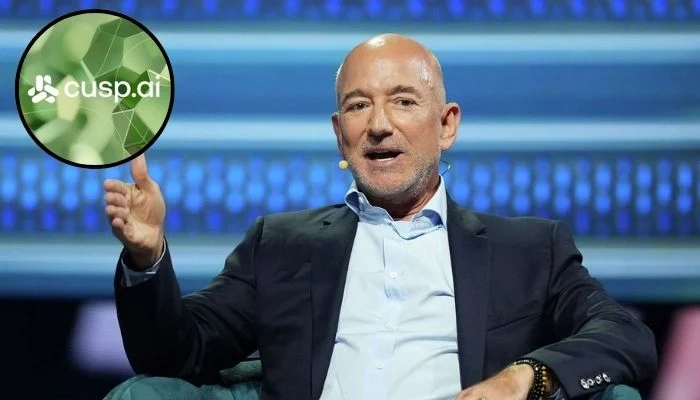
    Jeff Bezos has placed his bet on CuspAI, an artificial intelligence startup working to discover and design advanced materials for the next generation of computer chips. The investment aims squarely at the material shortage behind the ongoing chip crisis that has rattled the tech industry over the past several months. This is not  CuspAI’s first big funding win. Back in July, the company closed a $450 million Series B round, pushing its valuation to $2.6 billion. That round pulled in heavyweight backers, including Bezos Expeditions, AMD Ventures, Nvidia, and Meta. CuspAI was founded in 2024 with a much narrower focus. Originally, the company built AI tools to identify and test materials for water purification and carbon capture projects. Since then, its mission has grown considerably. By expanding into AI infrastructure and chip materials, the startup now positions itself as a possible fix during a period of serious supply chain strain. One of CuspAI’s key advantages lies in finding substitutes. The company’s AI can search for alternative materials that mimic the properties of scarce elements like tantalum, gallium, and iridium. These elements are becoming harder to source as demand climbs, particularly with the explosion of AI infrastructure worldwide. The International Energy Agency has already flagged concerns that data centre demand for gallium could outpace supply within the next few years. Adding to the pressure, rising geopolitical tension between the US and China over rare earth minerals continues to complicate global supply chains. Analysts have pointed to this rift as a growing risk factor for tech manufacturers everywhere. Beyond securing fresh funding, CuspAI has also launched something bigger: the AI Materials Foundry. This initiative brings together more than 45 major industry players under one coalition, including tech giants like Nvidia, Samsung, Meta, and Hyundai Motor Group. The goal is to pool resources and expertise as the industry races to solve its materials bottleneck. With Bezos now backing the effort directly, CuspAI’s profile in the AI and semiconductor space is only expected to grow. As chip shortages continue to challenge manufacturers worldwide, the company’s approach of using AI to hunt for alternative materials could prove critical in keeping production on track.

  • | |

    Eight bodies recovered after Broad Peak avalanche

    Rescue teams have recovered the bodies of eight mountaineers following the devastating avalanche on Broad Peak, while the search continues for two missing climbers. Another victim has been identified, but the body remains trapped in an area that rescuers have so far been unable to reach. Speaking to the media, the President of the Alpine Club of Pakistan described the incident as one of the deadliest accidents in the history of Broad Peak. He said a total of 11 climbers are believed to have been caught in the avalanche, triggering a large-scale rescue operation. He said the first phase of the operation began immediately after the incident. On the opening day, rescuers recovered the bodies of two climbers and also found partial human remains believed to belong to another victim. According to the Alpine Club, the first two recovered victims were a Nepalese mountaineer and a female climber from Oman. Rescue operations were carried out under extremely difficult weather and terrain conditions at high altitude. The Pakistan Army assisted the mission by providing helicopters to transport rescue teams and airlift the recovered bodies from the remote mountain. The aerial support played a key role in speeding up the recovery process. The Alpine Club president said that during the latest phase of the operation, the bodies of four Nepalese climbers and one Chinese mountaineer were successfully recovered and transported from the mountain. He added that rescuers have also identified another climber’s body. However, it is located in an inaccessible area, making immediate recovery impossible because of dangerous terrain and the continued risk of avalanches. Search teams are still looking for the remaining two missing climbers. Rescue officials said every effort is being made to locate them despite severe weather, snow-covered slopes and difficult mountain conditions. The tragedy has shocked Pakistan’s mountaineering community and highlighted the dangers faced by climbers attempting to scale some of the world’s highest peaks. Broad Peak, located in the Karakoram mountain range, is one of Pakistan’s tallest mountains and attracts climbers from around the world each year.

  • |

    Kuwait introduces new regulations to strengthen e commerce sector

    Kuwait has introduced a comprehensive set of regulations for e commerce platforms aimed at improving consumer protection, increasing transparency and creating a unified legal framework for the country’s rapidly expanding digital marketplace. The new rules were issued by the Ministry of Commerce and Industry under Ministerial Resolution No. 109 of 2026 and came into effect on July 8. They apply to all online platforms involved in selling, ordering and delivering goods and services across Kuwait. Officials said the regulations were introduced to address the rapid growth of online shopping while clearly defining the responsibilities of digital platforms, merchants, delivery companies and consumers. The measures are also intended to encourage investment and promote fair competition within the sector. Under the new framework, companies operating electronic platforms must obtain the required licences and comply with existing commercial laws. They are also required to strengthen cybersecurity measures to protect their digital systems and safeguard customer data from misuse or cyberattacks. The regulations require platforms to display complete pricing information before customers confirm their purchases. This includes product prices, delivery charges, commissions and any additional fees. Platforms must also provide accurate information about merchants, publish clear terms and conditions and ensure that product descriptions are truthful and up to date. Businesses are now required to establish transparent policies for returns, exchanges and refunds. They must also create complaint handling systems that resolve customer issues within specified time limits while protecting consumers’ personal information. In addition, platforms must maintain proper records of electronic transactions and payments. The new rules also place responsibilities on delivery service providers to ensure goods are transported safely and delivered efficiently. Online platforms will be expected to supervise delivery operations and coordinate closely with merchants and delivery companies throughout the process. To prevent excessive charges, the ministry has introduced limits on service commissions. Platforms may charge a maximum commission of 17 percent when they provide delivery services and 10 percent when deliveries are handled directly by merchants. Consumer delivery fees have also been capped at one Kuwaiti dinar per order, with businesses prohibited from charging more than that amount. The Ministry of Commerce and Industry has been given authority to monitor compliance with the regulations. Officials will be able to inspect businesses, request information and impose administrative penalties on companies that fail to follow the new requirements. Existing licensed platform operators must also update their registered business activity to reflect the category of managing delivery services through electronic platforms. The ministry said an implementation guide will be issued to help businesses, delivery companies and consumers understand the new compliance requirements. According to the explanatory memorandum accompanying the regulations, the reforms are designed to address problems that emerged with the rapid expansion of e commerce, including inconsistent commission rates, high delivery charges and unclear commercial practices. Officials believe the new framework will improve service quality, strengthen consumer confidence and support the continued growth of Kuwait’s digital economy.

  • | |

    Sonia Hussyn calls for meaningful freedom in Indep…

    Pakistani actress Sonia Hussyn has shared a thought-provoking message on Independence Day, urging people to look beyond the usual celebrations and think about what freedom truly means. The actress took to social media to express her concerns about the way some Pakistanis celebrate Independence Day. Rather than focusing only on flags, decorations and festivities, Hussyn questioned whether a nation can truly protect its rights if its people do not first learn to protect their own dignity, discipline and principles. In her message, the actress asked what a nation can do to protect its rights when its citizens do not know how to remain organized, principled or protect their self-respect. She also criticized the tendency to limit patriotic enthusiasm to free cake, loud celebrations and modified motorcycle silencers. Her comments appeared to be a call for greater responsibility among citizens. The message suggested that patriotism should not be limited to one day of celebration but should be reflected in people’s everyday behavior and choices. Hussyn’s remarks came as Pakistanis across the country prepared to celebrate Independence Day on August 14. Streets, homes and public spaces were decorated with national flags, while people took part in rallies, concerts and other festivities. Social media was also filled with patriotic messages and photographs celebrating the occasion. However, Hussyn encouraged her followers to consider a deeper meaning of independence. Her message focused on discipline, self-respect and responsibility as qualities that can help strengthen society. The actress’s comments quickly attracted attention online. A social media post featuring her message was shared alongside reactions from other Pakistani celebrities who also reflected on the country’s challenges while celebrating Independence Day. (Instagram⁠) Hussyn’s message reflects a broader conversation that often emerges around August 14: whether national pride should be expressed through temporary celebrations or through actions that contribute to society throughout the year. For many people, Independence Day is an opportunity to remember the sacrifices connected to Pakistan’s creation. Hussyn’s words add another perspective, suggesting that maintaining freedom also requires citizens to take responsibility for their communities and their own conduct. Her criticism of noisy celebrations does not necessarily reject patriotism itself. Instead, it highlights the difference between celebrating independence and actively contributing to the country. Simple acts such as following rules, respecting others, maintaining cleanliness and standing up for one’s rights can also become meaningful expressions of patriotism. Ultimately, Sonia Hussyn’s message asks Pakistanis to think beyond the excitement of August 14. Her central point is that a strong nation needs citizens who are disciplined, principled and conscious of their dignity. As Independence Day celebrations continue, her words serve as a reminder that loving one’s country can mean more than displaying a flag. It can also mean helping create a society worthy of the freedom that people celebrate each year.

  • | |

    Doctor suspended after performing laparoscopic sur…

    Islamabad: The Medical Tribunal has upheld a one year suspension of Dr Irfan Ashraf after finding that he performed laparoscopic surgery despite not completing the required training for independent laparoscopic procedures and operated at a healthcare facility that lacked an Intensive Care Unit and other essential facilities needed to deal with serious complications. The Tribunal also upheld a Rs100,000 fine and a ban preventing Dr Irfan Ashraf from performing laparoscopic procedures until he completes proper certified training. The judgment, announced on July 8, 2026, came in an appeal filed by Muhammad Zahid Niaz, whose father Niaz Ahmad died after a chain of medical treatment that began with laparoscopic surgery at Saleem Polyclinic in Mian Channu on December 31, 2016. The case took a serious turn when the disciplinary inquiry examined the actual training record of Dr Irfan Ashraf. The inquiry found that although he had taken part in laparoscopic procedures during his postgraduate training, most of his experience was as an observer or assistant. According to the judgment, Dr Irfan Ashraf had not completed the required number of procedures at the higher training levels needed to show independent surgical ability. The record showed that he had not completed even a single Level V procedure, which represents the stage at which a trainee is expected to perform laparoscopic surgery independently without supervision. The Tribunal said this was not simply a case where a normal surgical complication had occurred. The main concern was that Dr Irfan Ashraf undertook an elective laparoscopic operation without having demonstrated the required independent competence and at a facility that did not have the necessary backup facilities. The patient, Niaz Ahmad, suffered an injury to the common bile duct and hepatic vascular structures during the surgery. He was later taken to Bahawal Victoria Hospital in Bahawalpur for further treatment. He subsequently received treatment at Sheikh Zayed Hospital in Lahore and underwent an interventional radiological procedure at Lahore Medical Complex. Despite prolonged treatment at several hospitals, he died on March 4, 2017. The Punjab Healthcare Commission had earlier investigated the matter. It found that Saleem Polyclinic did not have the required infrastructure, qualified human resources and licensing needed for such surgical procedures. The Commission imposed a financial penalty on the owner of the healthcare establishment and referred the conduct of Dr Muhammad Saleem Akhtar and Dr Irfan Ashraf to the medical regulator for disciplinary action. The medical disciplinary committee later appointed Prof Dr Tanwir Khaliq, an experienced general surgeon, as an independent medical expert. He examined the medical record and assessed the standard of care, the management of laparoscopic complications and the facilities available at the clinic. Prof Dr Tanwir Khaliq concluded that the operation had been performed at a relatively small healthcare facility without an ICU and other essential backup facilities. He also found that Dr Irfan Ashraf was not sufficiently proficient in laparoscopic surgery, particularly when dealing with complications. The Tribunal noted that Dr Irfan Ashraf himself acknowledged that Saleem Polyclinic did not have an ICU or the facilities required to manage serious complications from laparoscopic surgery. The Tribunal also noted that Dr Irfan Ashraf had been working as a Senior Registrar at Bahawal Victoria Hospital, where better surgical support was available. When questioned about why the operation was carried out at the private facility, the explanation was that the patient wanted the surgery there. The Tribunal rejected this reasoning. It said a patient’s preference cannot remove a surgeon’s professional responsibility to determine whether a healthcare facility is safe enough for the planned procedure. The case also raised questions about what doctors tell patients about their professional skills. The disciplinary committee found that Dr Irfan Ashraf had represented himself as independently competent to perform laparoscopic surgery even though his training record did not show that he had completed the required independent procedures. The Tribunal said the evidence supported three major findings against Dr Irfan Ashraf. He performed an elective laparoscopic operation at a facility that could not properly manage foreseeable complications. He represented himself as independently competent despite incomplete training. He also exposed the patient to avoidable risk by choosing a facility without the necessary support instead of a properly equipped tertiary hospital. However, the Tribunal did not hold every doctor involved in the patient’s treatment responsible. Dr Muhammad Saleem Akhtar, the owner of Saleem Polyclinic, received a warning rather than a disciplinary punishment. The Tribunal found that there was no evidence that he personally performed the operation or took part in the surgical decision making. The Tribunal said ownership of a healthcare facility alone was not enough to impose the same disciplinary punishment on Dr Muhammad Saleem Akhtar as the operating surgeon. However, the warning required him to ensure that his facility was not used for procedures beyond its capacity. Dr Khurram Shafiq Khan was also cleared of professional negligence. His involvement came later, after the patient had already suffered complications from the earlier surgery. His role was connected with an embolization procedure to control bleeding from the hepatic artery. After examining his role, the disciplinary committee found no clear connection between the procedure performed by Dr Khurram Shafiq Khan and the patient’s eventual death. The Tribunal found no reason to disturb that decision. Muhammad Zahid Niaz had appealed because he believed the punishment against Dr Irfan Ashraf was too weak considering that his father’s treatment ultimately ended in death. He also wanted stronger action against Dr Muhammad Saleem Akhtar and Dr Khurram Shafiq Khan. The Medical Tribunal, chaired by Justice (Retired) Safdar Saleem Shahid, rejected the request for harsher punishment. The Tribunal said a tragic medical outcome does not automatically mean that every doctor involved was negligent. It explained that medical procedures can have known complications even when reasonable care is taken. The important question is whether a doctor failed to meet the level of skill and care expected from a competent doctor in similar circumstances. In the case of Dr Irfan Ashraf, however, the Tribunal found that the disciplinary committee had enough evidence

Leave a Reply

Your email address will not be published. Required fields are marked *