denise richards calls
| |

Denise Richards calls for honesty about cosmetic p…

Denise Richards is speaking openly about cosmetic procedures, saying what frustrates her most is when celebrities and influencers deny having work done while promoting unrealistic beauty standards. The actress believes there is nothing wrong with choosing plastic surgery, but she feels people should be honest about it.

Richards discussed the topic during the August 3 episode of the Dumb Blonde podcast, hosted by Bunnie Xo, the wife of country star Jelly Roll. The two women reflected on their own cosmetic procedures and shared why transparency matters, especially for younger generations who often compare themselves to celebrities online. 

During the conversation, Bunnie Xo passionately criticized public figures who claim their youthful appearance comes only from skincare products or healthy habits. Richards agreed, saying she dislikes when people refuse to admit they have had cosmetic work while allowing others to believe their results are completely natural. She explained that such claims create unrealistic expectations for women and girls who may feel pressured to look the same. 

Richards also opened up about her own experience with plastic surgery, revealing that she underwent a facelift after initially considering only a neck lift. Following discussions with a trusted friend and consultation with facial plastic surgeon Dr. Ben Talei, she decided a full procedure would create a more balanced result. The surgery included a facelift, neck lift, brow lift, eyelid surgery, lip lift and fat grafting. 

The 55-year-old actress admitted she was terrified before going through with the operation because she has spent decades in the public eye. She knew people would notice the changes, making it impossible to hide the procedure. However, she now describes it as one of the best decisions she has made for herself, saying the goal was never to look like someone else but simply to restore the features she felt had changed with age. 

Richards has long been candid about cosmetic enhancements. She previously spoke about getting breast implants at a young age and later needing revision surgery. She said she prefers openness over secrecy because it helps reduce the pressure placed on women to achieve impossible beauty standards without assistance. 

Throughout the interview, Richards stressed that every woman should have the freedom to make personal choices about her appearance without fear of judgment. Whether someone decides to age naturally or undergo cosmetic procedures, she believes the decision should be respected. For Richards, the real issue is not plastic surgery itself but the dishonesty surrounding it. By sharing her own journey, she hopes to encourage more realistic conversations about beauty, aging and self-confidence while reminding people that authenticity is just as important as appearance. 

Similar Posts

  • |

    Wildfires spread towards Bordeaux as Spain records first fire-related death

    Massive wildfires continued to spread across parts of France and Spain on Saturday, forcing large-scale evacuations and stretching emergency services as firefighters battled fast-moving flames driven by strong winds and prolonged heat. In France, the fires advanced inland toward Bordeaux, prompting thousands of residents in surrounding suburbs to leave their homes. Across the border in Spain, authorities confirmed the first death linked to the ongoing wildfire crisis after an elderly man died during a brush fire near Valencia. The fires have already displaced hundreds of thousands of people in both countries and are among the latest extreme weather disasters affecting southern Europe. Experts have linked the growing intensity of such events to prolonged dry conditions and repeated heatwaves that have become more common in recent years. French Prime Minister Sebastien Lecornu said the scale of the fires was unlike anything the country had experienced before and warned that the situation remained extremely serious. Meteorological data shows that temperatures in the affected region of southwestern France have averaged more than 32 degrees Celsius throughout July, far above the historical average for the month. The combination of unusually high temperatures, dry vegetation and powerful winds has created ideal conditions for wildfires to spread rapidly, making it difficult for emergency crews to contain them. French Interior Minister Laurent Nunez said firefighters were preparing for a long and demanding operation as the flames continued to move closer to Bordeaux. To strengthen the response, the French government has deployed military support alongside local firefighting teams. One of the country’s largest military transport aircraft joined the operation by dropping fire retardant over forests engulfed by flames. Aerial firefighting efforts have become a crucial part of the emergency response as crews struggle to slow the fires from the ground. The fires have destroyed homes and forests across the region while thick smoke has covered large areas. Around 197,000 people have been evacuated from the Gironde and Landes departments since the wildfires began earlier this week. Officials said the flames had reached within about 30 kilometers of Bordeaux. Although Bordeaux Airport remained open, transport services to and from the airport were disrupted, and the government advised people to avoid unnecessary travel in the affected region. Many evacuees described leaving their homes with little time to prepare. Seventy-one-year-old Bernadette said she fled during the night with her two grandsons, leaving behind most of her belongings, including essential medication. She is now staying at a conference center in Bordeaux that has been converted into temporary emergency accommodation for displaced residents. Spain is facing a similarly severe crisis. Three major wildfires, including two that merged west of Madrid, have forced authorities to declare the country’s first national wildfire emergency. Nearly 88,000 people have either been evacuated or ordered to remain indoors because of the fires. Emergency services continue to battle multiple fire fronts while high winds make containment efforts even more difficult. The country’s first confirmed wildfire-related death occurred near Valencia, where an elderly man died in his vehicle during a smaller brush fire that was later brought under control. Spain has also received international assistance through the European Union’s emergency response system. Additional firefighting aircraft from Italy and Greece are joining planes already sent by Portugal and the Netherlands to help contain the blazes. The situation around Madrid remains especially challenging as another wildfire in the neighboring province of Avila threatens to merge with existing fires. Firefighters are also dealing with the added difficulty of an ongoing union strike, although officials say it has had only a limited impact on staffing levels. Spanish Health Minister Monica Garcia urged residents to avoid spending time outdoors because of the dangerous smoke. She advised people to limit physical activity outside and wear face masks if they need to leave their homes. Residents forced to evacuate described hurried departures after receiving emergency alerts. One woman from the town of Fresnedillas de la Oliva said she grabbed only a few valuables and her pet cat before leaving as thick smoke filled the sky. Authorities in both countries continue to warn that the wildfire threat remains high as hot, dry and windy conditions persist.

  • |

    Former Chinese premier Zhu Rongji dies at 97

    BEIJING: Former Chinese Premier Zhu Rongji, a key figure in the country’s economic transformation during the 1990s, has died at the age of 97. Zhu was known for his direct speaking style and his strong support for economic reform. His tenure was marked by major changes aimed at restructuring China’s state-dominated economy and opening it further to global markets. He served as China’s vice premier from 1991 to 1998 before becoming premier, a position he held until early 2003. Zhu’s political career began decades earlier. He graduated from Tsinghua University and joined the Communist Party in 1949. During the Cultural Revolution, he was sent to work in the countryside and experienced a period of political hardship. He was later rehabilitated and gradually returned to senior government positions. In 1987, Zhu became mayor of Shanghai. During his tenure, he helped guide the city through early economic reforms and development that eventually contributed to its emergence as a major international financial centre. He moved to Beijing in 1991 after joining the central government. As vice premier and later premier, Zhu became closely associated with efforts to tackle economic overheating, inflation and financial instability. His government introduced wide-ranging reforms to state-owned enterprises. Many inefficient state companies were closed, restructured or privatised, while large numbers of workers were laid off. Zhu also strengthened the central government’s control over taxation and introduced reforms that encouraged private home ownership. Those changes played a major role in reshaping China’s housing market. One of his most significant achievements was helping China secure membership of the World Trade Organization in 2001, following years of difficult negotiations. China formally joined the organisation in December that year. The WTO accession accelerated China’s integration into the global economy and helped expand international trade and investment. However, Zhu’s reform programme also had critics. Some observers argued that changes to agricultural policy, tax arrangements and state-owned enterprises created difficulties that later governments had to address. Despite those criticisms, Zhu remained widely regarded as one of the most influential economic reformers in modern Chinese history. His reputation for blunt remarks became particularly prominent after a collection of his speeches was published in 2011. The books contained unusually candid assessments of corruption, government debt, banking problems and weaknesses in public administration. The speeches attracted significant public attention because they addressed many of the economic and social challenges facing China at the time. Zhu warned about corruption, inequality and problems created by local officials. His comments continued to attract interest among reform-minded officials, academics and members of the public long after he left office. His death marks the passing of a leader who played a central role in one of the most consequential periods of China’s economic development. Zhu’s legacy is closely linked to the difficult reforms of the 1990s, when China moved towards a more market-oriented economy while maintaining the political control of the Communist Party.

  • |

    Delhi internet cut as student protests escalate

    The Indian government has reportedly suspended mobile internet services in several parts of central New Delhi as nationwide protests over examination paper leaks continue to gain momentum. The move came amid heightened security and growing demonstrations led by students and youth groups demanding accountability over alleged irregularities in the country’s examination system. According to informed sources, telecom companies were instructed to disable mobile data services in and around the main protest sites in central Delhi. The internet restrictions affected thousands of residents, commuters and businesses in the area. The suspension caused significant disruption to daily life. Shopkeepers, restaurants and street vendors reported difficulties accepting digital payments because many businesses in India rely heavily on internet-based payment systems. Residents also experienced problems accessing online services and communication platforms. The protests have continued for more than a month, with students camping in central Delhi and demanding the resignation of Education Minister Dharmendra Pradhan. Demonstrators accuse the government of failing to prevent examination paper leaks that reportedly affected nearly two million students across the country. Student leaders say the paper leak scandal has seriously damaged confidence in India’s examination system and has put the future of millions of young people at risk. They insist the demonstrations will continue until those responsible are held accountable and meaningful reforms are introduced. Prime Minister Narendra Modi recently addressed the controversy and promised strict action against individuals involved in examination fraud. He said the future of India’s youth remains a national priority and announced plans to establish fast-track courts to ensure speedy trials in paper leak cases. However, opposition leaders argued that the government’s response does not go far enough. Congress leader Rahul Gandhi renewed his demand for the dismissal of Education Minister Dharmendra Pradhan, accusing the government of failing to protect the country’s education system and the interests of students. The demonstrations intensified after security forces attempted to stop protesters marching toward Parliament during the monsoon session. Police used tear gas and batons to disperse crowds after protesters tried to breach security barriers. Clashes later broke out, leaving scores of protesters and security personnel injured. Following the unrest, authorities increased security across central Delhi by deploying additional police personnel, strengthening barricades and monitoring key government buildings to prevent further violence. The protest movement, which initially focused on examination paper leaks, has gradually expanded into a broader campaign highlighting concerns over unemployment, educational opportunities and governance. Protest organisers say the issue is no longer limited to examination irregularities but has become a wider movement demanding transparency, accountability and reforms.

  • | |

    Punjab CTD arrests 54 terror suspects

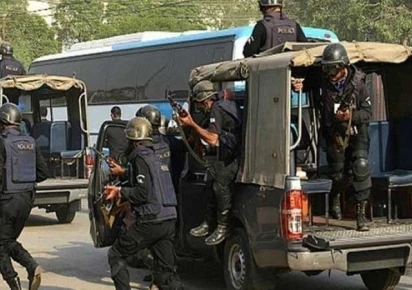
    The Punjab Counter Terrorism Department (CTD) has arrested 54 suspected terrorists, including five individuals alleged to have links with India’s intelligence agency, RAW, during a series of intelligence-based operations (IBOs) conducted across the province over the past two months. According to the CTD, a total of 419 intelligence-led operations were carried out in multiple districts to counter potential terrorist threats. During these operations, authorities questioned 422 individuals and detained 54 suspects believed to be associated with banned militant organisations. Officials said the five suspects accused of having links with RAW were identified as Waris Khan, Danish Ali, Roz Ali Khan, Wilayat Shah and Muhammad Aziz. The arrests were made in Lahore and Okara, while investigations into their alleged activities are continuing. The CTD stated that those taken into custody are suspected of having affiliations with several proscribed groups, including Fitna al-Khawarij, Daesh, Al-Qaeda in the Indian Subcontinent (AQIS), Lashkar-e-Jhangvi, Sipah-e-Sahaba and other outlawed organisations. The operations were conducted in several districts, including Lahore, Rawalpindi, Gujranwala, Faisalabad, Jhelum, Sargodha, Mianwali, Bhakkar, Sahiwal, Mandi Bahauddin, Pakpattan and Bahawalpur, as part of an ongoing campaign against terrorism. Authorities said a significant cache of weapons, explosives and other materials was recovered during the raids. The seized items included 7.9 kilograms of explosive material, 12 improvised explosive devices (IEDs), 50 detonators, safety fuse wire, pistols, rifles, ammunition, banned literature, pamphlets, flags, mobile phones and cash. The CTD also highlighted its wider security efforts, saying that during the past eight weeks it carried out more than 13,500 combing operations in coordination with local police and other law enforcement agencies. Nearly 495,000 people were screened during these operations, resulting in more than 1,100 arrests and over 1,000 registered cases.

  • | |

    Liverpool owners in talks to sell minority stake t…

    Liverpool’s owners, Fenway Sports Group, have confirmed they are in talks with British-Indian investor Amit Bhatia over a potential deal for a minority stake in the Premier League club. Bhatia, the son-in-law of Indian steel billionaire Lakshmi Mittal, is heading a consortium interested in buying into the 20-time English champions. An FSG spokesperson confirmed the approach from Bhatia’s group, stating: “An investment consortium led, managed, and represented by Amit Bhatia has expressed interest in making a strategic minority investment in Liverpool Football Club.” The Financial Times reported that Bhatia has hired advisers to work on the offer, which could value Liverpool at more than $6 billion. Bhatia, who previously served as a director of Queens Park Rangers and vice-chairman of the club’s holding company, is a prominent figure in British football. He has expressed pride and gratitude for his time at QPR, thanking players, managers, staff, and fans for making him feel part of the QPR family for many years. His involvement with Liverpool would mark a significant step in his investment career, further cementing his presence in English football. The discussions between Bhatia’s consortium and FSG are believed to be at an early stage, with no deal struck yet. Any investment from Bhatia would be made to further position Liverpool for success, following FSG’s move in 2023 to sell a minority stake in the club to global sports investment firm Dynasty. Reports at the time valued that transaction between $100 million and $200 million. FSG, which bought Liverpool for £300 million in 2010, has overseen a period of success for the club, including Premier League and Champions League titles. The potential sale of a minority stake to Bhatia’s consortium reflects FSG’s strategy of attracting strategic partners to support the club’s growth and competitiveness in an increasingly challenging football landscape. Bhatia’s consortium is the latest in a series of investment groups to express interest in Premier League clubs, highlighting the continued appeal of English football to global investors. If the deal proceeds, it would provide Liverpool with additional financial resources to invest in the squad and infrastructure, while Bhatia would gain a foothold in one of the world’s most iconic football clubs. The negotiations come amid ongoing speculation about the future of ownership at several top Premier League clubs. While FSG has maintained its commitment to Liverpool, the potential sale of a minority stake to Bhatia’s consortium suggests a willingness to explore strategic partnerships to secure the club’s long-term success. As discussions continue, Liverpool fans will be watching closely to see how any deal could impact the club’s future direction. The coming weeks will be critical in determining whether Bhatia’s consortium can finalize a deal that benefits both the investor and the club.

  • | | |

    PRL and SSGC face Senate anger over missing inform…

    Islamabad: State owned petroleum companies Pakistan Refinery Limited (PRL) and Sui Southern Gas Company (SSGC) faced serious criticism in the Senate after lawmakers expressed dissatisfaction over missing information, failure to follow committee directions and concerns about company management. The Senate Standing Committee on Petroleum questioned the performance and accountability of government owned petroleum companies and considered taking strict action against officials who failed to cooperate with parliamentary oversight. During the meeting chaired by Senator Umer Farooq, the committee reviewed the appointment criteria for chairpersons and managing directors of petroleum companies, the structure of their boards and progress on previous committee recommendations. The committee took serious notice of the absence of the Managing Director of Pakistan Refinery Limited during the meeting. Members expressed concern that PRL, despite being a state-owned company, did not provide the required information to the committee. The committee considered initiating a privilege motion against the Managing Director of PRL for failing to appear and provide necessary details. The Petroleum Division was directed to submit complete information about the boards of directors and senior management of all government owned petroleum companies. The committee said transparency in leadership appointments and company management is necessary because these organisations deal with matters directly linked to the national economy and public interest. The committee also expressed dissatisfaction over the performance of Sui Southern Gas Company and its failure to implement previous recommendations. Members said SSGC had not provided details of its board of directors despite earlier instructions. The committee also raised concerns over remarks made by SSGC that were considered discouraging toward the Senate Standing Committee’s role in discussing important matters. The committee considered moving a privilege motion against SSGC over non compliance with its directions. The Petroleum Division was further directed to review the tenure of board members who have remained in positions beyond the approved period and submit a detailed report. The committee also raised concerns over the absence of performance audits of oil rigs. Authorities were directed to provide the required audit report within seven days so that the committee could review the performance and efficiency of petroleum sector operations. Members said proper audits are necessary to identify problems, improve production and ensure better use of national resources. The committee also reviewed issues related to LPG quotas and licensing. The Oil and Gas Regulatory Authority was directed to hold consultations with all relevant stakeholders and submit a detailed report to the committee. Senators stressed that petroleum companies must improve governance, follow parliamentary instructions and ensure public institutions operate with transparency. The committee said accountability in state owned petroleum companies is essential to protect national interests and improve confidence in the energy sector.

Leave a Reply

Your email address will not be published. Required fields are marked *