hafiz naeem slams
| |

Hafiz Naeem slams rising prices, elite privileges

Jamaat-e-Islami Emir Hafiz Naeemur Rehman has criticised the country’s elite class, saying ordinary Pakistanis are struggling under rising costs while privileged groups continue to enjoy extensive benefits without paying their fair share of taxes.

Speaking at a press conference at Jamaat-e-Islami headquarters in Mansoorah, Lahore, Hafiz Naeem said increases in petroleum prices have a direct impact on the prices of essential goods and place the greatest burden on middle- and lower-income families.

He said access to quality healthcare and education remained inadequate for a large section of the population, adding that ordinary citizens were being deprived of basic facilities.

Hafiz Naeem also said Jamaat-e-Islami had not ended its protest sit-in but had only postponed it. He criticised what he described as a political system dominated by a self-serving political class.

He said many Pakistanis were taking significant risks to travel abroad in search of employment, while educated young people were also leaving the country because of limited job opportunities.

The Jamaat-e-Islami leader further alleged that owners of independent power producers were not being adequately taxed despite earning substantial incomes. At the same time, he said, people across the country were facing prolonged power outages while additional charges were being collected from consumers.

Hafiz Naeem accused the ruling class of failing to deliver meaningful relief because of what he described as corruption and poor governance. He questioned the reported purchase of an aircraft worth around Rs11 billion for the Punjab chief minister.

He also criticised government officials for defending the expenditure, saying public funds should not be used for expensive official vehicles and other privileges.

The Jamaat-e-Islami emir urged authorities to reduce unnecessary government spending and focus resources on providing relief to ordinary citizens.

Similar Posts

  • | |

    Happy 79th Independence Day to all patriots of Pak…

    Pakistan is celebrating its 79th Independence Day today with patriotic enthusiasm and nationwide festivities. Celebrations began at midnight as homes, markets, government offices and private buildings across the country were illuminated and decorated with national flags and green-and-white decorations. Major cities including Karachi, Lahore, Islamabad, Peshawar, Quetta and Multan have witnessed vibrant celebrations, with fireworks and lighting displays adding to the festive atmosphere. Citizens have taken to the streets to mark the historic occasion, while rallies and patriotic events are being organised in different parts of the country. The celebrations reflect the nation’s enduring spirit of patriotism and commemorate Pakistan’s independence achieved on August 14, 1947. Across cities and communities, people are joining together to celebrate the country’s 79th Independence Day with pride and renewed commitment to national unity and progress.

  • | |

    Gold prices surge by Rs13,700 per tola in Pakistan

    Gold prices in Pakistan surged sharply on Thursday, rising by Rs13,700 per tola as international bullion prices recorded a strong increase. According to the All-Pakistan Gems and Jewellers Sarafa Association (APGJSA), the price of gold increased to Rs471,936 per tola, compared with Rs458,236 recorded on the previous day. The price of 10 grams of gold also climbed significantly, increasing by Rs11,746 to Rs404,609. The sharp increase in local gold prices came alongside a major rally in the international bullion market. International gold prices rose by $137 per ounce to $4,495, providing strong upward momentum to domestic prices. The latest increase follows significant fluctuations in Pakistan’s gold market over the past several trading sessions. On Wednesday, local gold prices had declined by Rs3,700 per tola despite a strong rise in international prices. The rate had fallen to Rs458,236 per tola, while 10 grams of gold were priced at Rs392,863. On Tuesday, gold prices remained unchanged at Rs461,936 per tola. Earlier on Monday, the precious metal had gained Rs2,000 per tola, reaching Rs461,936. The latest movement highlights the volatility currently being witnessed in the precious metals market. International bullion prices remain a key factor influencing gold rates in Pakistan, while local prices can also be affected by currency movements and domestic market conditions. Silver prices also recorded a substantial increase on Thursday. According to APGJSA figures, the price of silver rose by Rs317 per tola to Rs7,169. The price of 10 grams of silver also increased by Rs317 to Rs6,146. The sharp rise in gold prices is likely to attract renewed attention from investors, jewelers and consumers who closely monitor precious metal rates. Gold is often considered a store of value, making significant price movements particularly important for investors and households. With international gold prices reaching $4,495 per ounce and the local rate crossing Rs470,000 per tola, market participants will be closely watching the next trading sessions for signs of whether the rally will continue or prices will experience another correction.

  • |

    Saudi Arabia unveils plans for Multinational Marit…

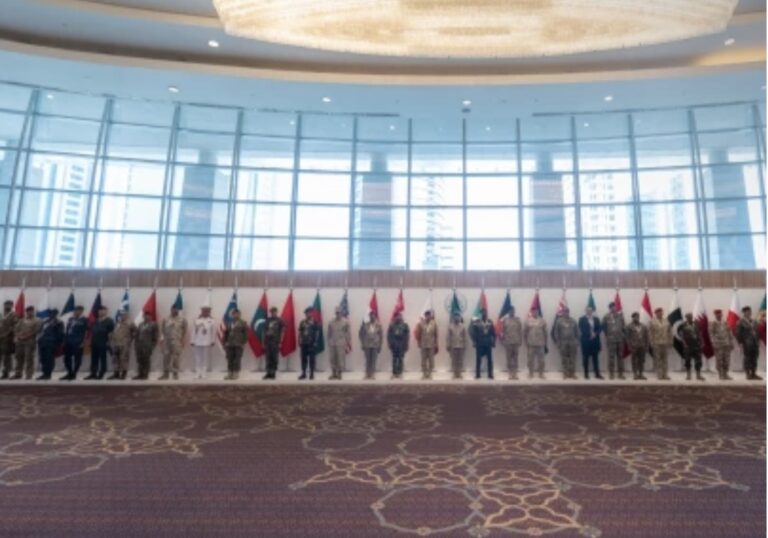
    Saudi Arabia and 13 other countries, including Pakistan, on Thursday announced the creation of a multinational maritime defence coalition aimed at safeguarding freedom of navigation, international trade and energy supply routes in the Bab al-Mandab Strait, the Red Sea and the Gulf of Aden. The Saudi defence ministry said representatives from 43 countries and the European Union attended an international meeting that discussed the proposed coalition, with Saudi Arabia serving as its founding and leading state and hosting its headquarters. The ministry said the coalition would strengthen maritime security, safeguard freedom of navigation, secure international trade routes and energy supply lines, and protect shared maritime interests in the strategic waterways. Fourteen countries, including Turkey, Pakistan, Egypt, Sudan and Djibouti, issued a joint statement supporting the proposed coalition. Among the six Gulf Arab states, Oman and the United Arab Emirates were not listed among the countries backing the statement. The founding states said participation in the coalition’s activities would remain a sovereign decision for each member state, stressing that the alliance is “purely defensive in nature, does not target any state, alliance or international organization, and will conduct all its activities in full compliance with international law while respecting state sovereignty and protecting freedom of navigation.” The joint statement said the coalition was established as a “framework for maritime defence cooperation” aimed at enhancing maritime security, protecting freedom of navigation, securing international trade and energy supply routes, and safeguarding interests in the Bab al-Mandab Strait, the Red Sea and the Gulf of Aden. The announcement comes amid heightened tensions in the Red Sea, where Yemen’s Houthi rebels have launched a series of attacks on Saudi-linked shipping. Saudi Arabia has responded with air strikes on what it said were Houthi military facilities in Yemen’s Hodeidah used to threaten commercial shipping. The Red Sea tensions mark the latest front in the wider Iran war, with attacks on shipping spreading beyond the Gulf and pushing oil prices higher. The Bab el-Mandeb Strait, linking the southern Red Sea with the Gulf of Aden and the Indian Ocean, is a key maritime chokepoint for global trade and energy shipments. The European Union launched a naval mission in the Red Sea in 2024 to help restore and safeguard freedom of navigation after the Houthis disrupted maritime traffic by attacking vessels in what they said was solidarity with Palestinians during the Gaza war. The new Saudi-led coalition represents a significant expansion of international efforts to secure the region’s vital waterways.

  • | | |

    Thousands of migrants leave Spain’s Ceuta after …

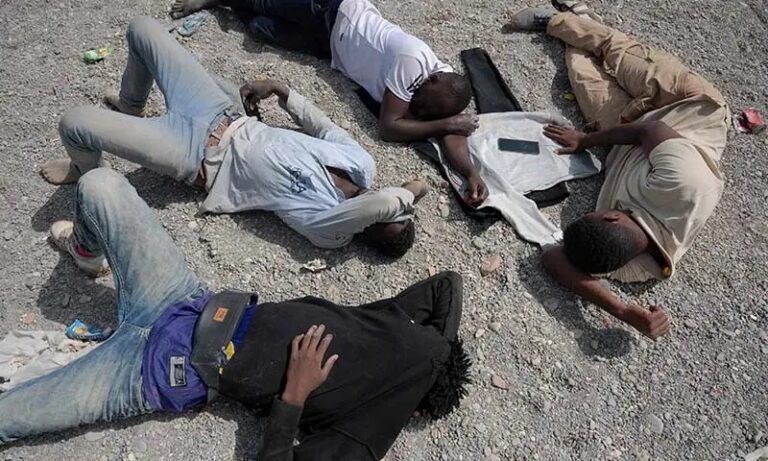
    Thousands of migrants have returned to Morocco after spending several days in Spain’s North African enclave of Ceuta following one of the largest attempted border crossings in the territory’s history. Many migrants said they left because of hunger, exhaustion, and disappointment after finding limited support and few opportunities in Ceuta. Spanish soldiers and Civil Guard officers guided groups of migrants back toward the Moroccan border crossing on Saturday. Many of those returning were young men who appeared physically exhausted after days of wandering through the city with little food or shelter. Some were barefoot, while others carried Red Cross blankets after receiving emergency assistance. Among those returning was 23-year-old Abdel Latif, who said he had hoped to find work and a better future in Europe. He explained that unemployment in Morocco pushed him to attempt the dangerous journey, but he decided to leave Ceuta after struggling to find food and support. The massive influx saw tens of thousands of migrants enter Ceuta over a period of two to three days. Local officials estimated that around 60,000 people reached the enclave, while Spain’s Interior Ministry reported a lower figure. The surge created a major humanitarian and political challenge for Spanish authorities. Many migrants attempted to reach Ceuta by swimming around border barriers in the Mediterranean Sea. Several people collapsed after completing the dangerous crossing, with Red Cross teams providing emergency treatment. At least dozens of migrants reportedly died while attempting to reach the Spanish territory. Spanish officials said that the majority of those who entered Ceuta had already returned to Morocco. Authorities have increased security measures along the maritime border, including the installation of floating barriers to prevent further crossings. Ceuta, home to around 84,000 residents, is one of only two European land borders located in Africa, along with Melilla. The territory has long been a major destination for migrants hoping to enter Europe in search of employment and improved living conditions.   Many migrants said their motivation was driven by economic hardship. Some described difficult working conditions and low wages in Morocco, saying they were searching for stability and better opportunities. Meanwhile, daily life in Ceuta has gradually returned to normal, with shops reopening and traffic resuming after the disruption caused by the migrant surge. However, some residents remain concerned about future migration pressures, while others say security improvements have restored a sense of stability. The latest events have once again highlighted the complex challenges facing Europe and North Africa in managing migration, border security, and humanitarian needs.

  • |

    Russia issues arrest request for Telegram founder Pavel Durov

    Russian authorities have announced that they are seeking the arrest of Telegram founder Pavel Durov, accusing him of allowing the messaging platform to be used for activities linked to terrorism. The move marks the latest escalation in Moscow’s long running dispute with the tech entrepreneur, who has repeatedly clashed with Russian officials over internet freedom and user privacy. Russia’s Federal Security Service, known as the FSB, said it had launched international search proceedings against Durov, alleging that Telegram was being used by Ukraine’s security services to recruit Russian citizens for sabotage and other attacks. The agency claimed that Durov failed to remove a dating bot that it says played a central role in these recruitment efforts. According to the FSB, an international wanted notice has been issued for Durov, who serves as Telegram’s chief executive. However, Russian authorities did not clarify the type of notice issued or whether foreign governments or international law enforcement agencies would recognise or act on the request. Durov’s legal representatives declined to comment on the allegations, while Telegram said the company would not make any public statement at this stage. The FSB alleged that a bot known as Leo Match Bot, which is banned in Russia, was used by individuals posing as young women to contact Russian teenagers and young adults. Authorities claimed these fake identities were created by Ukrainian intelligence agents to persuade users to attack police officers and carry out acts of sabotage against transport and energy infrastructure. Russian officials said that since July 2025, 46 people between the ages of 12 and 22 have been arrested in connection with attacks allegedly organised through the messaging bot. Ukraine has not publicly responded to these specific accusations. Since the beginning of the war, both Russia and Ukraine have accused each other of using online platforms and social media to recruit supporters and gather intelligence. The internet has become an increasingly important part of the conflict, with governments closely monitoring digital communication and online activity. Durov, who was born in Saint Petersburg, left Russia years ago and now holds French and United Arab Emirates citizenship. He first gained prominence after creating VKontakte, Russia’s largest social networking platform, before losing control of the company as government pressure increased. He later founded Telegram, which has grown into one of the world’s most widely used encrypted messaging services. Telegram has remained especially popular in Russia despite repeated attempts by the government to restrict access to the platform. Officials have long criticised the company for refusing to provide user data and have encouraged citizens to use state backed communication services instead. Durov also faced legal challenges in France last year, when he was arrested as part of an investigation into the distribution of illegal content through Telegram. He was later released on bail, and French authorities eventually lifted restrictions on his travel, allowing him to leave the country. The latest action by Russia comes as state controlled social media company VK continues promoting its government backed messaging application Max as an alternative to Telegram and WhatsApp. Russian authorities have increasingly supported domestic digital platforms as part of broader efforts to strengthen control over online communications. The announcement adds another chapter to the long standing conflict between the Russian government and Durov, whose commitment to encrypted communication and user privacy has repeatedly placed him at odds with Moscow’s efforts to regulate internet platforms. The outcome of Russia’s international arrest request remains uncertain, particularly given Durov’s residence outside the country and his foreign citizenship.

  • | |

    US military depletes long-range missile stockpile …

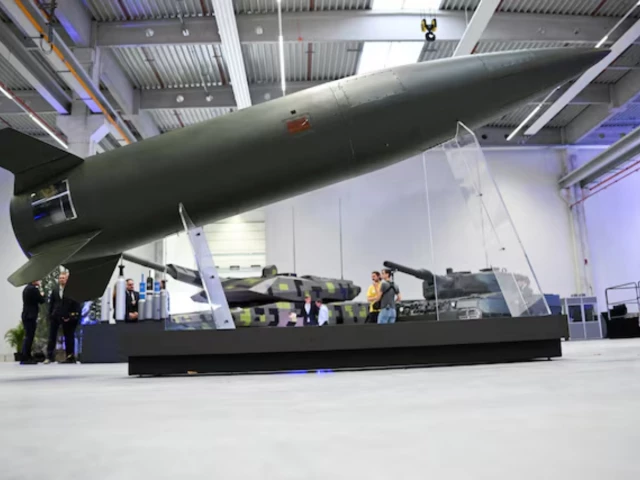
    The United States has burned through nearly all of its long-range precision missiles during five months of fighting in Iran, according to three people familiar with internal defense data, fueling concern inside Washington about military readiness for future crises. The weapons in question are primarily the Army’s ground launched systems, the Army Tactical Missile System and the newer Precision Strike Missile. Two of the sources said the military has expended virtually its entire supply of both. These munitions let forces strike targets accurately from a safe distance and have already proven vital in Ukraine, where American supplied versions allowed Ukrainian troops to hit targets deep inside Russian territory. The Precision Strike Missile represents a more advanced generation designed to eventually replace the shorter range ATACMS. Defense analysts note that such long-range munitions, each costing more than a million dollars, would also play a central role in any future confrontation with China. The sources declined to specify exact remaining quantities of either weapon. President Donald Trump launched the joint offensive against Iran alongside Israel in February, initially predicting a brief campaign. Instead, the conflict has stretched on for months, and the three sources said they worry that shrinking missile reserves could weaken the country’s ability to deter rivals such as Russia and China going forward. A fourth person familiar with the matter said Central Command, which oversees American forces across the Middle East, has nearly exhausted the land based missiles it held before the war started, though it has managed to replenish supplies by drawing from military stockpiles based elsewhere around the world. All four sources spoke on condition of anonymity. Asked to respond to the stockpile figures, the White House shared a statement from Trump asserting the country holds “far more munitions than anyone in the world” and more than it currently requires. He added that American defense manufacturers are producing at record volumes while also expanding factory capacity. Analysts largely agree that certain categories of weapons, including artillery shells and select missile types, are rolling off production lines at historic rates. Still, they caution that overall output may fall well short of what a prolonged conflict would demand. Lockheed Martin, which manufactures both the ATACMS and the Precision Strike Missile along with the THAAD missile defense system, did not respond to questions about the stockpile figures or the president’s remarks. Raytheon, maker of the Tomahawk cruise missile and the Patriot interceptor, also did not respond to inquiries. Chief Pentagon spokesperson Sean Parnell defended the state of American readiness, saying the military maintains a deep arsenal capable of protecting national interests and has carried out multiple successful operations across combatant commands. Internal debate over munitions The stockpile figures have circulated through federal government channels over the past week amid tense internal discussions about how much longer American forces can keep striking Iranian targets without depleting reserves needed to respond to crises elsewhere in the world. One source said the drawdown in ATACMS and Precision Strike Missile inventories reflects a deliberate choice by the administration to avoid riskier tactics, such as sending piloted aircraft to drop bombs directly over Iranian territory. Because these missiles allow strikes from a distance, analysts consider them especially valuable against an adversary with sophisticated air defenses, a category that includes China. A March assessment from the Center for Strategic and International Studies noted that these weapons have already been used against targets inside Iran. That same assessment found that Precision Strike Missile stocks started the conflict relatively low, since the weapon is still new to the arsenal, though the Army has placed large orders set for delivery in 2027. Military officials have said ATACMS production is winding down as manufacturing shifts toward the newer missile system. Military leaders have spent weeks warning the president that stocks of defensive weapons, including the Patriot interceptor system effective against ballistic missiles, are running low, according to two of the sources. Several news outlets reported last week that Trump opted against launching another large scale offensive inside Iran partly because military advisers raised concerns about dwindling supplies. A separate US official disputed that account, saying the president held off due to pressure from Gulf states rather than munitions concerns. The extended campaign has also reignited debate over the scope of presidential war powers, since no formal declaration of war or authorization for the use of military force has gone before Congress. Defensive systems also strained A separate assessment published last week by the Center for Strategic and International Studies estimated that the military used roughly 65 percent of its Patriot interceptor stock between February and July, while THAAD interceptor supplies fell by at least 38 percent compared with pre war levels. Two of the sources said those figures align with internal government data, though the underlying numbers could not be independently verified. The military has also used up close to half of its worldwide Tomahawk cruise missile inventory since fighting began, according to one source, a figure that likewise could not be independently confirmed. The Tomahawk, typically launched from Navy destroyers, cruisers and submarines, has long served as the primary tool for striking heavily defended targets without exposing pilots to risk. Raytheon, now part of RTX, has reached a preliminary multi year deal with the Pentagon to expand Tomahawk output alongside other munitions as officials work to rebuild depleted stockpiles amid the ongoing conflict.

Leave a Reply

Your email address will not be published. Required fields are marked *