india temple stampede
|

India Temple stampede leaves 7 dead, dozens injure…

NEW DELHI: A crowded morning of worship turned tragic at the Ashok Dham Temple in India’s Bihar state on Monday after a stampede-like incident killed at least seven devotees and injured more than a dozen others.

The incident occurred in Lakhisarai district as thousands of worshippers gathered at the temple on the third Monday of the Hindu month of Sawan. Local reports said the crowd surged suddenly, creating panic outside the shrine.

Officials said the arrival of two trains between around 6:30am and 6:45am sharply increased the number of people near the temple. The sudden rush reportedly caused a barricade to break, leaving people falling over one another.

Initial reports also suggested that an electrical pole or wire may have fallen, triggering panic among worshippers. Authorities have yet to establish the exact sequence of events, and an investigation is underway.

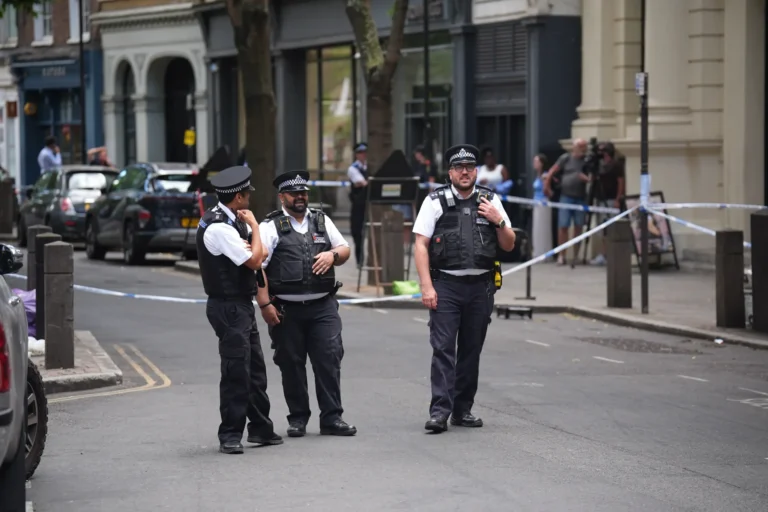
Emergency teams and district officials rushed to the scene after the incident. Several injured people were taken to nearby hospitals for treatment, while authorities worked to restore order and manage the remaining crowds.

The tragedy has renewed concerns about crowd-control arrangements at major religious gatherings in India, where large numbers of devotees often converge at temples during important festivals.

Officials said rescue and relief operations were continuing, while authorities were monitoring the situation around the temple.

The incident comes as religious sites across the region experience heavy attendance during the Sawan season, highlighting the importance of effective crowd management, emergency access and safe movement routes.
Similar Posts

  • | |

    Wet spring fuels costly disease battle for Canadia…

    Canadian farmers growing durum, spring wheat, canola and pulse crops have spent the growing season battling an unusually aggressive wave of crop diseases triggered by the wettest year the country has seen this decade. Jake Leguee, who farms roughly 19,000 acres, or about 7,689 hectares, of durum, wheat, lentils, flax and spring wheat in southeastern Saskatchewan, said he sprayed his entire operation with fungicide this year to keep disease pressure under control. He said the costs associated with that level of treatment add up quickly. The sudden surge in crop disease during early summer poses a serious threat to both the quantity and quality of Canada’s harvest this year. Canada ranks as the world’s top exporter of canola, durum wheat, dry peas and oats, and stands among the leading global suppliers of high protein spring wheat, making the outcome of this year’s harvest significant well beyond its own borders. The disease outbreak traces back to an extremely wet spring and early summer that left soils saturated with moisture, creating ideal conditions for fungal disease once temperatures turned hot and humid. That combination has forced many farmers into a difficult decision this season, choosing between spending additional money on crops that may not turn a profit given elevated fertilizer and input costs, or investing further to protect whatever yield remains in the field. For farmers like Sabourin, the level of moisture and frequency of rain throughout the season left little room for debate about whether to apply fungicide. Leguee said it will take several more weeks before he knows whether he applied the right fungicides in the right locations at the right time. He said his crops look healthy so far, with the exception of his lentils, though he cautioned that disease damage can sometimes hide inside kernels and pods that appear fine from the outside. That uncertainty means the ultimate quantity and quality of Canada’s export crops remain unresolved just as full scale harvesting gets underway across the prairies. Leguee said farmers will not have a clear picture of how the season played out until combines actually move through the fields, adding that fungicide treatment does not always deliver the results growers hope for.

  • | | | |

    Nation celebrates 79th Independence Day with grand…

    Pakistan is celebrating its 79th Independence Day today with national spirit and enthusiasm. The celebrations began across the country at midnight. People came out of their homes to mark the occasion. Streets, markets and neighbourhoods were decorated with the national flag. Green and white lights illuminated many cities. Buildings and public places were also decorated for the national day. Fireworks were held in several major cities. Citizens gathered at different locations to enjoy the celebrations. Karachi, Lahore, Islamabad, Peshawar, Quetta and Multan witnessed large gatherings. Many people carried national flags and wore green and white clothes. Rallies were also organised in different parts of the country. Citizens took part in patriotic events and expressed their love for Pakistan. In Lahore, a spectacular fireworks display was held at Greater Iqbal Park. A large number of people gathered at the park to celebrate Independence Day. Another major fireworks display was organised at Liberty Chowk. Families and young people attended the event in large numbers. Hyderabad also witnessed fireworks soon after midnight. Residents came out onto the streets to celebrate the national occasion. Multan joined the celebrations with a fireworks display at Ghanta Ghar Chowk. The district administration organised the event. A large crowd gathered at the historic location. The official celebrations continued after midnight. Special prayers were offered during Fajr prayers across the country. Prayers were made for Pakistan’s development and prosperity. People also prayed for national unity and peace. Special prayers were offered for the country’s security and stability. In Lahore, the day began with a 21-gun salute. The salute was held to mark the beginning of Independence Day. A similar 21-gun salute was held at the cantonment in Quetta. Mosques across the city also held special prayers for the country’s safety and security. The national day is being marked with ceremonies and patriotic activities across Pakistan. Government institutions, security forces and citizens are participating in different events. The celebrations highlight national unity and patriotism. People are also using the occasion to remember the sacrifices made for the creation of Pakistan.

  • |

    Husband of murdered school teacher says earlier police action could have saved her life

      The husband of a school teacher who was brutally murdered in Faridabad, Haryana, India has stated that his wife might still be alive if the police had taken firm action after her earlier complaint against the accused. The tragic incident has sparked renewed concerns about the handling of stalking and harassment complaints and the importance of timely intervention by law enforcement agencies. The victim, 28-year-old Sandhya Sharma was a teacher at a private school in Faridabad. She was brutally killed at her workplace two days ago in a shocking attack that has drawn widespread public attention. Police have arrested 21-year-old Amit, who is accused of carrying out the murder. During the investigation, the suspect reportedly confessed to planning the crime nearly two months in advance and admitted that he had purchased a knife specifically to carry out the attack. Speaking to the media, Sandhya Sharma’s husband, Vicky Gurjar, said that his wife had previously worked at another school in Sirohi village where the accused had begun stalking and harassing her. According to him, the family had filed a police complaint regarding the harassment. However, he believes that if strict legal action had been taken at that time, the tragedy could have been prevented. Vicky Gurjar explained that he and Sandhya had entered into a love marriage and had built a happy family together. The couple had two young children—a seven-year-old son and a five-year-old daughter. He said the loss of his wife has devastated the family and left their children without their mother. According to police investigators, the suspect had been searching for an opportunity to kill Sandhya Sharma for a considerable period. On the day of the attack, he entered the school premises and allegedly called the teacher out of her classroom by using her husband’s name as a pretext. Once she stepped outside, he grabbed her by the hair and repeatedly stabbed her in the neck and chest. Police reported that she suffered more than 27 stab wounds and died at the scene due to the severity of her injuries. The investigation further revealed that Amit was allegedly obsessed with Sandhya Sharma and had developed one-sided feelings for her. However, she consistently ignored his advances and never encouraged him. Police said the victim had previously filed a complaint accusing him of harassment. At that time, the suspect reportedly apologized, and the matter did not result in stronger legal action. Investigators also stated that Sandhya later changed both her school and her residence in an effort to distance herself from the accused. Police believe this decision may have further angered the suspect and contributed to his determination to carry out the crime. According to police officials, the accused initially planned to attack the victim while she was traveling to or from school. However, fearing that he would be quickly identified and arrested, he abandoned that plan. Instead, he decided to commit the murder inside the school building, where he believed he would have a better opportunity to confront her. A senior police officer said the suspect was so enraged during the attack that he continued stabbing the victim even after the knife became bent. Police have recovered the murder weapon and are continuing efforts to locate the suspect’s motorcycle as well as the clothes he was wearing during the crime. Authorities also confirmed that the entire attack was captured on the school’s CCTV cameras. During the incident, the accused allegedly threatened a school employee who attempted to intervene and save the teacher. The CCTV footage is expected to serve as a crucial piece of evidence in the ongoing investigation. Police further stated that Amit is the youngest of three brothers. He was unemployed and earned a living by raising buffaloes and selling milk. The investigation is ongoing, and authorities are collecting additional evidence to strengthen the case before presenting it in court.

  • |

    Why did Zelensky sack his Army Chief?

    Ukrainian President Volodymyr Zelensky has removed the country’s top military commander, General Oleksandr Syrskyi, in a major change to Ukraine’s military leadership as the war with Russia enters its fifth year. The decision comes during a difficult period for Ukraine, where fighting continues on several front lines and pressure is mounting on the government to improve military performance. General Syrskyi had been serving as Commander-in-Chief of the Armed Forces of Ukraine. He was responsible for leading the country’s military operations against Russian forces. President Zelensky announced that General Mykhailo Drapatyi will replace him as the new army chief. In his statement, Zelensky thanked Syrskyi for his service and praised Ukrainian soldiers for defending the country. However, he said Ukraine now needs a “reset” in military leadership to strengthen operations, improve coordination among commanders and address challenges related to troop mobilisation and battlefield management. The leadership change comes only a few days after Zelensky removed Defence Minister Mykhailo Fedorov from office. That decision sparked public protests in the capital, Kyiv, with many people expressing concern about changes in the country’s defence leadership while the war is still ongoing. Who is Oleksandr Syrskyi? General Oleksandr Syrskyi is one of Ukraine’s most experienced military officers. He was born in Russia in 1965 when both Russia and Ukraine were part of the former Soviet Union. During his early military career, he served in Soviet forces before choosing to remain in Ukraine after it became an independent country in 1991. Over the years, Syrskyi rose through the ranks of the Ukrainian military. In 2014, he led Ukrainian forces during fighting against Russian-backed separatists in eastern Ukraine. When Russia launched its full-scale invasion of Ukraine in February 2022, Syrskyi became one of the country’s most important military commanders. He played a leading role in defending the capital, Kyiv, from Russian attacks during the early weeks of the war. His leadership was widely praised, and he later received Ukraine’s highest national honour, the title of “Hero of Ukraine.” He was also credited with planning Ukraine’s successful counteroffensive in the Kharkiv region in 2022. During that operation, Ukrainian forces regained control of several key cities that had been occupied by Russian troops. Why was he removed? President Zelensky has not accused Syrskyi of any wrongdoing. Instead, he said the leadership change is aimed at improving Ukraine’s military strategy as the war continues. Reports suggest there had been disagreements within Ukraine’s defence leadership over military reforms, mobilisation policies and battlefield planning. Former Defence Minister Mykhailo Fedorov had previously criticised Syrskyi, saying some reforms were progressing too slowly. The appointment of General Mykhailo Drapatyi is seen as an attempt to bring fresh leadership and improve cooperation between military commanders and government officials. Ukraine has changed several military leaders This is not the first time Ukraine has replaced senior defence officials since the war began. In September 2023, Defence Minister Oleksii Reznikov left office after corruption allegations involving the defence ministry. In February 2024, General Valerii Zaluzhnyi, who was one of Ukraine’s most popular military commanders, was replaced by Syrskyi as commander-in-chief. Several other senior officers have also been reassigned as Ukraine continues to adjust its military leadership during the conflict. Russia has also changed its commanders Russia has also replaced several top military officials since launching its invasion of Ukraine. The commander of Russia’s Black Sea Fleet was removed after the sinking of the warship Moskva in 2022. Major General Ivan Popov was dismissed after publicly criticising Russia’s military strategy. General Sergey Surovikin, who once commanded Russia’s aerospace forces, was also removed following the failed Wagner Group rebellion in 2023. Why does this matter? Military leadership plays a crucial role in any war. Commanders make important decisions about troop movements, battlefield tactics, defence planning and military operations. Ukraine hopes the appointment of General Drapatyi will strengthen its armed forces at a time when Russia continues to launch attacks across different regions. The change also reflects Kyiv’s effort to improve military efficiency and prepare for future operations

  • | | |

    Pakistan welcomes Kuwait’s ratification of defen…

    Pakistan has welcomed Kuwait’s ratification of the bilateral defence cooperation agreement, describing the move as a significant milestone in strengthening defence relations and strategic cooperation between the two friendly nations. In an official statement issued on Wednesday, Pakistan’s Ministry of Foreign Affairs said the ratification reflects the long-standing partnership between Pakistan and Kuwait and reinforces their shared commitment to expanding defence and security collaboration. According to the Foreign Office spokesperson, defence relations between Pakistan and Kuwait are built on a strong foundation established during the 1980s. The agreement is expected to enhance cooperation in several key areas, including military training, professional military education, joint exercises, and the exchange of expertise between the armed forces of both countries. The spokesperson noted that the agreement provides a comprehensive institutional framework designed to promote closer coordination and sustained engagement between the defence establishments of Pakistan and Kuwait. The framework is intended to strengthen institutional links while creating new opportunities for collaboration in defence-related fields. Pakistan also expressed its commitment to working closely with Kuwait to ensure the effective implementation of all provisions outlined in the agreement. The Foreign Office stated that both countries would continue coordinating on the execution of the pact in accordance with its agreed terms. Officials emphasized that the growing defence partnership is based on mutual trust, shared interests, and long-standing institutional cooperation. The agreement is expected to further expand bilateral military relations while supporting broader strategic objectives for both nations. Beyond strengthening military cooperation, Pakistan believes the agreement will contribute positively to regional peace, security, and stability. The Foreign Office highlighted that enhanced defence collaboration between Islamabad and Kuwait City reflects a common desire to promote security cooperation and maintain constructive relations in the region. The bilateral defence cooperation agreement was originally signed in June 2023 as part of ongoing efforts to deepen strategic engagement between the two countries. Kuwait’s formal ratification now paves the way for the agreement’s full implementation, allowing both sides to advance cooperation through structured military exchanges, joint training initiatives, and institutional partnerships. The latest development underscores the enduring friendship between Pakistan and Kuwait and signals a renewed commitment to strengthening defence ties in support of shared security interests and regional stability. Both governments are expected to continue expanding cooperation in the years ahead through regular dialogue and practical defence collaboration.

  • | |

    Injection marks found on woman who died at Lahore …

    Medical board sources have revealed that injection marks were found on the arm and wrist of one of the two women who died at Township Police Station in Lahore. According to sources, around three and a half hours passed between the time the women were brought to the police station and their deaths. The sources said there was no significant difference in the post-mortem reports of the two women. The exact cause of death, however, has not yet been established. Police sources said the two women were not searched after being brought to the police station. They added that no female police personnel were present when the women were brought to the station. According to sources, both women were brought to the police station following a call made to emergency helpline 15. They reportedly remained seated near the station’s muharrir for around two hours. The muharrir was preparing to send the women to the female lock-up when the situation changed, sources said. Police officials said a case had been registered and the women were subsequently handed over to the investigation wing. They were reportedly being prepared for transfer to jail when both women collapsed. Sources further said there was no CCTV camera installed in the room of the investigation wing where the women were present. Police said female officers assigned to the station were deployed on duty at Data Darbar at the time. Officials maintained that women are searched before being placed in the female lock-up. Meanwhile, medical experts have suggested that the women may have died after consuming or being given a poisonous substance. Experts said the actual cause of death can be determined through forensic examination of samples collected during the investigation. The deaths have raised questions about the circumstances in which the women died while in police custody. Authorities are expected to rely on forensic evidence, post-mortem findings and other available evidence to establish the exact cause of death.

Leave a Reply

Your email address will not be published. Required fields are marked *