iran condemns plans
|

Iran condemns US plans to announce new sanctions

Iran on Saturday, August 22, denounced US plans to announce new sanctions that could put further strain on the Islamic Republic’s economy and have an impact on its most important trading partners including China.

After nearly six months of war since the US and Israel launched airstrikes against Iran on February 28, the sides are not firing at each other but also showing no sign of pursuing peace talks.

Oil shipments are at a virtual standstill in the Strait of Hormuz, with Tehran threatening to strike any unauthorized oil tankers that try to transit the vital waterway, and Iran’s economy is already under immense pressure from sanctions.

US Treasury Secretary Scott Bessent is due to hold a press conference at 2 pm EDT (1800 GMT) on Monday after threatening “the toughest sanctions in history” on Iran.

Bessent has also urged cooperation with Washington by China, which buys more than 80% of Iran’s shipped oil, according to 2025 data from analytics firm Kpler. Beijing has urged diplomacy.

Iran’s Foreign Ministry spokesperson, Esmaeil Baghaei, said on Saturday the imminent US announcement of new economic sanctions was an “assertion of extraterritorial sovereignty over every independent member state of the United Nations.”

“Such secondary sanctions find no foundation in international law,” he said in a post on X.

The secretary of Iran’s ​Supreme National Security Council, Mohsen Rezaei, told state television that Tehran would target the interests of countries helping the US.

“We are telling all nearby countries not to join the US economic war, otherwise we will consider them as enemies,” Rezaei said.

US President Donald Trump, who has warned of economic consequences against any country that provides “any type of lifeline to Iran,” said on Friday that Washington was observing “what happens” in the conflict.

“They would love to make a deal, but they’re not ready to make the right deal, in my opinion,” Trump said of Iran.

Hormuz traffic halted

While the US has effectively blockaded Iranian vessels in their ports, the Strait of Hormuz remained bottled up with thousands of seafarers stranded on hundreds of vessels.

Only four commodity ships sailed along the strait on Thursday, none of them large crude carriers or liquefied natural gas tankers, ship-tracking data showed.

However, Iran has granted permission for a number of Iraqi oil tankers to pass through the Strait following repeated requests from Baghdad, Iran’s state news agency IRNA reported on Saturday.

IRNA said obtaining special permission for Iraqi tankers was one of Baghdad’s main requests during a visit to Iraq by Parliament speaker Mohammad Baqer Qalibaf.

US Energy Secretary Chris Wright said the US military helped move a seven-day average of 8 million barrels a day of oil through the strait. That’s down from more than 20 million per day before the war or about one of every five barrels consumed worldwide.

US attacks have severely diminished Iran’s economy and devastated its navy and air force, but Tehran maintains enough missile and drone capability to impede oil tanker traffic and attack regional rivals.

Abdollahi, the armed forces chief of staff, sought to underline Iran’s missile capabilities during a visit to an underground plant manufacturing ballistic missiles that was reported by state television on Saturday.

“This plant has been able, much better than in the past, to produce equipment superior both in capacities and quality and in quantity,” he said.

Qalibaf, Iran’s parliamentary speaker, said Tehran had received “numerous messages” from neighbouring countries about establishing new regional security arrangements and economic cooperation.

Qalibaf, who did not say which countries he was referring to, accused the US of endangering the security of its allies in the region for the sake of Israel, adding that an independent, “homegrown” regional order would deliver peace and security.

Trump, meanwhile, has yet to achieve objectives he set at the start of the war such as dismantling Iran’s nuclear program – the state of which remains uncertain given that U.N. inspectors have been shut out since 2025 – and creating conditions for Iranians to overthrow their clerical rulers.

Thousands have been killed, mainly in Iran, where 168 Iranian school children were killed on the first day of the war. The US has reported more than 750 military personnel wounded and 18 killed.

While Iran remains defiant, President Masoud Pezeshkian has also called for a diplomatic solution.

“It would be better to end the war today, when we are powerful and have dignity, and the whole world acknowledges our victory and emphasizes that America, contrary to all regulations, attacked our schools, hospitals, and infrastructure and is hated in the world,” the ISNA news agency quoted him as saying on Friday. – Rappler.com

Similar Posts

  • The US-brokered security framework between Lebanon and Israel

    In a historic geopolitical turn of events, representatives from Lebanon and Israel signed a milestone, United States-brokered framework agreement in Washington. The landmark accord aims to establish a structured pathway toward ending ongoing armed conflict, restoring territorial integrity, and enforcing a lasting cessation of hostilities across their shared southern border. While diplomats have hailed the deal as an unprecedented step forward for regional stability, it has simultaneously ignited fierce domestic political debates and public outcry over sovereignty, security, and national defense. Negotiated over several rounds of high-level talks overseen by American officials, the framework establishes a phased operational roadmap designed to reshape the security dynamic along the border. The Israeli Defense Forces (IDF) are slated to progressively pull back from designated areas in southern Lebanon. Initial security sectors, known as pilot zones, will be created where control is formally transferred to standard state forces. Units from the Lebanese Armed Forces (LAF) will assume exclusive security responsibilities in these cleared zones, asserting the government’s monopoly on weapons and defense operations. Under international oversight, the Lebanese government commits to consolidating armed power under state institutions and overseeing the eventual dismantling of non-state armed infrastructure, specifically targeting Hezbollah’s military apparatus. Despite the diplomatic milestone celebrated in Washington, the agreement has met intense polarization within Lebanon. Opponents and vocal social commentators accuse the state leadership of capitulating to foreign pressure, arguing that making Israeli withdrawal contingent upon the disarming of local resistance groups compromises national defense while Israeli troops remain stationed on Lebanese territory. Critics assert that such concessions disproportionately favor foreign security interests at the expense of displaced southern residents who have borne the brunt of military strikes and displacement. Conversely, supporters of the Lebanese central authority emphasize that the country cannot endure perpetual conflict and economic paralysis. Proponents argue that reclaiming exclusive state sovereignty over military decisions is essential for securing international financial assistance, starting the rebuilding of devastated infrastructure, and allowing hundreds of thousands of displaced civilians to safely return to their homes in the south. Beyond the immediate security perimeter, the framework signals a broader effort by international mediators to reconfigure security structures in the Levant. By tying economic revitalization and diplomatic normalization to strict military compliance, Western nations hope to dismantle non-state proxy networks and prevent wider regional war spillover. However, significant hurdles remain. The execution of the agreement depends heavily on whether the Lebanese military possesses sufficient operational capability and political backing to execute its mandate without sparking internal civil strife. Furthermore, continuous monitoring mechanisms led by international entities will be critical to verify that both parties adhere to the standstill terms and avoid accidental escalations during the delicate troop transition phases. As diplomatic delegations prepare for follow-up implementation rounds, the coming months will test whether this framework represents a genuine turning point toward lasting peace or merely a brief intermission in a long-standing regional feud.  

  • | | |

    US military reports diverting 35 ships amid Iran m…

    The United States Central Command (CENTCOM) has reportedly stated that 35 commercial vessels were diverted as part of ongoing maritime operations involving Iran, according to media reports citing an official statement. The reported developments have drawn attention to maritime security in the strategically important Gulf region. According to the statement shared by CENTCOM, the U.S. military continues to enforce maritime measures that were reportedly reintroduced last month. Officials claimed that 35 commercial ships had been redirected during the operation. The statement also alleged that two vessels were disabled, while two others were boarded for inspection or brought under operational control. These claims have not been independently verified. The Strait of Hormuz remains one of the world’s most critical maritime chokepoints, serving as a major transit route for global oil and gas exports. Any military activity or disruption in the area has the potential to affect international shipping, energy markets, and regional stability. As a result, developments involving the waterway are closely monitored by governments, businesses, and security analysts worldwide. Separate reports indicated that Iranian officials denied speculation regarding any change in policy concerning the Strait of Hormuz. According to those reports, Iran maintained that there had been no new decision affecting the waterway and that its existing policy remained unchanged. Independent confirmation of these statements is limited, and official positions may evolve as the situation develops. Tensions between the United States and Iran have periodically affected maritime security in the Gulf over the years. Military deployments, sanctions, and regional disputes have contributed to an environment where commercial shipping operators closely follow official advisories and security updates before entering the region. As the situation continues to develop, additional information from official government statements, international maritime organizations, and independent reporting will be important in providing a clearer understanding of events. Given the strategic significance of the Strait of Hormuz, any confirmed changes in maritime operations could have broader implications for global trade, energy supplies, and regional security.

  • |

    UN appeals for urgent funding for Afghan women as Taliban restrictions deepen

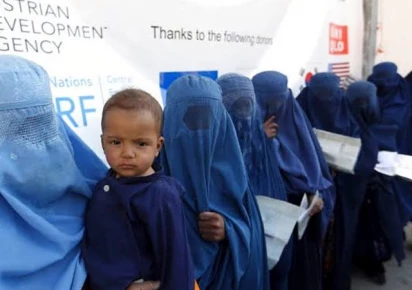
    The United Nations has appealed directly to international donors not to reduce financial support for women’s programmes in Afghanistan, warning that aid cuts will worsen an already severe humanitarian and human rights crisis. Speaking to reporters in Geneva, Susan Ferguson, the UN Women special representative in Afghanistan, revealed that more than 50% of 74 surveyed women’s organisations expect to suspend operations or close within the next year due to extreme funding shortfalls. She highlighted that the UN’s $1.7 billion humanitarian appeal for the country remains only 25% funded, while nearly three-quarters of local women’s groups saw their budgets slashed in 2025. The UN reports that the Taliban has issued over 100 discriminatory decrees restricting education, employment, healthcare access, and freedom of movement. Surveys indicate that over half of Afghan women now leave their homes only once or twice a month, with 70% rating their mental health as bad or very bad. While a coalition of 56 nations, including Britain, France, the US, Japan, and the UAE, issued a joint statement calling on the Taliban to lift these restrictions, key regional neighbours and global powers including Pakistan, Iran, Russia, China, and India did not sign, underlining continued international division over how to engage with Kabul.

  • |

    Typhoon Dolphin hits Japan’s Okinawa as China prepares for landfall

    Typhoon Dolphin has struck Japan’s southern Okinawa prefecture, injuring five people and causing power outages across approximately 14,000 properties. Major Japanese carriers ANA and Japan Airlines cancelled flights to the region as maximum sustained wind speeds reached 162 kph, with gusts hitting 216 kph. China has issued high-level alerts along its eastern coast, halting port operations and suspending 162 ferry routes in Zhejiang province ahead of expected landfall between Sunday and Monday. Airports and maritime hubs across eastern China, including Ningbo Lishe International Airport and Shanghai’s Yangshan port, have suspended operations or cleared vessels from harbors. In Taiwan, authorities reported the cancellation of 63 international flights, whilst Taipei rejected maritime traffic control directives issued by Beijing for the Taiwan Strait as baseless.

  • | | |

    Trump administration plans to revoke visas of fore…

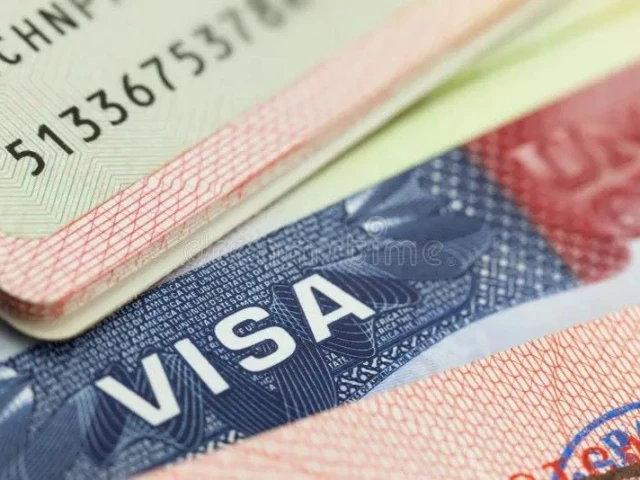
    The Trump administration plans to revoke certain non-immigrant visas held by foreign nationals who have applied for asylum or are currently seeking asylum in the United States. The State Department said Monday that it is working with the Department of Homeland Security to identify people who entered the country as temporary visitors but later filed asylum applications. Officials said the goal is to revoke their visitor visas. The department did not provide an estimate of how many visas could be affected. However, the Associated Press reported that the number could reach 200,000, based on State Department documents and information from two U.S. officials. If carried out at that scale it could become the largest mass visa revocation in U.S. history. The reported policy would affect B1 and B2 visas issued between 2016 and 2026 to people who have sought asylum. B1 visas are generally used for business travel while B2 visas cover tourism and other temporary visits. Visa cancellation would not automatically mean immediate deportation. According to the AP report many people with pending asylum cases could remain in the United States while their cases are processed but they would no longer hold their previous business or tourism visitor status. Deputy Secretary of State Christopher Landau said Monday that the U.S. immigration system has been overwhelmed by what he described as frivolous asylum claims. The State Department previously announced that more than 175,000 visas had been revoked under the Trump administration. The planned visa action is part of President Donald Trump’s broader immigration enforcement campaign which includes visa and green-card cancellations and an expanded deportation effort. The administration says these measures are intended to strengthen national security and enforce U.S. immigration laws. Civil rights and immigrant advocacy groups have criticized the broader crackdown arguing that some government actions threaten due process and free-speech protections. They have also raised concerns about racial profiling and the treatment of minority communities. Trump campaigned in 2024 on promises to reduce illegal immigration. Since returning to office, his administration has also introduced measures affecting legal immigration, including higher costs for some employment-based visa programs. Several immigration policies have faced legal challenges in U.S. courts.

Leave a Reply

Your email address will not be published. Required fields are marked *