iran rejects control
| |

Iran rejects US control over war’s end as Hormuz tensions persist

TEHRAN: Iran has rejected any suggestion that Washington will decide how the conflict ends, while diplomatic efforts over the Strait of Hormuz continue amid a fragile pause in US-Iran military strikes.

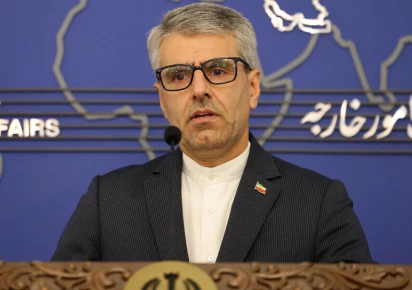
Iranian Foreign Ministry spokesperson Esmaeil Baghaei said some Gulf countries had been involved in the conflict alongside the United States. He did not identify the countries or provide further details.

Baghaei said Tehran would not allow the United States to determine the outcome of the war. He also said Iran had not requested a return to direct negotiations with Washington.

He said discussions with Oman over the management of the Strait of Hormuz had been positive. However, he stressed that the waterway remained closed and there had been no change in the situation.

The Strait of Hormuz remains one of the main flashpoints in the conflict. It is a crucial route for global energy shipments, making any disruption a major concern for oil markets and international trade.

Iranian state media also reported that six vessels were intercepted after attempting to use what Tehran described as an unsafe and unauthorised route through the southern part of the strait.

According to the report, the vessels had switched off their navigation systems. One vessel suffered an accident, while the others returned towards the Gulf following intervention by Iranian forces.

The situation has also affected shipping activity in other regional waterways.

Traffic through the Bab el-Mandeb Strait has slowed following attacks by Yemen’s Houthi movement on Saudi oil facilities along the Red Sea coast. Shipping data showed that only a limited number of commodity vessels crossed the waterway over the weekend.

The number of vessels using the Strait of Hormuz also remained unusually low despite the temporary pause in US and Iranian attacks.

The slowdown has raised concerns about the wider impact of the conflict on global energy supplies.

Oil prices, however, moved lower after Washington and Tehran halted their strikes for the time being. Brent crude fell sharply during Monday trading, while US West Texas Intermediate also declined.

The fall reflected hopes that diplomacy could eventually restore normal shipping through the Strait of Hormuz.

Oman has been playing a role in diplomatic efforts between the two sides. An Omani delegation travelled to Tehran to discuss possible arrangements for future management of the strategic waterway.

Iran and Oman reportedly differ over how the mechanism should operate. Tehran wants a service fee and greater control over the proposed system, while Oman has suggested a regional arrangement without tolls.

Meanwhile, Israeli Prime Minister Benjamin Netanyahu travelled to Washington for talks with US President Donald Trump.

The meeting is expected to cover regional developments and issues of concern to both countries. Netanyahu’s visit comes as the wider conflict continues to affect security across the Middle East.

Trump has also rejected reports that the US military is facing shortages of ammunition.

He said the United States has more munitions than any other country and has sufficient supplies for its military needs.

However, reports have suggested that US military officials have raised concerns about the strain on weapons stocks following nearly two weeks of sustained attacks on Iran.

US officials have reportedly warned that continued large-scale operations could put additional pressure on missile interceptors and other defensive systems deployed across the Middle East.

The United States has maintained that its forces remain capable of carrying out their missions.

The current pause followed 13 nights of US airstrikes against Iran. Tehran had responded to the attacks with strikes on areas in neighbouring Gulf states that host US military facilities.

Iran has now also paused its retaliatory operations. A senior Iranian official said Tehran’s position remains linked to Washington’s actions: if US attacks stop, Iran will also halt its operations.

US Ambassador to the United Nations Mike Waltz said Trump paused the campaign to give diplomacy more time.

Iran, however, remains deeply sceptical about the development.

An Iranian source said Tehran viewed the pause as potentially tactical rather than a genuine shift in Washington’s position.

The uncertainty has left many people in Iran worried about whether the fighting could resume.

Similar Posts

  • | |

    10 electric buses arrive in Azad Kashmir

    Ten electric buses have been delivered to Azad Jammu and Kashmir (AJK) from Islamabad as part of a new public transport initiative for the region. The buses have been provided by Punjab Chief Minister Maryam Nawaz. The initiative follows an announcement made by Pakistan Muslim League-Nawaz (PML-N) leader Nawaz Sharif during a public gathering in Muzaffarabad. Nawaz Sharif had announced that electric buses would be provided to AJK to improve public transport facilities in the region. The arrival of the first 10 buses marks progress towards implementing that announcement. The new buses are expected to provide residents with a modern transport option. They are also aimed at improving the quality of public transportation and making daily travel more convenient for citizens. The electric buses were transported from Islamabad to Azad Kashmir. Their arrival is likely to support efforts to upgrade the region’s existing public transport system. The initiative is also significant because electric buses can help reduce dependence on conventional fuel-powered public transport. Their use can contribute to lower emissions and cleaner urban environments. The provision of the buses reflects cooperation between Punjab and the AJK administration in the transport sector. The initiative is expected to benefit commuters, particularly those who rely on public transport for work, education and other daily activities. The announcement was made during Nawaz Sharif’s address in Muzaffarabad, where he spoke about development and public welfare initiatives for Azad Kashmir. The arrival of the buses is expected to be followed by further steps to put them into service for the public. Authorities will determine their routes and operational arrangements. The initiative is being viewed as part of broader efforts to introduce modern and environmentally friendly transportation facilities in AJK.

  • | | |

    Ishaq Dar offers special prayers for Pakistan in M…

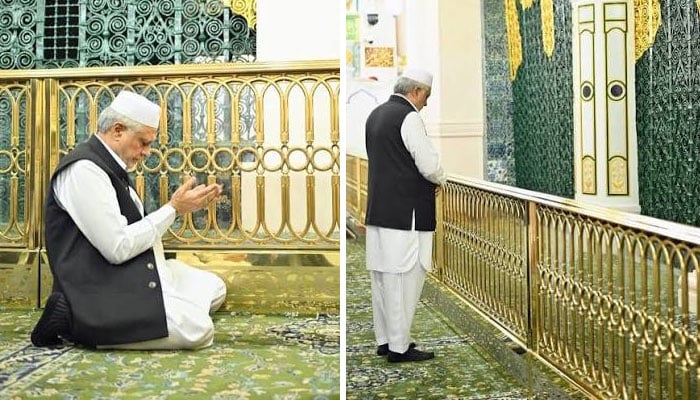
    Medina: Pakistan’s Deputy Prime Minister and Foreign Minister Ishaq Dar visited the Prophet’s Mosque (Masjid an-Nabawi ﷺ) in Madinah, where he offered prayers and prayed for Pakistan’s peace, prosperity and continued progress during his official visit to Saudi Arabia. According to Pakistan’s Foreign Office, the deputy prime minister paid his respects at the Roza-e-Rasool ﷺ and offered Salam. He also performed voluntary (Nafl) prayers at the Prophet’s Mosque, one of Islam’s holiest sites, where millions of Muslims from around the world gather every year to worship and seek spiritual blessings. The Foreign Office said Dar made special prayers for Pakistan’s economic development, national stability and the well-being of its people. He also prayed for unity, peace and prosperity across the Muslim world, expressing hope for harmony and progress among Islamic nations. As part of his visit to Madinah, Dar also travelled to Jabal Uhud, a site of immense historical and religious significance in Islamic history. He visited the resting place of Hazrat Ameer Hamza (RA), the beloved uncle of Prophet Muhammad ﷺ and one of the most revered martyrs of the Battle of Uhud, where he offered prayers and paid his respects. The visit reflects the spiritual aspect of Dar’s Saudi Arabia trip while highlighting Pakistan’s longstanding religious and diplomatic ties with the Kingdom. Senior Pakistani officials traditionally visit Islam’s holy sites during official engagements in Saudi Arabia, where they offer prayers for the country and the wider Muslim Ummah. The Foreign Office noted that Dar’s prayers focused on Pakistan’s future, asking for sustained peace, economic growth and national prosperity. His visit to the Prophet’s Mosque and other sacred sites also underscored the importance of faith and spiritual reflection alongside official diplomatic engagements. The visit comes at a time when Pakistan continues to seek economic stability and stronger cooperation with friendly countries, while reaffirming its commitment to unity and the welfare of the Muslim Ummah.

  • | | |

    PARCO, Cnergyico lead $1bn refinery exports

    Pakistan’s oil refining sector has achieved a major milestone. The country’s five major refineries exported petroleum products worth around $1.046 billion during the fiscal year 2025-26. This is the first time that the refinery sector has crossed the $1 billion export mark. The development has also strengthened the sector’s role as a source of foreign exchange for Pakistan. The achievement comes as the country continues to face pressure from a large trade deficit. Pakistan’s trade deficit is estimated at around $40 billion, increasing the importance of exports and import savings. The five major refineries made a significant contribution to the overall export earnings. Pakistan Arab Refinery Company (PARCO) recorded exports of around $277 million. Cnergyico Pakistan Limited exported petroleum products worth approximately $258 million. National Refinery Limited (NRL) recorded exports of around $238 million. Pakistan Refinery Limited (PRL) exported products worth approximately $200 million. Meanwhile, Attock Refinery Limited (ARL) exported petroleum products worth nearly $73 million. PARCO and Cnergyico remained the biggest contributors. Their combined exports reached approximately $535 million. This accounts for more than half of the total exports recorded by the five refineries. The development is particularly significant because the refining sector has traditionally been viewed mainly as a means of reducing Pakistan’s dependence on imported petroleum products. The latest figures show that the industry is increasingly contributing to both sides of the equation. It is helping reduce the import burden while also generating foreign exchange through exports. Cnergyico has also entered the global marine fuel market. The move could provide the company with new export opportunities and help expand Pakistan’s presence in the international fuel market. Industry modernization is expected to further improve the sector’s performance. Upgraded refinery facilities can increase production efficiency and enable companies to produce products that meet international market requirements. Further investment in refinery upgrades could therefore lead to higher exports in the coming years. It could also increase savings on petroleum imports. The latest performance highlights the growing importance of Pakistan’s refining industry. With continued modernization, better efficiency and access to international markets, the sector could become an increasingly important source of foreign exchange for the country. The development also comes at a critical time for Pakistan’s economy. Higher exports and lower import dependence are essential for reducing pressure on the country’s external account.

  • | |

    Sachal Afzal opens up about marriage concerns

    Rising Pakistani model and actor Sachal Afzal has candidly shared his thoughts regarding marriage, opening up about the personal hesitations, societal pressures, and expectations that make taking the major life leap a serious consideration for him. ​Speaking during a recent interview appearance, the Bakhtawar and Zabt actor addressed growing fan curiosity about his single status. Afzal, who successfully transitioned from award-winning fashion modeling to critically acclaimed television acting, admitted that while he values the institution of marriage, he holds significant concerns about finding genuine emotional compatibility amidst the fast-paced nature of modern life and the entertainment industry. ​Afzal explained that one of his primary concerns is ensuring that both partners share a deep, mutual understanding and commitment before taking the plunge. He noted that contemporary relationships often face immense strain due to unrealistic expectations, lack of communication, and societal rush to settle down based solely on age rather than readiness. ​Highlighting his perspective on entering a lifelong partnership, the actor stated: ​”Marriage is a sacred responsibility that requires absolute emotional maturity, compromise, and mutual respect. My biggest concern isn’t just getting married—it is ensuring that when I do, both my partner and I are fully prepared to navigate life’s challenges together. You cannot rush something meant to last a lifetime just to satisfy societal timelines.” ​The actor further highlighted how demanding a career in showbiz can be, explaining that balancing unpredictable shooting schedules and public life requires a partner who is patient, understanding, and secure. He emphasized that he prefers to focus on personal self-improvement and establishing a solid career foundation rather than rushing into a commitment out of fear or external pressure. ​Afzal’s honest take on marriage struck a strong chord with his growing fanbase and young viewers across social media. Netizens commended the actor for advocating a mature, thoughtful approach toward matrimony rather than treating it as a superficial checkbox. ​As Afzal continues to earn praise for his versatile performances across popular television dramas, his grounded perspective on relationships reinforces his image as a reflective, practical artist focused on long-term personal and professional growth.

  • | | | |

    Israeli raids, settlement plans deepen West Bank t…

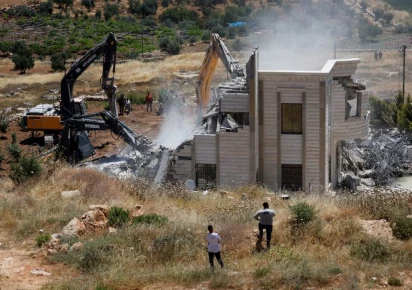
    RAMALLAH: Tensions across the occupied West Bank intensified on Monday as Israeli forces reportedly destroyed water pipelines, detained Palestinians and ordered families to leave their homes ahead of a planned demolition. While a new settlement plan near Jerusalem raised fresh concerns over the expansion of Israeli settlements. The latest developments have added to growing pressure on Palestinian communities already facing restrictions on movement, damage to agricultural land and disruptions to basic services. Palestinian human rights activist Aref Daraghmeh said Israeli forces destroyed water pipelines in the Atouf and Ras al-Ahmar areas of Tubas governorate. The areas, located in the northern Jordan Valley, have experienced repeated military operations in recent months. According to Daraghmeh, agricultural land has been cleared, water networks damaged and artesian wells filled in, causing significant losses for farmers who depend on the land and water supplies for their livelihoods. The destruction of water infrastructure has particular significance in the Jordan Valley, where Palestinian farming communities rely heavily on limited water resources. Brothers detained during raid In another operation in the northern Jordan Valley, Israeli forces detained two Palestinian brothers in the Ein al-Hilweh area, according to local sources cited by Anadolu. Meanwhile, Israeli troops raided the village of Tell, southwest of Nablus, and ordered residents to leave several homes ahead of the planned demolition of a house belonging to Palestinian Farouq Ramadan. Ramadan was killed on July 24 during an attack in the village, according to Palestinian sources. They said he had disarmed and killed one of the attackers before being shot dead. Three other members of his family were also killed and four Palestinians were injured during the incident, the sources said. Near Ramallah, agricultural land east of Jaljaliya village was also set on fire, Palestinian official news agency Wafa reported. Palestinian civil defence crews later brought the blaze under control. Village council head Osama Nazmi said an Israeli outpost had been established in the area about a year ago and that Palestinian homes belonging to residents from nearby Al-Mazraa Al-Sharqiya had subsequently been seized. New settlement plan raises alarm At the same time, Palestinian officials said Israel had advanced plans for a new settlement containing approximately 650 housing units south of Jerusalem. The Palestinian Jerusalem Governorate said Israel’s District Planning and Building Committee had deposited the plan for the proposed “Nofei Rachel” settlement. The project would cover approximately 27 dunams, or 6.7 acres, near Palestinian homes, according to the governorate. Palestinian authorities warned that the consequences would extend beyond the construction of the housing units, arguing that the development could affect Palestinian movement, urban growth and the ability of local communities to expand. They described the plan as part of a broader Israeli policy of expanding settlements and restricting Palestinian development. Israeli rights organisation Ir Amim separately said Israel had advanced three major settlement projects involving more than 3,400 housing units in East Jerusalem in recent weeks. The developments have renewed international concerns about settlement expansion. The United Nations and most countries regard Israeli settlements established in territory occupied since 1967 as illegal under international law. Critics say continued settlement construction threatens the possibility of establishing a viable Palestinian state alongside Israel. West Bank caught in wider conflict The latest events come as the Israeli-Palestinian conflict continues to reverberate across the region. According to figures cited by Palestinian authorities, violence in the West Bank has intensified alongside the wider war that began after the October 2023 Hamas attack on Israel. The situation has also drawn attention to the issue of Palestinian remains held by Israel. Report: Israel holds 1,700 Palestinian bodies Israel is holding the remains of around 1,700 Palestinians for possible use in future exchanges, Israeli newspaper Haaretz reported, citing two unnamed sources familiar with recent discussions within Israel’s security establishment. According to the report, Shin Bet chief David Zini supports retaining the bodies in case Israeli citizens are captured or disappear in the future. The Israeli military is also reportedly supportive of the position. Haaretz reported that most of the remains are believed to belong to Palestinians from Gaza who participated in the October 7, 2023 attack on Israel or subsequent fighting. However, the newspaper also reported that some of the bodies belong to Palestinians who were not involved in combat. The issue has raised legal questions inside Israel. Legal experts cited by Haaretz questioned whether authorities have the power to retain the remains of Palestinians who have not been proven to have taken part in fighting. The Palestinian National Campaign for the Retrieval of Martyrs’ Bodies and Disclosure of the Fate of the Missing said in October 2025 that Israel was holding around 1,500 bodies of Palestinians from Gaza at the Sde Teiman military facility in southern Israel. A crisis extending beyond borders The developments in the West Bank are unfolding against the backdrop of the devastating Gaza conflict. Palestinian health authorities say tens of thousands of Palestinians have been killed and injured since October 2023, while much of Gaza’s infrastructure has been destroyed or severely damaged. The reported destruction of water pipelines in the West Bank, the proposed settlement expansion and the continued disputes over Palestinian remains highlight how the conflict affects not only major political centres but also ordinary families, farmers and communities. For Palestinians living in areas such as Tubas, Nablus and the outskirts of Jerusalem, the immediate concerns are often deeply personal: access to water, the safety of their homes, the ability to farm their land and the uncertainty of what another military raid may bring. As settlement plans move forward and military operations continue, hopes for a reduction in tensions remain overshadowed by developments that are reshaping the landscape of the occupied West Bank.

  • |

    Historic post-Brexit deal eliminates Gibraltar-Spain border fence

    In a landmark shift ending decades of physical and bureaucratic division, Spain and Gibraltar have celebrated the dismantling of the land border fence following a treaty signed in Brussels. The post-Brexit agreement, taking effect at midnight, brings an end to land frontier controls and establishes Gibraltar as a de facto participant in the EU’s Schengen free-movement area. The treaty resolves over four years of complex negotiations between the United Kingdom, Spain, Gibraltar, and the European Union. Beyond removing land border gates that have stood since 1908, the accord places responsibility for Schengen passport checks at Gibraltar’s port and airport with Spanish officials, ensuring fluid transit for tourists and the roughly 15,000 Spanish cross-border workers who sustain the territory’s economy. Visiting the frontier municipality of La Línea de la Concepción to watch the physical removal of the barrier, Spanish Prime Minister Pedro Sánchez stated that the deal marks an end to “the last wall in continental Europe”, laying the groundwork for shared regional prosperity. Gibraltar’s Chief Minister, Fabian Picardo, emphasised that the historic arrangement delivers economic certainty and seamless movement while preserving the territory’s constitutional protections and British sovereignty intact.

Leave a Reply

Your email address will not be published. Required fields are marked *