lil wayne reveals
| |

Lil Wayne reveals he recorded music over the phone…

Lil Wayne has opened up about one of the most challenging periods of his life, revealing that he continued making music even while serving an eight-month sentence at New York City’s Rikers Island in 2010. During a recent appearance on the Keep Secrets podcast, the Grammy-winning rapper shared how his passion for music never faded, even behind bars.

The 43-year-old artist explained that he found a creative way to keep recording despite the restrictions of prison life. According to Lil Wayne, he would use the prison phone system to record verses, calling producers and collaborators who would capture his vocals on the other end of the line. Although the audio quality was far from perfect, he said it allowed him to continue writing and creating music during one of the most difficult chapters of his career.

Lil Wayne, whose real name is Dwayne Michael Carter Jr., was sentenced to eight months at Rikers Island after pleading guilty to attempted criminal possession of a weapon stemming from a 2007 incident. He entered the correctional facility in March 2010 and was released in November of the same year after serving approximately eight months.

Reflecting on that time, the rapper said music became a source of motivation and helped him stay mentally focused. Rather than letting prison halt his creativity, he used every opportunity he could find to keep working on new material. His determination to remain productive, even under difficult circumstances, demonstrated the dedication that has defined much of his career.

Lil Wayne has long been regarded as one of hip-hop’s most influential artists, with a catalog that includes hit albums such as Tha Carter III, Tha Carter IV, and Tha Carter V. Throughout his career, he has earned multiple Grammy Awards and inspired a new generation of rappers with his distinctive style and lyrical creativity.

During the podcast conversation, Wayne also reflected on the importance of resilience. He suggested that difficult experiences can shape an artist’s perspective and fuel creativity rather than stop it. His willingness to adapt, even while incarcerated, highlights the relentless work ethic that has kept him relevant in the music industry for decades.

Fans have responded with admiration to the revelation, praising Wayne’s determination to continue making music despite the limitations he faced. Many said the story offers a new appreciation for the effort that went into his work during that period.

More than 15 years after his release, Lil Wayne’s latest comments provide a rare behind-the-scenes look at how he stayed connected to his craft while incarcerated. His story serves as a reminder that, for some artists, creativity can endure even in the most challenging environments, proving that passion often finds a way to overcome obstacles.

Similar Posts

  • | |

    Petition urges President Zardari to approve judici…

      A petition submitted to the Islamabad High Court (IHC) has challenged President Asif Ali Zardari’s delay in approving the appointment of judges to several high courts across Pakistan. The petitioner argues that the president’s failure to act on the recommendations has created a serious constitutional issue and worsened the shortage of judges, affecting the country’s justice system. The petition was filed by Advocate Luqman Zafar Chaudhry through his legal counsel, Zahid Asif Chaudhry. It requests the court to issue a writ of mandamus directing the president, through his secretary, to immediately approve the summary sent by the prime minister. The summary contains the recommendations of the Judicial Commission of Pakistan (JCP) for appointments to the Islamabad, Lahore, Sindh, and Balochistan High Courts, along with the confirmation of several additional judges. According to the petition, the Judicial Commission, chaired by the Chief Justice of Pakistan, completed the constitutional process by finalizing its recommendations on July 20 and 21. These recommendations were subsequently forwarded to the president under Article 48 of the Constitution through the prime minister. However, the president has neither approved the summary nor returned it for reconsideration, despite the constitutional process requiring timely action. The petitioner maintains that Article 48 allows the president to return the prime minister’s advice only once within 15 days for reconsideration. Beyond that, the Constitution does not permit indefinite delay or silence. Therefore, the petition argues that the president is constitutionally obligated to approve the recommendations once the prescribed period has passed. It further states that the delay disrupted the oath-taking ceremony for the recommended judges, which had been scheduled for July 27. As a result, the ceremony was postponed indefinitely, leaving several judicial positions vacant and increasing the burden on existing judges. The petition also argues that the president’s inaction effectively transforms a ceremonial constitutional responsibility into an unauthorized veto power, something the Constitution does not allow. It claims this undermines judicial independence protected under Articles 2A and 175(3) of the Constitution. Referring to previous Supreme Court judgments, the petitioner emphasizes that judicial appointments must be completed through a transparent, collaborative, and time-bound constitutional process without executive interference. The petition also compares the president’s role under Article 48 with Article 75, which governs presidential assent to legislation and similarly requires action within a specified timeframe. According to the petitioner, the continued delay has created an acute shortage of judges, slowing the disposal of cases and affecting citizens’ constitutional rights to a fair trial and access to justice under Articles 9, 10A, and 25. The petition also raises concerns that the delay may have been influenced by political considerations rather than constitutional requirements. Citing media reports and public statements, it requests the court to determine when the Presidency received the summary, seek an explanation for the delay, declare the continued inaction unlawful, and prevent any action inconsistent with the Judicial Commission’s recommendations until the case is decided. The controversy has emerged amid a wider constitutional debate regarding the president’s authority in judicial appointments. While earlier Supreme Court decisions have held that the president cannot reject recommendations made by the Judicial Commission, Article 175A(8) does not clearly specify how quickly the president must act. Legal experts believe the issue may ultimately require judicial interpretation to clarify the constitutional limits of the president’s role in the appointment process.

  • | |

    Imran Khan family meetings tied to SOP compliance

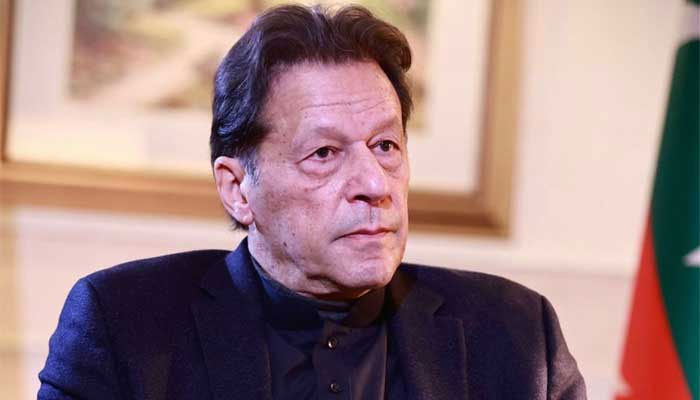
      ISLAMABAD: Family meetings with Pakistan Tehreek-e-Insaf (PTI) founder and former prime minister Imran Khan, who remains in jail, will continue under an understanding that his relatives strictly follow the agreed standard operating procedures (SOPs), according to informed sources. The key condition requires family members to avoid holding press conferences or issuing political statements after meeting Imran Khan. Authorities have reportedly linked the continuation of family visits to compliance with these conditions. Imran Khan’s sister, Noreen Khanum, was allowed to meet him again on Tuesday, marking her second meeting with the former premier within a few days. Sources described the development as a positive sign for Imran Khan and his family after a prolonged period of restrictions on family access. According to sources, authorities may continue easing restrictions on family meetings as long as the agreed SOPs remain in place and relatives comply with them. The understanding also requires family members who meet Imran Khan to refrain from making political comments or addressing the media after leaving the prison. The arrangement has also surfaced during proceedings before the Supreme Court, where assurances regarding compliance with the conditions have reportedly been given. The issue had remained contentious for an extended period because some members of Imran Khan’s family previously spoke to the media after meeting him. Statements attributed to the PTI founder also appeared on his social media accounts following some of these meetings. Sources said several of those statements contained strong criticism of the establishment, increasing tensions over whether family meetings should continue without additional restrictions. Authorities subsequently placed greater emphasis on ensuring that prison visits did not become a channel for political messaging. Under the current understanding, the authorities are expected to maintain the relaxed approach if the family continues to follow the agreed rules. In practical terms, relatives will be expected to avoid post-meeting press conferences, while politically controversial statements attributed to Imran Khan will also need to remain off the public platform following family visits. The development could provide some relief to Imran Khan and his family by allowing more regular contact while reducing the possibility of family meetings becoming a source of renewed political confrontation. It may also establish a framework under which the former prime minister can maintain direct contact with his relatives without triggering a return to the earlier restrictions. However, sources stressed that the continuation of the current arrangement depends largely on compliance with the agreed SOPs. Any violation could potentially lead to the authorities reconsidering the relaxed conditions surrounding family meetings.

  • | |

    Pakistan standing tall: realising Jinnah’s visio…

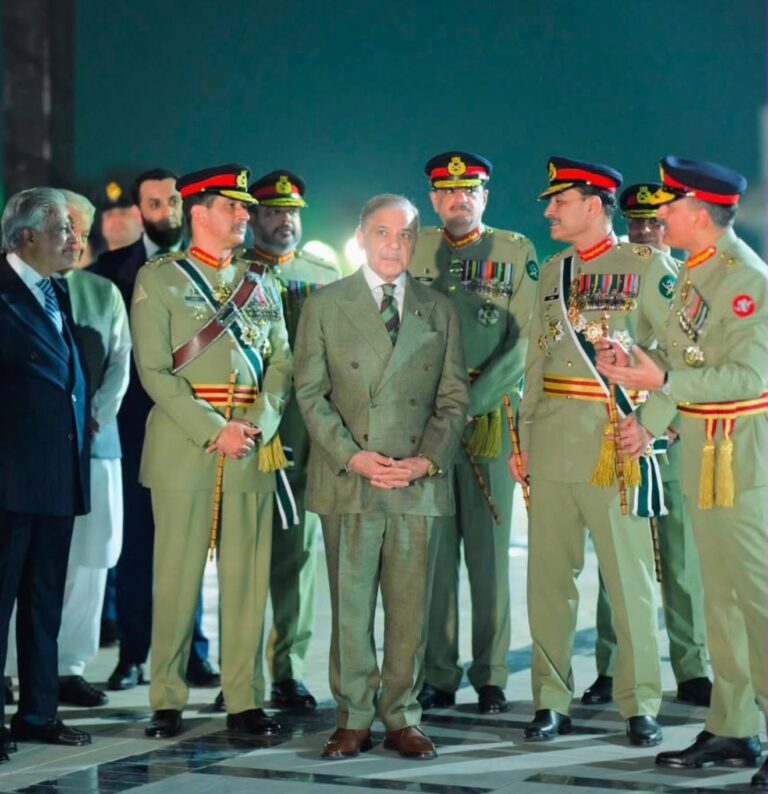
    Shehbaz Sharif and Asim Munir: Advancing the Vision of Quaid-e-Azam As Pakistan celebrates its 79th Independence Day, there is a growing sense that the country is witnessing a moment that would have deeply pleased its founding father, Quaid-e-Azam Muhammad Ali Jinnah. For decades, Pakistanis have carried Jinnah’s vision of a strong, sovereign and respected Pakistan in their hearts. Today, as Pakistan’s diplomatic and strategic importance continues to grow, that vision appears increasingly visible on the international stage. Prime Minister Muhammad Shehbaz Sharif and Field Marshal Syed Asim Munir are working together to translate that vision into reality. Their close coordination has provided Pakistan with a sense of direction, unity and confidence at a time when the world itself is undergoing profound geopolitical change. The Pakistan of today is increasingly being recognised as a country whose voice matters. Jinnah envisaged a Pakistan that would not merely exist on the world map, but would stand with dignity, sovereignty and confidence among the nations of the world. His vision was of a country capable of determining its own destiny and making a meaningful contribution to international affairs. There is a powerful resonance between that vision and the Pakistan we are witnessing today. Jinnah once spoke of a future in which the world’s decisions would be influenced by Pakistan. For many years, that aspiration seemed distant. But recent developments suggest that Pakistan is moving closer to that position. From facilitating dialogue between major powers to strengthening strategic partnerships with Türkiye, Saudi Arabia and China, Pakistan is demonstrating that it can engage with countries across different geopolitical blocs while protecting its own national interests. The country’s ability to host US-Iran talks is particularly significant. In an increasingly polarised world, being trusted to provide a platform for dialogue is itself an indication of diplomatic relevance. Pakistan’s relationship with China remains a cornerstone of its foreign policy, while ties with Türkiye and Saudi Arabia continue to deepen. At the same time, engagement with the United States has entered a phase in which Washington is once again recognising Pakistan’s strategic importance. The positive remarks by US President Donald Trump about Prime Minister Shehbaz Sharif and Field Marshal Asim Munir have also attracted international attention. Perhaps most importantly, Pakistan is projecting itself with greater confidence. The scenes in Islamabad surrounding the inauguration of Yadgar-e-Fateh, commemorating the sacrifices and achievements associated with Operation Bunyan-un-Marsoos, captured this changing mood. Political and military leaders standing together alongside the families of martyrs and veterans conveyed a powerful message that Pakistan’s strength lies in unity. As an overseas Pakistani who has lived in the West for more than two decades, this transformation is particularly striking. I have witnessed different phases of Pakistan’s image abroad. There were years when Pakistan was frequently discussed through the prism of instability, terrorism and political uncertainty. Today, the conversation is different. Pakistan is increasingly being discussed in terms of its strategic importance, diplomatic role, defence capabilities, regional influence and economic potential. This should make every Pakistani proud—but it should also make us more responsible. International recognition alone cannot build a prosperous Pakistan. The next challenge is to convert diplomatic and strategic gains into economic prosperity, stronger institutions, better education, employment opportunities and an improved quality of life for ordinary Pakistanis. That is where Jinnah’s vision must ultimately lead. At 79, Pakistan has every reason to celebrate. The country is standing taller on the world stage, and the partnership between Prime Minister Shehbaz Sharif and Field Marshal Asim Munir has helped project a message of unity and national purpose. But this is not the end of the journey. It is the beginning of a new chapter. Jinnah gave Pakistan a dream. The responsibility of this generation is to turn that dream into a lasting reality. Pakistan Zindabad.

  • |

    Houthi blockade threatens Saudi oil exports to Asia

    Saudi Arabia’s oil exports to Asia are facing fresh uncertainty after Yemen’s Houthi movement announced a blockade targeting Saudi ports in the Red Sea, raising fears of major disruptions to global energy supplies and higher oil prices. The impact became evident after two oil tankers carrying nearly 2.8 million barrels of Saudi crude reversed course in the Red Sea instead of continuing through the Bab al-Mandeb Strait. The vessels had departed from the Saudi port of Yanbu and were originally bound for Asian markets. The latest development has created concerns over the security of Saudi Arabia’s alternative export route. For months, the kingdom relied heavily on its Red Sea pipeline network and Yanbu terminal to bypass disruptions in the Strait of Hormuz, where regional tensions have significantly reduced shipping traffic. With Bab al-Mandeb now under threat, Saudi Arabia’s backup route is also facing serious challenges. Energy analysts warn that this could restrict oil exports, tighten global supplies and increase pressure on international crude prices. Asian countries are expected to suffer the greatest impact because they depend heavily on Middle Eastern oil. Around six million barrels of crude oil pass through Bab al-Mandeb every day on their way to Asian markets, with Saudi Arabia accounting for nearly two-thirds of that volume. India is considered the most vulnerable, as more than half of its crude oil imports travel through the Red Sea route. Pakistan is also among the affected countries, with around 36 percent of its crude imports passing through Bab al-Mandeb. Other major importers exposed to disruptions include the Philippines, South Korea, Japan, Taiwan and China. To avoid conflict zones, shipping companies are evaluating a much longer route through Egypt’s Suez Canal, the Mediterranean Sea and around Africa’s Cape of Good Hope before heading towards Asia. Although this route bypasses both the Strait of Hormuz and Bab al-Mandeb, it comes with significant drawbacks. The journey could take more than twice as long, extending delivery times by several weeks. Longer voyages would also increase fuel consumption, insurance costs and freight charges, making crude oil more expensive for buyers. Logistical challenges further complicate the situation. Most Saudi crude from Yanbu is transported on Very Large Crude Carriers (VLCCs), which are too large to pass through the Suez Canal when fully loaded. Operators would need to either transfer part of the cargo through Egypt’s SUMED pipeline or use smaller tankers, both of which would add time and operational costs. Energy experts believe these limitations could reduce Saudi Arabia’s export capacity even if alternative shipping routes remain available. Some refiners in Asia have already started preparing for longer supply routes, while shipping companies are adjusting vessel schedules in anticipation of prolonged disruptions. Analysts also warn that if instability continues in both the Strait of Hormuz and Bab al-Mandeb, the consequences could extend beyond shipping. Higher transportation costs, tighter crude supplies and increased demand for oil tankers could push global oil prices above the $100-per-barrel mark. Alternative supplies from countries such as Russia, the United States and Venezuela may help ease shortages, but those options are limited by production constraints, longer shipping distances and higher transportation expenses.

  • | |

    Scarlett Johansson reflects on how Hollywood red c…

    Scarlett Johansson is opening up about the evolution of Hollywood’s red carpet culture, revealing how the expectations placed on actors have shifted dramatically since she began her career. The Oscar-nominated actress says today’s approach to fashion and public appearances is far more polished and strategic than it was when she first entered the entertainment industry. Speaking in a recent interview, Johansson reflected on the early years of her career, recalling a time when red carpet events felt more relaxed and less focused on creating viral fashion moments. According to the actress, celebrities once had greater freedom to express themselves without the intense scrutiny that now comes with every public appearance. (People⁠) Johansson explained that, in the past, actors often selected outfits based on personal preference rather than carefully planned branding strategies. Today, however, red carpet appearances have become an important part of celebrity image-building, with stylists, fashion houses, and social media all playing significant roles in shaping a star’s public identity. The Black Widow star acknowledged that fashion remains an exciting part of the entertainment industry, but she believes the pressure surrounding high-profile events has increased considerably. Every outfit is now analyzed instantly across social media platforms, where fans and fashion critics closely examine every detail. Looking back, Johansson said she appreciates the more spontaneous atmosphere that existed when she was starting out. She noted that celebrities were able to experiment with different styles without worrying that every fashion choice would become the subject of widespread online discussion. The actress also reflected on how digital media has transformed celebrity culture. Before the rise of social media, red carpet moments were largely limited to television broadcasts and magazine coverage. Today, images circulate around the world within seconds, making fashion an even bigger part of an actor’s public presence. (Vanity Fair⁠ and People⁠) Despite the changes, Johansson said she still enjoys attending premieres and industry events. She praised the creativity of designers and stylists while emphasizing that confidence and authenticity remain more important than following every trend. For her, the best fashion moments are those that genuinely reflect a person’s personality rather than simply chasing headlines. Johansson’s comments have resonated with many fans, who praised her honest perspective on the realities of modern Hollywood. Some agreed that celebrity fashion has become increasingly commercialized, while others argued that social media has also given stars more opportunities to connect directly with audiences and showcase their individual style. As one of Hollywood’s most recognizable actresses, Johansson has attended countless premieres, award shows, and international film festivals throughout her career. Her reflections offer a rare behind-the-scenes look at how celebrity culture has evolved over the past two decades. While glamorous red carpets continue to be a defining part of the entertainment industry, Scarlett Johansson believes the experience has fundamentally changed. Her candid remarks highlight the growing influence of fashion, branding, and social media, while reminding audiences that authenticity remains timeless in an industry constantly adapting to new expectations.

  • | | |

    Pakistan stock exchange slides over 1,100 points 

      KARACHI: The Pakistan Stock Exchange (PSX) experienced a volatile trading session on Tuesday as strong gains recorded in early trading quickly disappeared, with the benchmark KSE-100 Index ending the day more than 1,100 points lower. Widespread profit-taking in major sectors, combined with cautious investor sentiment influenced by global market uncertainty, weighed heavily on the market. The benchmark KSE-100 Index initially climbed to an intraday high of 178,768.83 points, reflecting optimism among investors during the opening hours. However, the momentum proved short-lived as selling pressure gradually intensified across the market. By the close of trading, the index had fallen to 177,083.22 points, registering a decline of 1,116.80 points, or 0.63%, after touching an intraday low of 177,043.10 points. Market participants attributed the sharp reversal to extensive profit-booking in several heavyweight sectors. Commercial banks, oil and gas exploration companies, cement manufacturers, investment firms, and fertiliser stocks all came under significant selling pressure, dragging the benchmark index into negative territory despite its promising start. Investor confidence also remained subdued due to mixed developments in international financial markets. Asian stock markets traded without a clear direction as investors balanced encouraging corporate earnings from the United States against continuing geopolitical tensions. At the same time, international oil prices climbed by more than two percent as uncertainty surrounding diplomatic efforts to ease tensions between the United States and Iran persisted. Concerns over potential disruptions to global oil supplies through major shipping routes also contributed to market caution. Commenting on the day’s performance, Ahmed Sheraz, an equity trader at KTrade Securities, said the KSE-100 Index remained under pressure throughout the session because the market lacked fresh positive catalysts capable of sustaining its recent upward momentum. According to him, the absence of encouraging economic or corporate developments prompted investors to lock in profits after recent gains. Sheraz noted that selling activity was widespread across key sectors, particularly banking, oil and gas, cement, investment companies, and fertilisers. He added that despite Brent crude oil trading between $84 and $86 per barrel, investors largely preferred to stay on the sidelines while waiting for stronger economic indicators and corporate earnings announcements before making new investment decisions. Looking ahead, Sheraz believes the stock market is likely to remain highly sensitive to news flow. Upcoming corporate earnings reports, macroeconomic indicators, and foreign investment activity are expected to play a decisive role in shaping market sentiment over the coming weeks. He also identified the 176,500 to 177,000-point range as an important technical support level for the benchmark index, suggesting that maintaining this level could help stabilise the market. Trading activity slowed compared with the previous session. Total market volume declined to 711.2 million shares, down from 785.3 million shares recorded on Monday. Meanwhile, the total value of traded shares stood at Rs25.8 billion. A total of 495 companiesparticipated in trading during the session. Among them, 161 stocks closed higher, 295 stocks ended in negative territory, while 39 stocks remained unchanged. Pakistan International Bulk Terminal emerged as the session’s most actively traded stock, with approximately 89.8 million shares changing hands. The company’s share price declined by Rs0.34, closing the session at Rs16.74.

Leave a Reply

Your email address will not be published. Required fields are marked *