maryam aurangzeb says
| | |

Maryam Aurangzeb says PML-N Can address Azad Kashm…

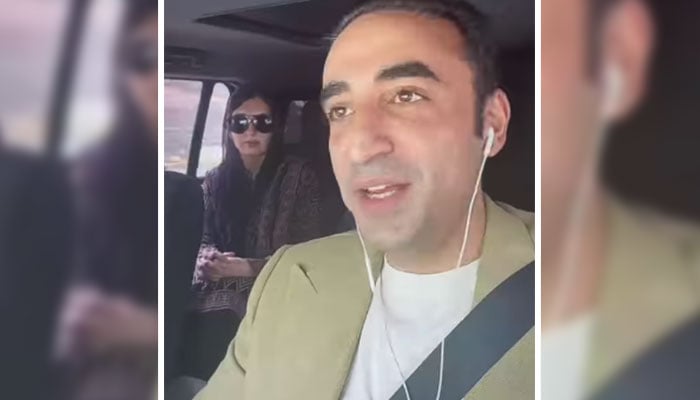
Punjab Senior Minister Maryam Aurangzeb has said that Pakistan Muslim League-Nawaz (PML-N) has the ability to address the long-standing challenges and deprivations faced by the people of Azad Kashmir. She urged party workers to support PML-N candidates and work for their success.

Addressing a rally in Rawalpindi, Maryam Aurangzeb highlighted what she described as the development achievements of PML-N governments and said the party has always focused on infrastructure, public welfare, and improving living standards.

She criticized political opponents and said that development should be judged by practical projects rather than statements. Referring to major infrastructure initiatives, she challenged critics to deliver projects similar to the motorways built during Nawaz Sharif’s tenure and the metro services introduced during Shahbaz Sharif’s government.

Maryam Aurangzeb said that development work has not been limited to Lahore, claiming that roads and infrastructure projects have been completed across Punjab. She added that the government’s focus remains on expanding facilities and improving public services.

The Punjab minister also mentioned development initiatives associated with Chief Minister Maryam Nawaz, including public transport projects in Azad Kashmir. She said that green buses are now operating on the streets of Muzaffarabad, providing improved transportation facilities for residents.

She further claimed that within 18 months, the Punjab government provided housing opportunities to around 200,000 people under the “Apni Chhat Apna Ghar” initiative. According to her, educational support programs have also been expanded, including the distribution of laptops to 100,000 students and Honhaar scholarships for 50,000 students.

Maryam Aurangzeb emphasized that PML-N’s approach is based on development, education, and public welfare. She called on party supporters to actively participate in political activities and strengthen the party’s position.

Her remarks came during ongoing political activities, where parties are presenting their development plans and seeking public support. The issue of development and addressing regional challenges remains a key focus in political discussions across Pakistan.

PML-N leaders have repeatedly highlighted infrastructure and welfare projects as central parts of their political agenda, while opponents continue to debate the effectiveness and impact of these initiatives.

Similar Posts

  • | | | |

    Trump warns Iran it has a ‘last chance’ to rea…

    US President Donald Trump has warned that Iran has a final opportunity to reach an agreement with the United States, saying he postponed planned military action to allow diplomacy one last chance. Speaking to reporters at the White House, Trump said several Gulf countries had urged Washington to delay military strikes against Iran in the hope that negotiations could produce a diplomatic breakthrough. According to the US president, those requests led him to postpone military action once again. Trump stated that multiple regional governments had contacted his administration, asking that Iran be given another opportunity to negotiate. He described the current moment as Iran’s “last chance” to avoid further escalation and urged Tehran to seize the opportunity for a peaceful resolution. When asked why this latest diplomatic effort differed from previous attempts, Trump replied that he wanted to give Iran one final opportunity before what he described as “complete destruction.” However, he did not provide additional details about the conditions that could trigger military action or a specific timeline. Despite his warning, Trump expressed optimism that negotiations could move forward quickly. He said the first phase of a potential agreement would involve reopening the Strait of Hormuz to unrestricted maritime traffic by Tuesday, while the second phase would focus on ending Iran’s nuclear program. The US president acknowledged that dismantling Iran’s nuclear program would not happen immediately and would require additional time to implement. He added that both the reopening of the Strait of Hormuz and measures related to Iran’s nuclear activities were included in a memorandum of understanding reportedly reached between the two sides in June. Trump’s remarks come amid renewed diplomatic efforts surrounding the long-running dispute over Iran’s nuclear program and regional security. Tensions between Washington and Tehran have remained high despite repeated attempts to revive negotiations. Earlier in the day, Trump also announced that talks with Iran were expected to take place. However, Iran has maintained that its current discussions are being conducted through Oman rather than in direct negotiations with the United States. The differing public statements highlight the continuing uncertainty surrounding the diplomatic process. No immediate response from Iranian officials was reported following Trump’s latest comments. It also remains unclear whether a formal agreement is close or whether the two sides have narrowed their differences on key issues, including nuclear activities and regional security. Observers say the coming days could prove significant as diplomatic contacts continue and both sides weigh the possibility of further negotiations against the risk of renewed confrontation in the region.

  • | |

    Bilawal urges Mirpur voters to support PPP in AJK …

    Pakistan Peoples Party Chairman Bilawal Bhutto Zardari has urged the people of Mirpur to actively participate in the first phase of the Azad Jammu and Kashmir elections. Bilawal issued a video message along with his sister, Aseefa Bhutto Zardari. He addressed voters as polling continued across Mirpur Division. Bilawal asked Kashmiris to come out of their homes and cast their votes. He said the people should use their democratic right to decide their future. He urged voters to support PPP candidates by voting for the party’s arrow symbol. Bilawal said the PPP believes that boycotting elections has never produced successful results. He therefore called on voters to take part in the electoral process instead of staying away from polling stations. The PPP chairman said voters should participate if they want their rights to be protected. He specifically mentioned the right to governance and ownership. He also called for the establishment of a truth and reconciliation commission for Azad Kashmir. Bilawal said the PPP wanted the people of Kashmir to have a strong voice in decisions affecting their future. He again urged voters to support the party and ensure their participation in the elections. Meanwhile, polling is continuing in the first phase of the AJK Legislative Assembly elections. Voting began at 8am and is scheduled to continue until 5pm. The first phase covers 13 constituencies in Mirpur Division. The constituencies are located in the districts of Mirpur, Kotli and Bhimber. Polling has started at most stations. However, voting could not begin at polling stations 36 and 37 in Aghar Colony, Kotli, because voters had not arrived. Officials are monitoring the polling process across the division. Authorities have also urged citizens to exercise their right to vote peacefully. Mirpur Commissioner Raja Tahir Mumtaz and Deputy Inspector General Kamran Ali visited wards 16 and 17 of LA-3. They reviewed the polling arrangements and assessed the situation at the polling stations. Speaking to journalists, the commissioner said polling had been proceeding peacefully across all three districts since the morning. He appealed to voters to leave their homes without fear and participate in the elections. The commissioner assured citizens that the administration had made security and other necessary arrangements. He said voters would be provided with a peaceful environment to cast their ballots.

  • |

    South Korea investigates election officials over alleged vote turnout manipulation

    South Korean investigators have launched a major investigation into the National Election Commission after allegations that officials altered voter turnout figures during the June 3 local elections. Authorities searched the commission’s offices on Thursday as part of a widening probe into what could become one of the country’s most serious election controversies in recent years. The investigation follows widespread problems that disrupted voting on election day. Dozens of polling stations ran out of ballot papers, creating confusion for voters across the country. The shortages occurred during the first nationwide local elections held after President Lee Jae Myung took office last year. The incident sparked public criticism, street protests, and growing demands for greater transparency in the country’s election system. The controversy also forced National Election Commission chief Roh Tae-ak to resign. President Lee responded by ordering a full investigation into the failures that affected the election process. Since then, police and prosecutors have been examining whether the problems were caused by simple mistakes or deliberate misconduct. According to investigators, there is evidence that officials from both the National Election Commission and the Gyeonggi Provincial Election Commission entered false voter turnout figures into the election reporting system. Authorities believe some staff members changed numbers without following the commission’s official approval procedures. Investigators suspect the changes were made to fix earlier reporting mistakes while officials waited for accurate turnout data from polling stations. Instead of correcting the figures through the required process, they allegedly adjusted turnout numbers across several voting locations to make the overall totals appear consistent. Reports suggest one example involved a polling station where officials accidentally recorded 1,000 voters instead of the actual 100. Rather than immediately correcting the mistake, investigators believe the excess figures were temporarily distributed among other polling stations with the expectation that later voter turnout would balance the totals. Authorities are now examining whether similar adjustments were made elsewhere during the election. Under the commission’s regulations, any correction to turnout figures must receive formal approval before being entered into the system. Investigators believe those procedures may have been bypassed in several cases. Officials leading the investigation confirmed that two election workers have already been placed under formal investigation on suspicion of falsifying official electronic records. Authorities are now trying to determine whether the alleged actions were limited to lower level employees or whether senior officials knew about or approved the changes. Analysts say the case has drawn attention to long standing concerns about oversight within South Korea’s election commission. Because the commission operates as an independent constitutional body, critics argue that its internal monitoring and disciplinary systems have not always been strong enough to prevent misconduct. The ballot paper shortages also affected voters directly. Data provided by the commission to lawmakers showed that at least 90 people were unable to cast their ballots because voting papers were unavailable at their polling stations. The controversy has also fueled political tensions. Supporters of former president Yoon Suk Yeol, who is currently in jail while facing trial on insurrection charges, have renewed claims that the country’s elections require closer scrutiny. Some far right groups have repeated allegations of foreign interference despite the absence of verified evidence supporting those claims. In recent weeks, university students have joined demonstrations calling for a complete investigation into the election commission. Protesters are demanding stronger safeguards to protect voting rights and restore public confidence in South Korea’s democratic institutions. As the investigation continues, authorities say they will examine every level of the election process to determine whether any broader misconduct took place.

  • | |

    Rs 71 billion ‘Apna Ghar’ push, 1.5 la…

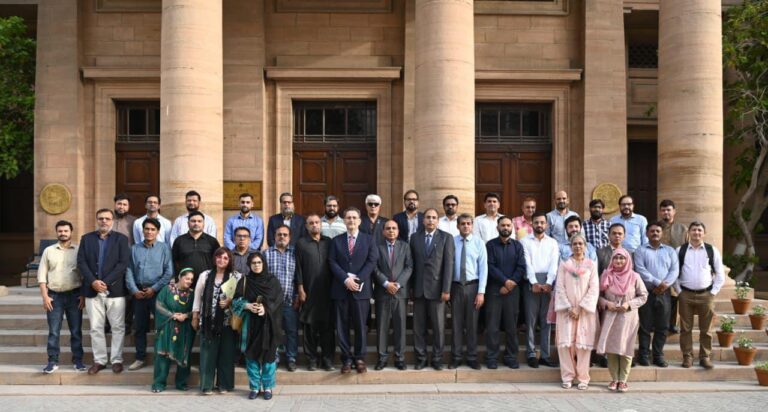
    KARACHI: For millions of teachers, clerks, nurses and daily-wage workers, owning a house has felt like a distant dream. Caught between skyrocketing rents and banks that rarely lend to them, they have spent years waiting for a break. Now, with the Prime Minister’s “Apna Ghar” scheme offering subsidized 20-year loans, that wait may finally be over — if the government can fix the loopholes that sank similar programs in the past. With rents climbing and home ownership slipping further out of reach, the government’s new housing finance push is back in focus. The Prime Minister’s “Apna Ghar” housing scheme unveils a 20-year financing plan backed by Rs 71 billion in federal subsidies allocated in the budget. The urgency is clear: Pakistan faces a housing shortfall of over 10 million units, with demand growing each year due to urbanization and population growth. The State Bank of Pakistan arranged a workshop on the Prime Minister’s Housing Scheme — Wazir-e-Azam Apna Ghar Program — to roll out salient features including financing structure, loan amount, tenure, income requirements, and monthly installment. According to SBP officials Ghulam Muhammad Abbasi, Executive Director, and Dr. Muhammad Saleem, Additional Director, the scheme aims to finance 150,000 houses by June 2027. Under the program, banks will provide loans of up to Rs 10 million for purchase of a ready-made house, flat, or plot, or for construction on a plot. A house of up to 250 square yards and a flat of up to 1500 square feet will be eligible. The loan tenure is 20 years, with a fixed markup of 5% for the first 10 years. Who can apply and how? Salaried individuals can apply with a salary slip, while non-salaried applicants including shopkeepers and daily wage workers can use electricity bills, mobile top-ups, children’s fee challans or other expense receipts as income proof, the State Bank said. An applicant can apply with 3 to 4 co-borrowers — father with sons, brothers with sisters, or husband with wife. The main applicant must not own any property; if found otherwise, the loan will be cancelled. An online portal has been created for applications, and forms are also available at bank counters. “Banks will not charge any processing fee, nor any penalty on balloon payment,” an SBP official added. “Banks will process an application in 15 days. For any complaint, applicants can lodge it on the Prime Minister’s portal against the bank or officer.” To accelerate home ownership and boost construction, the government has expanded the scheme to include overseas Pakistanis. Overseas Pakistanis/Non-Resident Pakistanis holding NICOP/POC may also obtain financing. Participating Financial Institutions may also extend financing for private developer-led housing projects. Housing: A basic need slipping away For Pakistan’s lower and middle class, owning a home has become unaffordable. Rising property prices, inflation, and lack of access to formal credit have widened the 10-million-unit housing gap. Most families either live in rented accommodations, spending 40-50% of income on rent, or in informal settlements without basic facilities. For this segment, “Apna Ghar” could be the first real chance to move from rent to ownership — provided installments stay within budget. The Benefits: Housing for the missing middle 1. Affordability: 5% fixed markup for 10 years is significantly lower than market mortgage rates. 2. Inclusion: Alternate income proof and NICOP/POC access opens doors for informal workers and overseas Pakistanis. 3. No hidden costs: Zero processing fee and a dedicated portal reduce bureaucratic hurdles. 4. Economic boost: Financing 1.5 lakh units will give a direct push to construction, cement, steel, and labor. The Shortcomings and Challenges The scheme may end up benefiting the middle class more than the poor it targets. Most low-income families live in katchi abadis with no legal land titles, which banks require. Without land regularization, the poorest remain excluded. Other challenges: 1. Scale vs Need: 150,000 homes by 2027 address only 1.5% of the 10-million-unit shortage. 2. Bank appetite: Banks have historically avoided mortgage lending due to documentation and recovery risks. 3. Land and title issues: The scheme assumes legal plots, a major bottleneck in cities like Karachi. 4. Affordability ceiling: Rs 10 million cap and installments may still be unaffordable for the poorest. 5. Implementation: SBP’s 15-day timeline will be tested, as past schemes struggled with delays. Skepticism on the ground But for many, doubt runs deep. “We pay Rs 25,000 rent every month. Owning a house feels like a dream,” said Ali, a private school teacher from Nazimabad. “Every time the government announces a scheme, I hear the same thing — in the end, the rich will take loans in the name of their drivers and peons. Let a few months pass. Then we’ll know if this system is transparent or just another test case.” That reflects three questions: Will it reach the right people? Will the process be clean? Will the intent hold? With the scheme only a few months old, experts say implementation will be the real test. Transparency concerns Applicants and housing experts pointed out banks’ history of demanding informal payments to process files. With “Apna Ghar” relying on banks, many wonder how SBP will ensure it remains bribe-free and trackable. The SBP Executive Director said an online portal has been launched and complaints can be registered directly with the Prime Minister’s or SBP portal. “Strict action will be taken against banks charging fees or demanding bribes,” he said. Economic boom Apna Ghar can bring Economists say the push can do more than provide roofs — it can revive construction and the economy. The sector contributes nearly 2.5% to GDP and employs over 8 million people directly. Every house is estimated to create 8-10 direct and 20-25 indirect jobs. With demand for 150,000 units against a backlog of 10 million, orders for cement, steel, bricks and labor are expected to rise. SBP notes housing has one of the highest fiscal multipliers. If targeted well, it could cut into the housing backlog while acting as a grassroots stimulus. An opportunity For Shahbaz-led government to

  • | |

    Zelenskiy accuses Russia of targeting world food s…

    Ukraine and Russia traded accusations of lethal attacks on Sunday, with President Volodymyr Zelenskiy saying Moscow deliberately targeted global food security by striking the seaport at Odesa. Three people died and 37 sustained injuries in the eastern Ukrainian city of Kharkiv after a multi storey apartment block took a direct hit. Across the border, authorities in Russia’s Belgorod region reported that a Ukrainian drone attack killed five people and wounded 25 others. Odesa seaport takes major damage Zelenskiy said a strike had damaged Odesa’s seaport, a critical hub for Ukraine’s agricultural exports. Local authorities reported that dozens of drones and missiles struck the southern seaside city, wounding a dozen people in the process. “In this way, the Russians are at war with the world’s food security,” Zelenskiy said, framing the attack as part of a broader effort by Moscow to disrupt global grain supplies that flow through Ukraine’s Black Sea ports. The Ukrainian president said Russia also struck nine other regions across the country on Sunday, extending the assault well beyond Odesa alone. Russia has spent months bombarding Odesa in a sustained campaign aimed at cutting Ukraine off from the Black Sea and choking its export routes. Ihor, a 67 year old Odesa resident whose apartment narrowly avoided destruction in the latest strikes, said residents have grown accustomed to the danger. “Everyone who lives in Odesa knows that the most common target is around the port area,” he said. Ukraine strikes Russian oil tankers in response As Ukraine works to choke off the revenue Russia relies on to fund its war effort, Kyiv’s forces have repeatedly targeted Russian oil tankers and other cargo vessels moving through the Black Sea. Ukrainian forces claimed three additional strikes on such vessels on Sunday alone. Both countries have widened their campaigns against each other’s logistics networks in recent months. E-commerce warehouses on both sides of the border and Ukrainian petrol stations have come under sustained attack throughout the summer. Ukraine’s state energy company Naftogaz reported a significant rise in attacks on its facilities over the past three days, including strikes on oil extraction sites overnight. Ukraine’s energy ministry said Russian forces also struck power facilities in the Odesa region, cutting electricity to a substantial share of the port city’s residents overnight. Power had already been restored to 90,000 consumers by Sunday, the ministry said. Russia’s Defence Ministry confirmed striking fuel storage facilities in the ports of Odesa and nearby Chornomorsk, saying the sites were being used to support the Ukrainian military. Pope Leo renews call for peace At the Vatican, Pope Leo used his Sunday address to renew calls for an end to the war, now in its fourth and a half year. Speaking before worshippers gathered for the Angelus prayer, the pontiff said tragic incidents are multiplying across the conflict, leading to a growing number of civilian casualties, including children. The renewed papal appeal comes as both Russia and Ukraine show little sign of scaling back their attacks, with strikes on energy infrastructure, ports and logistics networks continuing to intensify on both sides as the war grinds into its fifth year without a resolution in sight.

  • | |

    Seven workers abducted in armed raid on Chagai min…

    Seven workers were abducted after a group of armed men raided a private mining site in Chagai district and allegedly took away vehicles, fuel and other equipment worth millions of rupees. According to sources, the incident occurred around 1pm on Tuesday at a mine in Mahian Kaur, located approximately 15 to 18 kilometres west of Chagai town. Eight unidentified armed men reportedly arrived at the mining site on motorcycles. They took control of the facility and held the workers hostage before taking seven employees away with them. Four of the abducted workers were from Gilgit. They were identified as Wajahat, Wajid, Shahid and Sabir. The other three workers were locals. They were identified as Ziauddin from Dalbandin, Shah Saleem from Mahian in Chagai and Saeed Muhammad, who is also from Mahian. Sources said the armed men remained at the mining site for several hours. They reportedly stayed there until around 7pm before leaving with the hostages and equipment. The attackers allegedly took a Zambad vehicle and a four-wheel-drive pickup from the site. A motorcycle was also reportedly taken. More than 20 solar panels were among the items removed from the mining facility. The attackers also allegedly took bedding, kitchen equipment and other supplies used by the workers. A large quantity of fuel was also taken. Sources said the stolen fuel included around 2,500 litres of diesel and 1,500 litres of petrol. The attackers reportedly carried out the operation without facing resistance. They then left the area with the seven workers and the stolen property. The incident was reported to the relevant authorities soon after the attackers departed. Local administration and security officials have launched efforts to trace the abducted workers and recover the vehicles and other property. Search efforts are continuing in the area, while authorities are also investigating the identity and motives of the armed men. The abduction has raised fresh security concerns for workers and private mining operations in Chagai, where remote mining sites can be difficult to secure. At the time of reporting, there was no confirmed information about the whereabouts or condition of the seven abducted workers.

Leave a Reply

Your email address will not be published. Required fields are marked *