

muse singer matt
| |

Muse singer Matt Bellamy takes legal step to end m…

Muse frontman Matt Bellamy has officially taken legal steps to end his marriage to model and actress Elle Evans. The 48-year-old musician filed for divorce in Los Angeles on August 12, 2026, citing “irreconcilable differences” as the reason for the split. (People.com⁠)

Bellamy and Evans first met in 2015 while Evans appeared in Muse’s “Mercy” music video. Their relationship quickly developed, and the couple became engaged in December 2017. After dating for several years, they exchanged vows in an outdoor ceremony in Malibu on August 10, 2019. (Us Weekly⁠)

The couple went on to build a family together. They welcomed their daughter, Lovella Dawn, in June 2020. Their second child, son George Julien-Wade, was born in May 2024. Bellamy also has a teenage son, Bingham, from his previous relationship with actress Kate Hudson. (People.com⁠)

News of Bellamy and Evans’ separation first became public earlier this year. In June, Bellamy confirmed that they had separated in summer 2025, describing the circumstances behind the breakup as “really unexpected.” He also explained that the difficult period influenced his creative work and the making of Muse’s album The Wow! Signal. (People.com⁠)

At the time, Bellamy focused on keeping life stable for his children. His comments suggested that protecting their family environment remained a priority while he dealt with the major personal change.

The latest court filing provides more details about the divorce proceedings. Bellamy is seeking sole legal and physical custody of the couple’s two young children, Lovella and George. He is also asking the court to uphold the terms of their premarital agreement concerning spousal support. (People.com⁠)

Evans, meanwhile, has indicated that she plans to contest Bellamy’s custody request, according to reports. The custody issue could therefore become an important part of the proceedings as the former couple works through their separation. (People.com⁠)

Despite the end of their marriage, Bellamy and Evans have continued to share a connection through their children. The pair have also been seen maintaining family ties, including reuniting with their children for important occasions.

For fans, the divorce marks the end of a relationship that lasted more than a decade from their first meeting and seven years of marriage. Bellamy’s filing now moves their private separation into a formal legal process, while both parents face the challenge of navigating the next chapter of their lives and their children’s future.

Similar Posts

  • |

    Cross-party US legislators introduce resolution demanding prompt elections in Caracas

    A bipartisan group of US senators has introduced a resolution urging the swift organisation of free, transparent elections in Venezuela. The measure comes seven months after the American intervention that removed former President Nicolas Maduro and placed Vice President Delcy Rodriguez in charge as acting president. Spearheaded by Republican Senator Ted Cruz and Democratic Senator Jeanne Shaheen, the proposal demands the immediate release of political detainees and measures to protect political figures from violence or state retribution. The resolution highlights growing Congressional dissatisfaction with the current diplomatic stance of the White House, which lawmakers argue has failed to move the interim administration in Caracas toward establishing democratic processes. The action arrives as formal talks between the interim government and select opposition factions prepare to open without the inclusion of prominent opposition leader and Nobel Peace Prize laureate Maria Corina Machado. Machado, currently living in exile following post-election repression, has signaled intentions to return home to assist with national recovery following severe earthquakes, despite reluctance from Washington officials who argue her return could destabilise the fragile political environment. Senatorial leadership emphasised that restoring elected governance remains vital to regional security, cross-border cooperation, and international democratic norms.

  • | |

    Umera Ahmed urges fans to avoid AI-generated content

    Renowned Urdu novelist Umera Ahmed has appealed to readers and content creators to stop producing and sharing AI-generated visuals based on her literary works, saying such content diminishes the emotional and spiritual depth of her stories. In a statement shared through her official Instagram page, Ahmed’s team thanked readers for their continued love and support but expressed concern over the growing number of AI-generated images, videos and reels portraying scenes, characters and dialogues from her novels. The statement urged fan pages and digital creators to refrain from using artificial intelligence to recreate her books. According to the team, literature offers every reader a unique and personal experience, while AI-generated visuals limit that imagination by presenting a fixed interpretation of characters and events. Special concern was raised over Ahmed’s acclaimed novel Peer-e-Kamil, which the team described as a deeply spiritual and emotionally sensitive work. They said its message, beauty and sanctity should not be diluted through artificial intelligence-generated content. While appreciating the passion and dedication of fan communities, the statement encouraged readers to experience and share the author’s work in its original form, allowing the stories to leave their intended emotional impact without technological alteration. The appeal comes as artificial intelligence continues to spark debate within Pakistan’s creative and entertainment industries. Concerns over the misuse of AI have grown in recent months, with artists and public figures warning about its impact on originality, artistic integrity and personal image rights. The discussion intensified after an AI-generated promotional music video released by the Ministry of Planning and Development drew widespread criticism. Separately, television personalities Tauseeq Haider and Farah Saadia were forced to deny false rumours after AI-created images depicting their alleged wedding circulated online. Actor Hira Tareen has also urged fellow performers to carefully review contract terms, warning that some agreements may allow studios to use an actor’s likeness for AI-generated productions without adequate safeguards.

  • | |

    Naqvi vows full support for Balochistan security

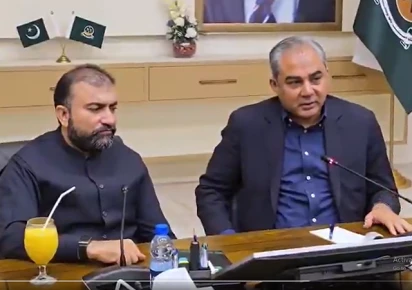
    Interior Minister Mohsin Naqvi has assured Balochistan of continued federal support to improve security and restore lasting peace in the province. Naqvi visited Quetta on Saturday. He met Balochistan Chief Minister Mir Sarfraz Bugti. The two leaders jointly chaired a high-level meeting on the province’s law and order situation. The meeting reviewed the latest security situation in Balochistan. Officials also discussed ongoing security operations and future plans to deal with terrorism. Chief Minister Bugti briefed the meeting on the challenges facing the province. He also explained the measures being taken to improve security and maintain peace. The meeting decided to further strengthen the Counter-Terrorism Force (CTF) and Balochistan Police. The participants agreed that the professional capabilities of both forces must be improved. The authorities also agreed to speed up decisions aimed at strengthening the provincial police force. The federal government assured Balochistan that it would provide the required resources and support. Naqvi said the federal government would continue to provide every possible assistance to Balochistan. He said restoring peace required immediate and effective implementation of a comprehensive security plan. The interior minister also called for greater use of the experience of former Balochistan police chiefs. He said their expertise could help authorities develop a stronger and more effective security strategy. Naqvi stressed the importance of modern technology in counterterrorism operations. He also highlighted the need for better intelligence and stronger coordination between security institutions. He said the federal and provincial governments were working together to address the security challenges. According to Naqvi, coordinated efforts are essential for establishing lasting peace in the province. Chief Minister Bugti also reaffirmed his government’s determination to fight terrorism. He said the provincial government would remain prepared to respond to threats on every front. Bugti made it clear that the government would not surrender to pressure from terrorists. He said the writ of the state would be established across Balochistan. The chief minister said no space would be allowed for terrorists to operate. He also stressed that security agencies would continue taking steps to protect citizens and public institutions. Bugti said the government’s strategy would not focus only on security operations. He said improving opportunities for young people was equally important. According to the chief minister, education, skills development, employment and positive activities could help young people build better futures. He said promoting merit would help restore the confidence of the province’s youth. He added that young people should receive equal opportunities to succeed. Bugti also highlighted the strong connection between peace and development. He said security, progress and prosperity must move forward together. He said the provincial government would continue working with the federal government to improve law and order. Development projects would also be accelerated across the province. The meeting came as Balochistan continues to face serious security challenges. Several attacks have occurred in the province in recent months. Security forces and law enforcement agencies have increased operations against militant groups. The Pakistan Army, Frontier Corps and Balochistan Police have also continued joint efforts in affected areas. Officials believe stronger intelligence sharing and better coordination can help prevent future attacks. Modern equipment and improved training are also being considered important parts of the security strategy. The federal and provincial governments have therefore agreed to combine security measures with development initiatives. They say improving employment, education and skills opportunities for young people is essential for long-term stability.

  • | | |

    PCB introduces comprehensive fitness policy for do…

      The Pakistan Cricket Board (PCB) has introduced a comprehensive domestic cricket fitness policy for the 2026-27 season, making physical fitness a key requirement for players representing regional, departmental, district, and zonal teams across the country. The newly announced policy has been designed to improve players’ overall fitness standards and ensure they are better prepared for the physical demands of modern cricket. Covering athletes from junior age-group competitions to first-class domestic cricket, the framework aims to establish a consistent and measurable fitness system throughout Pakistan’s domestic structure. The fitness programme has been developed by PCB Director of Sports and Exercise Medicine Javed Mughal. It follows a structured two-tier model that has been designed to align with international cricket standards while remaining practical, reliable, and easy to implement across different levels of the domestic game. The testing procedures have been created to produce consistent and repeatable results, allowing coaches and trainers to accurately monitor players’ physical progress. Under the new system, Tier 1 will apply to players representing the country’s 20 regional teams, eight departmental first-class sides, and more than 25 Grade-II departmental teams. These players will be required to complete 11 separate fitness tests, providing a total of 17 scoring opportunities during the assessment process. Tier 2 has been introduced for players competing in senior district cricket, U19 district teams, and regional U17 and U15 squads. Participants in this category will undergo eight different fitness tests, offering a maximum of 12 scoring opportunities. The PCB has also established a clear scoring system to determine whether a player passes or fails the assessment. In Tier 1, players may receive up to seven red scores and still meet the required fitness standard. However, recording eight or more red scores will result in a failed assessment. Those who fail will be allowed one opportunity to retake the test. Similarly, Tier 2 players will fail the assessment if they receive six or more red scores. The board hopes that the grading system will encourage players to maintain high fitness standards while also identifying areas requiring improvement. Fitness monitoring will not end after the initial assessment. Players who successfully complete the testing process will undergo another round of fitness evaluations approximately six months later. The purpose of the follow-up assessment is to measure each player’s progress and ensure that fitness levels continue to improve throughout the season. According to the PCB, every player is expected to demonstrate measurable improvement compared to their initial baseline results. The board believes continuous assessment will promote long-term physical development rather than one-time preparation for testing. The policy also outlines the procedure for players who do not meet the required benchmarks. Instead of repeating only the failed components, any player who fails the assessment will be required to complete the entire fitness testing programme again. This approach is intended to ensure overall physical readiness rather than focusing on individual weaknesses. The responsibility for conducting the assessments will rest with PCB-approved strength and conditioning coaches. These coaches will supervise fitness testing at every level of domestic cricket and submit the results to the National Cricket Academy along with the PCB’s Medical and Sports Science Department for evaluation and record-keeping. With this initiative, the PCB aims to strengthen the fitness culture within domestic cricket, enhance player performance, and create a stronger pathway for athletes aspiring to represent Pakistan at the international level.

  • |

    Record rainfall strands thousands at Japan Airport…

    TOKYO: Record-breaking rainfall in Japan’s Chiba prefecture left thousands of travellers stranded at Tokyo’s Narita International Airport, disrupted roads and rail services and claimed at least eight lives, as emergency crews and soldiers joined relief efforts on Friday. More than 360 millimetres of rain fell within 24 hours in parts of Chiba, an area adjoining Tokyo, triggering widespread flooding during one of Japan’s busiest holiday periods. Authorities said the downpour also disrupted power supplies, leaving more than 20,000 homes without electricity. The eight fatalities included a person who was reportedly trapped inside a submerged vehicle, according to Japanese public broadcaster NHK, citing local authorities and police. The unprecedented rainfall caused major disruption at Narita airport, where around 7,000 passengers were stranded after transport services were severely affected. Airport staff provided sleeping bags, drinking water and snacks as travellers spent the night inside terminals. Minoru Yamasaki, a 48-year-old Chiba resident returning from holiday, described the difficult situation, saying he waited about four hours for a taxi before returning to the airport after a hotel could not accommodate him. Airport officials said most flights were expected to operate normally on Friday, although transport links remained affected. Several railway services were suspended, while some trains connecting Narita with Tokyo resumed, helping reduce congestion around the international airport. Major highways in Chiba were also closed, forcing motorists onto alternative routes and creating severe traffic jams. In Chiba city, among the worst-hit areas, hundreds of residents spent the night at temporary evacuation centres in government buildings. Tokyo Electric Power reported that flooding at a power substation contributed to widespread outages. Gas supplies to nearly 13,000 households were also temporarily disrupted. Chiba Governor Toshihito Kumagai described the situation as extremely unusual, saying he had never experienced a disaster of this scale. Weather authorities said 367mm of rain was recorded over 24 hours, surpassing the previous Chiba record of 309mm set in October 2013. With further disruption possible, authorities continued rescue and recovery operations while urging residents to remain alert to flooding and other weather-related hazards.

  • | |

    Six Pakistani dramas that gave women powerful stories

    Pakistani television has produced many memorable female characters. Some of them stood out because they were not written simply as victims waiting to be rescued. Over the decades, several dramas showed women working, making difficult choices, facing social pressures and rebuilding their lives. These characters were ambitious, emotional and flawed. Most importantly, they were allowed to shape their own stories. Here are six dramas that created some of Pakistani television’s most memorable female leads. Ankahi (1982) Written by Haseena Moin, Ankahi introduced audiences to Sana Murad, played by Shehnaz Sheikh. Sana is confident, outspoken and determined. After her father’s death creates financial problems for the family, she decides to take responsibility. Despite having limited qualifications, she manages to secure a job after an unexpected meeting with a company chairman. Her journey through professional life becomes a mix of humour, challenges and personal growth. Sana’s character was significant because she was not defined by marriage or romance. She wanted to work and create a future for herself. Tanhaiyaan (1985) Haseena Moin’s Tanhaiyaan, directed by Shahzad Khalil, focused on two sisters who suddenly lose their parents and their family home. Played by Marina Khan and Shehnaz Sheikh, the sisters are forced to rebuild their lives independently. The drama presented women earning their own income without treating their decision to work as something unusual. Their struggles were balanced with friendship, humour and everyday challenges. That combination helped the drama remain popular long after its original broadcast. Maat (2011) Umera Ahmad’s Maat followed two sisters whose different priorities eventually take them in completely different directions. Saba Qamar played Saman, a woman strongly attracted to wealth, comfort and social status. Her sister Aiman, played by Aamina Sheikh, takes a quieter path. Aiman is repeatedly underestimated and overlooked. She faces difficult circumstances but continues building her life with patience and resilience. As the story progresses, the sisters’ fortunes change dramatically. The drama explores how ambition, relationships and personal choices can shape a person’s future. Durr-e-Shehwar (2012) Durr-e-Shehwar explored marriage from a perspective that was rarely shown without romanticising sacrifice. The central character enters marriage expecting affection and companionship. Instead, she faces emotional distance from her husband and hostility from her mother-in-law. The story is later viewed through the eyes of her daughter, Shandana. She initially believes her parents had a perfect marriage. She eventually discovers the struggles her mother endured. The drama raises questions about compromise, expectations and the sacrifices women make to preserve relationships. Digest Writer (2014) Saba Qamar played Fareeda, a young woman whose ambitions are often overshadowed by the expectations placed on her family’s son. Writing becomes Fareeda’s escape and her way of expressing herself. She begins publishing stories under the name Rashk-e-Hina. Her talent eventually attracts the attention of a television producer, giving her an opportunity to enter the drama industry. However, success does not come easily. Fareeda faces professional rivalry, betrayal and pressure from her family. The drama presents ambition as something meaningful while also showing the personal cost of pursuing a career in a difficult environment. Udaari (2016) Udaari tackled one of the most sensitive subjects in Pakistani television. The story follows Zebo, whose childhood is shattered by abuse. However, the drama does not define her entire identity through her trauma. Instead, Zebo gradually finds the courage to speak about what happened to her. Her mother also undergoes a major transformation. After realising the danger her daughter faces, she chooses to protect Zebo and rebuild their lives. Meera, a singer living nearby, also becomes an important source of support. One of the drama’s most powerful moments comes when Zebo confronts her abuser in court. Rather than accepting shame for what happened to her, she identifies herself as a survivor. Across four decades, these dramas demonstrate how Pakistani television has portrayed women in changing ways. From Sana’s determination to build a career to Zebo’s courage to seek justice, these characters were given stories beyond romance and victimhood.

Leave a Reply

Your email address will not be published. Required fields are marked *