opinion new foundations
| | | | |

[OPINION] The new foundations of security in the Indo-Pacific 

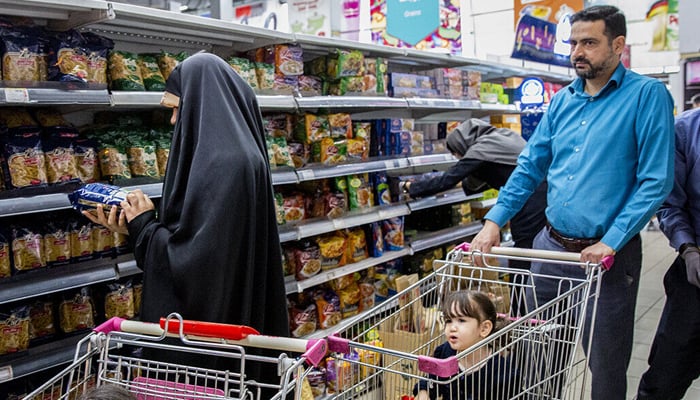
For many people across Southeast Asia, security isn’t about what’s happening on the other side of the globe. It is about practical things, here and now, measured day by day.  

Will the lights stay on? Can I fill up my tank? Is there enough rice for dinner? 

These everyday concerns increasingly define security across the Indo-Pacific. Energy, food, and economic security now underpin prosperity. That reality helps explain why Canada’s engagement with ASEAN and the Philippines, currently ASEAN 2026 chair, matters far beyond the diplomatic calendar.  

This year, ASEAN and Canada took important steps toward a free trade agreement that, when finalized as soon as possible this year, will make it easier for businesses to trade, invest, and create jobs across the 12 economies representing more than 850 million people. The ASEAN-Canada Free Trade Agreement (ACAFTA) is more than a trade deal; it is an investment in the future.  

Canada’s Minister of Foreign Affairs Anita Anand was recently in Manila for the ASEAN Post-Ministerial Conference and the ASEAN Regional Forum. She used that meeting to underscore Canada’s support for ASEAN centrality and for a secure, stable, and prosperous Indo-Pacific. The message from regional leaders was equally clear: security is no longer just about geopolitics. It also includes energy security, climate resilience, sustainable growth, and strong economic partnerships that help businesses and consumers prosper. 

The Philippines’ recent engagement with Canada illustrates this shift. 

Must Read

Marcos in Canada: Closer trade, security in a turbulent world 


Marcos in Canada: Closer trade, security in a turbulent world 

During President Ferdinand Marcos Jr.’s visit to Canada, our countries elevated bilateral relations to a strategic partnership and committed to developing a new plan of action to guide cooperation. A priority of this partnership is concluding negotiations on a Canada-Philippines free trade agreement by the end of 2026, strengthening economic growth and resilient supply chains. That is precisely why free trade agreements between our countries matter: today’s economic and security interests are increasingly intertwined, from energy cooperation and cybersecurity to supporting a free and open Indo-Pacific. 

Southeast Asia’s growing economies require affordable, reliable, and increasingly sustainable sources of power. Canada brings expertise in clean energy, critical minerals, and sustainable resource development, while also supplying LNG, oil, and LPG to support energy security and economic growth. As the Philippines works to expand clean energy opportunities and strengthen its energy mix, our countries can work together on practical solutions that benefit the wider ASEAN community. 

Food security presents a similar opportunity for partnership. Across Southeast Asia, farmers are facing more frequent climate shocks, changing weather patterns, and growing pressure on agricultural systems. Meeting these challenges requires innovation, climate-smart farming, and resilient food supply chains; from farms and processing facilities to the ports and shipping routes that keep food moving across the region.

Canada has long been a trusted partner in agricultural research, food safety, and sustainable farming. Through the Indo-Pacific Agriculture and Agri-Food Office in Manila, Canada is working directly with regional stakeholders, including governments and the private sector, to make trade easier, reduce red tape, and help food products reach markets more quickly. This helps strengthen food security by ensuring a reliable supply of key agricultural products for families across the region and supports regional productivity goals.

Communities also need tools to handle the shocks of a warming planet. Canada is partnering directly with leading actors in the region on disaster resilience. Through our capacity building initiatives, we are working with the ASEAN Coordinating Centre for Humanitarian Assistance on Disaster Management (AHA Centre) to ensure disaster management is both inclusive and prepared for multi-hazard emergencies. Our programs empower local civil society groups to move from reactive disaster response to anticipatory action, ensuring communities are better prepared for climate shocks. 

And as our physical world faces these shifts, the digital world is transforming just as quickly. Security is also what we experience on screens. It is about protecting personal data and ensuring we can safely shop, bank, and do business online. Canada is deepening cooperation with ASEAN in this area. We recently joined ASEAN’s digital senior officials track so that we can work more closely on things like cybersecurity, digital trust, and the responsible use of artificial intelligence. 

Ultimately, partnerships matter because they help deliver what people care about most: reliable energy, secure food supplies, good jobs, and economic opportunity. Canada’s engagement in the Indo-Pacific is built on a simple idea: we achieve more together. As Canada, ASEAN, and the Philippines deepen their partnerships, the focus is on what matters most to people: resilience, innovation and economic opportunity. In an uncertain world, these are the building blocks of both security and prosperity. – Rappler.com

David Hartman is Canada’s ambassador to the Philippines while Ambra Dickie is Canada’s ambassador to ASEAN.
Similar Posts

  • | |

    Zelenskiy accuses Russia of targeting world food s…

    Ukraine and Russia traded accusations of lethal attacks on Sunday, with President Volodymyr Zelenskiy saying Moscow deliberately targeted global food security by striking the seaport at Odesa. Three people died and 37 sustained injuries in the eastern Ukrainian city of Kharkiv after a multi storey apartment block took a direct hit. Across the border, authorities in Russia’s Belgorod region reported that a Ukrainian drone attack killed five people and wounded 25 others. Odesa seaport takes major damage Zelenskiy said a strike had damaged Odesa’s seaport, a critical hub for Ukraine’s agricultural exports. Local authorities reported that dozens of drones and missiles struck the southern seaside city, wounding a dozen people in the process. “In this way, the Russians are at war with the world’s food security,” Zelenskiy said, framing the attack as part of a broader effort by Moscow to disrupt global grain supplies that flow through Ukraine’s Black Sea ports. The Ukrainian president said Russia also struck nine other regions across the country on Sunday, extending the assault well beyond Odesa alone. Russia has spent months bombarding Odesa in a sustained campaign aimed at cutting Ukraine off from the Black Sea and choking its export routes. Ihor, a 67 year old Odesa resident whose apartment narrowly avoided destruction in the latest strikes, said residents have grown accustomed to the danger. “Everyone who lives in Odesa knows that the most common target is around the port area,” he said. Ukraine strikes Russian oil tankers in response As Ukraine works to choke off the revenue Russia relies on to fund its war effort, Kyiv’s forces have repeatedly targeted Russian oil tankers and other cargo vessels moving through the Black Sea. Ukrainian forces claimed three additional strikes on such vessels on Sunday alone. Both countries have widened their campaigns against each other’s logistics networks in recent months. E-commerce warehouses on both sides of the border and Ukrainian petrol stations have come under sustained attack throughout the summer. Ukraine’s state energy company Naftogaz reported a significant rise in attacks on its facilities over the past three days, including strikes on oil extraction sites overnight. Ukraine’s energy ministry said Russian forces also struck power facilities in the Odesa region, cutting electricity to a substantial share of the port city’s residents overnight. Power had already been restored to 90,000 consumers by Sunday, the ministry said. Russia’s Defence Ministry confirmed striking fuel storage facilities in the ports of Odesa and nearby Chornomorsk, saying the sites were being used to support the Ukrainian military. Pope Leo renews call for peace At the Vatican, Pope Leo used his Sunday address to renew calls for an end to the war, now in its fourth and a half year. Speaking before worshippers gathered for the Angelus prayer, the pontiff said tragic incidents are multiplying across the conflict, leading to a growing number of civilian casualties, including children. The renewed papal appeal comes as both Russia and Ukraine show little sign of scaling back their attacks, with strikes on energy infrastructure, ports and logistics networks continuing to intensify on both sides as the war grinds into its fifth year without a resolution in sight.

  • |

    Bangladesh hints at joining Pakistan-Saudi-Türkiy…

    DHAKA: Bangladesh has signalled that it could consider joining the emerging economic or defence framework involving Pakistan, Saudi Arabia and Türkiye, opening a potentially significant new chapter in regional diplomacy and security cooperation. Bangladesh Prime Minister’s Foreign Affairs Adviser Humayun Kabir said Dhaka was taking a positive view of the possibility of becoming part of a framework involving the three countries. His comments come only weeks after Pakistan, Saudi Arabia and Türkiye signed the Makkah Joint Defence Agreement. The agreement, signed in Makkah on Aug 7, commits the three countries to strengthening collective security and defence cooperation. It also states that an armed attack against any one of the three signatories would be regarded as an attack against all three. Kabir, speaking to Bangladesh’s state news agency, indicated that Dhaka would examine the idea through the lens of its own national interests and the rapidly changing global economic and trade environment. “The government is following a Bangladesh First policy,” Kabir said, according to reports, stressing that national interests remain at the centre of Dhaka’s foreign policy. The remarks are particularly noteworthy because Bangladesh has recently been working to strengthen practical ties with Pakistan. Kabir said the two countries were seeking greater cooperation in trade and people-to-people contacts, suggesting that economic engagement could form an important part of the relationship. For Pakistan, Bangladesh’s interest could give the Makkah framework a wider South Asian dimension. For Saudi Arabia and Türkiye, Dhaka’s possible participation could also expand the reach of an arrangement that the signatories have described as defensive rather than directed against any particular country. Turkish President Recep Tayyip Erdogan has said the agreement is open to other friendly countries seeking peace, prosperity and stability in the region. Turkish officials have also stressed that the pact does not identify a common enemy and is intended to strengthen defence cooperation and collective deterrence. Bangladesh’s possible move comes as Dhaka is also deepening its relationship with Saudi Arabia. Kabir said Prime Minister Tarique Rahman is expected to visit Saudi Arabia following an invitation from Crown Prince Mohammed bin Salman. The visit could provide an opportunity for discussions on economic cooperation, regional security and Bangladesh’s possible role in broader regional frameworks. For now, Dhaka has not announced any formal decision to join the defence agreement. But its positive signal is already attracting attention, particularly because Bangladesh’s participation could reshape the strategic picture across South Asia and the wider Muslim world. The next step will likely depend on how Dhaka assesses the proposed framework against its national interests, economic priorities and wider foreign-policy objectives.

  • |

    Singapore offers $55,000 per child to tackle birth crisis

    Singapore has announced a major expansion of financial support for families as the city-state struggles with a record-low birth rate and a rapidly ageing population. Prime Minister Lawrence Wong unveiled the new measures during his annual National Day Rally speech, saying the government wants to make it easier for Singaporeans who wish to have children to start and raise families. Under the revised package, families will receive nearly S$70,000, equivalent to about US$55,150, in direct financial support for each Singaporean child up to the age of 17. The assistance includes a S$10,000 payment at birth, while another S$10,000 will be provided to help with further education. The government plans to distribute the financial support over a child’s early years rather than concentrating most of the assistance around birth. Singapore will also expand parental leave, particularly for families with more children. The government intends to cover a greater share of the costs associated with extended leave, reducing the financial burden on employers and working parents. Housing support is another part of the initiative. Authorities plan to make it easier for families with children to purchase their first homes through subsidised housing schemes. The measures come as Singapore’s fertility rate continues to fall. The country’s total fertility rate dropped to a record 0.87 children per woman last year, compared with 0.97 in 2024. The figure is far below the estimated replacement level of 2.1 needed to maintain a stable population without relying on immigration. The demographic decline is becoming an increasingly serious challenge for Singapore. Longer life expectancy combined with fewer births means the country is rapidly moving towards an older population. Singapore is expected to enter the United Nations’ category of a “super-aged” society this year, when more than 21 per cent of its population is aged 65 or above. The proportion is expected to increase further, with one in four Singaporeans projected to be aged 65 or older by 2030. Wong acknowledged that financial incentives alone may not reverse the trend. Many younger Singaporeans are postponing parenthood because of concerns about financial stability, housing, careers and the responsibilities associated with raising children. Others are choosing not to have children. The prime minister said the government must be realistic about the limits of its policies and warned that the fertility rate is likely to remain below replacement level. With fewer births, Singapore’s working-age population could shrink while the number of elderly citizens continues to rise. This could place greater pressure on the younger population to support healthcare, pensions and other social services.

Leave a Reply

Your email address will not be published. Required fields are marked *