• | |

    Ariana Grande chooses love over fame

    Pop star Ariana Grande is reportedly looking forward to taking a break from the spotlight after completing her Eternal Sunshine Tour, with plans to spend more time with family, close friends and her reported partner Ricky Alvarez. According to media reports, Grande’s demanding schedule of concerts, rehearsals and other professional commitments has left little room for her personal life over the past several months. Sources close to the singer say she is eager to enjoy uninterrupted time with the people closest to her once the tour concludes. Grande and Ricky Alvarez previously dated between 2015 and 2016 after he joined her as a backup dancer. Reports suggest the pair have rekindled their relationship following the singer’s split from actor Ethan Slater. The two have recently been seen together on several occasions during breaks in the tour, fuelling speculation that their romance has resumed. Representatives for the singer have also confirmed that Grande intends to step back from public appearances after the tour ends. The decision comes amid growing public discussion about her health and well-being. According to her spokesperson, the singer hopes to finish the tour on a positive note before taking a well-earned break from public-facing work. The statement added that the pause will allow her to focus on her health and enjoy time away from constant public attention. As part of her planned hiatus, Grande has also withdrawn from the upcoming West End revival of Sunday in the Park with George, a production that would have reunited her with Wicked co-star Jonathan Bailey. The announcement follows the release of her eighth studio album, Petal, which sparked widespread discussion online after some fans expressed concern about her appearance in the music video’s lead single. Grande launched the Eternal Sunshine Tour in June 2026 in Oakland, California, and is scheduled to wrap up the 41-show tour at London’s O2 Arena on September 1 before beginning her extended break.

  • | |

    Sajal Aly’s edgy photoshoot sparks debate

    Pakistani actor Sajal Aly has become the centre of attention after unveiling a dramatic new fashion photoshoot that has generated widespread discussion across social media. Known for her elegant screen presence and natural beauty, the award-winning star surprised fans by embracing a bold, gothic-inspired look that marked a sharp departure from her recent television appearance. Sajal, who is currently earning praise for her performance as Rabiya in the drama Zanjeerain, transformed her image for the latest editorial shoot by wearing a long black wig, dark-toned makeup and all-black designer outfits. The high-fashion concept presented the actor in a mysterious and unconventional style rarely seen by her fans. The photos quickly went viral, attracting thousands of reactions on social media. While many fashion enthusiasts applauded Sajal for experimenting with a new aesthetic and praised her confidence in carrying such a challenging look, others expressed surprise and preferred her more natural on-screen appearance. Several users admired the actor’s willingness to step outside her comfort zone, describing the photoshoot as artistic, stylish and visually striking. Supporters said the concept showcased her versatility as a model and performer, proving she can adapt to different fashion trends with ease. However, not everyone was convinced by the transformation. Some social media users compared her appearance to fictional gothic characters, while others questioned the styling, saying they preferred the softer and more traditional look she has become known for in television dramas. A few comments also criticised the makeup and styling, arguing that it did not complement her usual appearance. Despite the divided opinions, the photoshoot has succeeded in creating a strong online buzz, with fans and fashion followers continuing to debate the creative direction behind the project. Industry observers note that celebrity fashion editorials often aim to challenge conventional beauty standards and encourage artistic expression rather than reflect everyday style. Sajal Aly has built a reputation as one of Pakistan’s most accomplished actors through her performances in numerous hit television dramas and films. Beyond her acting career, she has also become a prominent fashion icon whose public appearances and photoshoots frequently attract attention

  • | |

    VC calls for global support to Kashmir cause at UO…

    The University of Okara (UO) commemorated Kashmir Exploitation Day on Wednesday by organizing a seminar and a solidarity walk to reaffirm unwavering support for the people of Occupied Jammu and Kashmir (OJK) in their struggle for the right to self-determination. The event was organized by the Directorate of Student Affairs and attended by a large number of faculty members, administrative staff, and students. The Vice Chancellor of the University of Okara, Prof. Dr. Sajjad Mubin, presided over the ceremony. Addressing the participants, Prof. Mubin highlighted the decades-long suffering of the Kashmiri people and called upon the international community to play its role in ensuring the implementation of the United Nations resolutions on Kashmir. “Kashmir is the lifeline of Pakistan and an issue that remains central to peace and stability in South Asia. The resilient people of Kashmir have made unprecedented sacrifices for their legitimate right to self-determination, and the global community must not remain a silent spectator to their plight,” he said. The VC also paid tribute to Pakistan’s armed forces for safeguarding the country’s sovereignty and territorial integrity. “Our armed forces have rendered unparalleled sacrifices to make Pakistan impregnable. Their commitment to national security enables us to stand firmly with our Kashmiri brothers and sisters in their just struggle,” he added. Speaking on the occasion, the Registrar of the University of Okara, Jamil Asim, said that observing Kashmir Exploitation Day serves as a reminder of the collective responsibility to raise awareness about the humanitarian situation in Indian Illegally Occupied Jammu and Kashmir. “We stand in complete solidarity with the people of Kashmir and reaffirm our support for their internationally recognized right to determine their own future. Universities have an important role in educating the younger generation about issues of justice, peace, and human rights,” he remarked. The Pro VC, Prof. Dr. Muhammad Wajid, and the DSA, Dr. Shoaib Saleem, also addressed the gathering and emphasized the importance of maintaining national unity and continuing moral, diplomatic, and political support for the Kashmiri people. A one-minute silence was observed to honor the sacrifices of the people of Kashmir and to express solidarity with those who have lost their lives during the prolonged conflict. The seminar concluded with a solidarity walk in which the participants carried placards and banners expressing support for the Kashmiri cause and reaffirming Pakistan’s commitment to the right of self-determination for the people of Kashmir.

  • | | |

    Roads sealed around Karachi Press Club ahead of PT…

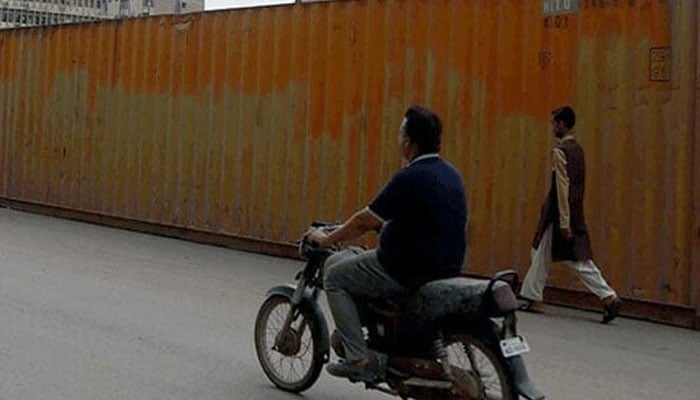
    Several roads surrounding the Karachi Press Club were closed on Wednesday as authorities implemented security measures ahead of a possible protest by Pakistan Tehreek-e-Insaf (PTI), causing traffic congestion in nearby areas. According to traffic police, the closures have led to increased vehicle movement on surrounding roads as commuters seek alternate routes. Officials said the diversions were introduced to ensure a smooth flow of traffic and minimise disruption during the expected demonstration. Traffic coming from MR Kiani Chowrangi has been redirected towards Thana Gali, while vehicles approaching Fawara Chowk are being diverted to Aiwan-e-Sadr Road and Zainab Market. Authorities have also rerouted traffic from the Coast Guard area towards the lane leading to the Passport Office to ease congestion around the Press Club. Traffic police have advised motorists to follow the designated diversion plans and cooperate with officials on duty to avoid delays. The precautionary measures come amid expectations of a PTI protest in the city, with law enforcement agencies maintaining heightened security in and around the area to ensure public safety and maintain order.

  • | |

    Lower Kohistan marks Youm-e-Istehsal Kashmir with …

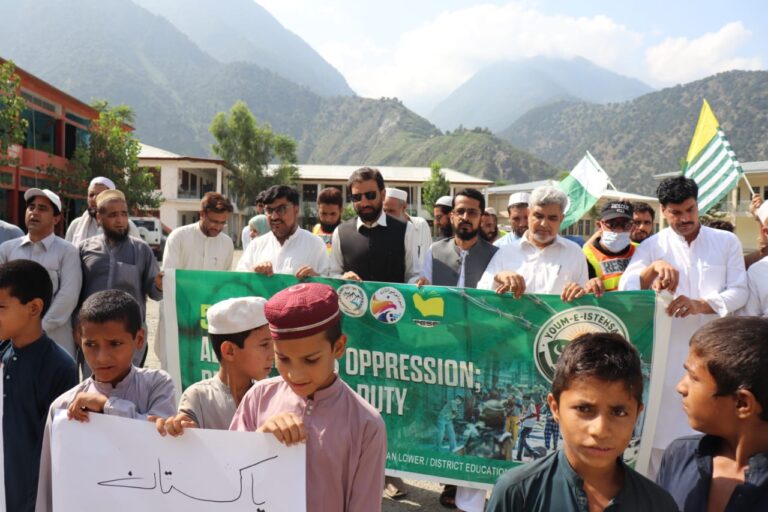
    LOWER KOHISTAN: The District Youth Office Lower Kohistan, in collaboration with the district administration and the education department, organised a ceremony at Government Model Girls High School (GMGHS), Pattan, on Wednesday to observe Youm-e-Istehsal Kashmir and reaffirm solidarity with the people of Indian Illegally Occupied Jammu and Kashmir (IIOJK). The event was attended by district administration officials, education department representatives, teachers, students, youth, and members of the local community. Participants paid tribute to the courage and resilience of the Kashmiri people and reiterated Pakistan’s continued support for their internationally recognised right to self-determination. Students presented speeches highlighting the historical significance of Youm-e-Istehsal Kashmir and staged thought-provoking tableau performances portraying the sacrifices, determination, and ongoing struggle of the people of Kashmir. The performances received appreciation from the audience for effectively conveying the message of peace, resilience, and national solidarity. Director Youth Affairs Khyber Pakhtunkhwa Abbas Khan Afridi said that the youth of the province had an important role in promoting awareness about the Kashmir issue and strengthening the values of unity, peace, and justice. He said the observance of Youm-e-Istehsal Kashmir reflected the nation’s unwavering commitment to standing with the people of Kashmir and supporting their legitimate right to self-determination. He urged young people to remain informed, responsible, and actively engaged in promoting truth, human rights, and national cohesion. The organisers said the event formed part of the Directorate of Youth Affairs Khyber Pakhtunkhwa’s continued efforts to engage young people in constructive civic activities while fostering patriotism, national unity, and awareness of issues of national importance.

  • |

    Trinasolar eyes Pakistan’s battery storage boom

    Pakistan has built one of the world’s fastest-growing distributed solar markets. According to recent research by Ember and Renewables First, it is estimated that Pakistan has approximately 38GW of distributed solar capacity across residential, commercial, industrial and agricultural sectors. As this installed solar base grows, the next challenge is making that energy more flexible and available when businesses need it most. Trina Storage, Trinasolar’s global battery energy storage business, says Pakistan’s expanding solar base is increasing interest in solar-plus-storage, particularly for utility-scale and microgrids for commercial & industrial (C&I). A Renewables First report estimates that Pakistan imported 4.6 GWh of BESS in 2025, representing 220% year-on-year growth. Rather than replacing existing solar assets, well-designed solar-plus-storage systems can help businesses optimize renewable energy use, improve operational flexibility and support more resilient energy management strategies, depending on each site’s design and operating requirements. However, adding BESS to an existing solar installation is not a simple plug-and-play exercise. Projects require careful assessment of the site’s electrical architecture, inverter configuration, demand profile, equipment compatibility, energy management system, safety requirements and commercial objectives. For many retrofit projects, an AC-coupled approach provides a practical solution by allowing battery storage to operate alongside an existing PV system through its own Power Conversion System (PCS), helping retain much of the original solar infrastructure. Compatibility must still be assessed at system level, including electrical interfaces, communications, controls and compliance with the applicable IEC and UL standards. Designed for utility-scale and C&I applications, Trina Storage’s Elementa Series is compatible and is designed for integration within solar-plus-storage systems using Trina or third-party equipment, with compatibility assessed according to the project architecture. Beyond supplying technology, Trinasolar can work with customers and EPC partners to assess system compatibility, determine the most suitable BESS configuration and develop an operating strategy aligned with each site’s technical and commercial requirements. Trinasolar’s energy storage expertise builds on its long-established presence in Pakistan’s solar market, where the company has supplied more than 500MW of 700W+ modules across commercial, industrial and residential applications and recently introduced the Vertex N G3 760W series. Globally, Trina Storage, established in 2015, has achieved BloombergNEF Tier 1 Energy Storage Manufacturer status for 10 consecutive quarters and is expected to surpass 30 GWh of cumulative shipments by the first half of 2026. Its latest 6.25MWh Elementa 3 platform combines advanced battery technology, intelligent thermal management and integrated safety features for large-scale energy storage applications. “Pakistan has already built a strong solar foundation. The next phase is to consider how battery storage can be integrated with those assets to make renewable electricity available across a wider range of operating conditions. That requires careful assessment of the existing equipment, the site’s load profile and the role the battery is expected to perform. Trinasolar’s PV experience and Trina Storage’s global BESS capabilities give us a useful perspective across both sides of that system,” said Edison Zhou, Head of Pakistan, Trinasolar.

  • |

    Pakistan’s auto tax policy sparks industry divide over EV incentives

    LAHORE: Pakistan’s automobile industry is witnessing growing divisions over the government’s taxation policy for vehicles, with local manufacturers warning that the current framework unfairly benefits expensive imported and premium new energy vehicles (NEVs) while placing a heavier tax burden on affordable cars purchased by middle-income families. The controversy has intensified following the government’s decision to introduce a range of fiscal incentives for new energy vehicles, including battery electric vehicles (BEVs), plug-in hybrid electric vehicles (PHEVs) and range-extended electric vehicles (REEVs). While the policy is designed to accelerate Pakistan’s transition towards cleaner transportation and reduce reliance on fossil fuels, established local assemblers argue that the incentives are skewed in favour of luxury vehicle buyers instead of promoting affordable green mobility. Industry representatives say the taxation gap between conventional locally assembled vehicles and premium electric vehicles has widened considerably, raising concerns over fairness, competitiveness and the long-term sustainability of Pakistan’s domestic automobile manufacturing sector. According to industry estimates, a locally assembled Suzuki Alto—one of the country’s most affordable passenger vehicles priced at around Rs3 million—bears nearly Rs550,000 in taxes, including sales tax, federal excise duty (FED) and the recently introduced New Energy Vehicle (NEV) levy. In contrast, a premium REEV costing close to Rs10 million reportedly attracts sales tax of only around Rs100,000 while remaining exempt from both the federal excise duty and the NEV levy. The tax disparity has triggered criticism from domestic manufacturers, who argue that the current structure effectively penalises middle-income consumers while offering generous incentives to buyers of high-end imported vehicles. Local Assemblers Raise Concerns Pak Suzuki Motor Company spokesperson Ikhlaq Virk said the taxation framework has created an uneven competitive environment that disadvantages affordable vehicles widely used by Pakistani families. He said entry-level models such as the Alto and Cultus serve as essential transportation for the country’s middle class but receive no meaningful tax relief despite their affordability. Virk further noted that premium hybrid and electric vehicles, valued at nearly Rs10 million or more, continue to enjoy substantial concessions under the government’s clean mobility policy. He also pointed to reports suggesting that the sales tax on certain plug-in hybrid and hybrid electric vehicles could be reduced from 25 percent to 18 percent after changes introduced through the Finance Bill, arguing that such relief would primarily benefit affluent consumers rather than encouraging mass-market adoption. IMF Programme Adds Complexity The debate comes at a time when Pakistan remains under an International Monetary Fund (IMF) programme, which has required the government to increase tax revenues, rationalise subsidies and implement fiscal reforms to stabilise the economy. Against this backdrop, industry stakeholders argue that taxation policies should strike a balance between environmental objectives and economic realities, ensuring that clean energy initiatives do not disproportionately favour a small segment of wealthy consumers. The discussion has also reopened a broader policy debate over whether Pakistan’s green mobility strategy should focus solely on reducing emissions or also safeguard domestic manufacturing, employment and industrial investment. Analysts Call for Balanced Incentives Automobile industry experts believe Pakistan’s transition towards cleaner transportation is necessary, but they stress that government incentives should encourage widespread adoption instead of being concentrated in the luxury vehicle segment. Yousuf M. Farooq, Director Research at Chase Securities, said environmental goals should be pursued alongside industrial development and economic sustainability. He noted that while encouraging cleaner transportation is an important national objective, incentive programmes should also consider vehicle affordability, localisation, environmental benefits and the contribution of manufacturers to Pakistan’s economy. Farooq emphasised the need for a consistent taxation framework across all vehicle categories, including conventional internal combustion engine vehicles, hybrids, plug-in hybrids and range-extended electric vehicles, while maintaining adequate protection for local assembly operations and the domestic auto parts industry. He added that environmental incentives should not undermine the competitiveness of local manufacturers or threaten employment generated by Pakistan’s automotive sector. Local Industry Fears Investment Slowdown Pakistan’s automobile industry has invested billions of rupees over the past three decades in assembly plants, localisation programmes and vendor development. The sector supports hundreds of component manufacturers and provides employment to thousands of skilled workers across the country. Industry stakeholders warn that if imported premium electric vehicles continue to enjoy significantly lower taxation than locally assembled conventional vehicles, future investment in domestic manufacturing could slow, weakening Pakistan’s automotive supply chain and localisation efforts. Manufacturers believe a prolonged imbalance may discourage further expansion by existing assemblers while affecting the viability of local parts suppliers that have developed alongside the country’s automobile industry. Government’s Green Mobility Vision Supporters of the government’s policy argue that Pakistan cannot afford to lag behind the global transition towards electric mobility. Many countries are offering tax incentives, subsidies and policy support to encourage electric vehicle adoption, reduce dependence on imported petroleum products and lower carbon emissions. Pakistan, which spends billions of dollars annually on fuel imports, could also benefit from increased electrification of its transport sector by reducing its import bill and improving environmental sustainability over the long term. However, industry observers believe the core issue is not whether electric vehicles deserve policy support but how those incentives should be structured.


  • |

    CDA launches Rs5.07bn Six-Lane Road project from Faizabad to Koral Chowk

    The Capital Development Authority (CDA) has accelerated plans to construct a new six-lane carriageway along Service Road East, approving a project worth Rs5.072 billion aimed at easing chronic traffic congestion on the Islamabad Expressway and improving connectivity between Faizabad and Koral Chowk. The 9.25-kilometre road will run parallel to the Islamabad Expressway, extending from Faizabad to Koral Chowk near Gulberg Housing Society. Once completed, the new corridor is expected to provide motorists with an alternative route, reducing travel time on one of the capital’s busiest transport arteries while facilitating smoother traffic movement for commuters travelling to Islamabad and Rawalpindi. Officials said the project forms part of the CDA’s broader strategy to upgrade the capital’s road infrastructure in response to increasing traffic volumes and rapid urban expansion in surrounding residential and commercial areas. According to official sources, the new carriageway is expected to improve access to several housing societies and neighbourhoods located along the eastern side of the Islamabad Expressway. Authorities believe the project will not only ease traffic bottlenecks but also stimulate commercial development by increasing the value of properties and attracting new businesses along the corridor. To facilitate construction, the CDA has earmarked approximately Rs500 million for the relocation of critical utility infrastructure. This includes fibre-optic networks operated by the Islamabad Police Safe City Project, the Strategic Plans Division (SPD), Sui Northern Gas Pipelines Limited (SNGPL), and the Islamabad Electric Supply Company (IESCO). Sources said extensive utility shifting will be required before the main construction work can proceed at full pace. The project involves relocating 11kV electricity distribution lines, shifting 242 electricity poles, and relocating 248 graves that fall within the road alignment. Earthwork activities have already begun at selected locations. The road project also incorporates environmental protection measures. Officials said engineers have planned the preservation of 22 underground water channels, natural streams, and stormwater drains located along the proposed route to minimise environmental disruption and maintain the area’s natural drainage system. A breakdown of utility relocation costs shows that around Rs406 million has been allocated for IESCO infrastructure, Rs87.3 million for shifting Safe City fibre-optic networks, and approximately Rs6 million for relocating SPD facilities. Work on these utility relocation components is expected to commence after the completion of technical and administrative formalities. A senior CDA official said the authority has revised the project’s completion timeline, reducing the original target of 12 months to between six and eight months. However, the official acknowledged that the timely relocation of utilities remains the biggest hurdle and will largely determine whether the revised deadline can be achieved.

  • |

    Fawad Blames PML-N, PPP for political deadlock

    Former federal minister Fawad Chaudhry said Pakistan cannot move forward politically or economically as long as the country’s two major ruling parties, the Pakistan Muslim League-Nawaz (PML-N) and the Pakistan Peoples Party (PPP), continue to dominate national politics. Speaking to reporters in Islamabad, Fawad criticized former president Asif Ali Zardari and former prime minister Nawaz Sharif, arguing that their continued influence has prevented the country from making meaningful progress. He said Pakistan would struggle to achieve stability and development unless it moved beyond what he described as the traditional political leadership. Fawad also took aim at Prime Minister Shehbaz Sharif’s economic record. He noted that Shehbaz has presented a total of 17 budgets during his political career, including 12 as chief minister of Punjab and five at the federal level. He questioned what new solutions the prime minister could still offer after overseeing so many budgets. Commenting on constitutional reforms, Fawad said he supports the transfer of administrative powers, adding that decentralization could strengthen governance if implemented effectively. Addressing the broader political situation, he stressed that any genuine national dialogue must include the founder of Pakistan Tehreek-e-Insaf (PTI), who remains in prison. Fawad said the PTI founder is the country’s most influential political leader and should be engaged in talks as a Pakistani citizen. He added that he shares a long political association with the PTI founder and believes meaningful negotiations cannot succeed without his participation. Former Sindh governor Imran Ismail, who was also present during the media interaction, said he has submitted a request to meet the PTI founder. According to Ismail, he intends to discuss proposals related to the creation of new provinces and seek his opinion on the issue before moving forward with any political discussions.

  • |

    Pakistan, Japan agree to expand development cooperation

    Pakistan and Japan have reaffirmed their commitment to strengthening long-standing development cooperation, with both sides agreeing to expand collaboration in economic reforms, mineral development, technical training, and human resource development during a high-level meeting in Islamabad. The understanding was reached during a meeting between Prime Minister Shehbaz Sharif and a nine-member delegation led by Japan International Cooperation Agency (JICA) President Dr. Tanaka Akihiko. Welcoming the delegation, Prime Minister Shehbaz Sharif described the seven-decade partnership between Pakistan and Japan as a cornerstone of bilateral relations, expressing confidence that the JICA president’s visit would inject fresh momentum into cooperation between the two countries. The prime minister highlighted the government’s ongoing economic reform agenda, stating that Pakistan had successfully navigated a challenging economic period through coordinated efforts and was now focused on achieving sustainable and inclusive economic growth. He said the government’s reform programme had produced encouraging results, noting that national revenues had doubled over the past three years. According to the prime minister, these improvements were creating greater fiscal space for investment in development priorities and public welfare. Shehbaz Sharif emphasized that equipping young people with modern skills and technical education remains one of the government’s foremost priorities. He said the administration is also committed to creating quality employment opportunities and promoting the economic empowerment of women as part of its broader development strategy. During the meeting, the prime minister welcomed JICA’s technical assistance in Pakistan’s minerals sector, describing the cooperation as timely given the country’s vast untapped mineral resources. He also appreciated JICA’s collaboration with the Small and Medium Industrial Development Authority (SMIDA), saying such partnerships would help strengthen industrial capacity, improve productivity, and boost Pakistan’s exports. The discussions also covered ways to broaden bilateral cooperation in areas including infrastructure development, capacity building, vocational training, and investment promotion. Both sides acknowledged the importance of expanding technical collaboration to support Pakistan’s long-term economic transformation. JICA President Dr. Tanaka Akihiko thanked Prime Minister Shehbaz Sharif for his warm welcome and appreciation, reaffirming Japan’s commitment to supporting Pakistan’s development journey. He noted that JICA and Pakistan share a long-standing partnership built on mutual trust and cooperation, adding that the agency remains ready to further expand its engagement across multiple sectors, including economic development, human resource development, and technical cooperation.