• | |

    Abdullah Saleem scores 1,191, tops DG Khan Board

    The Board of Intermediate and Secondary Education (BISE) Dera Ghazi Khan has announced the position holders for the 2026 Matric Annual Examinations ahead of the official declaration of results. Chairman Professor Dr Abdul Rauf unveiled the names of the top-performing students and congratulated the position holders and their parents on their outstanding achievement. Board Secretary Abdul Rehman Chaudhry, Controller of Examinations Professor Muzaffar Hussain, and other senior officials were present during the announcement ceremony. The board said the complete Matric Annual Examination results will be officially announced on August 6. Abdullah Saleem from Layyah secured first position across the DG Khan Board by scoring 1,191 marks. Mir Mujtaba from Taunsa Sharif claimed second position with 1,190 marks. The third position was shared by Farwah Ahmed from Muzaffargarh, Meerab Zahra from Layyah, and Syed Muhammad Jon Abbas from Layyah, with each student scoring 1,189 marks. Students from Layyah, Taunsa Sharif, and Muzaffargarh dominated the list of top achievers this year, reflecting the strong academic performance of the region. The announcement sparked celebrations among parents, teachers, and educational circles, who praised the students for their remarkable success. The position holders credited their achievement to hard work, the guidance of their teachers, and the prayers and support of their parents.

  • | | |

    PM seeks broader JICA partnership in skills, miner…

    Prime Minister Shehbaz Sharif on Wednesday called for expanding Pakistan’s cooperation with the Japan International Cooperation Agency (JICA), identifying skills development, mineral exploration and support for small and medium-sized enterprises (SMEs) as key areas for future collaboration. The prime minister made the remarks during a meeting in Islamabad with a nine-member JICA delegation led by its President, Dr Tanaka Akihiko. He said Pakistan deeply values its decades-long partnership with Japan and expressed confidence that the latest engagement would further strengthen bilateral development ties. Highlighting the government’s economic agenda, Shehbaz said Pakistan had emerged from a challenging economic period through coordinated reforms and was now focused on achieving sustainable and inclusive growth. He noted that fiscal reforms had significantly improved revenue collection over the past three years, creating greater capacity for national development. The premier stressed that equipping young people with modern skills, expanding technical and vocational education, creating employment opportunities and empowering women remain among the government’s highest priorities. He said Pakistan is keen to benefit from JICA’s expertise in these sectors. Shehbaz also identified the country’s vast mineral resources as a major area of economic potential and invited JICA to provide technical assistance to help develop the sector and attract greater investment. Discussing support for businesses, the prime minister said reforms at the Small and Medium Enterprises Development Authority (SMEDA) had strengthened the institution. He expressed hope that enhanced cooperation with JICA would help improve SME productivity, encourage entrepreneurship and boost Pakistan’s exports. During the meeting, Shehbaz also conveyed condolences over the recent earthquake in Japan. Dr Tanaka thanked the prime minister for his message of sympathy and appreciated the warm hospitality extended to the Japanese delegation during its visit. The JICA president reaffirmed the agency’s commitment to expanding cooperation with Pakistan in healthcare, education, urban and rural development, industrial growth and technical training. He said future projects would be designed in line with the development priorities of both the federal and provincial governments. Dr Tanaka also acknowledged Pakistan’s efforts to promote peace and stability in the Middle East. Separately, Federal Minister for Economic Affairs Ahad Cheema met the JICA delegation to discuss future development initiatives. He invited the agency to participate in financing the Main Line-1 (ML-1) railway project alongside the Asian Development Bank and other development partners, describing the railway upgrade as vital for improving trade, transportation and industrial connectivity across the country. Cheema also sought JICA’s support for expanding internet connectivity in rural areas to promote freelancing and digital commerce. He requested technical assistance for feasibility studies of major infrastructure projects, an area in which JICA expressed readiness to cooperate.

  • | | | |

    Iran warns US forces face regional expulsion

    Senior Iranian officials on Wednesday issued fresh warnings against the United States, declaring that American forces could eventually be forced out of the Middle East while linking any future reopening of the Strait of Hormuz to changes in Washington’s policies. Ebrahim Azizi, chairman of the Iranian parliament’s National Security Committee, said the removal of US military forces from the region and from countries hosting American bases was only a matter of time. In a post on X, he claimed the US would eventually have to focus its resources on securing its own territory instead of maintaining military installations abroad. The remarks came as Iranian media reported that ongoing discussions between Tehran and Oman over future navigation arrangements in the Strait of Hormuz would not automatically lead to the reopening of the strategic shipping route. According to Iranian state media, negotiations are being conducted solely between Iran and Oman, with officials insisting that the process is independent of the United States. Iranian sources maintained that even if an agreement is reached with Muscat, the waterway will remain closed unless Washington changes what Tehran describes as its hostile policies and interference. The Strait of Hormuz is one of the world’s most critical energy corridors, carrying a significant share of global oil shipments. Any disruption to traffic through the strait has the potential to affect international energy markets and regional security. Meanwhile, the United Nations expressed concern over a sharp increase in executions in Iran. UN High Commissioner for Human Rights Volker Türk said at least 56 people had been executed on national security-related charges since March, including dozens connected to protest-related cases. He warned that the growing use of capital punishment appeared aimed at creating fear within society. Regional tensions also escalated after Yemen’s Houthi movement claimed responsibility for a missile attack on the Saudi oil tanker Wafaa in the northern Red Sea. The group said the vessel was struck by ballistic missiles as part of its campaign targeting Saudi shipping. Houthi spokesman Yahya Saree claimed the movement had targeted eight Saudi oil tankers since launching its maritime blockade in late July and said dozens of other vessels had either been prevented from passing or forced to change course. Saudi authorities had not commented on the claims at the time of reporting. Separately, Iranian lawmaker Esmail Kowsari criticised US President Donald Trump’s approach toward Tehran, describing Washington’s negotiating strategy as inconsistent and unreliable. He accused the US administration of issuing conflicting statements regarding the Strait of Hormuz and Iran’s regional position. Iranian officials also blamed what they described as continued US pressure and military threats for slowing negotiations with Oman over navigation in the Strait of Hormuz, insisting that Tehran would not conclude any agreement under external pressure.

  • |

    Pakistan seal series with thrilling 4-3 win over South Korea

    Pakistan produced another impressive performance to edge South Korea 4-3 in a thrilling third hockey Test at Islamabad’s Nasir Bunda Hockey Stadium on Wednesday, taking an unassailable 3-0 lead in the four-match series. The visitors struck first and looked in control during the opening quarter. South Korea’s Kim Hyun Jung found the back of the net in the 10th minute, giving his side a 1-0 advantage that remained intact until the end of the first period. Pakistan responded strongly in the second quarter as Hayat Zakria scored a well-taken field goal to restore parity. However, the celebrations were short-lived, with Korea regaining the lead in the 33rd minute through Jing Ji Hon, leaving the hosts trailing 2-1. The contest became even more dramatic after the break. Rana Waheed equalised for Pakistan in the 45th minute, raising hopes of another comeback. Yet South Korea answered once again when Kim Yang scored five minutes later to make it 3-2 and put the visitors within touching distance of victory. With the clock ticking down, Pakistan produced a remarkable late surge. Hanan Shahid levelled the score in the 55th minute before Abdul Rehman completed the comeback just two minutes later, firing home the decisive goal in the 57th minute to send the home crowd into celebration. Pakistan held firm during the closing minutes to secure a memorable 4-3 victory, extending their winning streak against the Korean side. The result gives Pakistan an unbeatable 3-0 lead in the four-Test series, continuing an encouraging run for the national team on home soil. The series has also highlighted the successful return of international hockey action to Pakistan, with competitive crowds and spirited performances providing fresh optimism for the country’s hockey revival. The fourth and final Test will now offer Pakistan the opportunity to complete a clean sweep, while South Korea will look to salvage pride by avoiding a series whitewash.

  • Who Is Responsible for the Truth?

    One question stayed with me long after I attended a workshop under the project titled ‘Digital Trust and Free Expression in the Era of AI’, organized by the Department of Media and Development Communication, University of the Punjab with the support of the U.S. Mission to Pakistan in partnership with the Pakistan-U.S. Alumni Network, was, ‘How will we preserve digital trust and free expression in the age of AI’? As AI becomes an integral part of digital journalism, the question is no longer whether it should be used, and more importantly who should be held responsible when things go wrong. Artificial Intelligence has definitely proven to be a powerful tool for journalists. It can summarize long reports, translate content into multiple languages, follow breaking news, analyze vast quantities of data and even write complete news reports in seconds. All of these capabilities have revolutionized newsroom processes and enabled journalists to process information more efficiently than ever before. But efficiency is not the only measure of ethical journalism. Journalism isn’t about being fast, it’s about informing the public accurately, fairly and responsibly. One of the most valuable lessons I learned from the workshop was that AI does not understand information; it predicts the most likely response based on patterns in the data it has learned from. This distinction is important because when reliable information is unavailable at the time, AI generates responses that seem convincing but inaccurate, but are wrong, which is often referred to as AI hallucination. What’s most concerning is that the AI generated mistakes can appear convincing enough for people to accept them as true. This poses an ethical question: Who should be held responsible if AI-generated news contains misleading information? The burden can’t be placed entirely on the algorithm. AI has no moral judgement or legal accountability. It cannot distinguish between public interest and public harm and is not aware of the social consequences of publishing inaccurate information. This means that the responsibility rests with those who decide to employ these technologies: journalists, editors, newsroom leaders, and media organizations. While AI can help create content, it cannot replace responsibility. This is where ethics become more important than technological advancements. Checking information should not take a back seat to the ‘Publish first’ mentality. With all of the digital platforms that exist today, misinformation can spread from continent to continent within minutes and corrections often fail to reach the same audience. Each unverified headline altered photo or AI-generated mistake can damage the public’s trust, both in a specific news organization and in journalism.   The discussions also reinforced the importance of Media and Information Literacy (MIL). Verification is not only the responsibility of journalists, but also something that is necessary for every digital citizen. Learning how to use reverse image search, source verification techniques, and critical evaluation of online information is no longer an option, it’s essential for protecting ourselves from deception. As AI-generated content becomes increasingly sophisticated, it is essential to verify information before accepting it as true. AI will continue to evolve and so will digital journalism. The challenge is not innovation itself but using it responsibly. Trust is not something algorithms can build, it is something that can be gained only through transparency, accountability and a steadfast dedication to truth. While adopting new technologies to do journalism, let’s not forget that the tools should enhance journalism’s values, not shape journalism. AI may help write the news, but only humans can uphold the ethics behind it. The views, thoughts, and opinions expressed in this blog are solely those of the author and do not necessarily reflect the official policy or position of the U.S. Mission to Pakistan or USEFP.

  • |

    Pakistan sweep USA 3-0 in ITF Masters World Team Championship Opener

    Pakistan made a dream start to the ITF Masters World Team Championship by defeating the United States 3-0 in their opening Group match in Lisbon, Portugal. The convincing victory gives Pakistan an early boost in the prestigious men’s 45+ tournament, where more than 300 players from 30 countries are competing for top honours. Led by an experienced squad, Pakistan dominated both the singles and doubles contests to complete a clean sweep against the American side. Former Davis Cup star Aisam-ul-Haq Qureshi set the tone with a composed performance in the opening singles match. The Pakistan Tennis Federation president defeated Wojtek Brytek in straight sets, 6-2, 6-3, handing Pakistan a valuable early lead. The second singles encounter proved to be the highlight of the tie. Pakistan’s top-ranked player Aqeel Khan battled through a tense three-set contest against John Chesworth. After dropping the opening set, Aqeel fought back with determination to claim a hard-earned 2-6, 6-1, 6-4 victory, sealing Pakistan’s overall triumph. The doubles match added even more excitement. Pakistan’s Shehryar Salamat and Hadi Hussain lost the first set but responded brilliantly with an impressive comeback. The pair defeated Jevon West and Guillermo Cosen 1-6, 6-1, 10-6 in the deciding match tiebreak to complete a flawless 3-0 victory. The emphatic win has given Pakistan valuable momentum ahead of the remaining round-robin fixtures. The team’s blend of experience and composure under pressure was evident throughout the contest, raising hopes of a deep run in the championship. Pakistan will now face Canada in a crucial second group match. The winner will secure a place in the knockout stage of the tournament, making it one of the most important fixtures of the campaign. With confidence high after an outstanding opening performance, Pakistan will be aiming to continue its winning run and strengthen its bid for the ITF Masters World Team Championship title. The victory over the United States has already sent a strong message that the Pakistani veterans are ready to challenge the world’s best.

  • |

    Carlos Brathwaite applauds Babar Azam’s captaincy

    Former West Indies all-rounder Carlos Brathwaite has praised Pakistan captain Babar Azam for his outstanding leadership, describing his captaincy as a tactical masterclass during the ongoing Test against the Caribbean side. Speaking during his analysis of the match, Brathwaite highlighted Babar’s calm decision-making and ability to read the game under pressure. He said the Pakistan skipper showed excellent awareness by slowing the pace of play at key moments and making smart field changes that unsettled the West Indies batters. According to Brathwaite, one of Babar’s best tactical moves was the field placement against experienced batter Roston Chase. The carefully designed field forced Chase to rethink his natural game and prevented him from scoring freely. “Babar’s field settings kept Roston Chase under constant pressure,” Brathwaite noted. “He had to keep adjusting his approach, and eventually that pressure led to a mistake.” The former all-rounder added that Babar’s leadership reflected a high standard of captaincy, saying every move appeared to be planned according to the match situation rather than following a fixed strategy. Brathwaite believes the Pakistan captain demonstrated maturity, patience and tactical intelligence, qualities that helped his team remain competitive during crucial stages of the contest. Meanwhile, the Test match remains finely balanced. West Indies reached 103-6 in their second innings and currently hold a lead of 60 runs, setting up an intriguing finish over the remaining sessions. Pakistan will now look to capitalize on any opportunity to wrap up the innings quickly, while the West Indies hope to extend their advantage with the lower order. Brathwaite’s glowing assessment has once again placed the spotlight on Babar Azam’s leadership, with many cricket fans praising the Pakistan captain for his strategic approach and composure in high-pressure situations.

  • | |

    Justice delayed for 40 years is injustice, says Mu…

    Prominent religious scholar Mufti Muneeb-ur-Rehman has called for urgent reforms in Pakistan’s justice and economic systems, saying that a legal framework that fails to deliver justice for decades cannot be considered fair. Addressing a gathering in Karachi on Tuesday, Mufti Muneeb said prolonged court cases lasting 40 years amount to injustice and place an enormous burden on ordinary citizens. He stressed that timely justice is essential for social stability and public trust in institutions. The scholar also urged those in power to focus on resolving Pakistan’s domestic challenges. He said leaders often discuss global issues, but greater attention should be given to pressing national matters, particularly economic concerns affecting millions of people. Referring to the energy sector, Mufti Muneeb called for a solution to issues related to Independent Power Producers (IPPs), which have frequently been debated in Pakistan due to their impact on electricity costs and the national economy. He further highlighted the country’s financial difficulties, saying that after payments related to provincial allocations and debt obligations, limited resources remain for development and public welfare. Speaking at the same event, Maulana Bashir Farooqi expressed concern over the continuation of the interest-based banking system. He said there was a need for serious efforts to move toward alternative financial models and added that his organization was prepared to help train employees of conventional banks if reforms were introduced. The remarks come amid ongoing debates in Pakistan over judicial reforms, economic challenges and proposals for changes in the financial system.

  • |

    Powerful El Niño could push 49 million more into …

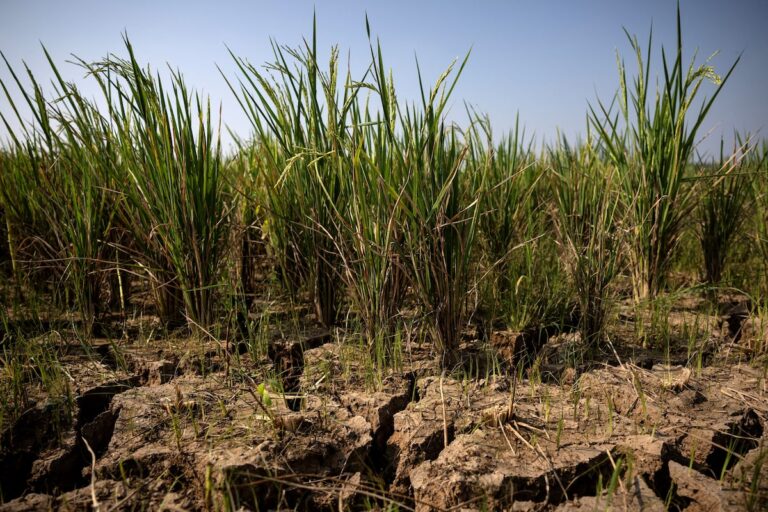
    A powerful El Niño weather event could push nearly 49 million more people into acute hunger by the end of 2027, the United Nations’ World Food Programme (WFP) has warned, raising fresh concerns about a worsening global food crisis driven by climate change and extreme weather. According to a new WFP report released on Wednesday, there is an 81 percent probability that the developing El Niño will become a very strong event, with Pacific Ocean temperatures already reaching their highest levels since at least 1982. If current forecasts hold, it could become the strongest El Niño recorded since 1950. El Niño is a naturally occurring climate pattern that warms surface waters in the central and eastern Pacific Ocean. Although it originates in the Pacific, it disrupts weather systems worldwide, often triggering droughts, delayed monsoons, floods and unpredictable rainfall that damage crops and threaten food supplies. The WFP estimates that 274 million people across 45 vulnerable countries could face acute food insecurity by the end of next year, representing a 22 percent increase from current crisis levels. Central America and Southern Africa are expected to suffer the most severe consequences. Food insecurity in Central America could rise by 83 percent, while Southern Africa may experience a 75 percent increase. More than 12 million additional people in Southern Africa, South America and the Caribbean could struggle to access enough food. Jean-Martin Bauer, Director of WFP’s Food Security and Nutrition Analysis Service, said previous strong El Niño events have repeatedly triggered major hunger emergencies. “These are events that in the past have caused widespread food crises,” Bauer said, urging governments and humanitarian organisations to prepare before conditions worsen. Although global food markets entered this El Niño cycle in a relatively stable position following strong harvests in 2025. Bauer warned that ongoing conflict in the Middle East and possible crop failures caused by extreme weather could push food prices higher. While worldwide price spikes are not considered inevitable, regional shortages could make food increasingly unaffordable for millions of vulnerable families already struggling with poverty. The report also highlights another growing concern—declining humanitarian funding. Budget cuts from major donors in the United States and Europe have significantly reduced WFP’s ability to monitor food security. Household surveys dropped from 1.1 million in 2024 to around 800,000 in 2025, with further reductions recorded this year due to funding shortages. Experts warn that limited data collection could delay the identification of emerging hunger hotspots, making humanitarian responses slower and less effective. The WFP also forecasts below-average rainfall across parts of East Africa, the Sahel, Central America and the Caribbean, while countries such as Somalia could face an increased risk of flooding. Across South and Southeast Asia, delayed monsoons, drought and localized floods are expected to disrupt agricultural production and livelihoods. Despite the alarming outlook, the UN agency stressed that forecasts remain uncertain and impacts will vary from region to region. To reduce future losses, the WFP has expanded its anticipatory action programmes in 18 countries, providing cash assistance and emergency support to more than 1.3 million people ahead of expected climate shocks. The agency says acting early will be critical to preventing millions more people from falling into hunger as one of the strongest El Niño events in decades continues to develop.

  • | |

    PTI rally sparks clashes, gridlock in Karachi

    A protest organized by Pakistan Tehreek-e-Insaf (PTI) in Karachi turned violent on Tuesday after party workers gathered near Fountain Chowk to express solidarity with PTI founder Imran Khan, leading to clashes with police, multiple arrests, and widespread traffic disruption. Hundreds of PTI supporters assembled at the protest site, chanting slogans and demanding the release of the party’s founder. The situation escalated when some protesters allegedly pelted police with stones as law enforcement attempted to prevent the gathering from moving forward. Police responded by firing tear gas shells and launching a baton charge to disperse the crowd and regain control of the area. The confrontation created panic among protesters and passersby, while security personnel moved in to clear the protest site and restore order. During the crackdown, police detained several PTI leaders and workers, including PTI Sindh Secretary General Dr. Masroor Siyal. Authorities have yet to confirm the total number of arrests or provide details about any injuries sustained during the clashes. The demonstration also brought traffic in parts of Karachi to a standstill. Roads surrounding Governor House, Metropole, Shaheen Complex, and nearby commercial areas witnessed severe congestion as police blocked several routes and diverted traffic. Long queues of vehicles formed across the city center, leaving commuters stranded for hours and disrupting routine business activity. The protest formed part of PTI’s ongoing campaign to show support for its jailed founder, with party workers continuing to hold demonstrations in different parts of the country despite heightened security measures and police action.