pakistan links jaac
|

Pakistan links JAAC protests to India-funded forei…

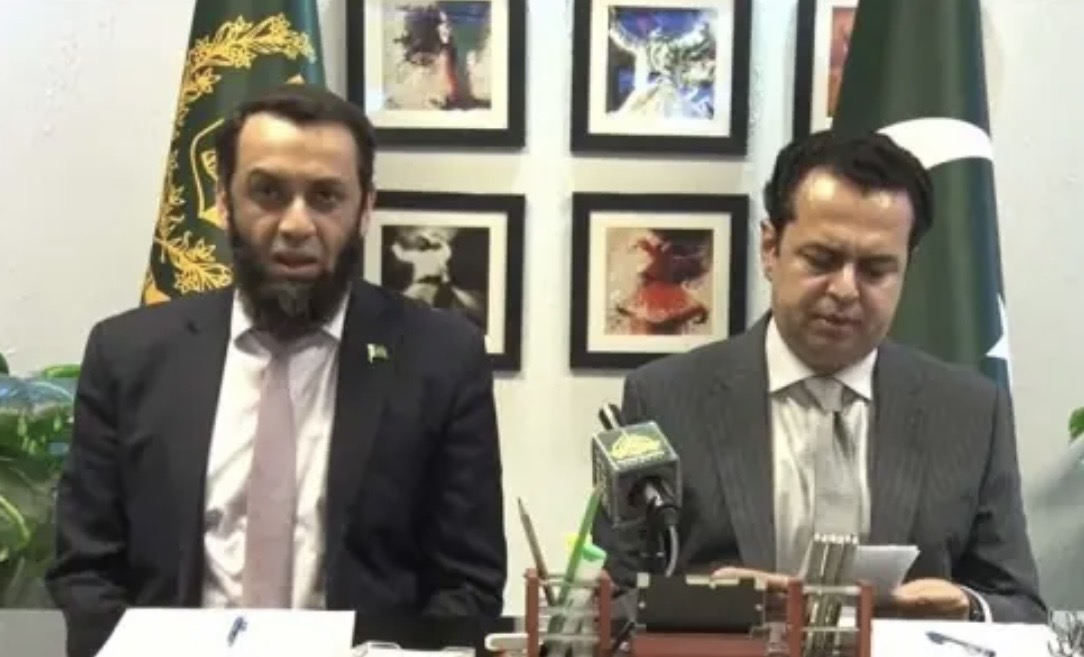
Information Minister Attaullah Tarar has alleged that violent protests by the banned Joint Awami Action Committee (JAAC) in Azad Jammu and Kashmir are being driven by militant elements pursuing a foreign agenda with Indian funding, as the government moves to restore order following the first phase of regional elections.

Speaking on Tuesday, Tarar maintained that while the recent elections in the Mirpur division were peaceful and transparent, the banned outfit could not accept the democratic process and resorted to violence. He noted that the people of Kashmir had given a “spectacular response” to the elections, with 600,000 votes cast in Rawalakot alone.

Tarar claimed that investigators have uncovered irrefutable evidence linking the JAAC’s social media campaign to India. Security agencies recently arrested a digital marketing services provider whose payment trails were traced to Indian gateways. According to the minister, an entire misinformation network was operating through bot farms to spread anti-state content targeting Pakistan’s sovereignty, government institutions, and armed forces. The investigation also recovered WhatsApp conversations between the arrested suspect and an Indian operator discussing payments and content amplification. “The investigation found that the entire misinformation network was operating through bot farms,” Tarar stated, adding that forensic analysis identified India-based accounts even when VPNs were used.

State Minister for Interior Talal Chaudhry emphasized that the government had accepted 37 out of 38 JAAC demands, with only the issue of refugee seats in the AJK Legislative Assembly remaining unresolved due to constitutional complexities. “Thirty-seven out of 38 JAAC demands were accepted, and the government of Pakistan fully cooperated with them,” Chaudhry said. He noted that the movement was not about securing rights but about “snatching” the rights of AJK people. The minister questioned the timing of the protests, noting that JAAC initially tried to stop the election schedule in AJK. “When they failed, JAAC members started long marches, sit-ins, strikes, blocked roads and disrupted activities across the region,” he added.

The AJK government has declared JAAC a proscribed organization under the Anti-Terrorism Act, and authorities have announced a Rs10 million reward for information leading to the arrest of four wanted JAAC leaders. Officials allege that armed members of the group have engaged in violence, resulting in injuries to police personnel. The federal government has assured full support to AJK authorities in maintaining law and order.

Similar Posts

  • |

    Senate Republicans launch battle to repeal Califor…

    A political battle over environmental regulation has intensified as a coalition of Republican senators introduced legislation. The battle will strip California of its authority to establish its own vehicle emissions standards. The proposal represents the latest push in a broader federal strategy to curb the state’s ability to impose environmental mandates that effectively shape national automotive and industrial markets. The effort is led by Senator Cynthia Lummis of Wyoming, alongside Senators Eric Schmitt of Missouri, Pete Ricketts of Nebraska, and Jon Husted of Ohio. The lawmakers argue that California’s regulatory body, the California Air Resources Board (CARB), has abused federal waivers. Auto manufacturers and equipment producers rarely manufacture separate product lines solely for one state. California’s strict rules often become the de facto national standard. These rules influence prices and options for consumers across the entire United States. The Congressional Review Act Strategy This legislative effort has a procedural mechanism: the Congressional Review Act (CRA). Under normal Senate procedures, major legislation requires a 60-vote to overcome a filibuster. However, resolutions brought under the CRA require only a simple majority to pass Congress. The stage for this Senate challenge was set earlier this summer. The timeline was set by the Environmental Protection Agency (EPA) that transmitted landmark California emissions waivers. The waivers were sent to the Republican-controlled Congress for potential repeal. Federal environmental officials asserted that these state waivers should have originally been submitted to lawmakers under the CRA framework. It opened a window for congressional review and nullification. Economic Concerns vs. Environmental Protections Proponents of the repeal contend that California’s stringent tailpipe regulations, mandates for zero-emission vehicles, and rules governing commercial and maritime equipment place an excessive financial burden on businesses and everyday Americans. Lawmakers pushing the repeal maintain that the state’s aggressive transition timelines artificially drive up vehicle costs, strain grid infrastructure, and disrupt critical supply chains, particularly at major Pacific shipping hubs where port electrification and commercial vessel requirements are enforced. Conversely, California officials and environmental advocates strongly defend the state’s right to set higher clean air benchmarks. Granted legal authority under the federal Clean Air Act due to its severe historical smog issues, California served as a primary catalyst for automotive innovation for decades. Supporters argue that strict state waivers successfully incentivized carmakers to develop cleaner internal combustion engines and expand electric vehicle offerings, resulting in measurable air quality improvements nationwide. Legal Showdown and Future Outlook The dispute overflowed from legislative halls into federal courtrooms. California state attorneys filed a lawsuit challenging the EPA’s decision to submit the waivers to Congress under the CRA, characterizing the maneuver as an illegal attempt to bypass statutory deadlines and overturn established regulatory frameworks.   The Senate prepares to consider the repeal resolutions. The fight underscores a fundamental dispute over authority and the future of transport decarbonization in America. Whether through congressional votes or judicial rulings, the outcome will likely dictate the regulatory landscape for automakers and consumers.

  • Russian Man Causes Chaos on Flight, Denied Entry to Thailand

    BANGKOK – A Russian passenger was denied entry to Thailand after causing significant disruption on a flight from Vietnam, behaving erratically, stripping off his clothing, and attempting to force open an aircraft door mid-flight. British Airways Upgrades Passenger Who Tackled Drunk Russian on Flight to Bangkok The incident occurred on January 29, 2026, aboard Thai […]

  • | | |

    Pakistan, Iran agree to strengthen border security…

    Pakistan and Iran have agreed to deepen cooperation on border security, counterterrorism, anti-narcotics operations, and efforts to combat illegal immigration and human trafficking. The agreement was reached during a meeting between Interior Minister Mohsin Naqvi and his Iranian counterpart, Eskandar Momeni, in Islamabad. Momeni arrived in Pakistan with a high-level delegation for talks aimed at expanding bilateral cooperation and addressing shared security concerns. During the meeting, both ministers stressed the need for stronger coordination to counter terrorism and drug trafficking in the Pakistan-Iran-Afghanistan border region. They agreed that closer cooperation and intelligence sharing are essential to prevent cross-border crimes and improve regional security. The two sides also reaffirmed their commitment to strengthening bilateral relations and expanding cooperation in trade, transit, agriculture, and other sectors. They agreed to improve coordination mechanisms to promote economic ties and facilitate greater collaboration between the neighbouring countries. Mohsin Naqvi said Pakistan is ready to enhance cooperation with Iran in every field of mutual interest. He praised the efforts of Iranian officials in promoting peace and expressed hope that diplomatic initiatives would help restore stability in the region. The Iranian delegation included senior officials from the interior ministry, urban development and transport ministry, the National Iranian Oil Company, the agriculture ministry, and the governor of Sistan-Baluchestan province. Pakistan’s delegation included senior officials from the Ministry of Interior, the Federal Investigation Agency, the Anti-Narcotics Force, NADRA, the National Cyber Crime Investigation Agency, Immigration and Passports, Islamabad Police, and other relevant departments. The visit comes at a time of renewed tensions in the Middle East. Military exchanges between the United States and Iran have intensified in recent days, raising concerns over regional stability and the security of international shipping routes. The Strait of Hormuz remains a major point of concern as continued hostilities threaten global oil supplies and international trade. The escalating conflict has also increased fears of wider economic disruption.

  • | |

    Pakistan wheat import faces Sindh opposition

    The Sindh government has strongly opposed the federal government’s decision to import wheat, warning that the move could hurt local farmers and weaken the domestic agriculture sector. Sindh Food Minister Makhdoom Mehboob-uz-Zaman said the province does not support wheat imports at a time when the country already has sufficient local production. He argued that bringing in imported wheat would reduce demand for locally grown crops and create financial difficulties for farmers who are already struggling with rising production costs. The minister also criticized the Punjab government for restricting the inter-provincial movement of wheat. According to him, Punjab currently has a surplus of around seven million metric tons of wheat, while Sindh faces a shortfall of nearly one million metric tons. He said that easing the movement of wheat between provinces would help address supply gaps without relying on imports. Makhdoom Mehboob-uz-Zaman added that the Sindh government plans to purchase wheat from the Pakistan Agricultural Storage and Services Corporation (PASSCO) to meet the province’s procurement target. He stressed that local resources should be utilized before considering foreign imports. Commenting on flour prices, the food minister said wheat flour in Karachi is currently selling between Rs130 and Rs140 per kilogram. He maintained that better coordination between the federal and provincial governments, along with the efficient distribution of locally available wheat, would help stabilize supplies and protect the interests of both consumers and farmers.

  • | | |

    Rising energy costs expand trade deficit

      Pakistan’s trade deficit widened considerably in July 2026 as increasing energy prices pushed the country’s import bill higher, despite continued growth in exports. According to data released by the Pakistan Bureau of Statistics (PBS), the trade gap reached $3.95 billion, representing an increase of more than 25 percent compared with $3.15 billion recorded in July 2025. The official figures revealed that imports increased by nearly 18 percent on a year-on-year basis, while exports also recorded an encouraging rise of almost 10 percent during the same period. Although export earnings improved, they were insufficient to offset the rapid increase in import payments. Saad Hanif, Head of Research at Ismail Iqbal Securities, said the latest figures indicate that Pakistan’s demand for imported goods remains strong. According to him, economic activity has continued to recover, resulting in higher import volumes across several sectors. He noted that the country’s reliance on imported products has remained significant despite efforts to improve the trade balance. Import payments climbed to $6.89 billion in July, compared with $5.84 billion during the same month last year. Hanif explained that the main reason behind the sharp increase was the rise in global energy prices, particularly due to ongoing tensions in the Middle East. He said petroleum products and Re-gasified Liquefied Natural Gas (RLNG) became around 40 to 50 percent more expensive than they were a year earlier. Since Pakistan depends heavily on imported fuel, energy purchases typically account for between one-fifth and one-quarter of the country’s total import expenditure. In addition, higher imports of automobiles, industrial equipment and agricultural machinery also contributed to the increase in the import bill. Exports, however, showed positive momentum. Pakistan earned $2.94 billion from exports in July, compared with $2.68 billion in the corresponding month of 2025. Hanif attributed this improvement mainly to stronger food exports, especially rice, which regained momentum in international markets. He also highlighted that the textile industry continues to be Pakistan’s largest export sector, contributing more than half of the country’s total export earnings. Textile exports remained stable throughout the previous fiscal year, helping maintain overall export performance. When compared with the previous month, Pakistan’s trade position showed some improvement. The trade deficit had reached $4.66 billion in June 2026 but narrowed by more than 15 percent in July. This improvement was largely driven by a remarkable 31 percent monthly increase in exports, one of the strongest monthly gains recorded in recent years, while import payments remained almost unchanged. The Ministry of Finance described the development as a positive beginning to the new fiscal year and linked it to government measures aimed at supporting exports, improving industrial productivity and reducing the cost of doing business. Meanwhile, Prime Minister Shehbaz Sharif has directed authorities to accelerate the privatisation of state-owned electricity distribution companies by attracting reputable international investors. During a review meeting in Islamabad, he instructed the Privatisation Commission to complete its restructuring within one month and ensure that the entire process follows international standards, transparent procedures and fixed timelines. He also stressed that consumer interests should remain fully protected throughout the privatisation process. The prime minister welcomed the positive response received during recent investor roadshows held in Pakistan, Turkey, Saudi Arabia and China for the first-phase privatisation of Gepco, Fesco and Iesco. He further instructed the Privatisation Commission to recruit qualified professionals in finance, law and information technology to strengthen its institutional capacity. In addition, he ordered the establishment of an effective grievance mechanism to address consumer complaints after the companies are transferred to private ownership. The government expects bidding for the three electricity distribution companies to take place between October and December 2026, with the aim of attracting investment from Gulf and other Asian markets.

  • | |

    Pakistan names 1st lunar rover ‘Jinnah-1’ ahea…

    ISLAMABAD: The Space and Upper Atmosphere Research Commission (SUPARCO) has officially named Pakistan’s first lunar rover “Jinnah-1,” marking a significant milestone in the country’s space exploration journey. The name was selected through a nationwide competition that attracted more than 4,000 suggestions from people across Pakistan. The title “Jinnah-1” was proposed by seven participants, with the final winner chosen through a draw. Seventeen-year-old Tayyab Karim from Bahawalnagar was declared the winner after submitting the name. SUPARCO said the name pays tribute to Quaid-e-Azam Muhammad Ali Jinnah and represents Pakistan’s ambition, progress and determination to explore new frontiers in space. The rover is scheduled to travel to the Moon in 2029 as part of China’s Chang’e-8 mission. Once deployed, Jinnah-1 will carry out scientific research in the lunar south polar region, contributing to Pakistan’s growing role in international space exploration. The mission is expected to provide Pakistani scientists and researchers with valuable opportunities to participate in lunar scientific studies and advance the country’s capabilities in space technology.

Leave a Reply

Your email address will not be published. Required fields are marked *