peek naia t3s
| | | | |

A peek at NAIA T3’s swanky First Meridian — and the coming lounge shake-up

Golf before a flight? Buffet with a glass of wine? Teppanyaki? A nap?

If you’re a business class flyer in NAIA Terminal 3, you just might have those options at First Meridian.

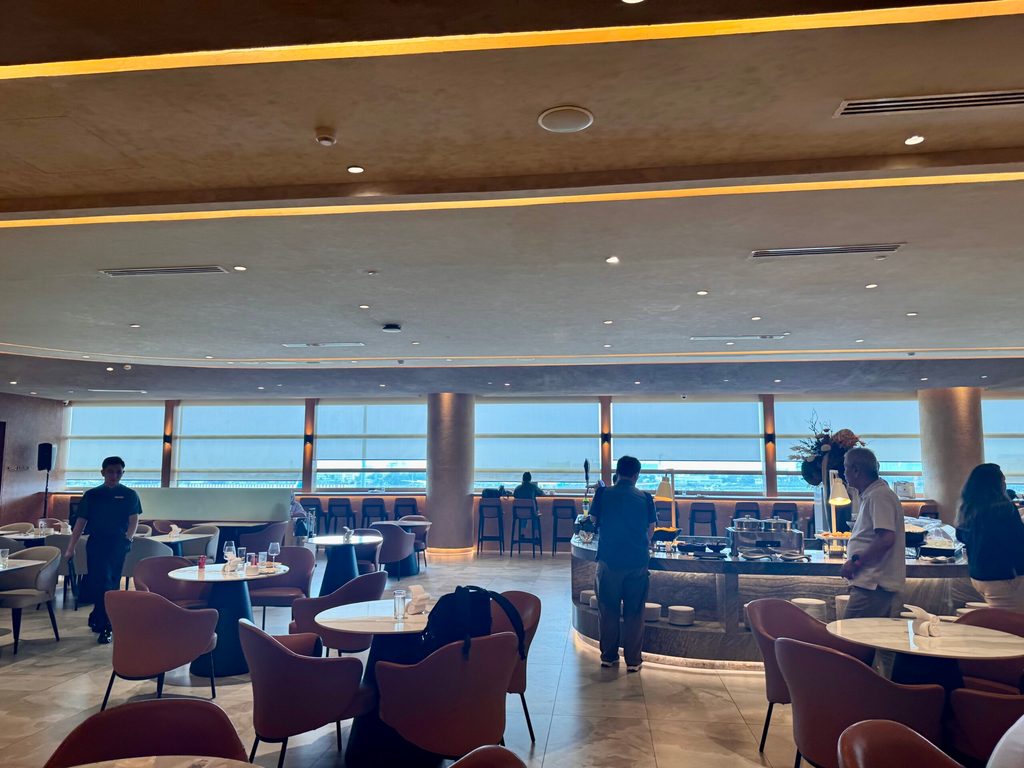
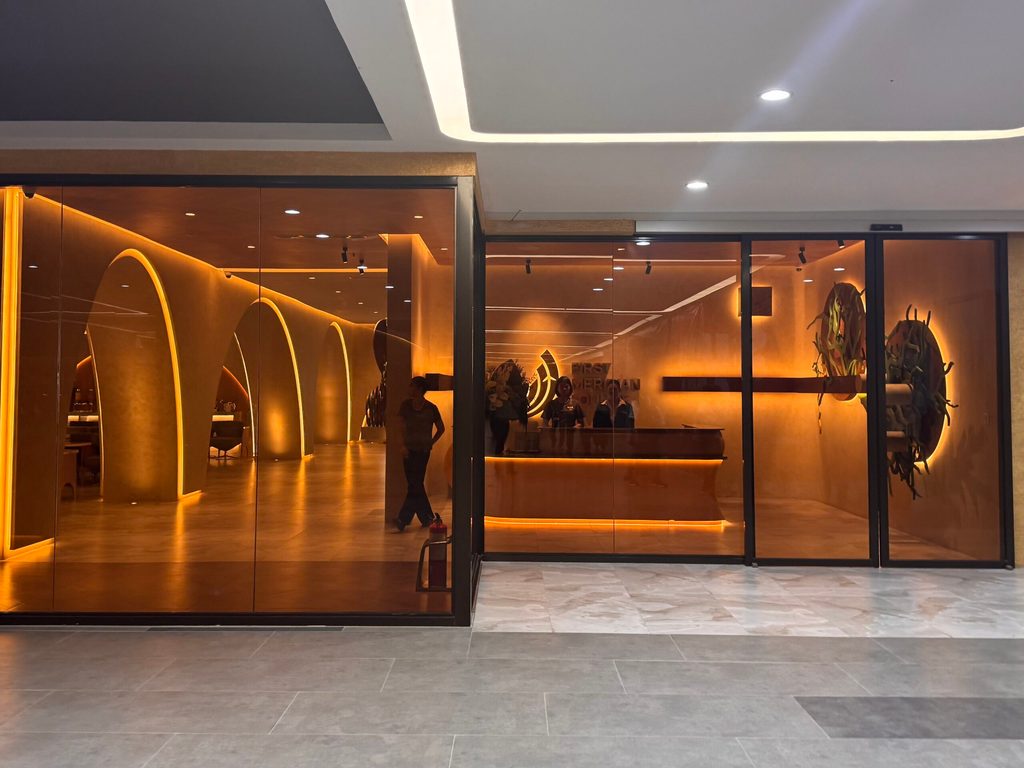
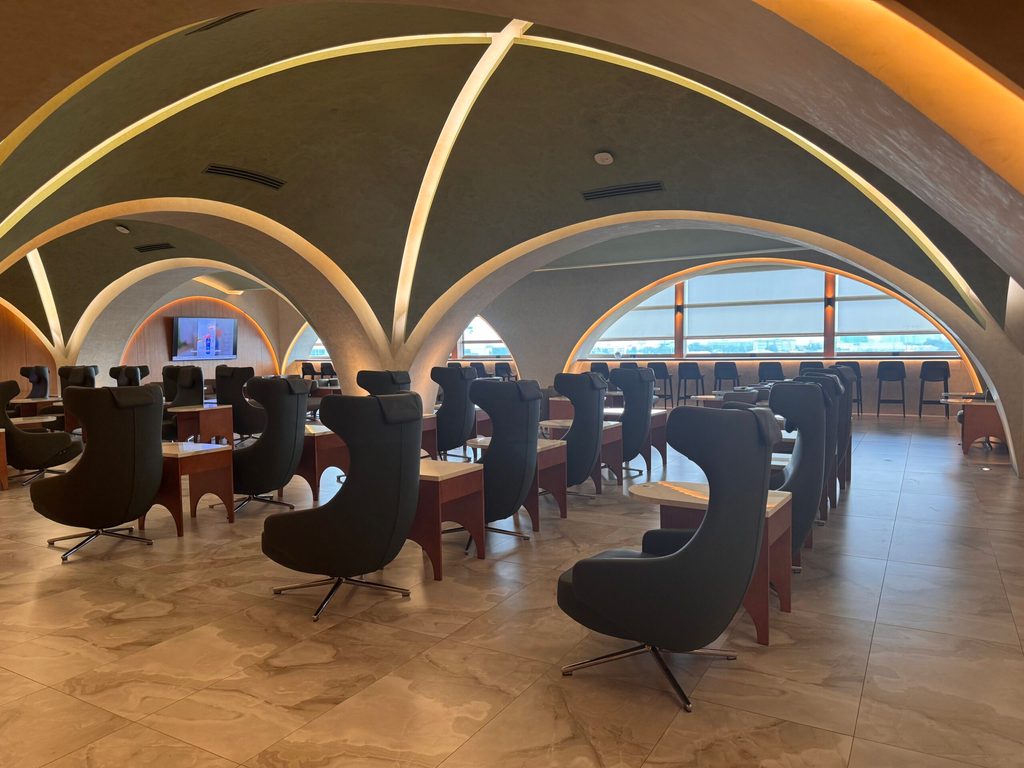
The sprawling new premium lounge tucked above Terminal 3’s international departure area is a striking new addition to the airport under New NAIA Infra Corp. (NNIC). For one thing, First Meridian lounge is massive. At around 2,600 square meters, it’s hard to miss.

That’s significantly bigger than the usual airline and common-use lounges travelers might have seen in the past.

inside track logo

Rappler got a first-hand look at the premium lounge during a tour with NNIC officials and former transportation secretary Jaime Bautista, now an independent director of San Miguel Corporation.

Inside are rows of seating overlooking the airside, quiet zones, showers, private dining rooms, and workspaces. There’s a library and game room, a children’s play area, and infant care room. And — because apparently waiting for a flight is also enough time to work on your swing — there’s even a golf simulator.
They didn’t skimp on the food either. When Rappler visited the lounge, there were generous servings of Japanese beef curry, chicken Emmental pie, spaghetti, and bowls of rich, steamy shrimp laksa. Those with a sweet tooth can indulge in honey ice cream and burnt cheesecake.

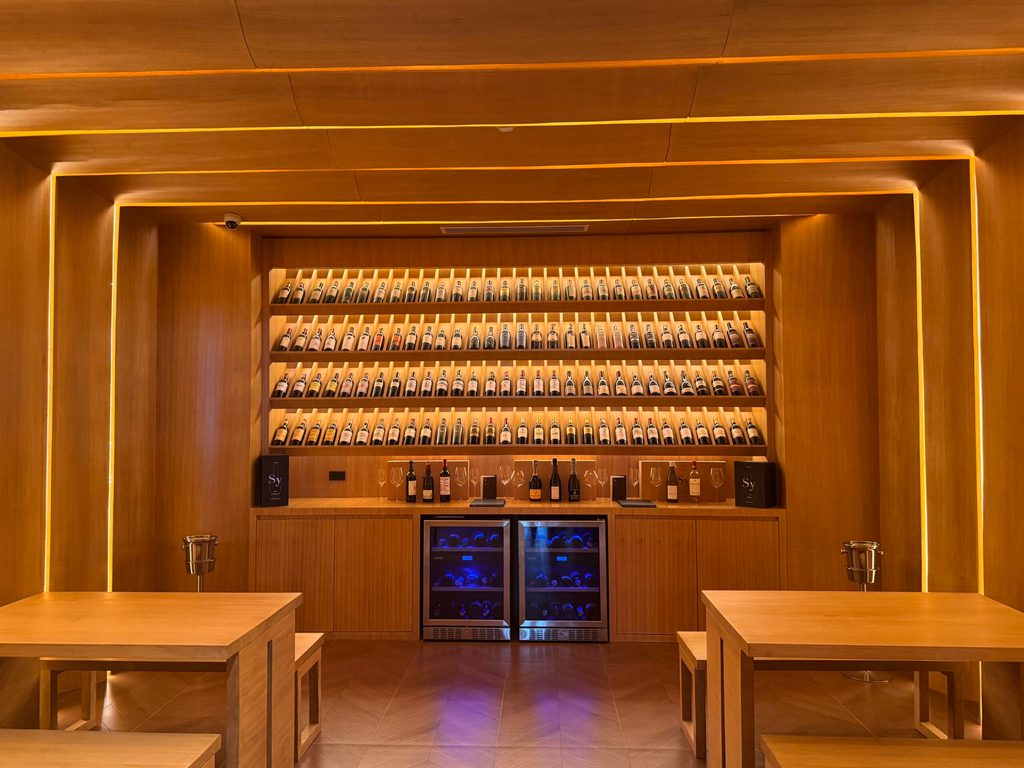
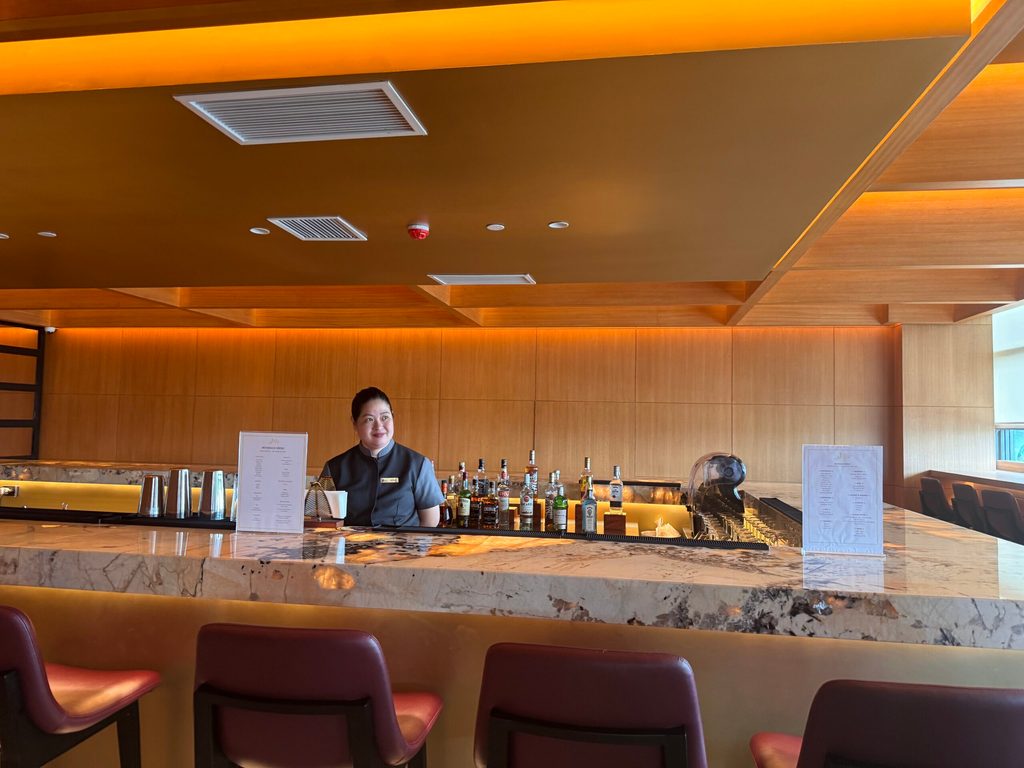
Apart from a buffet, passengers can find a bakery, teppanyaki station, a full-service bar, and yes, even a wine cellar.

The idea behind this is closer to the large shared lounges found at other main Asian airports. Instead of each airline maintaining its own relatively small space that may fill up only around certain flights, several carriers send their premium passengers to one large facility.

By early June, First Meridian was already serving eligible passengers from at least seven international carriers — Thai Airways, Emirates, Japan Airlines, Vietnam Airlines, Cathay Pacific, KLM, and Qatar Airways. Singapore Airlines has also begun sending eligible passengers there after closing its own Terminal 3 lounge on June 15, while ANA also now lists First Meridian among its Manila lounge options.

And if you have a long layover, good news: it’s open 24 hours.
Fewer lounges ahead

First Meridian’s arrival is also the start of a shake-up of Terminal 3’s existing lounges.

Terminal 3 has long had a patchwork of airline-operated and third-party lounges, but that lineup is already thinning out. Marhaba’s Terminal 3 lounge closed in May, while A Lounge is scheduled to permanently shut on September 1.

Cathay Pacific was among the first major carriers to make the switch. It permanently shuttered its own Manila lounge effective May 31 and now directs eligible passengers to First Meridian.

PAGSS is the next one to watch.

PAGSS, short for Philippine Airport Ground Support Solutions, operates another lounge inside Terminal 3, just a few steps away from First Meridian. The lounge had initially been expected to close by September 15 as NNIC reorganized T3’s commercial space.

Must Read

‘Long overdue’: NNIC taps Collins Aerospace to modernize NAIA systems


‘Long overdue’: NNIC taps Collins Aerospace to modernize NAIA systems

Except now, not so fast.

An NNIC official told Rappler that they’re looking to extend the operation of PAGSS until December 31 while NNIC and the airlines continue evaluating how to transition to common-use lounges.

“When the proper time comes, a decision will have to be made by the airlines,” the official told Rappler.

NNIC’s envisioned end state is a tidier Terminal 3 with just two premium lounges. One would be First Meridian, serving multiple international airlines. The other would be a Philippine Airlines-led facility that would also accommodate carriers from the oneworld alliance.

PAL was formally invited to join oneworld earlier in June, beginning its path to join a global airline group whose roster includes American Airlines, British Airways, Cathay Pacific, Japan Airlines, Qantas, and Qatar Airways. 

Who runs First Meridian?

First Meridian itself is not directly operated by NNIC. NNIC describes it as a privately-operated, third-party lounge. Its operator is Prestige Airport Lounge Corp.

Prestige is also connected to the San Miguel group that leads NAIA’s private concessionaire. San Miguel Corporation disclosures identify Prestige Airport Lounge as part of its infrastructure business and, as of June 2025, a wholly-owned subsidiary of San Miguel Holdings Corp.

That makes First Meridian part of the broader commercial transformation taking place since NNIC took control of NAIA in September 2024, as previously underused and boarded-up areas are turned into lounges, restaurants, shops and passenger facilities. – Rappler.com

Similar Posts

  • | | |

    PARCO, Cnergyico lead $1bn refinery exports

    Pakistan’s oil refining sector has achieved a major milestone. The country’s five major refineries exported petroleum products worth around $1.046 billion during the fiscal year 2025-26. This is the first time that the refinery sector has crossed the $1 billion export mark. The development has also strengthened the sector’s role as a source of foreign exchange for Pakistan. The achievement comes as the country continues to face pressure from a large trade deficit. Pakistan’s trade deficit is estimated at around $40 billion, increasing the importance of exports and import savings. The five major refineries made a significant contribution to the overall export earnings. Pakistan Arab Refinery Company (PARCO) recorded exports of around $277 million. Cnergyico Pakistan Limited exported petroleum products worth approximately $258 million. National Refinery Limited (NRL) recorded exports of around $238 million. Pakistan Refinery Limited (PRL) exported products worth approximately $200 million. Meanwhile, Attock Refinery Limited (ARL) exported petroleum products worth nearly $73 million. PARCO and Cnergyico remained the biggest contributors. Their combined exports reached approximately $535 million. This accounts for more than half of the total exports recorded by the five refineries. The development is particularly significant because the refining sector has traditionally been viewed mainly as a means of reducing Pakistan’s dependence on imported petroleum products. The latest figures show that the industry is increasingly contributing to both sides of the equation. It is helping reduce the import burden while also generating foreign exchange through exports. Cnergyico has also entered the global marine fuel market. The move could provide the company with new export opportunities and help expand Pakistan’s presence in the international fuel market. Industry modernization is expected to further improve the sector’s performance. Upgraded refinery facilities can increase production efficiency and enable companies to produce products that meet international market requirements. Further investment in refinery upgrades could therefore lead to higher exports in the coming years. It could also increase savings on petroleum imports. The latest performance highlights the growing importance of Pakistan’s refining industry. With continued modernization, better efficiency and access to international markets, the sector could become an increasingly important source of foreign exchange for the country. The development also comes at a critical time for Pakistan’s economy. Higher exports and lower import dependence are essential for reducing pressure on the country’s external account.

  • | | |

    Pakistan to reopen all border, transit routes with…

    A decision has been taken to reopen all border crossings and transit routes between Pakistan and Afghanistan, following a meeting chaired by Federal Interior Minister Mohsin Naqvi with senior officials and representatives of the business community. The meeting discussed measures to remove obstacles affecting bilateral trade and facilitate the movement of goods between the two countries. Participants also stressed the need to restore normal economic ties and improve trade relations between Pakistan and Afghanistan. The meeting further focused on making legal travel between the two countries easier and more convenient for their citizens. Officials and business representatives agreed that reopening the routes would help address difficulties faced by traders and support economic activity on both sides of the border. The government also emphasised the importance of reducing unnecessary hurdles in trade and movement while ensuring that legal procedures remain in place.

  • |

    KP cabinet approves tax exemptions for merged districts, Malakand

    PESHAWAR: The Khyber Pakhtunkhwa government has approved a package of measures aimed at providing tax relief to businesses and industries operating in the province’s merged tribal districts and Malakand Division, while also expanding welfare and education initiatives. According to Khyber Pakhtunkhwa Information Minister Shafiullah Jan, the provincial cabinet has endorsed exemptions from certain provincial taxes for service providers and industries operating in areas previously covered by the Federally Administered Tribal Areas (FATA), Provincially Administered Tribal Areas (PATA) and Malakand Division. Under the decision, service providers operating in the former FATA, PATA and Malakand areas will be exempted from provincial sales tax on services. Industries established in these regions will also receive relief from withholding sales tax. The government said the tax measures were intended to encourage investment, facilitate businesses and support economic activity in areas that have historically faced developmental and infrastructure challenges. Ehsaas Nawaz funding increased The cabinet also approved a significant increase in the financial allocation for the Ehsaas Nawaz programme. According to the information minister, the programme’s funding has been raised from Rs3 billion to Rs5 billion. The increase is expected to provide additional financial support under the government’s welfare initiatives and expand the programme’s reach among deserving segments of the population. Ashra Rahmat Lil-Aalameen programme approved The provincial cabinet also approved arrangements for observing Ashra Rahmat Lil-Aalameen (PBUH) across Khyber Pakhtunkhwa. The celebrations will formally begin from the first day of Rabi-ul-Awwal, with the cabinet approving a schedule for programmes to be organised across the province. The initiative is expected to include a range of activities aimed at highlighting the teachings, life and message of the Holy Prophet Muhammad (PBUH). Education sector measures Several decisions concerning education were also approved during the cabinet meeting. The provincial government sanctioned funds for schools and colleges in various districts to address educational requirements and improve facilities. The cabinet also approved a system for providing textbooks according to the semester system up to Grade 5. In another major education-related decision, the cabinet approved the provision of 100 percent free textbooks for students from Grade 9 to Grade 12. The measures are aimed at reducing the financial burden on students and their families while improving access to educational resources, particularly for students enrolled in government institutions. Public-private partnership legislation The cabinet further approved the Khyber Pakhtunkhwa Public Private Partnership Authority Bill 2026 for enactment. The proposed legislation is intended to establish a formal framework for public-private partnerships in the province and facilitate greater participation of the private sector in development projects. The government believes stronger public-private cooperation can help mobilise investment, improve service delivery and accelerate infrastructure development across Khyber Pakhtunkhwa.

  • |

    PSX jumps 2,100 points on global optimism

    The Pakistan Stock Exchange (PSX) witnessed a strong rally at the start of trading on Wednesday, with investors returning to the market after signs of easing geopolitical tensions in the Middle East lifted global sentiment. The benchmark KSE-100 Index climbed by more than 2,100 points during the opening session, reflecting renewed optimism among market participants. By around 9:30am, the KSE-100 Index was trading at 179,216.20 points, registering a gain of 2,132.98 points, or 1.20 percent, compared with the previous close. Market analysts attributed the sharp recovery to encouraging remarks from officials in Qatar and the United States, which strengthened expectations that diplomatic efforts could help prevent further escalation of the Iran conflict. The improved global outlook encouraged investors to increase buying in key sectors of the local market. The rally was broad-based, with significant buying interest recorded in automobile assemblers, cement manufacturers, commercial banks, fertiliser companies, oil marketing firms, power generation companies and refineries. Among the major gainers were heavyweight stocks such as Attock Refinery Limited (ARL), Mari Energies (MARI), Oil and Gas Development Company (OGDC), Pakistan Petroleum Limited (PPL), Pakistan Oilfields Limited (POL), Pakistan State Oil (PSO), Habib Bank Limited (HBL), MCB Bank, Meezan Bank (MEBL) and United Bank Limited (UBL), all of which traded in positive territory during the early session. Investor confidence also received support from reports that Pakistan has approached China to refinance a $1.3 billion commercial loan. According to reports, the financing is expected to be finalised later this month after both sides complete negotiations on the terms and conditions. Market participants believe the move could help strengthen Pakistan’s external financing position and provide support to the country’s foreign exchange reserves. The strong opening followed a volatile trading session on Tuesday, when the stock market closed significantly lower after investors engaged in widespread profit-taking. Although the KSE-100 Index had reached an intraday high of 178,768.83 points, selling pressure emerged later in the session as traders locked in gains following Monday’s impressive rally. Global financial markets also contributed to the positive sentiment. Asian equities advanced sharply after strong corporate earnings in the United States and continued enthusiasm for technology stocks pushed Wall Street to fresh record highs. Investors were further encouraged by hopes that diplomatic efforts would help keep the Strait of Hormuz open, easing concerns over disruptions to global energy supplies and putting downward pressure on oil prices and bond yields. Japan’s Nikkei index surged around 3 percent, while South Korea’s benchmark gained more than 4 percent. The broader MSCI Asia-Pacific Index outside Japan also posted strong gains, with Chinese blue-chip shares moving higher as investors welcomed improving market sentiment across the region. In the United States, stock futures remained stable after the S&P 500 reached another record high. However, trading in some technology stocks remained mixed. Chipmaker AMD declined in after-hours trading despite reporting earnings that exceeded analysts’ estimates, as investors had anticipated even stronger results. Concerns also persisted over the heavy capital spending required to support artificial intelligence infrastructure, with rising borrowing costs continuing to weigh on parts of the technology sector.

Leave a Reply

Your email address will not be published. Required fields are marked *