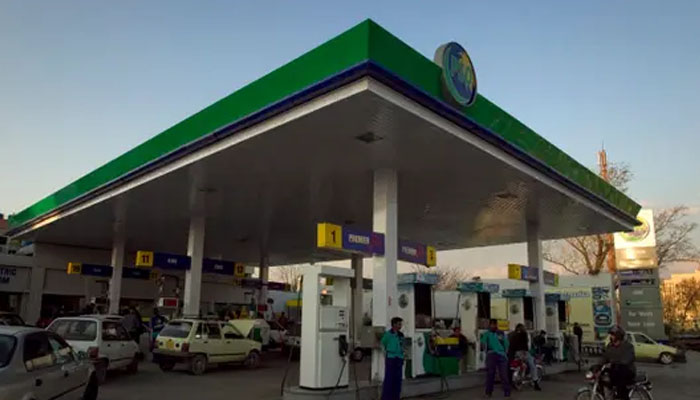
petroleum levy collection
|

Petroleum Levy collection hits record Rs1.57 trill…

Pakistan’s petroleum levy collection reached a record Rs1.567 trillion during the fiscal year 2025-26, exceeding both the government’s target and the International Monetary Fund’s (IMF) projection, according to sources.

The government also collected an additional Rs50.16 billion as Climate Support Levy during the fiscal year, adding further revenue from petroleum products.

Sources said petroleum levy collections increased by Rs347.24 billion compared with the previous fiscal year. The total collection stood nearly Rs100 billion above the government’s target of Rs1.468 trillion for FY2025-26.

The collection also surpassed the IMF’s estimate. The global lender had projected petroleum levy revenues of around Rs1.546 trillion for the fiscal year, meaning the actual collection exceeded the projection by approximately Rs21 billion.

Petroleum levy revenues have continued to rise sharply in recent years. The government collected Rs1.220 trillion in FY2024-25, compared with Rs1.019 trillion in FY2023-24. In FY2022-23, petroleum levy collection stood at around Rs580 billion.

The latest figures reflect the government’s growing reliance on petroleum-related revenues to strengthen its fiscal position and meet revenue requirements under its economic programme.

At present, the government charges a petroleum levy of Rs80 per litre on petrol, while high-speed diesel carries a levy of Rs77.28 per litre. In addition, the government imposes a separate Climate Support Levy of Rs5 per litre each on petrol and diesel.

The record collection comes as the government continues to seek higher revenues while managing fiscal pressures and meeting commitments under its agreement with the IMF. The increased levy revenue provides additional funds for the federal budget but also adds to the overall cost burden on consumers through petroleum prices.

Similar Posts

  • | |

    New team formed to probe Mir Raza Ali’s death

    The investigation into the death of 25-year-old businessman Mir Raza Ali has taken a new turn after police added a murder charge to the case and reconstituted the team handling the probe. Ali’s body was discovered in bushes in Karachi’s Gulistan-i-Jauhar on July 29, a day after he was reported missing. His family has maintained from the outset that he was abducted, subjected to torture and killed, while the initial police investigation had considered the possibility of suicide. The latest development came after a second post-mortem examination produced findings that differed from the initial medical report. According to an order issued by the Sindh Inspector General of Police’s office, the investigation team has been reorganised following the findings of the second autopsy. The first information report (FIR), initially registered under Section 365 of the Pakistan Penal Code for kidnapping, now also includes Sections 302 and 201. Section 302 deals with murder, while Section 201 relates to causing evidence of an offence to disappear or providing false information to protect an offender. A five-member team has now been assigned responsibility for the investigation. It is headed by Sindh Deputy Inspector General (Crime and Investigation) Amir Farooqui and includes senior police officers from different investigative units. The new team has been directed to conduct a thorough and impartial investigation and examine the case from every relevant angle. Police have also been instructed to identify, secure and analyse any new evidence, including physical, forensic, technical and circumstantial material. The team has been asked to make every effort to determine what happened to Ali and submit its findings to the relevant court within the required timeframe. Investigators will also provide daily updates on the progress of the case. The development follows demands from Ali’s family for a change in the investigation. Family lawyer Jibran Nasir had called for the original probe to be replaced after the businessman’s body was exhumed for a second post-mortem examination. According to the family’s legal representative, the fresh examination found evidence indicating that Ali had been shot in the back. He argued that the finding contradicted the earlier possibility of suicide and supported the family’s allegation that Ali had been murdered. Nasir has further alleged that Ali was tortured before his death, describing him as a young and ambitious businessman whose death had left his family seeking answers. The lawyer has also criticised the handling of the case by senior police officials, claiming that the family faced harassment and pressure instead of receiving a satisfactory investigation.

  • | | | |

    Pakistan-US relations strengthen as PM Shehbaz Sha…

    Prime Minister Shehbaz Sharif welcomed a bipartisan delegation from the United States Congress in Islamabad, reaffirming Pakistan’s commitment to strengthening bilateral ties and expanding cooperation across key economic and strategic sectors. The meeting underscored the growing momentum in Pakistan-US relations and highlighted the importance of continued dialogue between the two countries. The U.S. congressional delegation included Representatives Ryan Zinke and Michael Baumgartner. The meeting was also attended by Deputy Prime Minister and Foreign Minister Ishaq Dar, Foreign Secretary Ambassador Amna Baloch, and U.S. Chargé d’Affaires Natalie Baker. During the discussions, Prime Minister Shehbaz Sharif welcomed the visiting lawmakers and described their visit as a positive step toward deepening cooperation between Pakistan and the United States. He also congratulated the American people on the upcoming 250th anniversary of U.S. independence and conveyed his best wishes to President Donald Trump. The Prime Minister expressed appreciation for President Trump’s role in helping reduce tensions between Pakistan and India during the 2025 crisis. Referring to the ceasefire reached in May 2025, Shehbaz Sharif said diplomatic engagement helped prevent further escalation and contributed to regional stability. This reflects the Prime Minister’s stated position regarding the events. Highlighting future opportunities, Shehbaz Sharif said Pakistan is keen to enhance collaboration with the United States in trade, investment, agriculture, information technology, mining, minerals, and energy. He emphasized that stronger economic cooperation should remain a cornerstone of the bilateral partnership. The visiting U.S. lawmakers thanked the Prime Minister for the warm hospitality extended during their visit. They noted that President Trump’s positive relationship with Pakistan’s leadership has had a favorable impact on bilateral engagement. They also acknowledged Pakistan’s efforts to promote regional peace and stability. Both sides agreed on the importance of increasing exchanges between lawmakers from Pakistan and the United States. They said more frequent parliamentary visits could strengthen mutual understanding and support long-term cooperation. Following the meeting, Prime Minister Shehbaz Sharif hosted a reception for a delegation of U.S. corporate executives visiting Pakistan. The business delegation included representatives from the information technology, technology, energy, mining, manufacturing, and other industries. Addressing the gathering, the Prime Minister reiterated Pakistan’s commitment to building a stronger economic partnership with the United States. He encouraged American companies to explore investment opportunities in Pakistan and emphasized the valuable role of the Pakistani-American community in fostering closer ties between the two nations. The meeting reflects both countries’ interest in maintaining constructive diplomatic engagement while expanding cooperation in trade, investment, and regional stability.

  • | |

    Federal cabinet meeting postponed ahead of PM’s …

    The federal cabinet meeting scheduled to be chaired by Prime Minister Shehbaz Sharif has been postponed due to his official visit to Saudi Arabia, according to government sources. The meeting was expected to discuss important national and administrative matters. However, it has been deferred as the prime minister is leaving for a two-day official visit to the Kingdom. Sources said Prime Minister Shehbaz Sharif will depart for Saudi Arabia later today. During the visit, he is expected to hold a high-level meeting with Saudi Crown Prince Mohammed bin Salman. The two leaders are likely to review the strong and longstanding relationship between Pakistan and Saudi Arabia. Discussions will focus on expanding bilateral cooperation in various sectors, including trade, investment, energy and economic collaboration. Regional and international developments will also feature prominently in the talks. Both leaders are expected to exchange views on the evolving situation in the Middle East and other issues of mutual concern. They will also discuss ways to enhance coordination on matters affecting regional peace, stability and security. The visit reflects the close strategic partnership between Pakistan and Saudi Arabia. The two countries maintain strong political, economic and defence ties, while Saudi Arabia has remained one of Pakistan’s key allies and economic partners. Officials said the federal cabinet meeting will be rescheduled after the prime minister returns from Saudi Arabia. A new date for the meeting is expected to be announced in due course.

  • |

    Petrol, diesel prices may fall further

    Petroleum product prices in Pakistan may see another reduction from August 5, offering potential relief to consumers already facing high fuel costs. According to sources within the Oil and Gas Regulatory Authority (OGRA), the price of petrol could decrease by Rs3.39 per litre, while high-speed diesel may become cheaper by Rs4.07 per litre. The latest calculations suggest that the price of petrol could fall to approximately Rs328.56 per litre after the proposed reduction. Similarly, the price of high-speed diesel may come down to an estimated Rs385.86 per litre. OGRA sources said the initial working for the possible price adjustment has been completed. The final decision, however, will depend on the government’s review of the latest calculations and other relevant factors before announcing the new prices. The possible reduction comes shortly after the government announced a cut in petroleum prices. In the previous adjustment, the government reduced the price of petrol by Rs4.08 per litre, while the price of diesel fell by Rs2.45 per litre. If the latest proposed cuts receive approval, consumers could see another decline in fuel prices within a short period. A reduction in petrol prices would directly benefit motorists and households that rely on private vehicles for daily commuting. Lower diesel prices could also provide some relief to the transport sector, as diesel powers a large number of commercial vehicles, buses, trucks and other heavy transport used to move people and goods across the country. A decline in fuel prices may also help reduce pressure on transportation and logistics costs. Since diesel plays a major role in the movement of agricultural produce, industrial goods and essential commodities, any reduction in its price could potentially ease some of the cost burden on businesses and consumers. However, the impact of the proposed reduction on overall inflation will depend on several factors, including transportation costs, exchange rate movements and international oil prices. The government is expected to announce the final petroleum prices after completing its review and approving the new rates. The expected adjustment comes as consumers continue to closely monitor fuel prices because of their direct impact on household budgets and the cost of everyday goods and services. Any further reduction in petrol and diesel prices could provide some short-term financial relief to the public and businesses.

  • | |

    Sugar mills seek approval to export 585,000 tonnes…

    The Pakistan Sugar Mills Association (PSMA) has requested the federal government to allow the export of 585,000 tonnes of surplus sugar, saying the country has sufficient stocks to meet domestic demand while supporting sugarcane growers ahead of the next crushing season. In separate letters addressed to Deputy Prime Minister Ishaq Dar and the Minister for National Food Security, the association urged the government to grant immediate permission for sugar exports, as it has done in previous years. According to the letters, Pakistan had 3.4 million metric tonnes of sugar in stock as of July 15, 2026, while the country’s average monthly consumption stands at approximately 567,000 metric tonnes. The association said that even before the start of the upcoming crushing season, an estimated 1.158 million metric tonnes of sugar would remain in stock, ensuring ample supplies for domestic needs. PSMA further stated that another bumper sugarcane crop is expected during the next crushing season, which is projected to produce around 8 million metric tonnes of sugar—well above the country’s annual requirement. The association warned that with the sugarcane sowing season approaching, growers are facing uncertainty due to concerns over excess sugar stocks and limited storage capacity. It urged the government to allow the export of surplus sugar, including stocks held as strategic reserves, within one month of the beginning of the new crushing season. According to the association, timely exports would help stabilise the domestic market, create storage space for the new crop, and ensure better returns for sugarcane farmers

  • | |

    Pakistan, Iran reaffirm goal to boost bilateral tr…

    ISLAMABAD: Pakistan and Iran have reaffirmed their commitment to expanding bilateral trade to $10 billion, underscoring their determination to strengthen economic cooperation and deepen commercial ties. The pledge was made during the 10th session of the Pakistan-Iran Joint Trade Committee, where representatives from both countries reviewed trade relations and explored measures to enhance economic collaboration. Addressing the meeting, Pakistan’s Federal Minister for Commerce, Jam Kamal Khan, said the longstanding brotherly relationship between Pakistan and Iran should now be transformed into a robust economic partnership. He emphasized the importance of finalizing the proposed Pakistan-Iran Free Trade Agreement, saying it would open new opportunities for businesses and significantly increase trade between the two neighboring countries. The minister stressed the need to remove barriers affecting cross-border logistics, customs procedures, and cargo transportation to ensure smoother and more efficient trade flows. He also highlighted the potential of establishing joint border markets and implementing an electronic data interchange system to facilitate commerce and improve connectivity. Jam Kamal Khan noted that the private sectors of both countries are ready to expand trade and investment, adding that it is the responsibility of governments to provide a stable, business-friendly, and predictable environment that encourages commercial activity. He expressed confidence that the outcomes of the Joint Trade Committee meeting would produce a practical roadmap for strengthening Pakistan-Iran economic relations and accelerating progress toward the shared trade target of $10 billion.

Leave a Reply

Your email address will not be published. Required fields are marked *