pakistan moves strengthen
| | |

Pakistan moves to strengthen digital finance and e…


Finance Minister Muhammad Aurangzeb has called for a more supportive regulatory framework to expand electronic transactions, improve digital access to finance and accelerate Pakistan’s broader digital transformation.

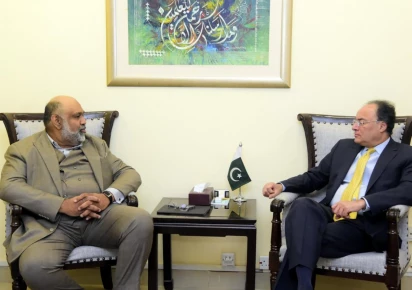
The minister made these remarks during a meeting with Pakistan Digital Authority (PDA) Chairperson Dr Sohail Munir, where the two discussed digital finance, technology-driven economic activity and the development of Pakistan’s digital infrastructure. According to the Ministry of Finance, Aurangzeb stressed that existing regulations must evolve alongside technological advancements and new business models.

The meeting focused on creating an environment that recognises electronic transactions and encourages greater use of digital systems in trade and financial activities. The participants also examined ways to improve access to finance by expanding digital platforms and making financial procedures more efficient.

Aurangzeb particularly highlighted the need to simplify customer onboarding, strengthen data-sharing systems and improve the interoperability of financial information. Greater integration between banks and capital markets was also discussed, with the aim of making investment opportunities more accessible to ordinary citizens.

The minister said streamlined digital account-opening procedures could encourage wider participation in the capital market. Better connections between banking and capital-market systems, he added, could increase investor participation and improve access to investment opportunities.

The meeting also covered the importance of connecting government data systems. According to the ministry, better-integrated data could help policymakers improve planning, policy formulation and decision-making. The increased use of technology and artificial intelligence was identified as another opportunity to improve the efficiency of government and financial services.

Digital infrastructure was another key area of discussion. Aurangzeb emphasised that new initiatives should be practical, scalable and consistent with Pakistan’s wider digital transformation goals. Digital assets and tokenisation were also discussed, particularly their possible applications in real estate and other investment sectors. Participants stressed that appropriate regulations and supporting mechanisms would be necessary for the responsible adoption of emerging technologies.

Aurangzeb appreciated the work of the Pakistan Digital Authority and called for practical, high-impact initiatives that could improve efficiency, expand financial access and strengthen the country’s digital capabilities. He also emphasised continued coordination among relevant stakeholders to ensure steady progress in Pakistan’s digital economy.

Pakistan has already witnessed significant growth in digital payments. According to the State Bank of Pakistan, retail payments through the banking system reached 3.7 billion transactions during January-March 2026, representing a 9% increase from the previous quarter. Digital channels accounted for 92% of total retail payment volumes, processing around 3.4 billion transactions worth Rs68.3 trillion.

Mobile banking and digital wallet registrations exceeded 132 million by March 2026, rising 37% year-on-year. Nearly half of Pakistan’s 268 million bank accounts were connected to a mobile banking application or digital wallet.

Meanwhile, Raast processed 742 million transactions worth Rs23.27 trillion during the quarter, reflecting growing public acceptance of instant digital payments. Mobile wallets such as Easypaisa and JazzCash have also expanded access to basic financial services, particularly for people previously underserved by traditional banking.

Merchant adoption is growing as well. QR-enabled merchants more than tripled during FY25, rising from 516,000 in FY24 to more than 1.9 million by the end of 2025. Although digital adoption remains stronger in urban areas, the figures indicate that Pakistan’s digital financial ecosystem is expanding rapidly.

Similar Posts

  • |

    US senator demands answers over USS Abraham Lincoln deployment

    WASHINGTON: US Senator Richard Blumenthal has called on the Pentagon to explain why the USS Abraham Lincoln has remained at sea for more than 250 days, raising concerns about the health, safety and readiness of thousands of sailors and Marines aboard the aircraft carrier. Blumenthal, a member of the Senate Armed Services Committee, sent a letter to Defence Secretary Pete Hegseth and Acting Navy Secretary Hung Cao seeking detailed information about the carrier’s prolonged deployment. The senator said the USS Abraham Lincoln left Naval Base San Diego on November 21, 2025, for what was originally expected to be a seven-month mission. Its deployment was scheduled to end in May but has since been extended, with no publicly announced date for its return. According to Blumenthal, the carrier has spent more than 200 consecutive days without a port visit, setting a record for the length of time it has remained at sea without such a stop. The prolonged deployment has triggered concerns about conditions aboard the carrier, including reported shortages of basic supplies, water contamination, plumbing problems and difficulties with mail deliveries. Blumenthal also raised concerns about the mental health and morale of crew members, as well as deck safety and general living conditions. He said reports of fatigue, deferred maintenance and limited opportunities for rest could increase the risks faced by personnel working aboard an aircraft carrier. The USS Abraham Lincoln carries around 5,000 sailors and Marines and operates in an environment involving aircraft, fuel, weapons, heavy machinery and complex electrical systems. Blumenthal warned that prolonged exposure to these conditions could create additional safety risks if crews are exhausted or equipment maintenance is delayed. The senator asked the Pentagon to provide information about reported habitability problems aboard the carrier, including issues involving hygiene supplies, mould, toilets, laundry facilities and water systems. He also requested details about the Navy’s measures for monitoring crew fatigue, morale, mental health and operational readiness. Blumenthal wants officials to disclose whether the extended deployment has been linked to increases in safety incidents, medical problems or disciplinary cases. Reports cited by US military publications have also described incidents in which sailors aboard the carrier allegedly attempted to go overboard during its prolonged deployment, intensifying concerns about the psychological pressure on personnel. The senator has asked the Navy to explain what measures are being taken to address such concerns and protect the wellbeing of the crew. The extended deployment comes as the United States continues military operations and maintains a significant naval presence connected to tensions involving Iran and the wider Middle East. Blumenthal questioned the Pentagon about the strategic purpose of keeping the carrier deployed for such an extended period. He asked officials to explain the military objectives linked to the Lincoln’s continued presence in the region and how the Navy determines whether the carrier remains operationally necessary. The senator also sought details about every extension of the carrier’s deployment, including who approved the extensions and what operational requirements were cited. He further questioned whether the Navy’s existing fleet structure and deployment system can maintain the current demand for aircraft carriers without undermining crew welfare, equipment readiness and future maintenance requirements. Blumenthal warned that maintaining a high operational tempo for an extended period could create a readiness problem in the future if the impact on personnel and equipment is not properly addressed.

  • | | |

    Pakistan’s top civil-military leadership in Riya…

    Prime Minister Muhammad Shehbaz Sharif and Chief of Army Staff and Chief of Defence Forces Field Marshal Syed Asim Munir arrived in Saudi Arabia on Thursday for high-level talks with the Kingdom’s leadership, as Pakistan seeks to consolidate its strategic partnership with Riyadh and build on its growing diplomatic engagement in efforts aimed at promoting peace and stability across the region. The visit, at the invitation of Saudi Crown Prince and Prime Minister Mohammed bin Salman bin Abdulaziz Al Saud, comes at a pivotal moment in regional geopolitics and is expected to focus on security cooperation, defence collaboration, economic partnership and coordination on key regional developments. Accompanying the prime minister are Deputy Prime Minister and Foreign Minister Senator Ishaq Dar, Defence Minister Khawaja Muhammad Asif, Information Minister Attaullah Tarar and Special Assistant Tariq Fatemi. Prime Minister Shehbaz Sharif is scheduled to hold extensive discussions with Crown Prince Mohammed bin Salman on expanding the strategic partnership between the two brotherly nations, reviewing the regional security environment and enhancing cooperation across defence, investment and economic sectors. The presence of Field Marshal Syed Asim Munir in the delegation underlines the growing strategic dimension of Pakistan-Saudi Arabia relations. Security analysts say the visit reflects Islamabad’s commitment to strengthening defence coordination with Riyadh at a time when regional stability remains a shared priority. The visit also comes as Pakistan projects an increasingly active diplomatic profile in regional affairs. Islamabad has consistently advocated dialogue over confrontation and has supported international efforts to reduce tensions and encourage peaceful engagement in the Middle East. Pakistani officials have maintained that the country’s foreign policy is centred on promoting regional peace, stability and constructive diplomacy. Pakistan’s diplomatic engagement in recent months, including its support for efforts to encourage dialogue between regional and international stakeholders, has reinforced its image as a country seeking political solutions to complex regional challenges. Officials say Islamabad remains committed to facilitating an environment conducive to peace and stability while maintaining close coordination with key partners, including Saudi Arabia. Pakistan and Saudi Arabia share decades of historic brotherhood founded on mutual trust, shared faith and unwavering support. Over the years, the relationship has evolved into a comprehensive strategic partnership encompassing defence, security, investment, energy and regional cooperation. The recent defence cooperation pact between the two countries has further strengthened bilateral ties, adding greater institutional depth to military collaboration and opening new avenues for strategic coordination. Officials believe the agreement reflects the confidence both leaderships have in each other’s commitment to safeguarding regional peace and collective security. Against the backdrop of rapidly changing geopolitical dynamics, the Riyadh meetings are expected to reaffirm the close alignment between Islamabad and Riyadh on regional and international issues while exploring fresh opportunities for economic investment and defence cooperation. Besides his official engagements, Prime Minister Shehbaz Sharif will perform Umrah and offer prayers at the Prophet’s Mosque in Madinah. Officials described the visit as another milestone in Pakistan-Saudi Arabia relations, expressing confidence that the high-level engagement will further strengthen one of Pakistan’s most important strategic partnerships and reinforce Islamabad’s continuing commitment to regional peace, dialogue and stability.

  • | | |

    Ministers seek PM’s approval for prices of 52 vi…

    ISLAMABAD: The federal health ministry has sought an urgent meeting with Prime Minister Shehbaz Sharif to obtain approval for the pricing of 52 newly registered life-saving medicines. Health Minister Syed Mustafa Kamal and Finance Minister Senator Muhammad Aurangzeb are expected to attend the meeting along with Federal Health Secretary Muhammad Aslam Ghauri and Drug Regulatory Authority of Pakistan (DRAP) Chief Executive Officer Dr Obaidullah. Officials said the health ministry has contacted the prime minister’s adviser, Tauqeer Shah, requesting an early appointment for the delegation. The Cabinet Committee on Drug Pricing had already approved prices for the 52 medicines during its meeting on July 24. However, the medicines cannot be legally marketed in Pakistan until the federal cabinet gives its final approval. After cabinet approval, DRAP will be able to issue notifications fixing the maximum retail prices of the medicines, allowing pharmaceutical companies to formally launch the products in the regulated market. Health ministry officials said the proposed meeting with the prime minister is aimed at obtaining his support for placing the pricing decision before the federal cabinet at the earliest. The delegation is also expected to raise the issue of hardship cases involving several essential medicines. Manufacturers and importers of these medicines have requested price adjustments, arguing that continued production or imports at the existing prices have become increasingly difficult. A senior health ministry official said the government was concerned because several registered medicines remained unavailable in the regulated market despite their prices having been approved by the drug pricing committee. The official said the delegation would brief the prime minister on the situation and seek immediate action to prevent further shortages. Among the medicines facing supply pressure are essential products such as influenza vaccines and morphine used in cancer treatment, along with other drugs whose manufacturers have reported difficulties in maintaining supplies at existing prices. The Cabinet Committee on Drug Pricing, chaired by Finance Minister Muhammad Aurangzeb, approved the 52 pricing cases after reviewing recommendations submitted by DRAP’s Drug Pricing Committee and Policy Board. All 52 cases forwarded by the Drug Pricing Committee and endorsed by the DRAP Policy Board were approved by the cabinet committee. However, the committee’s decision is not the final step in the process. The federal cabinet must endorse the recommendations before DRAP can officially notify the maximum retail prices. The medicines covered by the proposed pricing decision are used to treat a range of serious and chronic conditions. They include medicines for cancer, diabetes, haemophilia, Parkinson’s disease, autoimmune disorders, blood-clotting conditions and severe infections. Some are also used in intensive-care units and emergency treatment. Officials believe timely approval could help bring the newly registered medicines into the regulated market and improve availability for patients requiring specialised treatment.

  • | |

    Iran cannot be subdued, people are forcing enemies…

    TEHRAN: Iranian Parliament Speaker Mohammad Baqer Qalibaf has said that Iran cannot be subdued, claiming that the country’s people are standing united against external pressure and forcing their opponents to retreat. Qalibaf made the remarks while congratulating General Mohsen Rezaei on his appointment to the Supreme National Security Council. He described Rezaei’s inclusion in the council as evidence of the confidence placed in him by Iran’s Supreme Leader. According to Qalibaf, Iran is currently passing through one of the most sensitive periods in its history. He said recent developments had demonstrated to the international community that attempts to bring Iran under pressure would not succeed. The Iranian parliament speaker said national unity remained strong across the country, with the public, military and diplomatic institutions standing together under the leadership of Supreme Leader Mojtaba Khamenei. Qalibaf further claimed that the Iranian people were demonstrating resilience in the face of their adversaries and were now putting pressure on the opposing side to back down. His comments come amid heightened tensions surrounding Iran and the United States, with disagreements over regional security, military threats and the strategic Strait of Hormuz continuing to dominate international attention.

  • | | |

    Details Emerge on School Shooter in Fatal Nonthaburi Mass School Shooting, Motive Under Investigation

    Nonthaburi- A 14-year-old student opened fire at Debsirin Nonthaburi School in Bang Kruai district, Nonthaburi province (on the outskirts of Bangkok), on the morning of August 7th, 2026, killing multiple people before dying of a self-inflicted gunshot wound. Authorities have also linked him to the earlier killing of his grandparents at their home. The incident […]

  • |

    Sonu Nigam explains why he will not discuss NEET protests publicly

    Sonu Nigam has addressed his decision to stay silent on the NEET protests, after a video of his reaction went viral online. The clip had sparked mixed reactions among fans and critics alike. Back in July, a video circulated showing Nigam being asked about the ongoing student protests during a media interaction. He appeared visibly uncomfortable, responding briefly before stepping away from the question entirely. The moment triggered widespread discussion on social media, with some users questioning why he chose not to comment. Nigam has now clarified his reasoning in a new interview with Bombay Times. He explained that every discussion has its own appropriate time and setting. According to Nigam, he has followed one clear rule throughout his career, staying focused strictly on the purpose of whatever event he’s attending. He said that after three decades of working in Mumbai, he’s learned to always stick to the agenda of a given occasion. Nigam added that he avoids letting conversations drift toward unrelated topics during press interactions. At the time of the viral video, Nigam was attending an event honouring the late singer Pankaj Udhas. He felt discussing an unrelated political issue there would have been inappropriate given the occasion’s purpose. He said bringing up politics during a tribute dedicated to his mentor felt disrespectful to him personally. For Nigam, staying on-topic was not avoidance, but a matter of basic professional etiquette. Nigam also revealed a personal commitment he’s made regarding public commentary. He said he promised his father he would never comment on issues he doesn’t fully understand or have proper knowledge of. He clarified that this does not mean he avoids speaking up altogether. Nigam pointed to past instances where he’s taken clear public stances, including issues like loudspeaker regulations at religious sites and royalty rights for performing artists. He said he has taken plenty of stands throughout his career and has played a role in pushing for real systemic changes. Nigam maintained that silence on one particular issue doesn’t reflect indifference, but rather a conscious choice about when and where to speak. Reactions to his explanation have remained divided, with some praising his restraint and others still critical of his initial response.

Leave a Reply

Your email address will not be published. Required fields are marked *