pmdc announces special
| |

PMDC announces special measures for AJK students a…


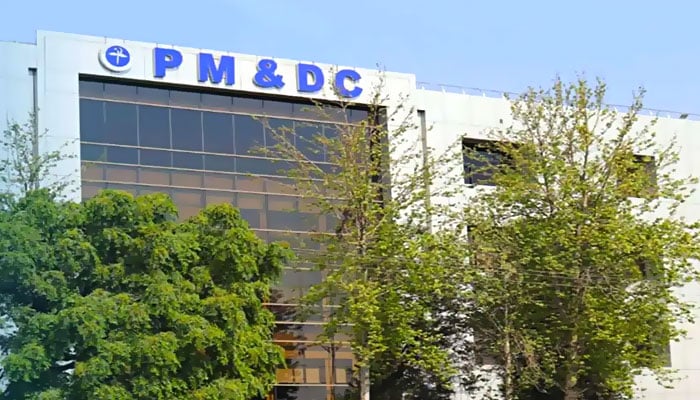
The Pakistan Medical and Dental Council (PMDC) has announced a series of special measures to ensure that students from Azad Jammu and Kashmir (AJK), who have been affected by prolonged internet disruptions, are able to participate in the Medical and Dental College Admission Test (MDCAT) without facing unnecessary obstacles. As part of these initiatives, the PMDC has established a dedicated examination center in Islamabad and has also reached a preliminary agreement to set up a regional PMDC office in Azad Kashmir.

The decisions were made during a meeting between AJK Secretary of Health Brigadier Aamir Raza and Joint Admission Committee Chairman Professor Dr. Faisal Bashir with PMDC President Professor Dr. Rizwan Taj, Registrar Brigadier (Retd.) Rehan Naqvi, and Director of Admission Affairs Dr. Imdad Ali Khushk. The meeting focused on the registration challenges faced by AJK students due to the prolonged internet shutdown and explored practical solutions to ensure that no eligible candidate is deprived of the opportunity to take the MDCAT.

During the meeting, the Secretary of Health of the AJK government informed PMDC officials that the ongoing internet suspension in the region had created serious difficulties for students attempting to complete their online registration for the entrance examination. He requested the council to extend every possible facility to affected students so that deserving candidates would not miss the examination because of circumstances beyond their control.

Speaking on the occasion, PMDC President Professor Dr. Rizwan Taj stated that the council had already introduced several special measures to facilitate students from Azad Kashmir. He emphasized that the Government of Pakistan remains committed to ensuring equal opportunities for every eligible student seeking admission to medical and dental colleges, regardless of the challenges they face.

Dr. Rizwan Taj explained that, considering the extraordinary circumstances in the region, the deadline for MDCAT registration with the regular fee had been extended twice. Initially, the deadline was extended until July 13, and later it was further extended until July 23, 2026, to provide additional time for students affected by the communication disruptions to complete their registration process.

The PMDC President further said that students from Azad Kashmir had been given multiple options for submitting their registration applications. In addition to the online process, applications could be sent through WhatsApp, email, postal mail, or submitted in person. He also assured students experiencing registration difficulties that they could contact the PMDC directly, where officials would provide all possible assistance to help them complete the process successfully.

To further support students, the PMDC has established a special MDCAT examination center in Islamabad specifically for candidates from Azad Kashmir. A public notice has already been issued regarding the facility, and a dedicated focal person has been appointed to guide students throughout the registration and examination process. The council hopes these measures will reduce confusion and ensure smooth coordination for affected candidates.

During the meeting, PMDC President Professor Dr. Rizwan Taj and Registrar Brigadier (Retd.) Rehan Naqvi assured the Government of Azad Jammu and Kashmir of their full cooperation in addressing students’ concerns. Both sides also reached a preliminary agreement to establish a PMDC regional office in Azad Kashmir to improve access to council services for students and healthcare professionals in the region. The proposal will now be presented to the PMDC Governing Body for formal approval.

At the conclusion of the meeting, the AJK Secretary of Health and the Chairman of the Joint Admission Committee appreciated the PMDC’s timely response and the special facilities provided for students affected by the internet shutdown. They expressed confidence that these initiatives would ensure that no eligible student from Azad Jammu and Kashmir would be deprived of the opportunity to appear in the MDCAT because of technical or communication-related difficulties.


Similar Posts

  • |

    Private sector gets record Rs1.138 trillion loans in FY2025-26

    Pakistan’s private sector secured bank financing worth Rs1.138 trillion during the fiscal year 2025-26, marking the highest level of private-sector credit in the last four years, according to Adviser to the Finance Minister Khurram Shahzad. In a statement, Shahzad said the sharp increase in lending reflects improving economic conditions, stronger business confidence, and the government’s efforts to encourage investment and industrial growth. He noted that private-sector credit expanded by approximately 15 percent during the fiscal year compared to the previous year. The adviser highlighted that greater access to financing has played a key role in supporting business expansion and productive economic activities across the country. He added that around 89 percent of the newly disbursed loans were directed toward major productive sectors, including manufacturing, wholesale and retail trade, and agriculture. According to Shahzad, the manufacturing sector alone received fresh financing of Rs657 billion, enabling industries to expand production capacity, modernize operations, and meet growing market demand. He said the significant flow of funds into manufacturing demonstrates renewed confidence in Pakistan’s industrial sector. He further stated that increased financial support for the trade and agriculture sectors has contributed to higher production, stronger commercial activity, and improved investment by private businesses. Enhanced credit availability, he said, is helping enterprises expand operations, create employment opportunities, and strengthen overall economic performance. Shahzad described the record lending as a positive indicator of the country’s economic recovery, saying that rising private-sector borrowing reflects improving investor sentiment and greater confidence in Pakistan’s financial system. He added that sustained access to bank financing would remain essential for maintaining economic momentum, boosting productivity, and supporting long-term, sustainable growth.

  • | |

    Middle East braces for intense heatwave as tempera…

    DUBAI: A fresh wave of extreme heat is set to grip the Middle East this week, with temperatures forecast to approach 50 degrees Celsius across several countries, prompting weather authorities to issue alerts over dangerous conditions. The UAE’s National Center of Meteorology (NCM) has warned that the coming days will bring soaring temperatures across the region, particularly affecting the United Arab Emirates, Iraq, Kuwait, and eastern Saudi Arabia, where prolonged exposure to the heat could pose serious health risks. According to meteorologists, desert regions in the UAE are expected to experience the highest temperatures, with some areas likely to approach the 50°C mark. Authorities have urged residents to avoid unnecessary outdoor activities during peak afternoon hours and to remain well hydrated. The latest forecasts indicate that Al Shawamekh in Abu Dhabi has already recorded temperatures exceeding 50°C, highlighting the intensity of the current weather conditions. Kuwait is also expected to experience extreme heat, with temperatures predicted to reach 48°C in the coming days, while parts of Iraq and eastern Saudi Arabia are likely to face similarly scorching conditions. Despite the widespread heat, forecasters say some eastern and southern parts of the UAE, including Fujairah, could receive rainfall by Thursday as unstable weather develops over mountainous regions. The weather authority has also issued warnings for strong winds, reduced visibility, and dust storms, which may affect road travel and outdoor activities across several parts of the region. Health experts advise people to stay indoors whenever possible, drink plenty of water, wear light-colored clothing and avoid prolonged exposure to direct sunlight, particularly during midday when temperatures are expected to peak. The renewed heatwave follows a summer of record-breaking temperatures across several parts of the world, with climate scientists warning that extreme weather events are becoming more frequent and intense due to global climate change. Governments across the Gulf have increasingly introduced measures to protect workers and residents during the hottest months, including restrictions on outdoor labor during peak daytime hours and expanded public awareness campaigns on heat-related illnesses. As the latest heatwave builds across the region, authorities continue to monitor weather conditions closely while urging the public to follow official safety advisories. With temperatures expected to remain exceptionally high over the coming days, residents are being encouraged to take extra precautions to minimize the risk of heat exhaustion and heatstroke.

  • |

    PCB unveils commentary panel for Champions Cup 2026

    MULTAN: The Pakistan Cricket Board (PCB) has announced a star-studded commentary panel for the National Champions Cup 2026, adding further excitement to a tournament that could prove important in shaping Pakistan’s future international squad. The seven-match competition will be played at Multan Cricket Stadium from August 11 to 18, with four teams — Pakistan Greens, Pakistan Whites, Pakistan Blues and Pakistan Gold — competing in a single round-robin format. Former Pakistan captain Salman Butt will headline the commentary team alongside Ali Younis, Tariq Saeed, Aimen Anwar and Raja Asad. Their experience and analysis are expected to provide viewers with deeper insight into the performances of established players and emerging prospects. Under the tournament format, each team will face the other three sides once. The two teams collecting the most points at the end of the league stage will advance to the final. The Champions Cup carries added significance as the PCB looks ahead to the ICC Men’s Cricket World Cup 2027. Selectors will use the competition to closely monitor players competing for national recognition, while younger cricketers will have an opportunity to make a strong impression. The PCB has selected 44 players across the four squads, with another 13 players included in a reserve pool. Reserve players can replace members of the main squads only in cases involving injury or concussion. With established internationals sharing the field with promising domestic talent, the tournament is expected to offer a revealing look at Pakistan’s emerging cricketing depth. For selectors, every match could become an audition. For players, the Champions Cup may represent a crucial step towards earning a place in Pakistan’s plans for the 2027 World Cup, to be jointly hosted by South Africa, Zimbabwe and Namibia. Squads Pakistan Greens Playing XI: Shadab Khan (c), Faheem Ashraf, Fakhar Zaman, Farhan Yousuf, Mehran Mumtaz, Mohammad Hasnain, Mohammad Salman Mirza, Naseem Shah, Omair Bin Yousuf, Saad Baig (wk) and Sameer Minhas. Pakistan Whites Playing XI: Saim Ayub (c), Akif Javed, Ali Raza, Haris Rauf, Hasan Nawaz, Khushdil Shah, Mohsin Riaz, Mohammad Wasim Jnr, Saad Masood, Shahzaib Khan and Usman Khan (wk). Pakistan Blues Playing XI: Sahibzada Farhan (c), Abdullah Shafique, Ahmed Daniyal, Arafat Minhas, Hasan Ali, Hussain Talat, Jahandad Khan, Rohail Nazir (wk), Shamyl Hussain, Sufyan Moqim, Taimur Khan (wk). Pakistan Gold Playing XI: Shaheen Shah Afridi (c), Abdul Samad, Abdul Subhan, Faisal Akram, Haider Ali, Kamran Ghulam, Maaz Sadaqat, Mohammad Nawaz, Muhammad Akhlaq (wk), Muhammad Imran and Saad Khan.

  • |

    Umerkot flour millers reject Rs128/kg official rate, seek fresh price review

    UMERKOT: Flour mill owners in Umerkot district have rejected the government-fixed price of Rs128 per kilogram, arguing that the sharp increase in wheat prices has pushed their production costs far above the officially notified rate. The millers said the prevailing wheat price in the open market had climbed to around Rs125 per kilogram, while additional expenses related to milling, labour, electricity, transportation and other operations had increased the overall cost of producing flour to nearly Rs140 per kilogram. They maintained that selling flour at Rs128 per kilogram was therefore commercially unsustainable and would force mill owners to operate at a loss. In this regard, representatives of the flour milling industry have submitted written applications to the Mirpurkhas commissioner and the Umerkot deputy commissioner, requesting authorities to reconsider the existing flour price and determine a new rate based on prevailing market conditions and production costs. The mill owners also raised objections to what they described as excessive administrative action against flour mills across the district. They specifically complained about raids and wheat seizures allegedly carried out by assistant commissioners in Umerkot, Kunri, Samaro and Pithoro. According to the millers, government policy allows flour mill owners to maintain wheat stocks of up to 850 bags per stone at their mills or designated warehouses. They alleged that despite the provision, local administrative officials had conducted raids on mills and storage facilities and seized wheat stocks. The mill owners termed the alleged seizures unjustified and said such actions were creating additional difficulties for an already financially pressured industry. They urged the authorities to ensure that enforcement measures were carried out strictly in accordance with the relevant government policy. The millers further called for an investigation into alleged irregularities involving food department inspectors. They demanded that senior provincial officials examine the complaints and take appropriate action if any wrongdoing is established. They appealed to the Sindh chief minister, provincial food secretary, Mirpurkhas commissioner, Umerkot deputy commissioner and other concerned authorities to intervene in the matter and review the officially fixed flour price. The mill owners argued that the price should be determined after taking into account the current cost of wheat as well as electricity, labour, transportation, maintenance and other expenses associated with flour production. They warned that continued enforcement of a price they consider economically unviable could increase financial losses for flour mills and put further pressure on the district’s milling industry. The millers said they were willing to cooperate with the administration in maintaining the availability of flour and preventing unjustified price increases, but stressed that any official pricing mechanism must reflect actual market and production costs. They also urged the provincial government to establish a transparent mechanism for monitoring wheat stocks and flour prices so that disputes between millers and local administrations could be resolved through clear rules rather than repeated raids and seizures.

  • | | |

    Police officer martyred in gun attack near Jamali …

    A police officer was martyred after unidentified gunmen opened fire on two policemen near Jamali Bridge on Karachi’s Super Highway on Monday. The attack has prompted senior police officials and the Sindh government to order an immediate investigation and intensify efforts to apprehend those responsible. According to police, the two officers were deployed on duty near Jamali Bridge when unidentified assailants riding a motorcycle approached and opened indiscriminate fire. Constable Zaman, who was serving at Site-A Police Station, sustained fatal injuries and died at the scene. His fellow officer survived the attack without injury. Authorities have not yet confirmed the motive behind the shooting, and an investigation is underway to determine whether the incident was a targeted attack or linked to other criminal activity. Police have begun collecting evidence from the crime scene and reviewing available information to identify the suspects. Following the incident, Inspector General (IG) Sindh Javed Alam Odho took immediate notice of the attack and directed the Deputy Inspector General (DIG) East to submit a detailed report without delay. The IG instructed law enforcement officials to ensure that those involved in the attack are arrested and brought to justice as quickly as possible. The police chief also ordered investigators to utilize all available resources, including modern technology, intelligence networks, and investigative tools, to trace and capture the suspects. He further directed police units to strengthen patrolling, checkpoint operations, and snap checking across the area while maintaining strict surveillance of suspicious individuals and vehicles. Separately, Sindh Home Minister Zia-ul-Hassan Lanjar also sought an immediate report from the Senior Superintendent of Police (SSP) East regarding the incident. He emphasized that every available resource should be employed to identify and arrest the attackers and ensure they face the full force of the law. The home minister instructed police to make effective use of intelligence information, forensic techniques, and modern investigative methods during the operation. He also called for enhanced police patrols, tighter security measures, and increased monitoring of suspicious activity to prevent similar incidents. Paying tribute to the fallen officer, Lanjar said the sacrifice of police personnel would not be forgotten and reaffirmed the government’s commitment to pursuing those responsible. The attack highlights the continued security challenges faced by law enforcement officers in Karachi, where police personnel remain on the frontline against crime and violence. Investigations into the shooting are ongoing, and authorities have yet to announce any arrests.

  • | |

    KP government orders immediate closure of mines

      The Khyber Pakhtunkhwa (KP) government has ordered the immediate closure of all mines where explosive materials are used, as part of a broader effort to strengthen security and tighten oversight of potentially hazardous substances across the province. According to official directives issued by the Provincial Home Department in Peshawar, all district administrations have been instructed to take immediate action and ensure strict implementation of the government’s orders. The directive emphasizes the need for swift compliance and close coordination among local authorities to enforce the new measures without delay. The Home Department has also directed all districts to prepare and submit comprehensive lists of mines operating within their jurisdictions. These lists will distinguish between mines that use explosives and those that do not. Officials have been instructed to classify all mines using explosive materials under a Red List, indicating that they fall under stricter regulatory scrutiny and are subject to immediate closure or further action. On the other hand, mines extracting soft rock without the use of explosive materials will be placed on a Green List. These mines are considered comparatively safer from a security perspective and may continue operations in accordance with existing regulations, provided they comply with all relevant legal requirements. The department has instructed district administrations to submit both the Green List and the Red List as soon as possible. The reports are expected to provide a clear picture of mining activities across the province and help authorities monitor compliance with the latest directives. In addition to regulating mining operations, the Home Department has ordered strict monitoring of the purchase, sale, transportation, storage, and use of explosive materials. Authorities have also been instructed to closely monitor the movement and use of urea fertilizer, which can potentially be misused in the manufacture of improvised explosive devices if diverted from legitimate agricultural purposes. As part of these measures, all districts have been asked to compile and submit complete district-wise lists of licensed urea dealers. The purpose of collecting this information is to strengthen oversight of the distribution chain and prevent the illegal sale or diversion of urea for unlawful activities. The Home Department has further instructed all relevant officials to submit the required reports and lists without delay. Once these reports are received, the provincial government will review the findings and determine any additional actions that may be necessary. Relevant authorities are expected to take further administrative, regulatory, or legal measures based on the information collected from across the province. The latest directives reflect the KP government’s commitment to enhancing public safety, improving regulatory oversight of mining activities, and preventing the misuse of explosive materials. By introducing a district-wise classification system and increasing surveillance over explosives and urea distribution, the provincial administration aims to strengthen law enforcement efforts and reduce potential security risks associated with unauthorized use of hazardous substances. The implementation of these measures is expected to improve coordination among government departments and ensure greater accountability in the mining and chemical supply sectors across Khyber Pakhtunkhwa.

Leave a Reply

Your email address will not be published. Required fields are marked *