pope leo diagnosed
| |

Pope Leo diagnosed with cancer as doctors remove part of lung

VATICAN – Pope Leo was diagnosed with lung cancer after surgeons removed the lower lobe of his right lung during surgery on Tuesday, October 13, the Vatican said in a medical bulletin.

The 71-year-old pontiff has lung adenocarcinoma, a common form of lung cancer, with tissue tests conducted during the operation confirming what doctors had suspected from preparatory examinations, the bulletin said.

The surgery to remove a small growth discovered during a recent routine health check lasted about 90 minutes and was successful, with no complications, according to Leo’s lead surgeon, Dr. Stefano Margaritora, and personal physician, Dr. Luigi Carbone.

“In order to make the procedure curative, the lower lobe of the right lung was removed using a video-assisted technique,” they said, indicating that the aim was to eliminate all cancerous tissue.

The pope was admitted to Rome’s Gemelli hospital earlier on Tuesday for the procedure. The Vatican had said his recovery was expected to take about a week.

Leo regained consciousness normally after the operation and returned to his hospital room, where he was resting, the medical bulletin said.

The Vatican said earlier this week that the pope was expected to remain in hospital for about a week. All his public events have been cancelled until October 20.

A medical expert said more information was needed to assess the pope’s condition, including the size of the tumor and whether the cancer had spread to his lymph nodes, details the Vatican did not immediately provide.

“While we have the diagnosis, we do not yet have the stage. This is critical to prognosis and treatment,” said Dr. Stephen Liu, a lung cancer expert at Georgetown University in Washington and division chief of hematology-oncology at MedStar Georgetown University Hospital.

“If this is a small lung cancer with no lymph nodes involved, surgery itself is likely to be curative,” Liu said. “But if final analysis reveals a greater extent of cancer involvement, this indicates a poorer prognosis.”

Leo left the Vatican shortly before 1 pm (1100 GMT) on Tuesday and was seen waving from the back of a black SUV as his convoy traveled about 9 km north to the hospital.

Upon arrival, Leo shook hands with several officials and walked past a crowd of well-wishers, some of whom shouted “Auguri” (best wishes), before entering through the main entrance.

Elected by the world’s cardinals in May 2025, Leo is relatively young for a Church leader. He enjoys sports, including tennis, and is not known to be a smoker or to have had recent health issues.

The late Pope Francis, Leo’s predecessor, was hospitalised several times as he grew frail in his later years. He died aged 88 in April 2025.

Leo, who spoke in a firm, clear voice at his only public event on Monday, October 12, maintains a busy schedule. He is due to make an 11-day tour of Uruguay, Argentina and Peru from November 6 to 17, though it was unclear whether the trip would still go ahead.

The pope is the ultimate earthly authority for the world’s 1.4 billion Catholics and has no deputy who steps in when he is sick. When a pope is incapacitated, the Vatican’s bureaucracy continues its work, holding off on decisions that require papal approval.

Born in Chicago in 1955 as Robert Prevost, Leo served for decades as a missionary and bishop in Peru before becoming pope. In 1985, when he was a young priest, he contracted typhoid fever in Chulucanas, Peru, and was hospitalized.

He recounted the experience in his only major interview as pope, published in a book by Penguin Peru. Leo said the pain was so severe that he asked God to let him die rather than continue suffering. He took his survival as a sign from God that “We need you here (on Earth),” he said.

“I never looked back,” Leo said. – Rappler.com

Similar Posts

  • |

    Thailand’s ancient monastery earns Unesco World Heritage status

    A historic Buddhist monastery in southern Thailand has been added to the Unesco World Heritage List, giving the country another globally recognized cultural landmark and providing stronger support for its long term preservation. The recognition marks an important milestone for Thailand as it is the first World Heritage site located in the country’s southern region. The newly listed site is Wat Phra Mahathat Woramahawihan, located in Nakhon Si Thammarat province. The Thai Foreign Ministry announced that it is now Thailand’s ninth World Heritage site. Officials said the designation will help improve conservation efforts through closer cooperation between national authorities and local communities, ensuring the monastery remains protected for future generations. The announcement was celebrated at the monastery with traditional ceremonies. Monks gathered to chant blessings while officials and visitors took part in the event by striking a ceremonial gong. Local media described the atmosphere as one of pride and celebration as the centuries old temple received international recognition. According to Unesco, the monastery has served as one of the region’s leading Buddhist centers since it was established in the eighth century. Over the centuries, it has become an important place of worship, education, and cultural exchange. The temple complex is home to impressive stone stupas, a large reclining Buddha statue, and numerous standing and seated golden Buddha figures. Visitors can also see detailed sculptures and artistic depictions of guardian deities throughout the site. The monastery reflects a rich blend of religious and cultural influences that shaped Southeast Asia over many centuries. Because of its location on the Thai peninsula between the Pacific and Indian oceans, it became a meeting point for traders, pilgrims, and scholars from across the region. Unesco noted that traditions and architectural styles from Brahmanism, Hinduism, Mahayana Buddhism, and Theravada Buddhism, along with influences from India, Sri Lanka, and Myanmar, are all visible in the site’s design and religious practices. These different cultural traditions have been woven into the monastery’s buildings, ceremonies, and daily rituals, making it a valuable symbol of the region’s shared history. The site’s historical importance and unique cultural identity were key reasons behind its inclusion on the prestigious World Heritage List. Thailand hopes the international recognition will also strengthen its tourism industry. World Heritage status often attracts more international visitors, helping local economies while raising awareness about the importance of preserving cultural landmarks. Tourism remains one of Thailand’s most important economic sectors, although visitor numbers have not yet fully recovered to levels seen before the Covid-19 pandemic. Government figures show that tourist arrivals during the first half of this year were more than three percent lower than during the same period in 2025. Officials believe the addition of another World Heritage site could encourage more travelers to explore destinations beyond Thailand’s traditional tourist hotspots. Wat Phra Mahathat Woramahawihan now joins a distinguished list of Thai World Heritage sites that includes the Historic City of Ayutthaya, the Thungyai Huai Kha Khaeng Wildlife Sanctuaries, and the Ancient Town of Si Thep. The latest recognition highlights Thailand’s rich cultural heritage while reinforcing efforts to preserve one of the country’s most significant religious and historical treasures for generations to come.

  • |

    Belgium wildfire spreads toward Germany

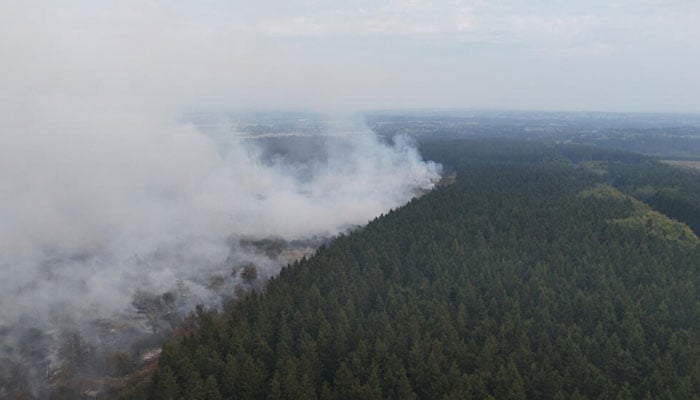
    A massive wildfire has engulfed around 3,000 hectares of forest in Belgium, with flames now moving toward the German border in what authorities describe as the country’s worst recorded forest fire. According to international media reports, firefighters, military personnel, helicopter crews and local farmers are working together to contain the blaze. Strong efforts are underway as the fire continues to threaten forested areas near the German border. Authorities have urged residents who evacuated their homes to remain away for the time being, warning them not to return until officials declare the areas safe. Emergency teams are focusing on preventing the fire from spreading further toward Germany. Helicopters are assisting ground crews by monitoring the flames and supporting firefighting operations in difficult-to-reach areas. Data from the European Forest Fire Information System (EFFIS) indicates that the blaze is the largest forest fire ever recorded in Belgium. The fire has already affected more than twice the area destroyed by a major wildfire in the country in 2011. The wildfire comes as several parts of Europe face extreme heat and prolonged dry conditions. Rising temperatures, low rainfall and dry vegetation have increased the risk of wildfires across the continent, putting forests, communities and emergency services under growing pressure.

  • |

    Japan launches cooling shirt with built-in fans

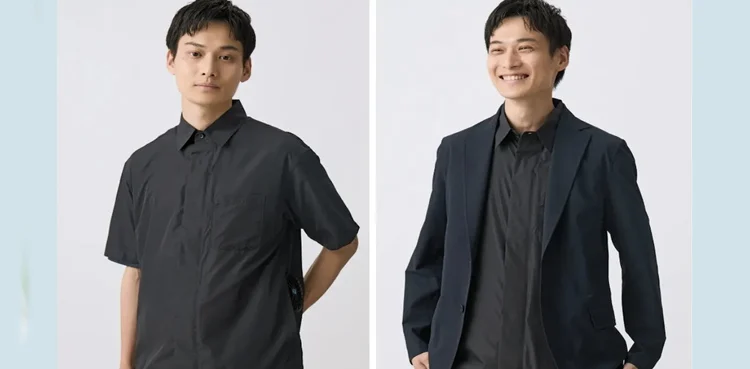
    Tokyo – Due to Japan’s intense summer heat, office wear is now being equipped with modern cooling technology. Japanese people have started wearing clothes with built-in air-conditioning systems. Japanese clothing manufacturer Yofuku no Aoyama has introduced a short-sleeved shirt fitted with two small fans that provide cool air to the wearer while they are on the move. According to media reports, the shirt looks like a simple and elegant office shirt but it actually contains an advanced cooling system. A fan is installed at the back of the shirt near the waist. When switched on, it circulates air inside the shirt and helps keep the body cool. Air-cooled clothing has become increasingly popular in Japan over the past few years. However, it has mainly been used by people working in construction, waste collection and event security. Such clothing is generally designed as jackets or vests and has traditionally been considered protective or workwear rather than office clothing. However, as summer temperatures continue to rise in Japan, demand for cooling clothing is increasing among ordinary citizens and office workers as well. Keeping this growing demand in mind, Yofuku no Aoyama developed the shirt in collaboration with FZN, a company specializing in fan-equipped clothing. The shirt comes with two fans and a rechargeable battery. According to the company, efforts have been made to keep the cooling system as lightweight as possible. According to the report, each of the two fans weighs 95 grams, while the rechargeable battery pack weighs 165 grams. Although the fans are visible when the shirt is viewed from the back, designers have tried to make them less noticeable from other angles so that the shirt remains suitable for an office environment. The company has not provided specific information about the noise level of the fans suggesting that they may not be completely silent. When is cooling shirt most useful? The shirt is considered more useful while travelling rather than during meetings. The company says its main purpose is not necessarily to operate the fans inside an office or during client meetings as such meetings are generally held in air-conditioned rooms. The real benefit of the shirt is for people who travel around the city from one meeting to another. While walking outside in extreme heat or using public transport, the fans can help keep the body cool. It may also reduce the need for employees to change sweat-soaked clothes and put on formal attire again after reaching their destination. What is price? The complete initial package of the Kuchou Wear Short-Sleeve Shirt is being sold for 17,490 Japanese yen. The package includes the shirt, two fans, a rechargeable battery pack and a charging cable. The shirt is available in blue and grey with medium, large and extra-large sizes offered. The product has already gone on sale at the company’s stores and online shop.

  • | |

    Indian activist Sonam Wangchuk says he remains ali…

    Indian activist Sonam Wangchuk says he has lost 11 kilograms during a 26 day hunger strike but remains alive, as his protest continues to fuel a wider youth movement demanding education reforms in India. Wangchuk, known widely as Sonam sir, has become the central figure in a youth led campaign organized by the Cockroach Janta Party, which is calling for sweeping education reforms and the resignation of Education Minister Dharmendra Pradhan. He was removed from the group’s protest site at Delhi’s Jantar Mantar on Saturday and taken to a hospital, where he has continued his fast. Despite his removal from the demonstration site, thousands of supporters have kept returning to Jantar Mantar, even after a heavy handed police response to a march toward parliament earlier in the week left numerous protesters and police officers injured. That crackdown has intensified public anger and energized opposition parties, creating a growing political challenge for Prime Minister Narendra Modi’s government. Modi has not addressed the protests directly or met with demonstrators, but he issued a statement on social media that many interpreted as an effort to connect with students angered by repeated leaks of exam papers. He wrote that the welfare of the country’s youth matters above all else and said the government would establish fast track courts to deliver swift punishment for those responsible for the leaks. A spokesperson for the Cockroach Janta Party, Ashutosh Ranka, responded that the government’s plan addressed the aftermath rather than the root cause, saying the movement wants to know why the leaks keep happening and who profits from them. He indicated in a video statement that protesters intend to continue their campaign until their demands are met. Even though Wangchuk is no longer physically present at the protest grounds, his fast has become a symbolic centerpiece of the movement, with demonstrators displaying placards and artwork referencing his hunger strike. Before he was hospitalized, he spent 21 days enduring intense summer heat while consuming only salt and water. Medanta Hospital in Gurugram said in a statement that Wangchuk was admitted to intensive care and is being monitored by a team of specialists. The hospital described his condition as stable and said his vital signs remain within normal ranges, adding that all treatment is being given with his consent. On Wednesday, senior figures including Cockroach Janta Party founder Abhijeet Dipke, along with opposition lawmakers, activists and public personalities, again urged Wangchuk to end his fast. Health Minister JP Nadda, who visited the hospital on Tuesday night, said he too had asked the activist to stop and rejoin efforts to guide young people, adding that the government remains willing to discuss the issues he has raised. Wangchuk has so far rejected these appeals. In a video statement recorded from his hospital bed on Wednesday night, he said he wants to end his fast because his work matters to him, but added that he would only do so once the government guarantees no force or retaliation will be used against students. He said he would end the strike immediately if that assurance comes, and would continue if it does not. He also praised the students involved in Monday’s confrontation with police, saying they showed remarkable composure even while being beaten with sticks, and said their restraint under pressure led him to keep going with his fast. Neither Wangchuk’s latest statement nor an earlier letter he sent to government ministers he met on Tuesday mentioned Pradhan’s resignation directly, though the Cockroach Janta Party maintains that the demand has not changed. Dipke told supporters that the protest at Jantar Mantar will continue until Pradhan steps down, and said the movement would not let Wangchuk’s sacrifice or the injuries suffered by students go without result. The standoff reflects a broader pattern seen in past protest movements across South Asia, where a single high profile figure’s personal sacrifice becomes a rallying point that sustains momentum long after the initial spark fades. Hunger strikes in particular have a long history in Indian political life as a tool for applying moral pressure on governments, dating back to independence era activism, and their effectiveness often depends on sustained public attention and the government’s willingness to negotiate before a health crisis forces the issue. As the standoff continues, the government faces mounting pressure to address both the immediate demand for accountability over exam paper leaks and the broader question of how education policy is managed, while doctors continue to monitor Wangchuk’s condition inside the hospital.

  • |

    Italian waste workers recover discarded €1m lottery ticket from mountain of refuse

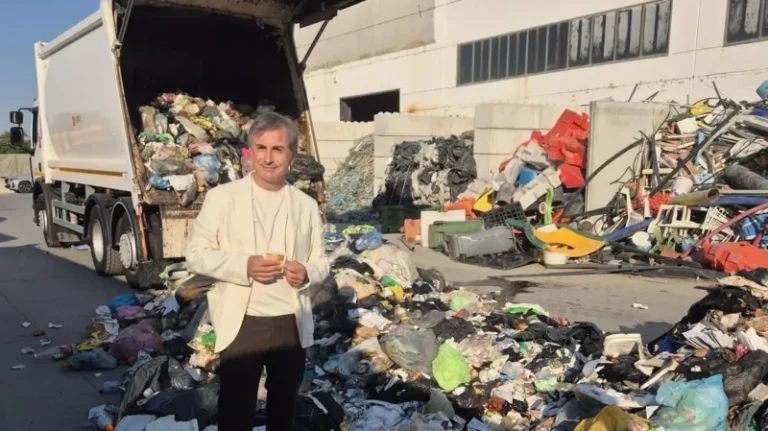
    An anonymous lottery player in southern Italy has successfully retrieved a winning ticket worth €1 million (£857,000) after accidentally discarding the slip into a municipal bin. The mix-up occurred at a local shop in Bitonto when a ticket scanner displayed a “non-payable” notification. Unaware that the message indicated a payout exceeding the shop’s cash limit rather than a losing ticket, the player threw the slip into a rubbish bin. Upon returning home, family members pointed out that the player’s chosen numbers, 2, 4, 8, 10, and 51, had indeed been drawn. After returning to the store, the family discovered that the bin had already been emptied by a municipal collection vehicle operated by local sanitation company SANB. The owner alerted SANB officials, who tracked down the specific bin lorry before its contents were transferred to a compactor or landfilled. “This story is nothing short of miraculous,” said Roberto Nicola Toscano, director of SANB, noting that because the incident occurred on a Sunday, the lorry’s contents had not yet been processed. Sanitation staff escorted the vehicle to a secure facility and spent two days sifting through a massive heap of municipal waste. On Tuesday morning, a refuse worker located the intact winning ticket inside a damaged bag. The lottery winner, who signed a formal agreement to cover the operational costs of the search effort, will receive the full prize sum following official validation.

Leave a Reply

Your email address will not be published. Required fields are marked *