princess elisabeth dazzles
|

Princess Elisabeth dazzles in emerald green at royal wedding

Belgium’s Crown Princess Elisabeth turned heads with her elegant appearance as she attended a high-profile European royal wedding alongside members of her family.

The 23-year-old heir to the Belgian throne joined her parents, King Philippe and Queen Mathilde, as well as her younger brother, Prince Gabriel, for the wedding of Archduchess Isabel of Austria and Carlos Gaytán de Ayala. The ceremony brought together royals and aristocrats from across Europe, making it one of the season’s most notable royal gatherings.

For the special occasion, Princess Elisabeth chose a sophisticated emerald green gown that highlighted her timeless sense of style. The floor-length dress featured a deep V-neckline, long fitted sleeves, and elegant gathered detailing at the waist, creating a graceful silhouette.

She completed the look with a coordinating feathered green headpiece, matching clutch bag, and delicate dangling earrings. Her long blonde hair was styled in soft, loose curls, adding a classic touch to the refined ensemble. The princess appeared confident and poised as she posed for photographs with her family.

King Philippe embraced traditional formalwear for the event, wearing a black morning tailcoat paired with a light grey waistcoat, striped grey trousers, and a silver-and-blue patterned tie. His polished appearance reflected the formal dress code typically observed at European royal weddings.

Queen Mathilde also drew admiration in a striking crimson outfit adorned with intricate floral lace embroidery. The Belgian queen’s elegant look complemented the formal atmosphere of the celebration while adding a vibrant splash of color to the family portrait.

Prince Gabriel matched his father’s sophisticated style in a classic morning suit featuring a black tailcoat, light grey waistcoat, crisp white shirt, and silver tie. The young prince completed the family’s coordinated appearance with his polished and traditional attire.

Princess Elisabeth, born on October 25, 2001, is the eldest child of King Philippe and Queen Mathilde. As the Duchess of Brabant, she is first in the line of succession to the Belgian throne and is widely regarded as one of Europe’s most prominent young royals.

She has represented Belgium at numerous official engagements and international events while balancing her academic pursuits. Her public appearances frequently attract attention for her graceful demeanor and elegant fashion choices, earning praise from royal watchers around the world.

When Princess Elisabeth eventually succeeds her father, she will make history as Belgium’s first queen regnant, becoming the first woman to rule the country in her own right. Her role as future monarch places her at the center of Belgium’s royal future, and each public appearance continues to highlight her growing confidence and readiness for the responsibilities that lie ahead.

Her appearance at the royal wedding once again showcased her sophisticated style while underscoring the close ties shared among Europe’s royal families through longstanding traditions and ceremonial occasions.

Similar Posts

  • | |

    Two women allegedly harassed on Karachi streets

    Two separate videos showing alleged harassment of women on the streets of Karachi have surfaced, raising concerns about women’s safety in public places. In the first incident, a motorcyclist allegedly harassed a woman who was walking along a road in Orangi Town. The suspect reportedly approached the woman, committed the alleged act and fled the scene. According to the footage, the incident took place at around 9am. The video has circulated widely and reportedly shows the suspect’s face clearly enough to assist with his identification. A similar incident was reported in the Al-Falah area of Malir. In that case, a motorcyclist allegedly harassed a woman while she was walking on the road. CCTV footage of the incident surfaced a day earlier. The two incidents have sparked concern over the safety of women in Karachi. The circulation of the videos has also prompted calls for authorities to identify the suspects and take appropriate legal action. No suspect has been arrested in either case so far. There is also no confirmed report of a formal complaint being registered by either of the affected women. Authorities have yet to provide further details about the incidents or confirm whether investigations have been formally launched.

  • | | | |

    US launches heavy strikes on Iran after missile at…

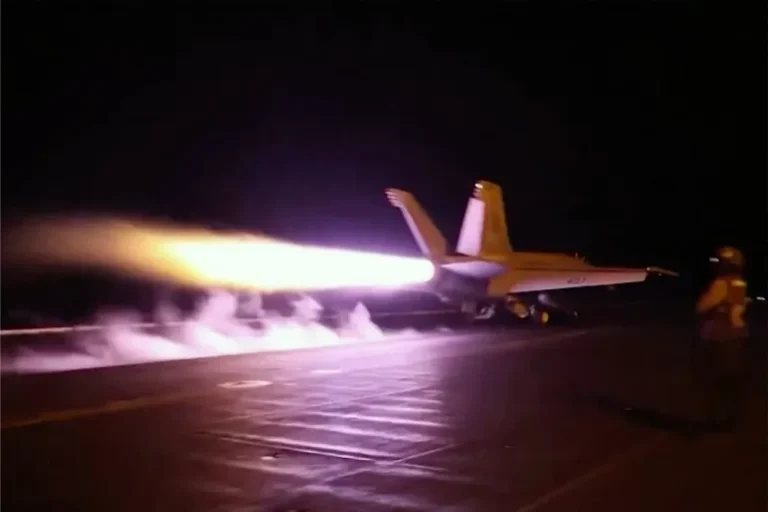
    The United States has resumed large-scale military operations against Iran, launching what officials described as a “heavy wave” of precision strikes after a five-night pause, dramatically escalating tensions across the Middle East and raising fresh concerns over the security of the Strait of Hormuz. According to the US Central Command (CENTCOM), the overnight operation targeted dozens of sites linked to Iran’s Islamic Revolutionary Guard Corps (IRGC), including military command centres, missile and drone facilities, coastal defence systems and maritime infrastructure. The strikes came in response to Iranian missile attacks a day earlier on American forces stationed at a US military base in Jordan. US President Donald Trump had warned that Washington would respond “very hard” to any attack on American troops, and the latest operation marked one of the most extensive US offensives since the conflict intensified earlier this year. Iranian state media reported that at least three civilians were killed in the strikes, including a couple and their two-year-old child after a residential building on Qeshm Island was hit. The IRGC also confirmed that three of its personnel were killed during the attacks. Explosions were reported across several southern Iranian cities, including Ahvaz, Abadan, Bushehr, Kazerun and Farashband. Iranian media said power outages affected parts of Ahvaz following strikes in the oil-rich Khuzestan province, while local officials confirmed that multiple locations in Abadan had also been targeted. The confrontation quickly spread beyond Iran. Jordan said its air defence systems intercepted five Iranian missiles launched toward its territory after Tehran targeted a US airbase and command headquarters inside the kingdom. No casualties were reported. Meanwhile, Kuwait confirmed that an Iranian strike hit a building belonging to a Chinese company in the country’s north, killing one worker and causing significant damage. Saudi Arabia condemned Iran’s attacks on Jordan, describing them as a violation of international law and regional stability. Despite the renewed fighting, diplomatic contacts continue behind the scenes. Pakistan’s Foreign Ministry said negotiations between Tehran and Washington remain active, particularly over the Strait of Hormuz and efforts to reduce tensions. Iranian officials also confirmed that discussions with Omani mediators regarding the future of the strategic waterway are continuing. The Strait of Hormuz remains at the heart of the crisis. Iran insists the waterway remains closed because of US military actions, while Washington accuses Tehran of threatening global shipping and using maritime pressure to strengthen the IRGC’s influence. Adding economic pressure, the US Treasury imposed fresh sanctions on two Iranian companies accused of supporting an IRGC-backed maritime insurance network. Security analysts say Washington now faces a critical decision: continue targeting Iran’s military infrastructure around Hormuz or expand attacks on key national infrastructure. While the latest strikes signal a tougher military posture, experts believe both sides still have incentives to leave the door open for diplomacy, even as the risk of a wider regional war continues to grow.

  • |

    Taylor Swift music removed from Trump TikTok videos

    Taylor Swift has reportedly had more of her music removed from TikTok videos posted by Donald Trump and the official White House account, adding another chapter to the ongoing tension between the pop superstar and the US president. The latest incident involved Swift’s 2021 song “Bet You Think About Me,” which was featured in a TikTok video showing Trump speaking to supporters. The video was posted on the official White House account and included a caption that appeared to reference Swift’s lyrics, saying, “We know you think about us.” However, within hours of the video being posted, viewers noticed that Swift’s song was no longer playing. The audio had been muted, while an onscreen message stated that the sound was unavailable. The removal quickly attracted attention from Swift’s fans, many of whom have closely followed the singer’s public and political disagreements with Trump. Reports have also indicated that Swift’s music was removed from other White House TikTok videos posted months earlier. One recent example featured Trump and First Lady Melania Trump watching fireworks. The video included text describing the mood as being excited because it was August and Trump was president. The clip originally featured Swift’s song “August,” a track from her critically acclaimed 2020 album “Folklore.” It also included a message from Trump’s team suggesting that Swift would be pleased that her music had been used, along with hashtags referencing the singer, the song and the MAGA movement. The situation changed several days later when the song was no longer available in the video. Instead, TikTok displayed a notice explaining that the copyright owner had not made the sound available in the country. Trump’s social media team later appeared to respond by using another Swift song, “Red,” in a separate TikTok post. The video featured a parody album cover showing Trump wearing a red MAGA hat, along with a fictional playlist titled “Red (Donald Trump’s Version).” The disputes over Swift’s music come amid a long-running public relationship between the singer and Trump that has often been marked by political differences. Trump has previously criticized Swift publicly, while the singer has openly expressed political views that have frequently placed her at odds with him and his supporters. Swift’s ownership of her music has also become an important part of the situation. She regained control of her original master recordings in May 2025 after a lengthy dispute over ownership. As a result, her control over her catalog has allowed her to take a stronger position regarding how her recordings are used. The repeated removal of Swift’s songs from Trump-related TikTok posts highlights the complicated relationship between copyright ownership, social media and political messaging. It also demonstrates how the use of popular music can quickly become controversial when it is connected to political figures or movements.

  • | |

    China’s hypersonic arsenal expands with long-ran…

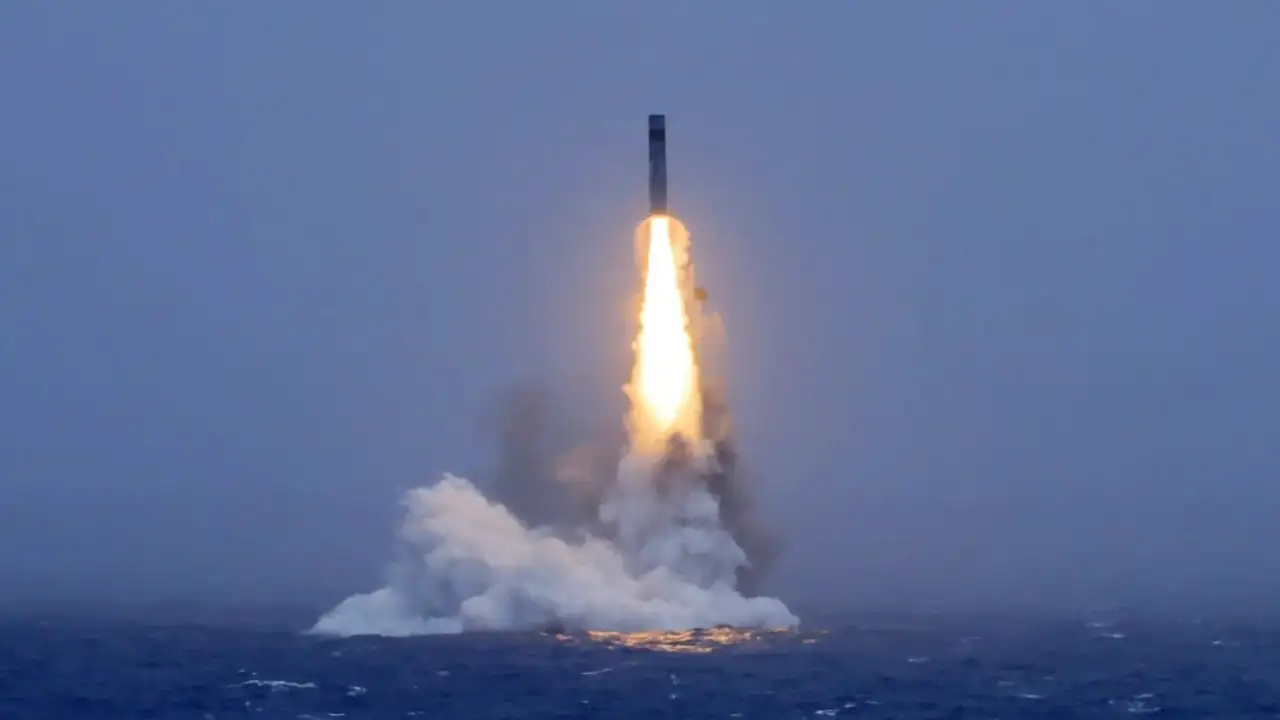
    BEIJING: China has developed a new generation of hypersonic weapons that could potentially threaten high-value military aircraft thousands of kilometres away, according to a Bloomberg report, highlighting the rapidly changing nature of long-range warfare and the growing strategic competition between Beijing and Washington. The reported development involves hypersonic glide vehicles (HGVs) capable of carrying air-to-air weapons. Such systems could potentially target aircraft that normally operate far behind the frontline, including aerial tankers, airborne command-and-control platforms and other support aircraft that provide fuel, communications and battlefield information to fighter jets. The report, citing a person with direct knowledge of the matter, said China has also added air-to-air capabilities to some hypersonic cruise missiles and anti-ship capabilities to several other missile systems. The reported changes reflect Beijing’s broader effort to make its large missile arsenal capable of carrying out a wider range of missions. A New Threat Beyond the Front Line The significance of the reported technology lies in the type of targets it could threaten. Modern air forces rely heavily on support aircraft. Tankers allow fighter jets to remain airborne for longer periods, while airborne early-warning and command aircraft help monitor enemy activity, coordinate operations and share information with aircraft and ground forces. If these platforms could be attacked from much greater distances, commanders could be forced to move them farther away from contested areas. That could reduce their effectiveness and complicate air operations. A hypersonic glide vehicle released from a DF-17 missile is reported to have a range of around 2,414 kilometres, a distance slightly shorter than the separation between mainland China and the US territory of Guam, a major American military hub in the western Pacific. China’s more advanced DF-27 is estimated to have a range of about 8,000 kilometres, potentially putting much of the western and central Pacific within reach. However, details about the system remain limited, and several of its reported capabilities are based on intelligence assessments rather than publicly released Chinese specifications. Why Hypersonic Weapons Are Difficult to Counter HGVs differ from conventional ballistic missile warheads because they can manoeuvre while travelling through the atmosphere. Their ability to alter their flight path can complicate efforts to predict where they will go and how they can be intercepted. China’s DF-17 has already been publicly displayed and is considered one of the world’s operational hypersonic glide weapon systems. Recent Chinese state media footage showed multiple DF-17 launch vehicles, suggesting the system has been deployed on a significant scale. But the reported ability to use such technology against distant aircraft also presents major operational challenges. A missile travelling thousands of kilometres would require highly accurate and continuously updated information about a moving target. Analysts note that the longer the flight, the greater the opportunity for an opponent to disrupt the intelligence and targeting chain. There is also a potential escalation risk. A ballistic missile launch could be difficult to identify immediately, creating uncertainty over whether the weapon is carrying a conventional or nuclear payload. Washington Responds With Longer-Range Weapons The development comes as the United States is also expanding its long-range air-to-air capabilities. The US Navy has begun testing the AIM-424 MALICE, a new long-range air-to-air missile reportedly designed to engage targets at distances exceeding 463 kilometres. Washington is also pursuing other extended-range weapons, including the AIM-260 and AIM-174B. The emerging competition reflects a broader shift in military planning. Future air battles may not be decided solely by which side has more fighter jets, but by which side can protect its own support aircraft while threatening those that keep an opponent’s air force operating. For China and the United States, that could make long-range missiles and hypersonic systems an increasingly important part of the military balance across the Indo-Pacific. Still, some details of China’s reported new capabilities remain classified or independently unverified. The claims therefore offer an indication of Beijing’s evolving military ambitions rather than a complete picture of its operational capabilities. Even so, the reported progress adds another layer to the increasingly sophisticated missile competition between the world’s two major military powers.

  • |

    Nine-member team conquers 6,050m Thalo Zom

    PESHAWAR: A nine-member mountaineering team has successfully climbed the 6,050-metre Thalo Zom peak in Khyber-Pakhtunkhwa. The achievement is being seen as an important milestone for mountaineering and adventure tourism in the province. The team completed the difficult expedition after spending eight days on challenging mountain routes. The Khyber-Pakhtunkhwa Tourism Authority said Thalo Zom is one of the most difficult and less frequently climbed peaks in the Hindu Kush mountain range. Its difficult terrain makes the climb demanding even for experienced mountaineers. The expedition started on July 9. The team continued its journey through difficult mountainous terrain before reaching the summit on July 17. After reaching the top, the mountaineers raised the national flag. The moment marked the successful completion of a challenging expedition in one of the region’s difficult mountain areas. The climbers had to pass through difficult routes in Kumrat and Chitral during the expedition. The journey involved steep and rugged terrain. The team also crossed glaciers and areas containing deep cracks in the ice. Glacial crevasses can make high-altitude expeditions particularly dangerous. Mountaineers must carefully choose their routes while crossing such areas. The difficult conditions required careful planning and sustained effort from the team. The eight-day expedition tested the climbers as they moved through remote and challenging parts of the Hindu Kush. The successful ascent also highlights the potential of Khyber-Pakhtunkhwa for adventure tourism. The province is home to several high-altitude mountains and remote valleys. The region’s mountainous landscape attracts climbers and adventure enthusiasts. However, many peaks remain difficult to access because of their rugged terrain and limited routes. The Tourism Authority said Thalo Zom has a notable history in international mountaineering. Australian climbers first reached the summit in 1971. The peak was climbed again in 2019 by Italian mountaineers. The latest expedition adds another successful ascent to the mountain’s history. The achievement also draws attention to the broader tourism potential of Kumrat and Chitral. Both areas are known for their mountainous landscapes and challenging terrain. Successful mountaineering expeditions can help promote lesser-known destinations among domestic and international adventure tourists. They can also bring greater attention to the natural attractions of the province. The latest climb demonstrates the determination and endurance required to reach high-altitude peaks. The team had to overcome glaciers, steep routes and dangerous ice formations during the journey. The successful ascent of Thalo Zom is therefore more than a mountaineering achievement. It also showcases the natural beauty and adventure tourism potential of Khyber-Pakhtunkhwa.

  • | | |

    PM Shehbaz says Pak-Saudi-Turkiye defence pact is …

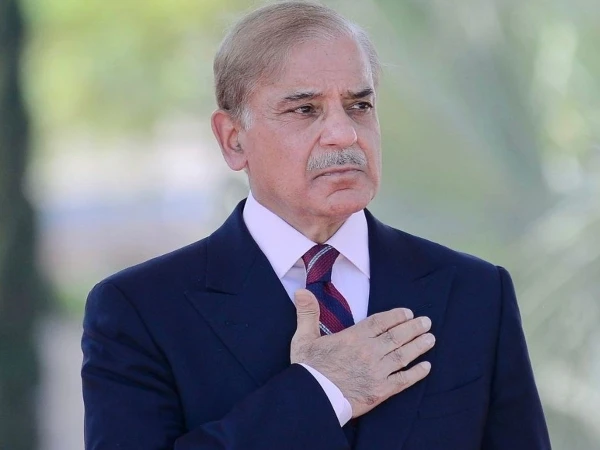
    Prime Minister Shehbaz Sharif has said the newly signed defence agreement between Pakistan, Saudi Arabia and Turkiye is strictly defensive in nature. He said the pact is not intended to promote aggression or create tensions in the region. The prime minister made the remarks while addressing a meeting of the federal cabinet on Monday. Pakistan, Saudi Arabia and Turkiye signed the Makkah Joint Defence Agreement on August 7 in Makkah. The agreement aims to strengthen cooperation among the three countries in the field of defence and security. Under the pact, an attack against any one of the three signatories would be treated as an attack against all three. The arrangement is intended to strengthen collective deterrence and improve coordination among the countries. PM Shehbaz said the main objective of the agreement was to promote peace, stability, progress and prosperity across the region. He stressed that the agreement should not be viewed as a preparation for military aggression. The prime minister described the pact as a source of strength for Pakistan, Saudi Arabia and Turkiye. He also said its benefits could extend to the wider Muslim world. Shehbaz Sharif congratulated Deputy Prime Minister Ishaq Dar and Chief of Defence Forces and Chief of Army Staff Field Marshal Asim Munir for their role in the agreement. He said discussions on stronger defence cooperation between the countries had continued for several years before the latest agreement was finalised. Pakistan and Saudi Arabia had already signed a Strategic Mutual Defence Agreement in September 2025. The prime minister said Pakistan and Turkiye had also maintained defence and security arrangements for decades. Shehbaz highlighted Pakistan’s long-standing defence cooperation with Saudi Arabia. He recalled that Pakistani personnel had served alongside Saudi forces in protecting the holy cities of Makkah and Madina. He said the latest trilateral agreement builds on those longstanding ties and provides a broader framework for cooperation. The agreement has also received attention across the Muslim world. The Organisation of Islamic Cooperation described it as an important strategic development. Several countries, including Kuwait, Bahrain and Somalia, have welcomed the agreement. Iran has also responded in a relatively positive tone. Tehran reiterated its preference for regional security arrangements based on cooperation among countries in the region. The agreement comes amid growing security concerns across the Middle East and wider region. Its signatories have presented the pact as a mechanism for collective defence rather than an offensive alliance. The Pakistani government has maintained that the arrangement is aimed at strengthening regional stability and protecting the sovereignty and security of its members.

Leave a Reply

Your email address will not be published. Required fields are marked *