taylor swift music
|

Taylor Swift music removed from Trump TikTok videos

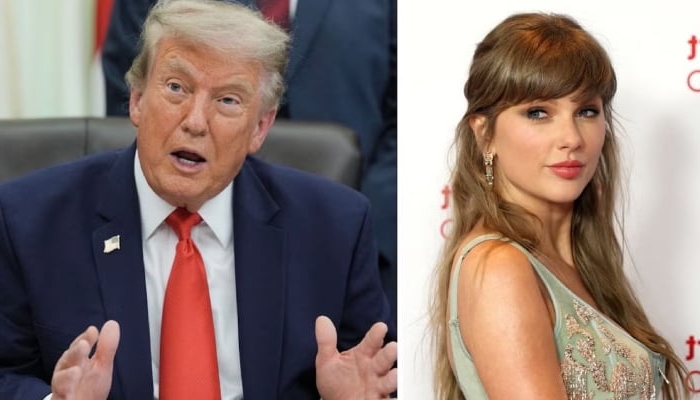
Taylor Swift has reportedly had more of her music removed from TikTok videos posted by Donald Trump and the official White House account, adding another chapter to the ongoing tension between the pop superstar and the US president.

The latest incident involved Swift’s 2021 song “Bet You Think About Me,” which was featured in a TikTok video showing Trump speaking to supporters. The video was posted on the official White House account and included a caption that appeared to reference Swift’s lyrics, saying, “We know you think about us.”

However, within hours of the video being posted, viewers noticed that Swift’s song was no longer playing. The audio had been muted, while an onscreen message stated that the sound was unavailable. The removal quickly attracted attention from Swift’s fans, many of whom have closely followed the singer’s public and political disagreements with Trump.

Reports have also indicated that Swift’s music was removed from other White House TikTok videos posted months earlier. One recent example featured Trump and First Lady Melania Trump watching fireworks. The video included text describing the mood as being excited because it was August and Trump was president.

The clip originally featured Swift’s song “August,” a track from her critically acclaimed 2020 album “Folklore.” It also included a message from Trump’s team suggesting that Swift would be pleased that her music had been used, along with hashtags referencing the singer, the song and the MAGA movement.

The situation changed several days later when the song was no longer available in the video. Instead, TikTok displayed a notice explaining that the copyright owner had not made the sound available in the country.

Trump’s social media team later appeared to respond by using another Swift song, “Red,” in a separate TikTok post. The video featured a parody album cover showing Trump wearing a red MAGA hat, along with a fictional playlist titled “Red (Donald Trump’s Version).”

The disputes over Swift’s music come amid a long-running public relationship between the singer and Trump that has often been marked by political differences. Trump has previously criticized Swift publicly, while the singer has openly expressed political views that have frequently placed her at odds with him and his supporters.

Swift’s ownership of her music has also become an important part of the situation. She regained control of her original master recordings in May 2025 after a lengthy dispute over ownership. As a result, her control over her catalog has allowed her to take a stronger position regarding how her recordings are used.

The repeated removal of Swift’s songs from Trump-related TikTok posts highlights the complicated relationship between copyright ownership, social media and political messaging. It also demonstrates how the use of popular music can quickly become controversial when it is connected to political figures or movements.

Similar Posts

  • | |

    Mariyam Nafees calls for priority queues for vulnerable people

    Pakistani actor and host Mariyam Nafees has called for the introduction of separate priority queues in Pakistan for people who may find it difficult to stand in regular lines for long periods. The actor raised the issue during a special Independence Day episode of Good Morning Pakistan, where she appeared alongside Sarwat Gillani, Amar Khan, Saif Ali Khan, Mohsin Abbas and Omair Rana. During the programme, Mariyam highlighted the difficulties faced by elderly people, pregnant women, young children and individuals with disabilities or health problems when they have to wait in long queues. She said priority lines are commonly available in many countries to facilitate people who need special consideration. In her view, young and physically fit individuals can generally wait longer, while vulnerable people may not be able to do so comfortably. Mariyam said Pakistan should also consider introducing dedicated queues at public offices and other places where people regularly have to wait for services. She stressed that simply allowing vulnerable people to move ahead is not always effective because some members of the public may ignore their needs. According to her, a formal priority system could make the process more organised and ensure that deserving people receive timely assistance. The actor’s comments focused on the broader issue of public behaviour and social responsibility. She suggested that a structured system could reduce disputes and make public spaces more accessible for those who need additional consideration. During the discussion, Saif Ali Khan also supported the broader point. He noted that the problem is not limited to queue arrangements. He pointed out that people sometimes give preference to friends, relatives or acquaintances at offices and other places. He argued that such preferential treatment should also be discouraged. The discussion drew attention to the importance of fairness in public spaces and equal access to services. Mariyam’s remarks have also sparked conversation about whether Pakistan should introduce more formal systems to assist elderly citizens, pregnant women, children and people with disabilities.

  • | | |

    Pakistan to lead new Turkey-Saudi defence pact

    ISLAMABAD: Pakistan is set to take the first three-year leadership of a new secretariat established under the defence agreement signed by Pakistan, Türkiye and Saudi Arabia in Makkah on Aug 7, giving Islamabad a prominent role in coordinating the emerging regional security framework. According to Turkish and international media reports, the secretariat will serve as the central mechanism for implementing decisions taken by the three countries and coordinating their growing defence cooperation. After Pakistan’s initial three-year term, leadership is expected to pass to Saudi Arabia and then Türkiye. The agreement is built around a collective-security principle under which an armed attack against one member would be regarded as an attack against all three. However, unlike NATO’s automatic response mechanism, the pact leaves the nature of any response to be determined according to the circumstances and the request of the affected country. A high-level council comprising foreign and defence ministers as well as military chiefs is also expected to oversee the arrangement. The council is expected to meet twice a year, while cooperation could range from intelligence sharing and logistics to direct military assistance when required. The partnership also places a strong emphasis on defence technology. The three countries plan to expand cooperation in unmanned systems, electronic warfare and artificial intelligence, alongside joint military exercises designed to improve coordination among their armed forces. Joint defence production, research and technology transfer are also part of the broader framework. For Pakistan, the first leadership term could prove strategically significant. Islamabad already maintains longstanding defence ties with both Ankara and Riyadh, and its role at the secretariat could give it greater influence in regional security diplomacy. Türkiye has stressed that the agreement is defensive and is not directed against any particular country. Turkish Foreign Minister Hakan Fidan said the pact is intended to strengthen regional security rather than replace existing alliances. With the Middle East facing continued instability, the new arrangement could become an important test of how effectively three regional powers can turn political solidarity into practical defence cooperation.

  • | |

    G-B flash floods leave widespread destruction

    GILGIT: Torrential rains have triggered devastating flash floods, mudslides and landslides across Gilgit-Baltistan, leaving a trail of destruction that has damaged hundreds of homes, swept away bridges and disrupted road links in several districts. According to the latest assessment by the Gilgit-Baltistan Disaster Management Authority (GBDMA), 60 weather-related incidents have been recorded across the region, causing extensive damage to homes, transport infrastructure and livestock. Officials reported that 184 houses were affected, including 49 completely destroyed and 135 partially damaged. The disasters also washed away nine bridges, damaged nearly eight kilometres of roads and claimed the lives of 68 animals. Astore emerged as the worst-hit district in terms of housing damage, where more than 80 homes were partially damaged after flash floods and landslides struck the Lous and Doyan Khichik areas. Diamer also suffered significant losses, with 42 houses damaged, including 16 that were completely destroyed in Thore, Buner Dass, Khanbary, Shahi Mahal and Darel. In Skardu, rising water levels and flash floods destroyed 15 houses and swept away four bridges, the highest number of bridge losses reported in any district. Ghizer witnessed damage to two dozen homes and one bridge due to flash floods, cloudbursts and river erosion, while Ghanche reported damage to 12 houses and the loss of three bridges. Gilgit district also experienced flooding in several valleys, where eight houses were damaged and around 50 livestock perished, accounting for the highest livestock losses in the region. Although Hunza and Nagar escaped major residential damage, road infrastructure in both districts was affected by flooding and erosion. Relief efforts are continuing in the affected areas. Emergency supplies, including tents, food packs, kitchen sets, plastic mats and bedding, have been distributed among displaced families in Diamer and Skardu. Authorities have also dispatched additional relief consignments to flood-hit valleys to support affected communities. Meanwhile, road clearance operations are underway to restore connectivity. Heavy machinery has been deployed to remove landslide debris along the Jaglot-Skardu Road, where restoration work is progressing at multiple locations. Officials said road networks in Ghizer, Hunza, Shiger and Kharmang have been reopened, while emergency teams and equipment remain on high alert as authorities continue monitoring the evolving situation.

  • | |

    Fresh footage of Iran’s Supreme Leader Mojtaba K…

    A previously recorded video of Iran’s Supreme Leader Mojtaba Khamenei has surfaced, offering a rare glimpse of the country’s new leader as speculation continues over his health. The footage, released by Iranian media, shows Khamenei attending an academic session and reviewing a student’s research paper on the “Islamic security model.” He is heard speaking publicly in the video for what is described as the first time since assuming the leadership, and he praises the research as flawless. The release comes amid unverified reports that Khamenei was seriously injured during military strikes that resulted in the death of his father, Ayatollah Ali Khamenei. Iranian state media has sought to counter the reports by broadcasting the footage, although the exact date when it was recorded remains unclear. Iranian President Masoud Pezeshkian has also rejected claims about the supreme leader’s deteriorating health, describing him as “absolutely healthy.” Since taking office, the 56-year-old Mojtaba Khamenei has largely stayed away from public appearances, communicating mainly through written statements and official channels. His limited visibility has continued to fuel questions about his health and whereabouts.

  • |

    Turkish President Erdogan: Makkah pact to reshape regional security

    Turkish President Recep Tayyip Erdogan has said the joint defence agreement signed by Türkiye, Pakistan and Saudi Arabia will strengthen security cooperation and contribute to peace and stability in the region. In a statement posted on his X account, Erdogan said he visited Makkah at the invitation of Saudi Crown Prince and Prime Minister Mohammed bin Salman. During the visit, Erdogan said he met with Crown Prince Mohammed bin Salman and Pakistani Prime Minister Shehbaz Sharif. The three leaders subsequently signed a joint defence agreement, according to Erdogan. He said the agreement is based on the principle of collective defence and would further strengthen security and military cooperation among the three countries. Erdogan said the pact would also encourage joint projects in the defence industry and facilitate stronger cooperation in combating terrorism. The Turkish president said the agreement reaffirmed the right to self-defence recognised under Article 51 of the United Nations Charter. He stressed that the agreement was not directed against any country. Instead, Erdogan said the pact remained open to brotherly countries that seek peace, prosperity and stability in the region. He added that Türkiye would continue to pursue its principled position of resolving conflicts and crises through dialogue and diplomacy. Erdogan also expressed hope that the visit to Makkah and the agreement reached by the three countries would bring peace, stability and prosperity to the wider region. The agreement marks a significant step in defence cooperation between Türkiye, Pakistan and Saudi Arabia and establishes a framework for closer coordination against shared security threats.

  • | |

    PMDC announces special measures for AJK students a…

      The Pakistan Medical and Dental Council (PMDC) has announced a series of special measures to ensure that students from Azad Jammu and Kashmir (AJK), who have been affected by prolonged internet disruptions, are able to participate in the Medical and Dental College Admission Test (MDCAT) without facing unnecessary obstacles. As part of these initiatives, the PMDC has established a dedicated examination center in Islamabad and has also reached a preliminary agreement to set up a regional PMDC office in Azad Kashmir. The decisions were made during a meeting between AJK Secretary of Health Brigadier Aamir Raza and Joint Admission Committee Chairman Professor Dr. Faisal Bashir with PMDC President Professor Dr. Rizwan Taj, Registrar Brigadier (Retd.) Rehan Naqvi, and Director of Admission Affairs Dr. Imdad Ali Khushk. The meeting focused on the registration challenges faced by AJK students due to the prolonged internet shutdown and explored practical solutions to ensure that no eligible candidate is deprived of the opportunity to take the MDCAT. During the meeting, the Secretary of Health of the AJK government informed PMDC officials that the ongoing internet suspension in the region had created serious difficulties for students attempting to complete their online registration for the entrance examination. He requested the council to extend every possible facility to affected students so that deserving candidates would not miss the examination because of circumstances beyond their control. Speaking on the occasion, PMDC President Professor Dr. Rizwan Taj stated that the council had already introduced several special measures to facilitate students from Azad Kashmir. He emphasized that the Government of Pakistan remains committed to ensuring equal opportunities for every eligible student seeking admission to medical and dental colleges, regardless of the challenges they face. Dr. Rizwan Taj explained that, considering the extraordinary circumstances in the region, the deadline for MDCAT registration with the regular fee had been extended twice. Initially, the deadline was extended until July 13, and later it was further extended until July 23, 2026, to provide additional time for students affected by the communication disruptions to complete their registration process. The PMDC President further said that students from Azad Kashmir had been given multiple options for submitting their registration applications. In addition to the online process, applications could be sent through WhatsApp, email, postal mail, or submitted in person. He also assured students experiencing registration difficulties that they could contact the PMDC directly, where officials would provide all possible assistance to help them complete the process successfully. To further support students, the PMDC has established a special MDCAT examination center in Islamabad specifically for candidates from Azad Kashmir. A public notice has already been issued regarding the facility, and a dedicated focal person has been appointed to guide students throughout the registration and examination process. The council hopes these measures will reduce confusion and ensure smooth coordination for affected candidates. During the meeting, PMDC President Professor Dr. Rizwan Taj and Registrar Brigadier (Retd.) Rehan Naqvi assured the Government of Azad Jammu and Kashmir of their full cooperation in addressing students’ concerns. Both sides also reached a preliminary agreement to establish a PMDC regional office in Azad Kashmir to improve access to council services for students and healthcare professionals in the region. The proposal will now be presented to the PMDC Governing Body for formal approval. At the conclusion of the meeting, the AJK Secretary of Health and the Chairman of the Joint Admission Committee appreciated the PMDC’s timely response and the special facilities provided for students affected by the internet shutdown. They expressed confidence that these initiatives would ensure that no eligible student from Azad Jammu and Kashmir would be deprived of the opportunity to appear in the MDCAT because of technical or communication-related difficulties.

Leave a Reply

Your email address will not be published. Required fields are marked *