pti announces september
| |

PTI announces September 27 to Islamabad over key d…

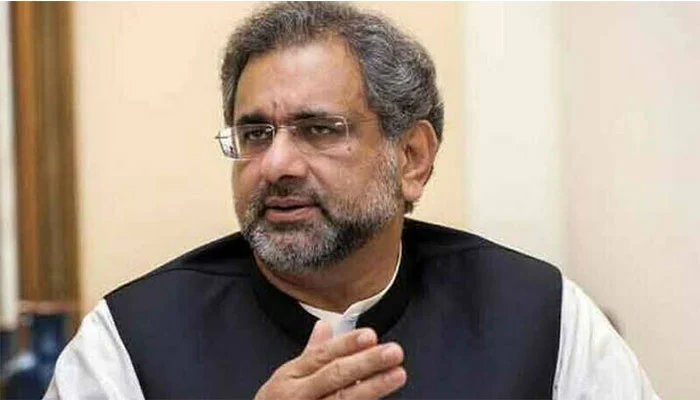
Pakistan Tehreek-e-Insaf (PTI) has announced plans to march to Islamabad on September 27 if its demands regarding party founder Imran Khan are not met, with senior party leaders calling for legal and constitutional relief.

The announcement was made during a public gathering near the motorway in Peshawar, where PTI leaders said the planned demonstration would go ahead unless progress is made on several issues, including regular meetings with Imran Khan, access to his personal physician, and timely hearings of court cases involving the former prime minister.

Addressing supporters, Khyber Pakhtunkhwa Chief Minister Ali Amin Gandapur said the party had pursued every available constitutional and legal avenue but had failed to achieve the desired outcomes. He argued that the party had little confidence in the judicial process and claimed that recent constitutional amendments had affected the functioning of the courts.

Gandapur also alleged that PTI supporters had faced excessive force during previous demonstrations. He questioned the continued detention of Imran Khan and reiterated the party’s position that the former premier’s removal from office was the result of external interference. He further claimed that Pakistan’s economy had performed better during Imran Khan’s tenure and criticized the current government’s handling of economic and security challenges.

The chief minister also expressed concern over inflation, unemployment, law and order, and the country’s overall economic situation. He accused the federal government of mismanagement and urged supporters to remain united ahead of the planned protest.

Speaking at the same event, PTI leader Sohail Afridi said the party had exhausted all legal and constitutional options before deciding to launch another protest movement. He maintained that the planned march was intended to demand justice rather than political concessions.

Afridi announced that PTI would proceed towards Islamabad on September 27 if its demands remained unaddressed. He told supporters that the party was seeking what it described as judicial justice and the restoration of legal rights for its leader.

The planned demonstration is expected to become one of PTI’s major political mobilization efforts in the coming months. Party leaders have called on supporters from across the country to participate peacefully in the protest.

The federal government has not yet issued a detailed response to PTI’s latest announcement. Political observers say the coming weeks will be important as both sides weigh their next steps amid Pakistan’s evolving political landscape.


Similar Posts

  • |

    Liverpool sign Ronald Araujo on loan from Barcelona

    Liverpool have moved to strengthen their defence by signing Ronald Araujo on a season-long loan from Barcelona, giving the Uruguay international a fresh opportunity after falling down the pecking order at the Spanish club. Barcelona confirmed on Monday that Araujo will spend the 2026-27 season at Anfield, with the agreement running until June 30, 2027. The Catalan club did not reveal the financial terms, but reports in the Spanish media indicate that Liverpool will cover his wages and have an option to make the transfer permanent for €55 million ($63.5m). The move marks a significant change for Araujo, who had been regarded as one of Barcelona’s key defensive players. The 27-year-old renewed his contract with the Catalan giants in 2025, extending his deal until 2031. However, his position became increasingly uncertain under Barcelona coach Hansi Flick. Young defender Pau Cubarsi emerged as a central figure in the back line, while Eric Garcia and Gerard Martin also competed for defensive roles. Araujo made 35 appearances across all competitions last season but spent several weeks away from football because of mental exhaustion. After returning in January, he struggled to regain a regular starting position. His move to Liverpool comes at a crucial time for the Premier League club. Liverpool need defensive reinforcements after Ibrahima Konate departed for Real Madrid, while Joe Gomez and Giovanni Leoni are currently injured. Araujo could therefore find himself playing an important role alongside experienced captain Virgil van Dijk, particularly as Liverpool begin a new chapter under Spanish coach Andoni Iraola. The Uruguayan defender, who was part of Uruguay’s squad at the 2026 FIFA World Cup but did not feature, said he was eager to begin his Liverpool journey. “I’m excited to be here at this massive club with lots of history,” Araujo said. “I’m excited to meet my team-mates, excited to get started playing, and I’m very motivated.” He described the transfer as the right move at this stage of his career, suggesting that regular football was an important factor behind his decision. Liverpool have also strengthened their defensive options by signing young French defender Jeremy Jacquet from Rennes. For Araujo, the challenge is clear: turn a difficult period at Barcelona into a new beginning at Anfield—and prove that he still belongs among Europe’s elite defenders.

  • | |

    GCU Lahore goes fully paperless in major digital s…

    LAHORE: Government College University (GCU) Lahore has officially moved its administrative operations to a fully paperless digital system, marking a major step towards modernising governance and reducing reliance on traditional office files. The transformation has been achieved through the implementation of the e-Filing and Office Automation System, a cloud-based digital platform developed by the Punjab Information Technology Board (PITB). The system has been provided to the university free of cost under special directions from the Punjab government, according to university officials. Under the new framework, administrative processes across GCU’s departments will now be handled online through a single digital platform. Routine matters such as leave applications, travel permissions, annual performance reports, official orders and departmental correspondence can now be processed electronically. The university said the system would also cover digital note sheets for proposals between departments, approval of payments for visiting faculty, purchase requests and agendas for departmental meetings. No more files moving from desk to desk One of the most significant changes will be the elimination of the traditional practice of physically moving files from one office to another. Instead, officials will be able to create, review, approve and track documents digitally through the cloud-based platform. This is expected to improve administrative efficiency while making it easier to monitor the progress of official matters. GCU Vice Chancellor Professor Muhammad Umar Chaudhry described the transition as more than an environmental initiative, saying digital governance was essential for a modern educational institution. He said moving administrative affairs away from paper would strengthen transparency, speed and accountability, while reducing delays associated with manual file tracking. According to the vice chancellor, removing routine administrative delays would allow faculty members and heads of departments to devote more time to teaching and research. Part of wider digital transformation The university said the paperless initiative is part of a broader digitalisation drive launched during the previous academic year under the vice chancellor’s leadership. Before implementing the complete e-office system, GCU had introduced online approval mechanisms for student society events and digital billing for payments to visiting faculty members. The administration is now preparing to take the process further with the planned launch of a comprehensive e-Services Portal. The upcoming platform is expected to streamline requests related to campus maintenance and other facilities. Officials hope the system will allow infrastructure-related problems to be reported and addressed more quickly without disrupting academic activities. Alumni records also going digital GCU’s digital reforms are not limited to current campus operations. The university is also working on a major project to digitise the records of its alumni, expanding technology-based management beyond day-to-day administration. The move towards a paperless campus could ultimately reduce paperwork, improve record management and provide university officials with faster access to important information. With administrative processes increasingly moving online, GCU Lahore is positioning itself as an example of how Pakistan’s public-sector universities can use digital technology to make governance faster, more transparent and more efficient.

  • | |

    Shahid Khaqan Abbasi criticizes government over ec…

    The head of the Awam Pakistan Party, Shahid Khaqan Abbasi, has criticized the government over the country’s worsening economic and political situation, saying that even government representatives have now started raising concerns about the state of affairs in Pakistan. Speaking at a press conference in Islamabad, Abbasi said that the interior minister had realized after four to five years that the country was facing serious governance challenges, while ordinary Pakistanis had been expressing similar concerns for years. “The people of Pakistan have been saying the same thing for the past four to five years,” Abbasi stated, adding that government ministers should raise such issues directly during cabinet meetings instead of discussing them publicly. The former prime minister stressed that Pakistan urgently requires meaningful reforms and warned that temporary or superficial measures would not solve the country’s deep-rooted problems. He argued that the country has repeatedly experimented with short-term solutions every year, but what is needed is a fundamental change in the system. “We need to change the system and establish the rule of law,” Abbasi said, emphasizing that strong institutions and equal application of laws are necessary for long-term stability. Abbasi also criticized political divisions and the practice of using accountability cases against opponents. He called for an end to the cycle of imprisoning political rivals, questioning how the country could progress if every politician was accused of corruption. “If all politicians are corrupt, then who will run the country?” he asked. The Awam Pakistan Party leader claimed that two major stakeholders currently play a dominant role in running the country, but instead of working together, both sides continue to blame each other for national problems. Discussing the economic situation, Abbasi said that the income of Pakistani citizens has declined significantly over the past six years. He claimed that household purchasing power has fallen by approximately 14 percent, leaving many families struggling financially. “Every household in Pakistan has become poorer,” he said, adding that unemployment has reached its highest level in 21 years. Abbasi also highlighted the increasing tax burden on citizens, stating that the average Pakistani now pays around Rs60,000 in taxes annually. He said that taxes that were previously around Rs30,000 have doubled in recent years, while poverty continues to rise across the country. The former prime minister argued that Pakistan is struggling to attract investment because of inconsistent policies and uncertainty. He accused the government of relying heavily on taxation rather than creating conditions that encourage economic growth. “There is no certainty about when new taxes will be imposed,” Abbasi said, claiming that unpredictable policies discourage businesses and investors from operating in Pakistan. He also raised concerns about public health and food security, stating that thousands of children in Pakistan are affected by HIV and that the government has started importing wheat despite the country being an agricultural economy. “A country known for agriculture is now purchasing wheat from abroad,” he remarked. Abbasi further criticized rising costs of essential services, including electricity, gas, petrol, and diesel. He said that ordinary citizens are facing increasing financial pressure because of continuous price increases. According to Abbasi, Pakistan’s current situation reflects a broader governance failure, and without major reforms, improvements in economic conditions will remain difficult. He called for political cooperation, institutional reform, and policies focused on economic stability rather than short-term measures.

  • | |

    Capital one defends closure of Trump organization accounts

    Capital One Financial has responded to a lawsuit filed over its decision to close bank accounts linked to the Trump Organization, arguing that the move was based on internal anti-money laundering reviews rather than political or ideological motivations. The bank, in a legal filing submitted on Friday, stated that it closed the accounts following a detailed assessment conducted by its anti-money laundering (AML) specialists. The company argued that the decision was made after months of analysis and was consistent with its internal policies as well as regulatory requirements. The filing represents the first time a major bank has publicly connected concerns related to money laundering risks with its decision to end a banking relationship involving the Trump family business. However, Capital One clarified that it has never accused the Trump Organization of committing illegal money laundering activities. Instead, the bank said that the account closures were the result of routine compliance procedures. Capital One argued that documents presented in the case, along with the plaintiffs’ own claims, demonstrate that the decision was related to AML concerns rather than any attempt to discriminate against the company because of political beliefs. The dispute began after Capital One informed the Trump Organization in March 2021 that it planned to close more than 300 accounts associated with businesses connected to former U.S. President Donald Trump. The Trump Organization and Eric Trump, Trump’s son, later filed a lawsuit in March 2025 in a Florida federal court, claiming that the bank had unfairly “debanked” them because of political pressure and what they described as the company’s “woke” policies. The lawsuit alleged that Capital One’s decision was influenced by the political environment following the January 6, 2021, attack on the U.S. Capitol. The plaintiffs argued that the bank wanted to distance itself from Trump and his supporters during a period of intense public and political scrutiny. A federal court in Miami has already dismissed two versions of the complaint but allowed the plaintiffs opportunities to revise and submit updated claims. Capital One argued in its latest filing that the amended complaint continues to contain the same weaknesses as earlier versions and fails to establish evidence of unlawful discrimination. The bank accused the Trump Organization of presenting selective information and relying on statements taken out of context. Capital One maintained that the allegations of political motivation were unsupported and ignored the broader circumstances behind the account closures. According to the bank’s filing, certain transaction patterns identified during its review matched types of activities that federal banking authorities commonly recognize as requiring additional examination. Capital One said its AML team followed established procedures before reaching the decision to terminate the accounts. The legal battle comes during a broader political debate in the United States over the issue of “debanking,” with some conservatives accusing financial institutions of unfairly targeting individuals and organizations because of their political views. During his second presidential term, Trump’s administration has criticized such practices and taken steps aimed at preventing what it describes as discriminatory banking decisions. The controversy has also involved other major financial institutions. Trump previously filed a lawsuit against JPMorgan Chase, making similar allegations regarding political discrimination. During his first term in office, Trump also took legal action against Capital One and Deutsche Bank in an effort to prevent the release of his financial records to Congress. The case continues to highlight the growing tension between banking compliance practices, political concerns, and the debate over whether financial institutions should have broader restrictions on ending relationships with controversial clients.

  • | | |

    9 cancer medicines declared fake and illegal after…

    A major health alert has emerged in Karachi after the Sindh Drug Testing Laboratory declared nine medicines used for cancer treatment as substandard, fake, and unregistered. Authorities have started action against the responsible parties following the laboratory findings. Director Sindh Drug Testing Laboratory Syed Adnan Rizvi said that the investigation was launched after receiving laboratory reports, and relevant institutions have begun taking action based on the results. According to Rizvi, some of the cancer medicines tested did not contain the required active ingredients needed for treatment, while others did not have a valid registration number from the Drug Regulatory Authority of Pakistan (DRAP). He warned that the availability of counterfeit and low-quality cancer medicines poses a serious threat to patients because ineffective treatment can allow the disease to progress and reduce the chances of recovery. The official also raised concerns about prescription practices, stating that some oncologists mention the names of specific pharmacies on prescriptions, which may force patients to purchase medicines only from those outlets. He emphasized the need for transparency and strict monitoring throughout the medicine supply chain. Cancer medicines are highly sensitive and require accurate composition and quality standards because patients depend on them for life-saving treatment. Experts have repeatedly stressed that fake or substandard drugs can cause severe health consequences, especially for people undergoing critical therapies. The Sindh Drug Testing Laboratory findings have increased concerns about medicine regulation and quality control in the healthcare sector. Authorities are expected to investigate the source of the suspected medicines, identify those involved in their distribution, and take legal action where necessary. The incident highlights the importance of purchasing medicines only from authorized pharmacies and ensuring that drugs carry proper registration details and quality certifications. Health officials have urged patients and healthcare providers to remain cautious and report any suspicious medicines to relevant authorities. Drug safety remains a major challenge in many healthcare systems, and officials say stronger monitoring, improved enforcement, and public awareness are essential to prevent the circulation of counterfeit medicines. Further details about the investigation and action against those responsible are expected as authorities continue their review of the case.

  • | | |

    Pakistan’s top civil-military leadership in Riya…

    Prime Minister Muhammad Shehbaz Sharif and Chief of Army Staff and Chief of Defence Forces Field Marshal Syed Asim Munir arrived in Saudi Arabia on Thursday for high-level talks with the Kingdom’s leadership, as Pakistan seeks to consolidate its strategic partnership with Riyadh and build on its growing diplomatic engagement in efforts aimed at promoting peace and stability across the region. The visit, at the invitation of Saudi Crown Prince and Prime Minister Mohammed bin Salman bin Abdulaziz Al Saud, comes at a pivotal moment in regional geopolitics and is expected to focus on security cooperation, defence collaboration, economic partnership and coordination on key regional developments. Accompanying the prime minister are Deputy Prime Minister and Foreign Minister Senator Ishaq Dar, Defence Minister Khawaja Muhammad Asif, Information Minister Attaullah Tarar and Special Assistant Tariq Fatemi. Prime Minister Shehbaz Sharif is scheduled to hold extensive discussions with Crown Prince Mohammed bin Salman on expanding the strategic partnership between the two brotherly nations, reviewing the regional security environment and enhancing cooperation across defence, investment and economic sectors. The presence of Field Marshal Syed Asim Munir in the delegation underlines the growing strategic dimension of Pakistan-Saudi Arabia relations. Security analysts say the visit reflects Islamabad’s commitment to strengthening defence coordination with Riyadh at a time when regional stability remains a shared priority. The visit also comes as Pakistan projects an increasingly active diplomatic profile in regional affairs. Islamabad has consistently advocated dialogue over confrontation and has supported international efforts to reduce tensions and encourage peaceful engagement in the Middle East. Pakistani officials have maintained that the country’s foreign policy is centred on promoting regional peace, stability and constructive diplomacy. Pakistan’s diplomatic engagement in recent months, including its support for efforts to encourage dialogue between regional and international stakeholders, has reinforced its image as a country seeking political solutions to complex regional challenges. Officials say Islamabad remains committed to facilitating an environment conducive to peace and stability while maintaining close coordination with key partners, including Saudi Arabia. Pakistan and Saudi Arabia share decades of historic brotherhood founded on mutual trust, shared faith and unwavering support. Over the years, the relationship has evolved into a comprehensive strategic partnership encompassing defence, security, investment, energy and regional cooperation. The recent defence cooperation pact between the two countries has further strengthened bilateral ties, adding greater institutional depth to military collaboration and opening new avenues for strategic coordination. Officials believe the agreement reflects the confidence both leaderships have in each other’s commitment to safeguarding regional peace and collective security. Against the backdrop of rapidly changing geopolitical dynamics, the Riyadh meetings are expected to reaffirm the close alignment between Islamabad and Riyadh on regional and international issues while exploring fresh opportunities for economic investment and defence cooperation. Besides his official engagements, Prime Minister Shehbaz Sharif will perform Umrah and offer prayers at the Prophet’s Mosque in Madinah. Officials described the visit as another milestone in Pakistan-Saudi Arabia relations, expressing confidence that the high-level engagement will further strengthen one of Pakistan’s most important strategic partnerships and reinforce Islamabad’s continuing commitment to regional peace, dialogue and stability.

Leave a Reply

Your email address will not be published. Required fields are marked *