punjab engages pmln
| |

Punjab CM engages PML-N legislators to improve pro…

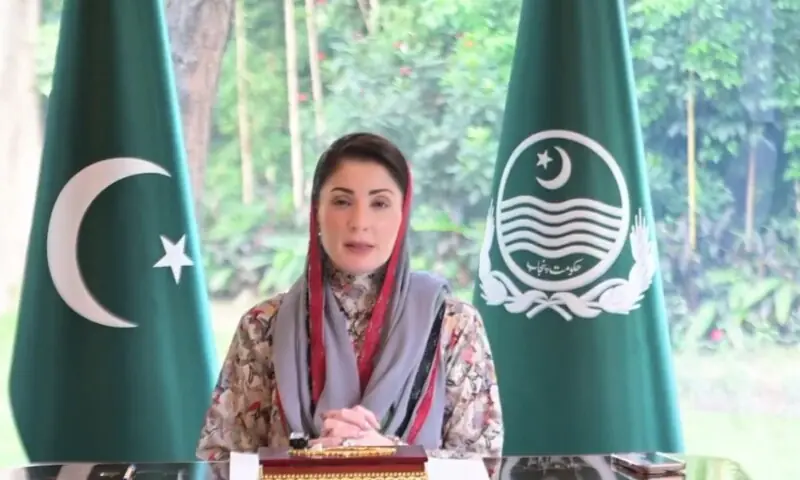
LAHORE: Punjab Chief Minister Maryam Nawaz has intensified her engagement with Pakistan Muslim League-Nawaz (PML-N) legislators by holding regular meetings aimed at addressing their concerns and improving coordination between elected representatives and the provincial administration.

As part of the initiative, the chief minister met PML-N members of the Punjab Assembly from Bahawalnagar on Friday to discuss the political situation, ongoing development projects, and issues affecting local communities. The meeting followed a similar interaction with lawmakers from Mandi Bahauddin held last week, reflecting a broader effort to strengthen communication within the party.

The renewed outreach comes amid concerns voiced by several lawmakers, particularly those representing rural constituencies, who believe government officials and police are not responding adequately when they raise public issues on behalf of their constituents.

Since assuming office in February 2024, Maryam Nawaz has maintained a policy of keeping political influence out of administrative and police appointments, insisting that postings and transfers should be based solely on merit. While the move has been praised as an effort to promote transparency and professionalism, some legislators have argued that it has reduced their ability to effectively advocate for their voters.

Party sources said most lawmakers are not seeking authority over appointments but expect district officials and law enforcement agencies to respond respectfully and seriously when they present genuine public grievances. They believe stronger coordination between elected representatives and the administration is essential for resolving local issues and maintaining public confidence.

According to senior party figures, the chief minister has been encouraged to hold regular consultations with lawmakers to ensure their concerns are heard directly while preserving her commitment to merit-based governance.

The Punjab government has reiterated that its policy of transparent appointments remains unchanged. Officials maintain that the administration is committed to eliminating political interference in the bureaucracy while ensuring that public service delivery continues to improve across the province.

The latest meetings are being viewed as an effort to strengthen internal party coordination, enhance communication with legislators, and ensure that public concerns are addressed more effectively without compromising administrative reforms.

Similar Posts

  • |

    Two tribal elders killed in South Waziristan

    Two tribal elders were shot dead by unidentified armed men in the Zarmilan area of Toi Khulla tehsil in Lower South Waziristan on Sunday, according to police District Police Officer (DPO) Shah Hassan identified the victims as Haji Gul and Malik Badshah, both members of the Suleman Khel tribe. Police said the two elders were travelling from Gul Kach towards Zarmilan when gunmen opened fire on their vehicle near Darozanda. Both men sustained multiple bullet wounds and died at the scene, while the attackers escaped. Police registered a preliminary case at Toi Khulla police station and launched an investigation. DPO Hassan said officers were examining all possible aspects of the incident and working to identify and arrest the suspects. The killings come amid growing concerns over the deteriorating security situation in Lower South Waziristan. The district has witnessed a rise in targeted killings, bomb attacks, kidnappings for ransom, extortion and attacks on police and security personnel over the past 18 months. Tribal elders and their relatives have increasingly become targets of violence. The trend has raised concerns about the safety of influential tribal figures, who have traditionally helped resolve disputes and maintain peace through jirgas and other local mechanisms. In May, prominent tribal elder and chief of the Ahmadzai Wazir tribe, Malik Tariq Wazir, was among three people killed in an IED blast near Gulshan Plaza in Wana’s busy Rustam Bazaar. Four others suffered injuries in the explosion. Police said explosives had allegedly been planted near the plaza overnight and detonated in the morning as Malik Tariq passed through the market in a vehicle. He was considered an influential figure who played an active role in tribal jirgas and local dispute resolution. He had also been abducted by armed men in December 2024 but was later released following efforts by tribal elders and local mediators. In another incident in June 2026, unidentified gunmen killed two sons of prominent tribal elder Malik Jamil Wazir near Kari Kot Bazaar in Wana tehsil. The brothers were identified as Naveed Wazir and Moeenuddin Wazir.

  • | |

    22 dead, 183 injured in Punjab rains

    Punjab Disaster Management Authority (PDMA) Director General Umar Abbas has said that 22 people have died and 183 others were injured in various rain-related incidents across Punjab. Speaking at a press conference in Lahore, Abbas said the Gujranwala and Rawalpindi divisions received the highest rainfall during the recent spell. He added that the water situation in the Ravi and Sutlej rivers remains normal. According to the PDMA chief, a breach developed in an embankment in Sheikhupura, but authorities immediately repaired it and filled the gap. Abbas said new machinery had been acquired under the Punjab Development Programme to improve the province’s ability to respond to emergencies. He claimed that water accumulation this year was three times lower than last year. He said the authorities had also completed the cleaning of major drains before the monsoon season to reduce the risk of urban flooding and waterlogging. The PDMA director general said Punjab’s electricity infrastructure is outdated, and relevant authorities are reviewing several issues concerning the power system. He further said that encroachments and people living in riverbeds have been removed as part of measures to prevent casualties during flooding. According to Abbas, protective embankments are also being constructed at several locations along rivers to strengthen flood protection and minimise the impact of rising water levels. The latest figures highlight the continuing risks posed by heavy monsoon rains across Punjab, while authorities are monitoring rainfall, river levels and vulnerable areas to prevent further loss of life and property.

  • |

    Azad Kashmir goes to polls under revised schedule following civil unrest

    Voting has commenced in the Mirpur division of Azad Jammu and Kashmir (AJK) for the first phase of the region’s general elections, following weeks of political instability and civil unrest. The election commission announced a three-phase schedule across 45 assembly constituencies after campaign activities were severely disrupted by protests led by the Joint Awami Action Committee (JAAC), a civil rights movement recently banned under anti-terrorism laws. The unrest primarily stems from JAAC’s demand to abolish 12 legislative seats reserved for Kashmiri refugees living in Pakistan, which the group contends allow mainstream Pakistani political parties to improperly influence local government formation. While the AJK Supreme Court ruled that these reserved seats hold constitutional protection and cannot be removed by executive decree, security remains high across polling areas, with officials warning of strict legal measures against any attempts to disrupt the voting process. Following the Mirpur phase, voting for the Muzaffarabad division and refugee constituencies will take place on August 2, concluding with the Poonch division on August 10.

  • | |

    Doctors reject FBR POS system, warn of public prot…

    Islamabad: The Pakistan Medical Association Punjab has warned the Federal Board of Revenue that doctors could launch legal action, protests and even withdraw medical services if the proposed Point of Sale system is imposed on private healthcare establishments. PMA Punjab President Dr Kamran Saeed Sheikh said the medical community was ready to fight the issue through courts, public protests, banners and awareness campaigns if its concerns were not addressed. He said the doctors could also consider token strikes or withdrawal of services. The warning came during a press conference at the National Press Club, where the PMA Punjab provincial council met in Islamabad. Doctors from different parts of Punjab discussed the FBR initiative concerning POS systems and the requirements linked to Section 175C. Dr Kamran Saeed Sheikh said doctors were not refusing to pay taxes. He stressed that the medical profession should not be treated like an ordinary business because healthcare is an essential public service. According to Dr Kamran Saeed Sheikh, the proposed system could create additional technical and financial difficulties for doctors and ultimately increase the cost of healthcare for ordinary patients. He also raised concerns about patient privacy. He said information about a patient’s illness, visits and expenses must remain confidential and should not be exposed through systems that could allow unnecessary access or monitoring. The PMA Punjab president said private healthcare providers were already paying taxes on several areas, including electricity, equipment, water, gas and buildings. He argued that adding more technical requirements could take doctors away from their main responsibility of treating patients. Dr Kamran Saeed Sheikh also warned that doctors were already leaving Pakistan and that healthcare establishments in some areas were closing rather than opening. He said further administrative pressure could make the situation worse. The PMA leadership said it had already held two meetings with the FBR and had also sent written communications explaining its position. According to Dr Kamran Saeed Sheikh, the discussions had not produced the result the doctors wanted. He said the medical community was prepared to keep all legal and democratic options open. “We will fight legal battles, go to court and protest,” Dr Kamran Saeed Sheikh said during the briefing. He also warned that doctors could come onto the streets and consider withdrawal of services if the issue was not resolved. Dr Maqsood Zahid, President Elect of PMA Punjab, also questioned whether POS technology was suitable for medical services. He argued that healthcare was different from selling ordinary products because doctors provide services that can be required at any time, including emergencies during the night. He said doctors could not stop treating an emergency patient simply because a machine was not working or an internet connection had failed. Dr Maqsood Zahid said many patients also receive treatment without paying the full amount. Some patients receive services at half rates, while others are treated free of charge. He questioned how such cases would be properly reflected through a system designed mainly around payment records. He gave the example of a hospital in Mian Channu, Khanewal, where doctors reportedly deal with many patients without charging them. He said that out of 100 patients, around 60 could be treated without receiving even a single penny, making a simple payment based system difficult to apply to real medical practice. The doctors also argued that medical treatment cannot be measured in the same way as the sale of a retail product because the cost and complexity of treatment can change from patient to patient. Dr Maqsood Zahid said the medical community was willing to discuss a suitable tax formula with the government if a system could be designed according to the realities of medical practice. The PMA representatives said doctors across the country were being represented in discussions on the issue. They said representatives from Sindh, Khyber Pakhtunkhwa, Balochistan, Karachi, Islamabad and Punjab had participated in consultations. The PMA also raised the problem of smaller clinics in remote areas. Doctors argued that poor internet services, electricity problems, shortage of technical workers and maintenance costs could create serious difficulties for clinics outside major cities. Dr Muzaffar Niazi said doctors would not accept a situation in which the medical profession was treated like a normal retail business. He said doctors were prepared to pursue legal action, demonstrations, public awareness campaigns and other forms of protest. The PMA leadership also stressed that it was not against taxation itself. Dr Maqsood Zahid said doctors were law abiding citizens and accepted that taxes were necessary to run the country. The main demand was for the government to develop a system that recognised the special nature of healthcare and did not place unnecessary financial and administrative pressure on doctors or patients. The PMA Punjab had already formally raised the issue with the FBR. In a letter dated January 20, 2025, Dr Kamran Saeed Sheikh, President PMA Punjab, asked the FBR Chairman to defer the installation of POS systems in private healthcare establishments. The letter warned that additional administrative, technical and financial requirements could increase the cost of healthcare and reduce the time available for doctors to provide medical treatment. It also pointed to problems such as unreliable electricity and internet services, shortage of technical staff and difficulties faced by small and medium sized clinics. PMA Punjab also warned in the letter that additional pressure on private healthcare could discourage young doctors and female doctors from starting private practices in remote and less developed areas and could contribute to further brain drain from Pakistan. The letter was also copied to the President of Pakistan, Prime Minister, Governor Punjab, Federal Minister for Finance and Revenue, Chief Minister Punjab, Speaker Punjab Assembly, provincial health ministers and the Chairman Punjab Health Care Commission. The PMA leadership has now made clear that the dispute is no longer limited to a technical discussion over a machine. Doctors say the issue involves taxation, patient privacy, the cost of healthcare and the ability of small clinics to continue providing services. If the disagreement remains unresolved,

  • |

    Google DeepMind exec admits AI extinction risk is “not zero

    Lila Ibrahim, Google DeepMind’s Chief AI Readiness Officer, will not put a number on the odds of AI wiping out humanity. She is not dismissing the possibility either. Speaking to Fortune, she said the risk is “not zero,” admitting that anything more specific would just be guesswork on her part. Ibrahim was among those who signed the Center for AI Safety’s 2023 statement, alongside co-founders of Anthropic and OpenAI. That statement argued AI extinction risk deserves the same global priority as nuclear war and pandemics. Three years on, she still believes staying silent on existential risk would be irresponsible. She feels this way especially now, given how far the technology has advanced since then. Some of her peers sound even more alarmed. Geoffrey Hinton, often called the “godfather of AI,” estimates a 10% to 20% chance of extinction within the next three decades. Anthropic’s Dario Amodei has gone further, putting the odds of things going “really, really badly” at around 25%. These warnings are not new either. Physicist Stephen Hawking, who used AI tools himself, raised similar concerns long before ChatGPT even existed. Ibrahim compares the situation to the pandemic, pointing out that the worst risks rarely arrive the way people expect. She noted that entire industries failed to properly weigh risk during earlier tech shifts, including the rise of the internet and social media. She is just as sceptical of the optimistic predictions floating around. Elon Musk recently told The Economist that money will stop mattering by 2036, imagining a future of cheap abundance and universal high income once robots take over most jobs. Jeff Bezos has predicted millions of people living in space by 2045. Sam Altman, meanwhile, envisions new job opportunities specifically for graduates working in space. Ibrahim isn’t convinced by either scenario, arguing that AI simply is not developing fast enough to make these predictions realistic anytime soon. Rather than debating far-off futures, Ibrahim says she is more focused on using AI to tackle problems happening right now. She pointed to climate change and industrial pollution as areas where the technology could make a real difference. She was also clear that AI’s benefits should not be limited to a handful of powerful companies. For her, that is just as important as managing the risks.

  • |

    UAE to charge music licensing fees at cafes, hotels and malls

    DUBAI: The United Arab Emirates is set to introduce licensing fees for playing music at cafes, hotels, malls and other commercial venues. According to UAE authorities, a music licence will be required for commercial use of music from December. The new fee will apply to businesses and commercial establishments that play music for customers. The licence will remain valid for one year. Businesses will be required to renew it annually to continue using music commercially. Authorities said educational institutions and government organisations will be exempt from the licensing fee. Non-commercial events will also not be required to pay the fee. The new licensing system has been introduced to protect the copyright and intellectual property rights of singers and other music creators. Officials said the system is intended to ensure that artists and rights holders receive appropriate protection when their music is used commercially. Authorities have also warned that action may be taken against establishments that play music without obtaining the required licence. The new rules are expected to affect a wide range of commercial venues across the UAE, including hospitality and retail businesses.

Leave a Reply

Your email address will not be published. Required fields are marked *