relatives murdered thai
| | |

Relatives of Murdered Thai Family Demand Death Penalty for Killers as Chonburi Family of Three Cremated

CHONBURI, Thailand

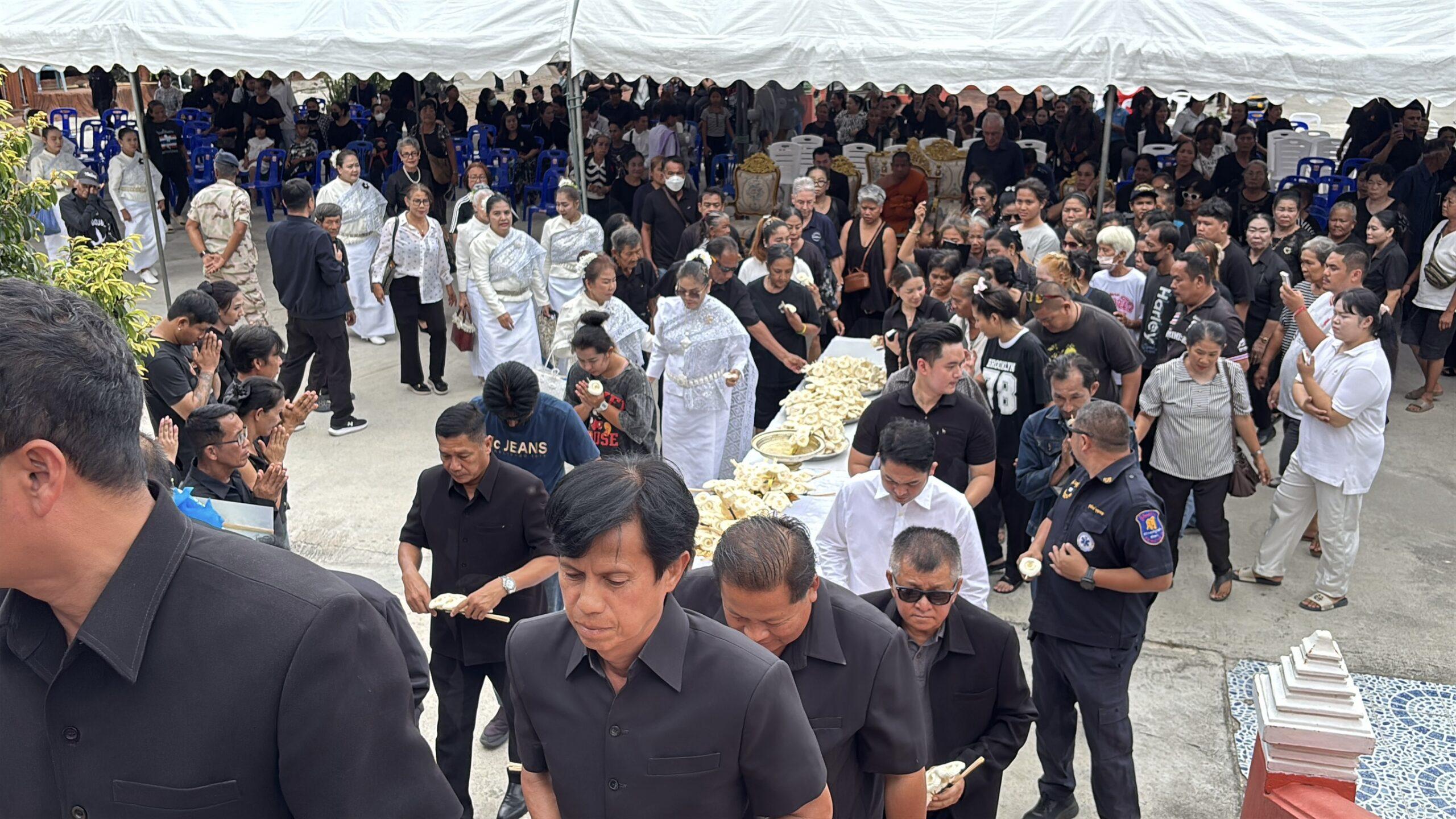
The bodies of a father, mother and teenage daughter murdered and buried by a gang of criminals reportedly led by a suspect known as “Pong” were cremated on Saturday in a solemn ceremony at a temple in Banglamung district, as grieving relatives called for the death penalty and reported strange incidents they believe show the victims’ spirits remain restless.

At 4 p.m. on Aug. 8th, 2026, Phongsathit Pitjanan, deputy governor of Chonburi province, presided over the joint cremation of Wichian Wongsa, 53 (known as Chian); his wife Chantana Chatin, 50 (Ad); and their daughter Nichapa Wongsa, 18 (Noi). The three were the victims of a brutal killing and burial attributed to Pong’s gang.
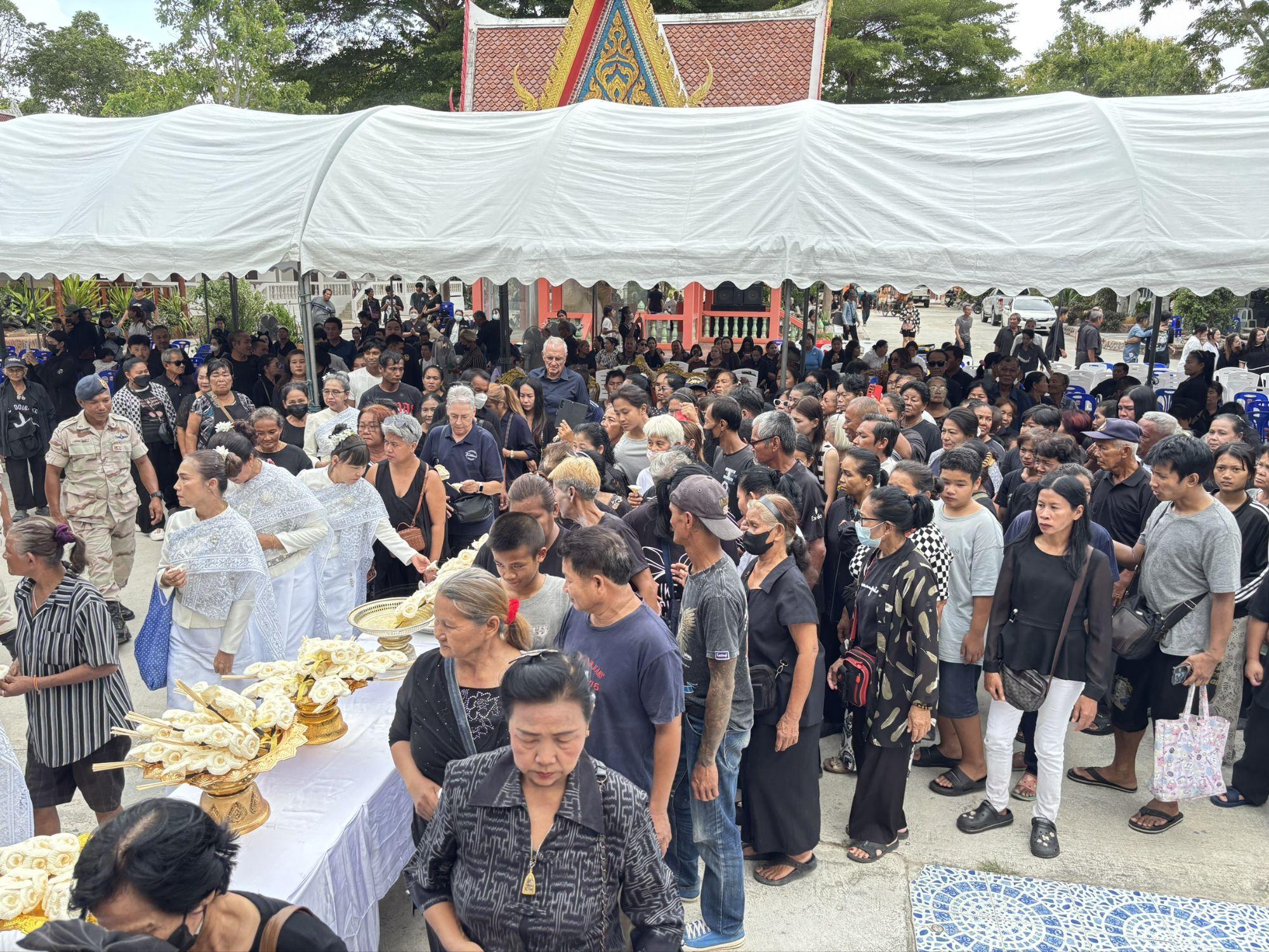
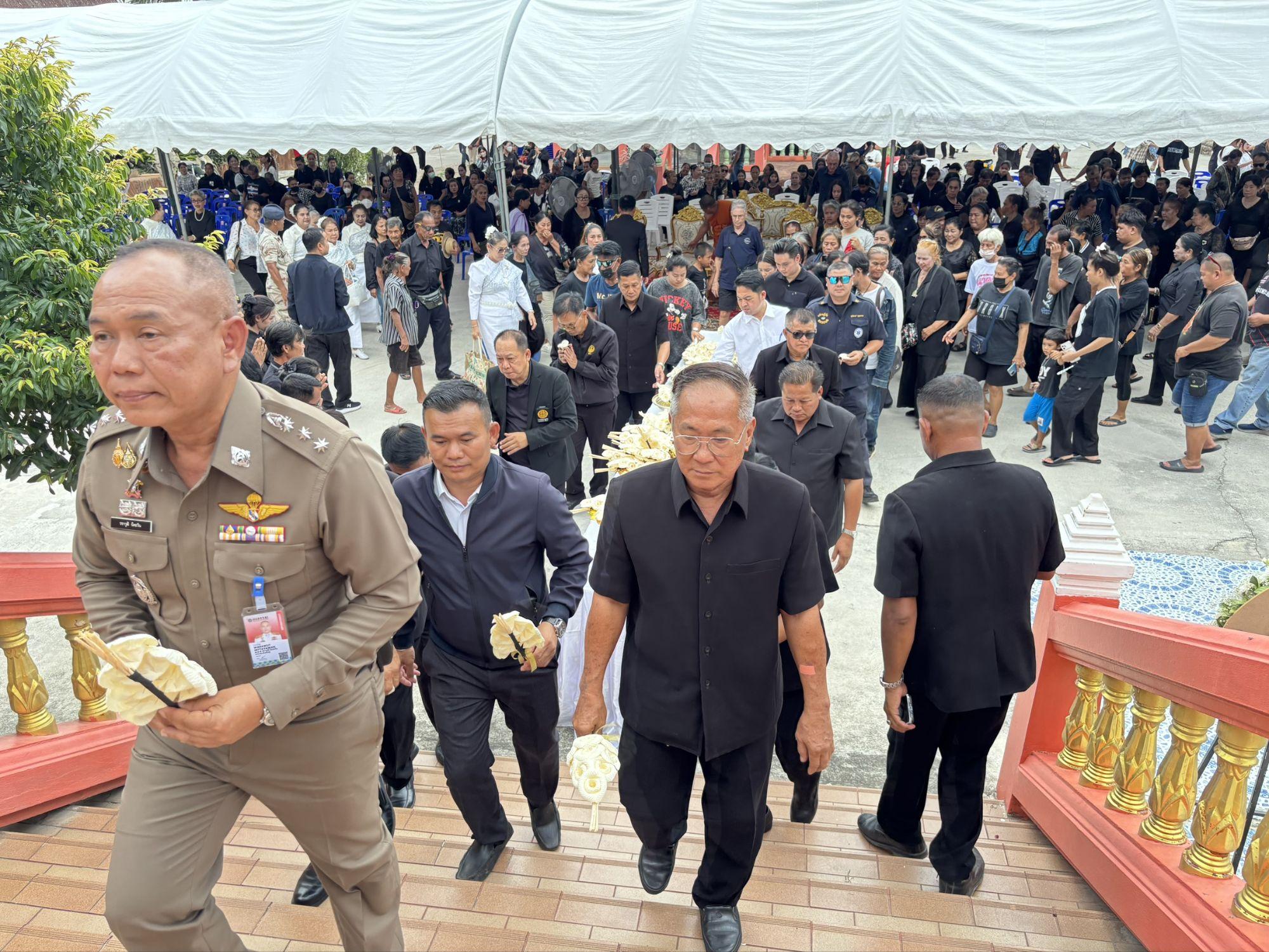
The ceremony took place at Wat Khao Bunmee Dararam (also known as Wat Thung Kha) in the Huai Yai subdistrict of Bang Lamung district. Phra Khru Palad Theerayut Chotiko, or “Luang Phi X,” the temple’s abbot, led the monastic side of the rites. Local officials, police from Huai Yai station, administrators from Banglamung district, village headmen and a large number of residents attended amid an atmosphere of deep mourning.
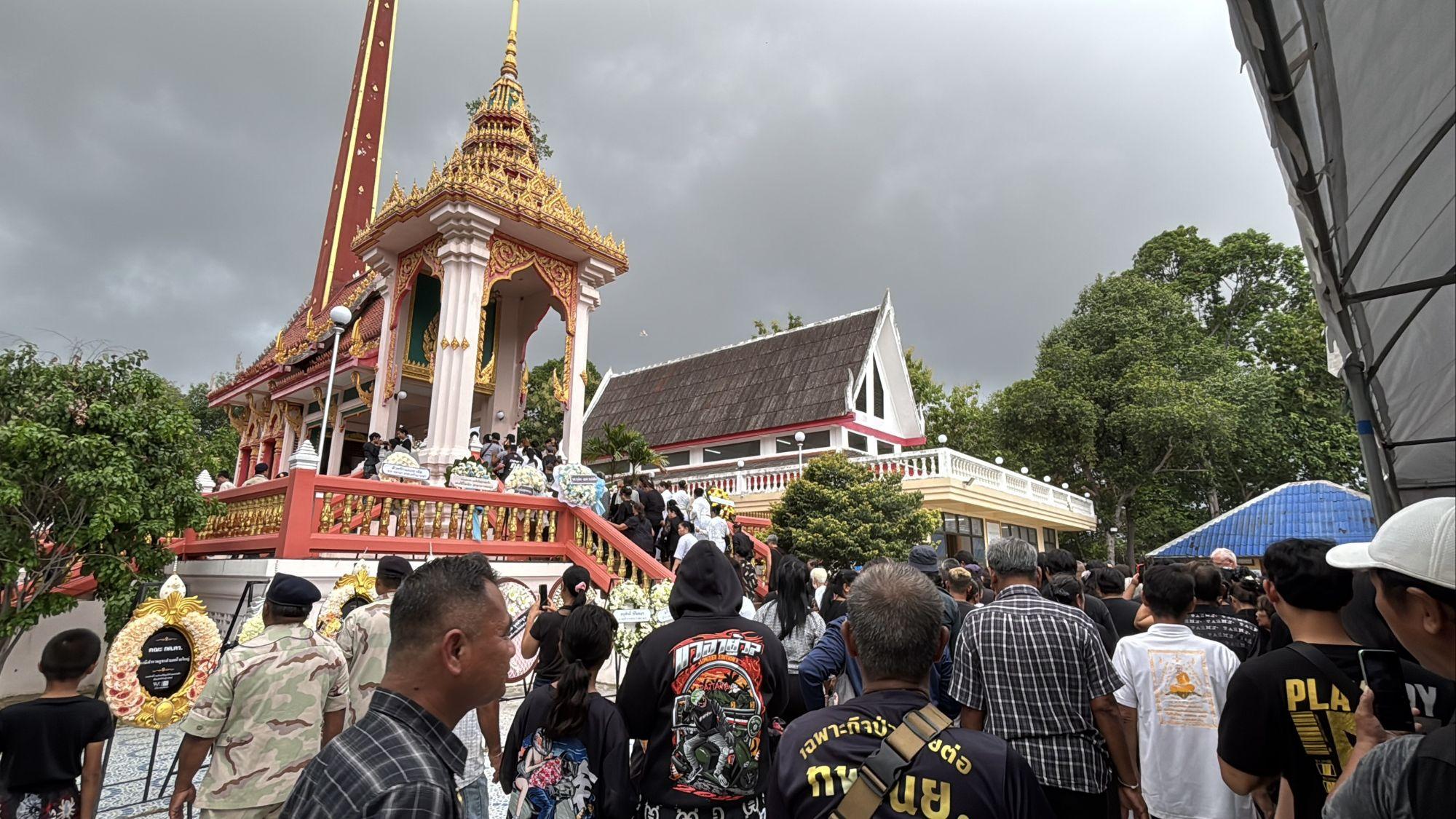
Activities began at midday. Villagers offered food to monks and dedicated merit to the deceased family. Monks performed the Matika Bangsakun chanting. The three coffins were then moved to the crematorium. A likay folk performance troupe and a group of local housewives from Huai Yai subdistrict staged shows in front of the coffins before the cremation.
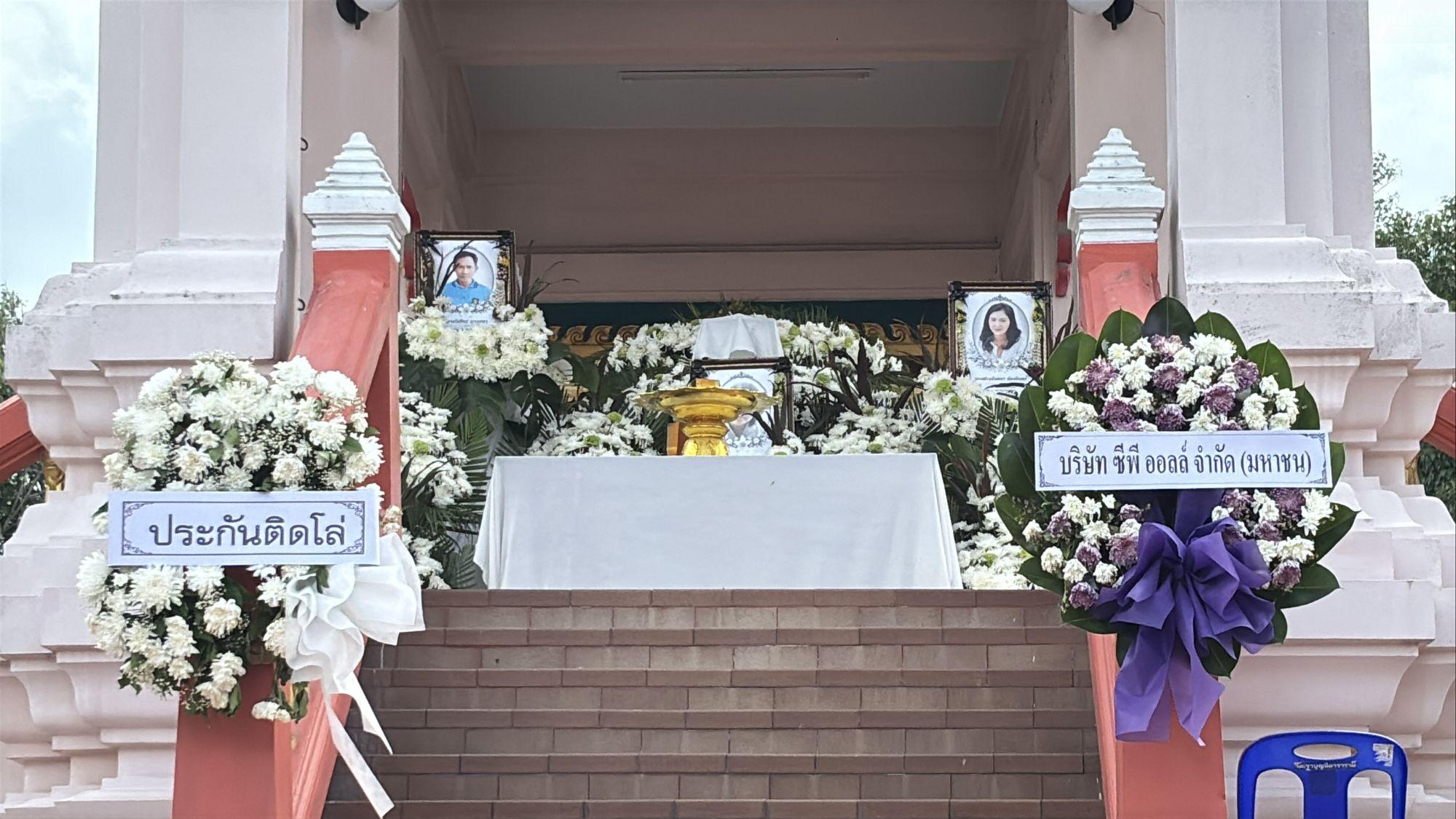
Temple staff planned to cremate the bodies one at a time, starting with the father, followed by the mother and then the daughter, allowing about three hours per body to facilitate separation of the ashes. The process was expected to finish in the early hours of the following morning.

Pranee Chatin, 68, mother of Chantana, said she still cannot accept what happened. Since the deaths of her daughter, son-in-law and granddaughter she has been unable to eat or sleep properly. On the night the bodies were discovered she was at her home in Bueng village, Huai Yai, when her daughter called around 2 a.m. to say the eldest daughter’s body had been found. Immediately afterward a strong smell of decaying remains filled the area. Pranee believes her daughter’s spirit returned home.

“If her spirit can hear me, I want to tell her not to worry about her mother and siblings. Please go in peace,” she said. “I want Pong in particular of the suspects to receive the death penalty and have it carried out. Why keep causing suffering to villagers? If it were your own siblings treated this way, wouldn’t you feel pain? One person killed so many people. Why let him continue living?”

Prisna Blundell, 45, also known as Tukta, Chantana’s younger sister, thanked police, officials, the public, the abbot and all the monks who helped organize the funeral. Crowds of people, many of whom had never known the family, attended the four nights of chanting rites. She believes the victims’ family can sense the support.

“My sister would want the police to pursue the case against Pong to the fullest and for him to receive only the death penalty,” she said. “This is not just our family’s wish, it is the wish of everyone, so that the spirits of my sister, brother-in-law and niece can find peace and so the public can live in safety.”

Asked whether any spirits had appeared in dreams during the funeral, Tukta said none had. However, she described an unusual incident on the night of the Buddhist holy day, Aug. 6th. An employee who sold crispy pork for the late Chantana was sleeping while keeping watch near the three coffins when a large, heavy wooden bench that seats two people toppled onto him. No one else was nearby. Tukta believes the spirits of her sister and the family remain vengeful toward Pong.

Somnuek Chatin, 55, an uncle of the victims, said the family still cannot accept the tragedy and insists Pong must face the death penalty. He added that unusual events occurred at the victims’ home in recent days: dogs howled through the night. A hotel employee who rode past reported seeing a man standing and feeding dogs, behavior that matches Wichian’s known love of dogs and his habit of returning at night to feed them.

The cremation marked the formal farewell to the three victims as the community continues to demand justice.
Similar Posts

  • | |

    White Flowers Cover Site Where Bodies Found as Chonburi Governor Joins Public in Final Memorial for Diana and Roman; Russian Family Touched by Thai Kindness

    Huai Yai- On August 6th, 2026, the family of Diana and Roman, two Russian siblings killed in a shocking murder case in the Huai Yai Subdistrict, held a final memorial ceremony at the site where their bodies were discovered. Led by their mother, Mrs. Sharina Nasimova, the family gathered to mourn, offer merit to the […]

  • Police Intensify Search for Missing Russian Siblings Near Pattaya as Mother Pleads for Their Safe Return

    Huai Yai, Chonburi – July 28, 2026 – Officers from Huai Yai Police Station have mobilized investigators in an urgent effort to locate two Russian siblings who vanished from their home in Moo 7, Huai Yai Subdistrict, in the early hours of July 26. Family members remain deeply anxious as closed-circuit television footage has revealed […]

  • | | |

    Bangladeshi muslims India crackdown: Deportation d…

    A growing controversy over undocumented migrants in India’s West Bengal has drawn attention after authorities launched a crackdown targeting people accused of illegal entry from Bangladesh. The move has created uncertainty among many migrant families and sparked debate over immigration policies, legal procedures, and human rights. In border areas such as Hakimpur, families who migrated from Bangladesh in search of better economic opportunities say they are now facing an uncertain future. Many claim they came to India years ago to find work and support their families but are now worried about detention and possible deportation. India shares a long border with Bangladesh, and movement of people between the two regions has a complex historical background. Communities on both sides have long-standing cultural, linguistic, and economic connections, particularly in border states such as West Bengal and Assam. Authorities supporting the crackdown say action is being taken against people who do not have valid documents to remain in India. Officials argue that the country has laws for dealing with undocumented foreign nationals and that proper procedures are being followed. However, human rights organizations have raised concerns about whether individuals are being given sufficient legal protection before removal. Rights groups have emphasized that anyone facing deportation should have access to legal representation and a fair process to verify their citizenship status. The issue has also increased diplomatic sensitivity between India and Bangladesh. Dhaka has called for established verification procedures to be followed before any person is sent across the border, while Indian officials maintain that deportation procedures are carried out according to existing laws. For many migrant families, the dispute is not only about documents and borders but also about their livelihoods and future. Some workers who spent years building lives in India say they now fear losing their homes, jobs, and social connections. The controversy has also fueled wider discussions about identity, religion, and politics in India. Critics argue that vulnerable communities should not become victims of political disputes, while supporters of stricter immigration controls say governments have the right to protect their borders. As authorities continue their actions, the situation remains a sensitive issue involving immigration policy, regional relations, and the rights of individuals caught between two countries.

  • Teams Searching for Young Missing Russian Siblings Near Pattaya Zero in on Phone GPS Signal that Vanished Near Reservoir

    Huay Yai- Investigators are focusing on the Khama Rodok area, known locally as Mab Fak Thong 1 Reservoir behind Wat Yansangwararam, after detecting that the GPS signal from one of two Russian siblings’ mobile phones disappeared just before the path leading to the reservoir. On the morning of July 30th, 2026, rescue teams responded to […]

  • | |

    Ride-hailing driver reveals final journey of Waffl…

      The ride-hailing driver who transported Wafflix owner Mir Raza Ali shortly before his death has shared details of the young man’s final journey, describing how Ali personally guided him through several roads in Karachi before being dropped outside a bank in Gulistan-e-Johar. Ali, 25, was allegedly abducted from the PECHS area before his body was discovered in bushes near a wedding hall in Gulistan-e-Johar. Police initially suspected that he may have been tortured before being shot. The circumstances surrounding his death remained unclear for some time, including speculation over whether he had been murdered or had died by suicide. However, a second post-mortem reportedly strengthened his family’s claim that Ali had been killed. In a video statement released on Wednesday, the driver, Ehsanullah, recalled accepting Ali’s ride during the early hours of the morning. He said the booking came through at around 3:57am. After accepting it, he reached the pickup location at approximately 4:06am and called Ali a minute later to inform him that he had arrived. According to the driver, Ali asked him to wait for a couple of minutes before coming outside. Ehsanullah said Ali arrived around 4:09am, after which the journey began. The driver said they initially left the street and headed towards Khalid bin Waleed Road. He recalled that when he was about to take a turn, Ali stopped him and instructed him to use another route towards a one-way road leading towards Imtiaz and Tariq Road. During the journey, Ali reportedly asked whether the vehicle had Bluetooth or a speaker. After connecting his mobile phone, he played music while continuing to guide the driver. Ehsanullah said he relied on the navigation system while also following Ali’s instructions. The route reportedly took them from Tariq Road to Bahadurabad and then towards Aga Khan Hospital, Stadium Road, Millennium Wall and Perfume Chowk. They subsequently travelled through Johar Mor, Mosamiyat and Samama before reaching Continental Bakery. The driver said Ali then directed him to take another turn and continue ahead before eventually asking him to stop. Ehsanullah said he dropped Ali outside a bank and then left the area. Meanwhile, Sindh Inspector General of Police Javed Alam Odho acknowledged shortcomings in the investigation into Ali’s death. Speaking at a ceremony at the Sindh Bar Council, he said the case was being reassessed following a new medico-legal report. Odho described Ali’s death as tragic and said a new investigation team had been instructed to conduct a transparent and independent inquiry. He acknowledged that there had been lapses, particularly concerning the medico-legal process, and said the shortcomings would be addressed. Ali’s body was discovered on July 29 with a gunshot wound. Investigators later recovered a .30-bore pistol casing from the crime scene on August 6, although the firearm itself had not been found. Following concerns raised by Ali’s family and evidence suggesting he had been shot from behind, the previous investigation team was dissolved. A new team, headed by DIG Investigation and Crime Amir Farooqi, was formed. The family’s lawyer, Jibran Nasir, had previously called for an impartial investigation and alleged that the family had been pressured to accept a suicide explanation. A judicial magistrate in Karachi’s East district has also directed police to submit a progress report in the case by August 15 as the renewed investigation continues.

  • | |

    Lahore High Court sets aside lower courts

      The Lahore High Court has overturned the decisions of two lower courts that had directed the National Database and Registration Authority (NADRA) to issue Computerized National Identity Cards (CNICs) to two individuals despite questions regarding their citizenship. The ruling reinforces that disputes involving suspected citizenship fall within the jurisdiction of NADRA’s verification mechanism rather than civil courts. Justice Mohsin Akhtar Kayani issued a detailed written judgment after allowing NADRA’s appeals against the decisions of the lower courts. In the judgment, the court clarified that civil courts do not have the legal authority to decide cases involving disputed or questionable citizenship. Instead, such matters must be addressed through the procedures established under the relevant laws governing nationality verification. According to the written decision, individuals whose identity cards have been blocked or whose citizenship status has been questioned must approach the NADRA Verification Board within 30 days. The High Court further directed the Verification Board to examine each case and issue a decision in accordance with the law within 60 days of receiving the application. The judgment explains that NADRA had challenged the rulings issued by the Senior Civil Judge in Sialkot and the Sessions Judge, who had ordered the authority to issue national identity cards to two citizens despite concerns regarding the authenticity of their Pakistani citizenship. The High Court concluded that these lower courts exceeded their legal jurisdiction by issuing such directives. Justice Kayani emphasized in the written ruling that obtaining a national identity card is a fundamental right of every eligible Pakistani citizen. However, the court also stressed that this right must be exercised in accordance with the law and only after citizenship has been properly verified through the legally prescribed process.   The respondents maintained before the court that they were Pakistani citizens by birth and therefore entitled to receive national identity cards. They argued that NADRA had incorrectly classified them as foreign nationals and subsequently blocked their CNICs, depriving them of an essential legal document required for everyday civic and economic activities. NADRA, on the other hand, presented documentary evidence supporting its decision to classify the individuals as non-citizens pending verification. According to the High Court’s judgment, the authority’s documentary evidence was found to be reliable and credible. The court observed that the respondents failed to produce sufficient evidence to establish their claim of Pakistani citizenship. The judgment further states that the lower courts overlooked significant documentary evidence and failed to apply the relevant legal principles before directing NADRA to issue the identity cards. As a result, the High Court held that these legal errors warranted judicial intervention. Justice Kayani noted that the High Court has the constitutional authority to correct legal mistakes committed by subordinate courts. Exercising this authority, the court declared both lower court decisions null and void, thereby allowing NADRA’s appeals. The ruling establishes an important legal precedent regarding the resolution of citizenship disputes in Pakistan. It clarifies that while access to a national identity card is a fundamental right, questions relating to citizenship must first be determined through NADRA’s statutory verification process rather than through civil litigation. The decision also seeks to ensure consistency in handling citizenship-related cases by directing affected individuals to the NADRA Verification Board and requiring the board to decide such matters within a specified timeframe. This approach aims to balance the protection of citizens’ rights with the need to maintain the integrity and accuracy of Pakistan’s national identity registration system.

Leave a Reply

Your email address will not be published. Required fields are marked *