sbp injects rs116tr
| | |

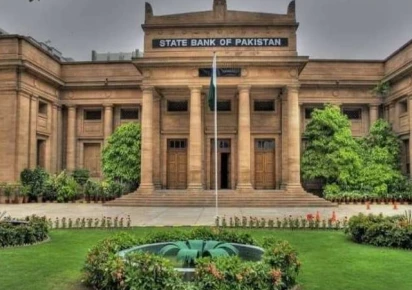
SBP injects Rs11.6tr into banking system

The State Bank of Pakistan (SBP) injected around Rs11.6 trillion into the country’s banking system through an open market operation on Monday, providing significant liquidity to banks.

The central bank conducted a reverse repo auction under its Open Market Operations (OMOs). Banks submitted bids worth Rs11.777 trillion across two different tenors.

The SBP accepted Rs11.613 trillion in total.

For the four-day tenor, banks offered Rs31 billion. The central bank accepted the entire amount at an interest rate of 11.54%. The bids in this category ranged between 11.56% and 11.54%.

The 14-day tenor attracted much larger demand. Banks submitted offers worth Rs11.746 trillion. The SBP accepted Rs11.583 trillion at a cut-off rate of 11.51%.

The bidding rate for the 14-day facility ranged from 11.57% to 11.51%. Of the Rs5.6527 trillion offered specifically at 11.51%, the central bank accepted Rs5.48415 trillion on a pro-rata basis.

The large-scale liquidity injection comes as banks continue to manage their short-term funding requirements. Open market operations are among the SBP’s key tools for managing liquidity and maintaining stability in the financial system.

Meanwhile, the Pakistani rupee recorded a slight improvement against the US dollar during Monday’s trading session.

The rupee strengthened by three paisa, closing at Rs277.62 per dollar compared with the previous close of Rs277.65. The marginal gain reflected relative stability in the foreign exchange market.

The US dollar index also declined by 0.1%. The index, which measures the dollar against six major international currencies, traded near its lowest level of the month at 99.519.

Gold prices, meanwhile, moved sharply higher in Pakistan.

The price of gold increased by Rs2,000 per tola to reach Rs461,936. The price of 10 grams also rose by Rs1,715 to Rs396,035, according to market rates.

The increase followed a strong recovery in international bullion prices. Gold has gained around 9% in August and was trading near $4,400 an ounce.

Market analysts said the recent recovery suggested renewed interest from institutional investors and central banks.

The rebound has also pushed gold above key technical resistance levels. This has strengthened expectations that prices could move higher if buying momentum continues.

Gold had faced heavy pressure following the escalation of the US-Israel conflict with Iran. International prices fell from a record level of around $5,595 an ounce in January to below $4,000 in June.

The decline prompted some investors to raise cash. Some central banks also used reserves to support their domestic economies as oil prices surged.

Analysts now believe renewed central bank purchases could support the precious metal. Institutional investors are also rebuilding their holdings after the earlier sell-off.
Similar Posts

  • |

    Atiqa Odho questions casting choice in Dar Ke Nijat

    Veteran Pakistani actress Atiqa Odho has shared her thoughts on what she believes was a casting mismatch in the drama serial Dar Ke Nijat, saying one particular casting decision made it difficult for her to fully connect with the story. During a recent episode of the television review show Kya Drama Hai, Odho discussed different aspects of the drama and praised most of its casting. However, she admitted that she struggled to accept actress Saba Hameed in the role of Faran Tahir’s mother, explaining that the casting felt unconvincing to her. According to Odho, the overall cast of Dar Ke Nijat has been carefully selected, but she felt that Saba Hameed portraying the mother of Faran Tahir did not appear believable on screen. She noted that while actors are capable of playing a wide variety of characters regardless of their real-life age or appearance, audiences also need to feel that the relationships presented in a drama are convincing. The actress explained that her reservations were influenced by another television drama currently airing at the same time. In Bus Tera Saath Ho, Saba Hameed and Faran Tahir are seen portraying husband and wife, making it difficult for viewers to immediately accept them as mother and son in Dar Ke Nijat. Odho pointed out that watching the same pair in two entirely different family dynamics simultaneously affected the realism of the characters for her. She said that although actors often take on diverse roles, parallel broadcasts can sometimes create confusion and reduce the emotional impact of a performance. She also commented on Saba Hameed’s appearance, describing her as an elegant, stylish and youthful actress whose screen presence does not naturally align with traditional grandmotherly roles. Odho said that despite efforts to transform her look for the character, she still found it difficult to view her as an elderly matriarch. In her opinion, the makeover appeared forced rather than natural, preventing her from becoming fully immersed in the story. She stressed that this was her personal perspective and acknowledged that other viewers may have different opinions about the casting. Odho further remarked that she understands actors frequently portray characters outside their real-life age brackets and appreciates the creative freedom that comes with acting. Nevertheless, she believes that casting decisions should also consider audience perception, particularly when the same performers are appearing in multiple dramas at the same time in dramatically different relationships. The veteran actress emphasized that this single issue stood out to her while watching Dar Ke Nijat, even though she otherwise admired the production and its performances. Her comments have since sparked discussion among drama fans, with many debating whether simultaneous casting in contrasting family roles can affect a viewer’s ability to suspend disbelief. The conversation has also reignited broader discussions about casting choices in television dramas, particularly when popular actors appear in multiple projects airing concurrently. While some viewers agree that repeated pairings can be distracting, others argue that talented performers should be judged solely on how convincingly they portray their characters, regardless of their roles in other productions.

  • |

    Dar-e-Nijat takes shocking turn over Zariab-Zamil relationship

    Dar-e-Nijat, the new Pakistani prime-time drama airing on ARY Digital, has taken an unexpected turn after a recent episode left viewers questioning the nature of Zariab and Zamil’s relationship. Written by Umera Ahmed and directed by Saqib Khan, the drama explores themes of spirituality, personal beliefs, ambition, and the challenges faced by a young woman as she navigates her life and values. Four episodes of the drama have aired so far, with the latest installment generating considerable discussion among viewers. The episode featured a surprising sequence involving Zariab, who went to the house of her friend Zamil after the baraat ceremony. The story then shifted to the following morning, when Zariab’s grandmother questioned her about where she had been. Zariab remained silent, while the way the scene unfolded appeared to suggest that something significant had happened between her and Zamil. The visual details of the sequence added to the speculation. Zariab was shown washing her face and hands, while Zamil was notably absent. His remorseful message further strengthened the impression that the two had crossed a physical boundary. The scene was deliberately presented without directly showing what had happened, leaving viewers to interpret the events through the characters’ actions and reactions. The ambiguity prompted fans to approach writer Umera Ahmed for clarification. One viewer on X asked Ahmed whether the scene was intended to indicate that Zariab and Zamil had become physically involved. The fan specifically referred to the way Zariab returned home late after the baraat scene, as well as her actions afterward and Dadda’s statement about modesty and honour. Umera Ahmed responded with a brief confirmation, effectively putting an end to the speculation surrounding the scene. The revelation has since sparked a strong reaction among Dar-e-Nijat viewers. Many fans said they had already understood the implication from Zariab’s behaviour and the subtle clues placed throughout the sequence. Rather than directly portraying the incident, the drama relied on expressions, dialogue, silence, and character reactions to communicate what had happened. Some viewers also interpreted Zamil’s actions as an attempt to establish his importance in Zariab’s life and prove that he believed he had a greater claim over her than anyone else. This interpretation has added another layer to the discussion surrounding the characters and their motivations. At the same time, several viewers praised the drama for addressing such a sensitive subject without relying on graphic or overly explicit scenes. They argued that topics involving relationships, intimacy, guilt, and moral boundaries can be more impactful when handled through suggestion rather than direct depiction. The development has undoubtedly changed the direction of Dar-e-Nijat and raised questions about how Zariab will deal with the consequences of her choices. With the drama focusing heavily on spirituality and personal accountability, viewers are now waiting to see how the storyline explores guilt, relationships, faith, and the repercussions of the events between Zariab and Zamil.

  • | |

    Six non-local workers killed in Kech

    Six non-local workers have been killed by militants linked to Fitna al-Hindustan in the Nasirabad area of Kech district, Balochistan, according to security sources. The sources said militants initially abducted six workers and killed another worker, identified as Javed, on July 27. The attackers later killed all six abducted workers, bringing the total number of victims in the incident to seven. The deceased workers have been identified as Muhammad Arshad, Muhammad Taimur, Muhammad Parvez, Muhammad Wazir, Muhammad Amjad and Muhammad Yahya. According to security officials, four of the victims came from Punjab, while two belonged to Khyber Pakhtunkhwa. The workers had reportedly been employed on development projects in Balochistan. Their deaths have raised fresh concerns about the security of workers from outside the province who travel to Balochistan for employment and infrastructure projects. Security sources also recalled a separate incident in Mashkel, Balochistan, where militants recently killed five non-local workers. The victims in that attack were also reportedly working on development-related projects. The latest killings come amid continued security challenges in parts of Balochistan, where militants have repeatedly targeted civilians, security personnel and workers involved in development activities. Security forces have been conducting operations against militant groups in various parts of the province.

  • | |

    Ahaan Panday, Sharvari film gets release date

    A major update has emerged about Ahaan Panday and Sharvari’s upcoming untitled film with director Ali Abbas Zafar. Yash Raj Films has officially announced that the romantic action entertainer will hit cinemas on March 26, 2027, during the Good Friday weekend, giving fans a release date for one of Bollywood’s most anticipated upcoming projects. The film marks the first on-screen collaboration between Ahaan Panday and Sharvari. Directed by Ali Abbas Zafar and backed by Aditya Chopra under the Yash Raj Films banner, the project has been generating significant buzz since it went on floors earlier this year. The announcement has further heightened expectations following Ahaan’s successful debut and Sharvari’s growing popularity in the industry. Apart from Ahaan and Sharvari, the film also features Bobby Deol and Aaishvary Thackeray in pivotal roles. According to reports, the project is a romantic action drama that blends high-octane action sequences with an emotional love story. Much of the film has been shot across the United Kingdom, with the makers aiming to deliver a visually grand cinematic experience. The announcement comes at a time when Ahaan Panday’s career is receiving widespread attention after the success of Saiyaara. Industry insiders believe Yash Raj Films is positioning the young actor as one of its next leading stars, with the Ali Abbas Zafar directorial expected to further establish him in Bollywood. Sharvari, meanwhile, continues to strengthen her impressive film lineup. The actress has earned praise for her recent performances and is currently attached to several major productions. Her pairing with Ahaan has already sparked curiosity among moviegoers, with many eager to see the fresh on-screen chemistry between the two stars. For Ali Abbas Zafar, the film marks his reunion with Yash Raj Films after years. The filmmaker previously delivered successful films for the studio and is returning with another large-scale commercial entertainer. Fans are expecting the director’s signature blend of action, romance and emotionally driven storytelling. The official release date announcement has been welcomed enthusiastically on social media, with fans expressing excitement about the cast and the collaboration between Yash Raj Films and Ali Abbas Zafar. Although the film’s title remains under wraps, the latest update confirms that audiences can expect to see Ahaan Panday and Sharvari together on the big screen on March 26, 2027, making it one of the most awaited Bollywood releases of the year.

  • |

    Japan earthquake disrupts auto and chip production as death toll rises to 34

    A powerful earthquake that struck Japan’s Kumamoto region has killed at least 34 people and disrupted major manufacturing operations, exposing the continued vulnerability of the country’s industrial supply chains. The 7.1 magnitude quake damaged roads, interrupted essential services and forced several automobile and semiconductor companies to suspend production, raising concerns about delays across global supply networks. The earthquake struck on Tuesday, causing widespread destruction in southern Japan. Thousands of households were left without basic utilities while damaged roads and transport links made it difficult for businesses to continue normal operations. Kumamoto is one of Japan’s most important manufacturing regions and plays a key role in producing vehicles, auto parts and semiconductors used around the world. Toyota has temporarily suspended production at three factories in Fukuoka until August 5 because of concerns about employee safety and disruptions affecting suppliers and transport companies. The company has also decided to halt operations at one of its plants in Aichi, located more than 600 kilometres from the disaster zone, showing how shortages of essential components can quickly affect factories far from the earthquake’s epicentre. One of Toyota’s major suppliers, Aisin, also suffered disruptions at its factory near the hardest hit area. The company manufactures engines, doors and other vehicle parts for Toyota, Nissan and Daihatsu. Aisin said it plans to restart production gradually after confirming that facilities are safe and product quality can be maintained. However, it has not announced when full operations will resume. Trucks carrying supplies, including portable toilets, were seen entering the factory as recovery work continued. Local businesses reported that water services had been interrupted although electricity remained available. The latest disaster has revived memories of the 2016 Kumamoto earthquake, which caused severe damage to the same Aisin plant and forced Toyota to suspend production across Japan because of shortages of a critical door component. Industry officials said smaller suppliers further down the supply chain may also have been affected this time, increasing the risk of continued production delays. Auto parts manufacturer Denso said one of its suppliers had already reported damage while several others were still assessing conditions. Nissan has suspended some production at its two vehicle plants in Kyushu because of delays in receiving parts. Mitsubishi Motors has also halted certain production lines at its factory in Okayama as the effects of the earthquake continue to spread through the manufacturing sector. Kumamoto has also become one of Japan’s leading centres for semiconductor production in recent years. The region is often referred to as the country’s Silicon Valley because of its concentration of advanced chip manufacturers. Taiwan Semiconductor Manufacturing Company, the world’s largest contract chipmaker, evacuated workers from its Kumamoto plant immediately after the earthquake. The company later confirmed that operations had started to resume within a few hours. Other semiconductor companies are expected to take longer to recover. Renesas said damage at one of its facilities included fallen ceiling panels, cracked walls and water leaks. The company plans to restart production in stages beginning on August 5. Tokyo Electron announced that it expects to resume production next week, while Sony said efforts are continuing to restore operations at its semiconductor factory in Kumamoto. Although the number of deaths is lower than the more than 260 people killed in the 2016 earthquake, this disaster has still caused significant human and economic losses. Nearly half of the fatalities occurred inside commercial buildings. Nine people died when severe structural damage struck a Nippon Paper Industries mill near the epicentre. Another seven people lost their lives at an Aeon shopping mall where authorities believe a gas explosion occurred more than an hour after the initial earthquake. The disaster has once again highlighted the challenge Japan faces in protecting both its population and its globally important manufacturing industry from natural disasters.

Leave a Reply

Your email address will not be published. Required fields are marked *