scientists uncover clue

Scientists uncover clue behind Antarctica’s mysterious blood falls

Scientists have uncovered an important clue about the source of the mysterious red water flowing from Antarctica’s famous Blood Falls in Taylor Valley.

The iron-rich and crimson-coloured saline water has fascinated researchers for decades. While its red color has long been attributed to the iron it contains, a new study offers fresh insight into where the water originated.

According to research published in the journal Nature Geoscience, scientists have found molecular and genetic evidence indicating that the salty water flowing from Blood Falls has a marine origin. The findings strengthen the long-standing theory that the water was once part of an ancient sea.

Researchers collected and analyzed 167 samples of water, sediment and air from Blood Falls and the surrounding area. The study found that samples from Blood Falls contained 9 percent eukaryotic genetic signatures associated with marine environments compared with only about 1 percent in samples collected from nearby locations.

According to the researchers, the new evidence strongly supports the theory that the water at Blood Falls originates from a reservoir of ancient seawater that became trapped beneath the Taylor Glacier millions of years ago.

The researchers said the presence of strong marine genetic signatures in the red saline water provides evidence that an ancient marine ecosystem once existed there before becoming isolated beneath Antarctica’s thick ice sheet.

Scientists believe this discovery could improve our understanding of how microscopic organisms survive in some of the harshest environments on Earth.

The findings may also help researchers investigate the possibility of life beneath the icy surfaces of other worlds, including Europa, one of Jupiter’s moons and Enceladus, a moon of Saturn.

Similar Posts

  • |

    America’s premier tourist destination

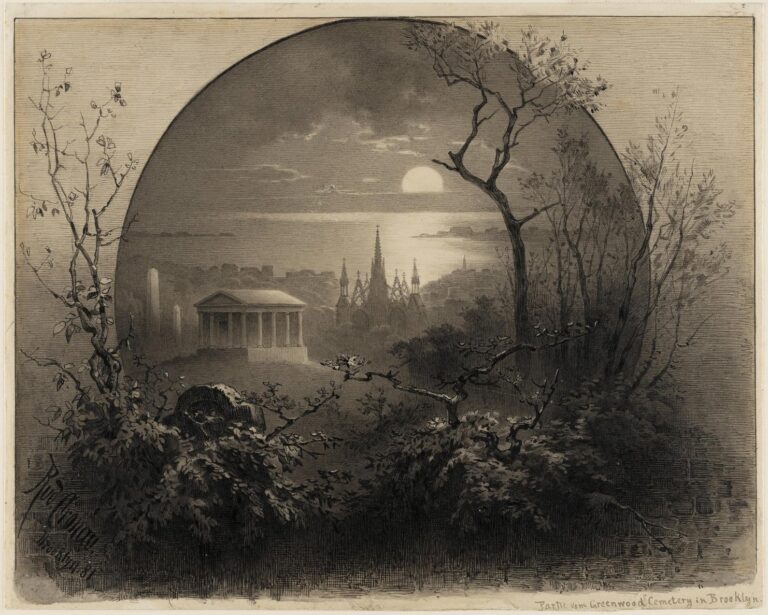
    During the early 1860s, an unexpected location ranked as the second most visited tourist spot in the United States: Green-Wood Cemetery in Brooklyn. Trailing only Niagara Falls in popularity, the vast burial ground welcomed roughly 500,000 visitors every year. Families routinely spent their afternoons strolling through the peaceful grounds. They took horse-drawn carriage rides and admiring the elaborate grand monuments across the landscape. When Green-Wood first opened its gates in 1838, New York City had virtually no public parks, as Central Park had not yet been conceived. By the time the early 1860s arrived, Central Park was only beginning to open its initial sections to the public. As a result, rural cemeteries like Green-Wood filled a massive void for city dwellers seeking fresh air, natural beauty, and a quiet escape from urban density. The unique charm and sweeping vistas of the cemetery caught the attention of Rudolf Cronau, a German-born illustrator and artist. Born in Solingen in 1855, Cronau trained at the prestigious Düsseldorf Art Academy under Andreas Müller before establishing his own studio. In 1881, he ventured across the Atlantic on an assignment for Die Gartenlaube, a popular German illustrated magazine. His mission was to document the landscapes, bustling cities, and diverse people of the United States, bringing the American experience to life for European readers through a mix of written reports and detailed artwork. While visiting Brooklyn in 1881, Cronau captured the cemetery’s famous skyline view in a artwork titled View from Greenwood Cemetery, Brooklyn. Rendered in delicate watercolor and black ink, the piece now resides in the permanent collection of the Brooklyn Museum. Cronau arranged his view in three distinct planes: an elaborate mausoleum anchored the foreground, Green-Wood’s iconic Gothic main entrance gates framed the middle ground, and the vast expanse of New York Harbor and the New Jersey coastline stretched out in the background. The mausoleum highlighted in the foreground of Cronau’s illustration belonged to John Anderson, a prominent NYC figure who amassed a massive fortune in the tobacco trade. Anderson, born in 1812, ran a well-known shop near Manhattan’s City Hall before eventually passing away in Paris in 1881.   Beyond serving as his final resting place, Anderson’s tomb was built as a bold political statement. Commissioned during the heights of the American Civil War, the Greek Revival-style structure was purposefully designed to symbolize a commitment to republican governance over monarchical rule, while serving as an unmistakable declaration of pro-Union support. Through art and architecture, a single cemetery hilltop managed to weave together personal wealth, national ideology, and one of the finest views of 19th-century New York.

  • Blood treatment removes forever chemicals

    A new study suggests that a blood cleaning treatment used to lower cholesterol may also help remove harmful “forever chemicals” from the body. The treatment called apheresis is mainly used for people whose high cholesterol cannot be controlled with medication.  During the procedure blood is taken from one arm and passed through a special filter that removes excess fats. The cleaned blood is then returned to the body through the other arm. At the Technical University of Dresden in Germany, home to one of the world’s largest apheresis centers around 10,000 of these treatments are performed each year. For the study researchers examined used filter bags from the apheresis machines to see what substances had been removed along with cholesterol. They wanted to find out whether the filters could also remove harmful forever chemicals toxic substances that remain in the environment and the human body for a very long time as well as tiny plastic particles known as microplastics. The researchers say the early findings are promising. If future studies confirm these results apheresis could become a useful way to reduce the amount of certain harmful pollutants in the body in addition to lowering cholesterol.

  • Tracing the spiritual legacy of “Nanak Se Nankana”

    In the fertile plains of Punjab lies a landscape quietly layered with centuries of devotion, miracle tales, and interfaith kinship. This sanctuary of green fields was known as Rai-Bhoi-Di-Talwandi. The time long before the bustling town of Nankana Sahib bore its current name. It was overseen by Rai Bhoi Bhatti, a local Muslim landlord whose family had influence over the region. Yet, history transitioned irreversibly in 1469. It was in this soil that Guru Nanak Dev Ji, the founder of Sikhism, was born to Mehta Kalu and Mata Tripta. Rai Bular Bhatti (Rai Bhoi’s descendant) renamed the settlement Nankana Sahib in his honor. He was basically moved by the extraordinary spiritual wisdom radiating from the young child. Thus began a historical and spiritual trajectory known throughout the subcontinent as Nanak Se Nankana. The sacred evolution of a man into a timeless sanctuary. What makes Nankana Sahib uniquely enchanting is that the entire geography operates as a living storyboard. The city’s trees, fields, and lanes are strongly knitted  into local folklore. And each folklore is  marked by a Gurdwara commemorating young Nanak’s childhood and early enlightenment. Gurdwara Janam Asthan is the crown of the holy city. This magnificent marble compound stands at the site of Guru Nanak’s ancestral home. It was originally built as a small sanctum by his descendants. Later transformed into a grand complex surrounded by reflective Sarovars (holy pools) during the reign of Maharaja Ranjit Singh. According to popular regional legend, a young Nanak was sleeping out in the open pastures while tending to his father’s cattle. As the afternoon sun shifted, a large cobra slithered out and expanded its hood above his face to shade him from the blistering heat. Rai Bular Bhatti witnessed this miracle from his horse and then showed his devotion for Nanak. The ancient Jal (Mal) tree under which the event occurred still casts its shade today at Gurdwara Malji Sahib. Local folklore recalls a peasant complaining that Nanak’s roaming cattle had ruined his crops. Yet, when officials inspected the field, the damaged green stalks had miraculously grew back whole and undamaged. Gurdwara Kiara Sahib stands today atop that very field. When young Nanak returned from a nearby market town having spent his father’s money entirely on feeding hungry sadhus (Sacha Sauda or the True Bargain), he feared his father’s anger. He hid beneath a large, canopy-like tree whose drooping branches resembled a tent (tambu). Nearby stands Patti Sahib, where a seven-year-old Nanak astounded his teacher by writing an acrostic poem on the alphabet explaining divine truths instead of mere grammar. Beyond the miraculous legends of childhood, Nankana Sahib carries profound historical lore. It weathered the turbulent Sikh Empire era. The city witnessed the heroic sacrifices of the 1921 Akali Movement reform at Janam Asthan. It also survived the painful demographics shifts of the 1947 Partition. Today, the journey of Nanak Se Nankana remains an emotional pilgrimage. Every year during Gurpurab (Guru Nanak’s birth anniversary), thousands of pilgrims from across the globe cross borders to converge on these quiet lanes. The devotees step through the grand archways of Gurdwara Janam Asthan and touch the dust of Nankana to their foreheads. They aren’t just visiting a building. They are retracing a historical path that transformed a quiet Punjab meadow into a sanctuary of universal love, humility, and timeless unity.  

  • Why you keep opening the fridge

    Have you ever opened the fridge looked inside for a few seconds closed it without taking anything and then returned a short time later to do the same thing? If so you’re not alone. Psychologists say this habit is usually not caused by hunger.  Instead it is often linked to the way the brain responds to boredom routine and the search for something enjoyable. Experts explain that when people feel bored or mentally tired the brain looks for something that brings quick pleasure.  Foods high in sugar fat or salt can create a temporary feeling of comfort and satisfaction. As a result people may walk to the fridge without even realizing why. Opening the fridge can also become part of a daily routine. After spending time working on a computer or taking a short break many people automatically head to the kitchen even if they are not hungry. Another reason is curiosity. The brain hopes there might be something new or exciting inside such as a favorite dessert leftover food or a snack that was forgotten. Experts compare this behavior to checking a phone again and again for new messages even when you know there may not be any. Psychologists say habits often follow a simple pattern: a trigger a routine and a reward. For example feeling bored or finishing a task can trigger the habit of opening the fridge. Even if no food is eaten the action itself can provide a brief sense of interest or relief. People who work from home or spend long hours alone may be more likely to develop this habit because boredom can sometimes feel similar to hunger. Experts also say the environment plays an important role.  A bright kitchen a fridge that is easy to reach or food that is clearly visible can make people more likely to open the fridge. The next time you find yourself opening the fridge again, ask yourself one simple question “Am I really hungry or am I just looking for something to do?” According to psychologists the answer may surprise you.

  • The Population Debate: Curse or Opportunity?

    By Dr Naveeda Katper Different countries have different characteristics regarding population, geography, and natural resources that shape their economic growth. Economists use various indicators to measure development, and population is one of the most debated among them. A large population is often viewed as a hurdle to economic growth. However, every issue deserves to be examined from different angles. The question, “Is a large population a curse or a blessing?” cannot be answered with a simple yes or no. We need to move beyond the idea of population as a burden and understand the concept of the demographic dividend. What appears to be a curse can become a blessing when viewed through the right perspective and supported by the right policies. Research by the RAND Corporation and the World Bank has shown that countries with a growing working-age population can experience faster economic growth when supported by sound education, health, and employment policies. Whether a large population becomes an economic asset depends on governance and public policy. A growing population is not necessarily a curse because every additional mind brings new ideas, different perspectives, and fresh solutions to existing problems. One mind can accomplish one task, two minds can accomplish two, and millions of minds can achieve far more. That is the value of teamwork and collective human potential. Every individual possesses different skills, abilities, and talents that can contribute to national development. What many consider a burden may actually become a country’s greatest strength if those human resources are properly developed. This is the essence of the demographic dividend—the economic advantage that emerges when the working-age population becomes larger than the dependent population. Development economists describe this period as a “window of opportunity” rather than a guaranteed outcome. Highly populated countries can utilize their youthful population to strengthen their economies. After India, China, the United States, and Indonesia, Pakistan is the fifth most populous country in the world. This should be seen as an opportunity rather than a challenge because more than 65 percent of Pakistan’s population consists of young people. That gives the country a significant advantage. A demographic dividend can only be realized when the working-age population is educated, healthy, skilled, and productively employed. When more people are working and contributing to the economy, household savings increase, investment grows, government spending on dependents declines, and both economic output and per capita income improve. The World Bank has repeatedly emphasized that human capital—education, health, and skills—is one of the strongest drivers of long-term productivity and national income. The real challenge is identifying the policies required to achieve this dividend. A country can benefit only if it creates sufficient employment opportunities, provides quality education and skill development, ensures access to healthcare, encourages women to participate in the workforce, and maintains stable economic and public policies. When these conditions exist, the country enjoys faster economic growth, greater productivity, increased investment and savings, improved living standards, and stronger entrepreneurship and innovation. Economic growth becomes inevitable when people are hardworking, equipped with multiple skills from an early age, and capable of adapting to changing economic demands. Skilled and self-reliant citizens become the driving force of national development. Evidence from South Korea, Singapore, and Ireland shows that investment in education and skills transformed youthful populations into globally competitive economies. However, a demographic dividend can quickly become a demographic burden if employment opportunities and skills do not keep pace with population growth. The consequences may include rising unemployment, poverty, social unrest, and migration. Economists and demographers consistently argue that a demographic dividend is not automatic; it is an opportunity that must be earned through effective governance and strong institutions. Without adequate planning and investment, a large youth population can become a liability instead of an asset. The International Labour Organization has warned that persistent youth unemployment can reduce economic productivity and increase social instability. A dynamic economy capable of creating millions of formal-sector jobs each year is essential for absorbing a growing workforce. Human capital development should remain at the center of national policy. Strong educational systems, Technical and Vocational Education and Training (TVET), science, technology, engineering and mathematics (STEM), digital literacy, coding, digital finance, and technology-based curricula should be introduced from the early years of education. Equal opportunities for girls and women in education and employment are equally important. Pakistan also needs job creation, labour market reforms, export-led manufacturing, labour flexibility, investment in high-value industries such as technology, electronics, and specialized services, support for youth entrepreneurship and microfinance, and stronger healthcare infrastructure. UNESCO has consistently highlighted that technical and vocational education equips young people with practical skills that improve employability and economic resilience. Pakistan possesses one of the largest youth populations in the region, but this advantage can only be realized through greater investment in education, skills, and employment. In conclusion, population control alone is not a long-term solution to economic growth. Developing people’s abilities, expanding opportunities, and investing in human capital are far more effective. The experiences of countries such as Italy and Japan also demonstrate that declining populations and ageing societies create their own economic challenges. The real question is not how many people a country has, but how well it prepares its people to contribute to national development. Research across both developed and developing countries consistently concludes that people become an economic asset when governments invest in their education, health, productivity, and opportunities rather than viewing population solely as a number. The writer holds a PhD from Malaysia and writes on economic development, public policy, and demographic issues. She can be reached at naveedakatper11@gmail.com


  • |

    Pashtun identity in modern South Asia

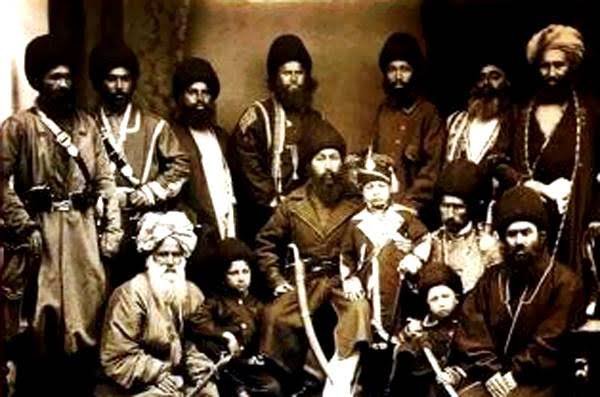
    The Pashtuns represent one of the most populous indigenous groups across South and Central Asia, predominantly in Afghanistan and Pakistan. Their social backbone relies on interconnected lineages, extended families, clans, and tribal alliances rather than a centralized political authority. From major confederations like the Durrani and Ghilzai to influential communities such as the Yusufzai, Afridi, Mohmand, Khattak, Wazir, and Mahsud, Pashtun society is a rich tapestry of overlapping regional, religious, and civic loyalties. At the core of their culture is Pashtunwali, an ancient honor code governing daily life through principles of hospitality, courage, asylum, and restorative justice. Historically, community issues and disputes were negotiated collectively through jirgas, or assemblies of local elders, maintaining order through consensus. Empire Builders and Cultural Crossroads Beyond tribal structure, Pashtuns have repeatedly reshaped the political landscape of the Indian subcontinent and Central Asia. Sultanate Dynasties: The Lodi dynasty established its rule over the Delhi Sultanate, paving the way for intricate South Asian governance structures. Administrative Reforms: Imperial leader Sher Shah Suri founded the Sur Empire in North India, pioneering sweeping reforms in taxation, infrastructure development, and currency. Empire Founding: In the 18th century, Mirwais Hotak challenged Safavid Persian dominance, while Ahmad Shah Durrani established the Durrani Empire in 1747, laying the groundwork for modern Afghanistan. This history is far more than military conquest. Pashtun territories served as vital crossroads where Persian, Turkic, Indian, and Islamic traditions converged. Consequently, their heritage spans beyond warrior traditions. It thrives in rich oral poetry, musical compositions, complex embroidery, craftsmanship, and trade networks. The Borderlands and Modern Challenges The 19th century brought prolonged conflict with British imperial forces along the northwestern frontier. A pivotal turning point arrived with the demarcation of the Durand Line in 1893. By drawing an artificial boundary between Afghanistan and British India (now Pakistan), the British divided ancestral Pashtun communities, establishing a geopolitically sensitive frontier that continues to spark debate and shape regional politics today.   In recent weeks, administrative re-alignments and border disputes in provinces like Balochistan and Khyber Pakhtunkhwa have reignited local debate. Prominent political and tribal leaders have voiced strong resistance to state restructuring, asserting that top-down administrative decisions risk erasing historical identities. Through renewed calls for broad political dialogue rather than bureaucratic divisions, modern Pashtun communities continue to rely on unified assemblies to safeguard their cultural heritage, self-determination, and historical voice in a changing region.

Leave a Reply

Your email address will not be published. Required fields are marked *