sindh clarifies 6day
| |

Sindh clarifies 6-day school week: Rule applies on…

Karachi: Sindh Education Minister Syed Sardar Ali Shah has clarified that the province’s six-day school week policy will apply only to government schools, while private educational institutions will remain free to determine their own weekly schedules.

The clarification came after a notification issued by the Sindh School Education Department stated that both public and private schools would resume classes from August 1 under a six-day teaching schedule, leading to confusion among parents and school administrations.

Addressing the issue through a statement on social media, Sardar Ali Shah explained that all government schools across Sindh will conduct academic activities six days a week starting August 1, 2026, in line with the department’s decision.

He further emphasized that the revised working schedule is not mandatory for private schools. Instead, private educational institutions will continue to set their operating days and working hours according to their own policies.

The minister’s clarification has resolved uncertainty surrounding the implementation of the new academic schedule, confirming that only government-run schools are required to follow the six-day teaching week.

Similar Posts

  • |

    US investigates possible Russian role in Iranian strikes on CIA facilities

    US intelligence agencies are examining whether Russia helped Iran carry out drone attacks on CIA facilities in the Gulf, raising fresh concerns about growing military cooperation between Moscow and Tehran. Officials are reviewing intelligence to determine whether Russia provided targeting information, advanced drone technology, or other forms of support that may have increased the accuracy of the attacks. According to sources familiar with the investigation, analysts have not reached any final conclusions about Russia’s involvement. However, the precision of the strikes and Russia’s long history of military and technical cooperation with Iran have led intelligence officials to explore whether Moscow played a direct role in planning or supporting the operations. The investigation follows a series of Iranian drone attacks that targeted sensitive US intelligence locations in the region. At least two CIA facilities were reportedly hit in March. One of the sites was located inside the US Embassy in Riyadh, Saudi Arabia, while another was in eastern Iraq. Officials familiar with the matter said additional CIA locations may also have been attacked, although they declined to reveal further details because of security concerns. Western intelligence officials have also reviewed reports suggesting that Russia may have assisted Iran in selecting the targets. One intelligence assessment reportedly concluded that Russia likely contributed to identifying regional CIA facilities, although officials stressed that the findings remain under review and have not been publicly confirmed. According to officials briefed on intelligence reports, the attack on the US Embassy compound in Riyadh involved two upgraded versions of Iran’s Shahed drones. They said one drone created an opening in the embassy’s outer structure while the second entered through the damaged area before exploding inside. No casualties were reported, but the operation demonstrated a level of accuracy that surprised intelligence analysts. The investigation comes as tensions between the United States and Iran remain high following months of military exchanges across the Middle East. American officials are also examining recent Iranian strikes on a US military base in Jordan where ballistic missiles killed two American soldiers. Those attacks have intensified concerns that Iran may be receiving more advanced military support from Russia. Analysts believe Russia has spent years helping Iran improve its drone capabilities. Intelligence sources say Moscow has assisted Tehran in increasing the range and precision of its Shahed drones through technical upgrades. Reports also suggest Russia supplied Iran with the Kometa M satellite navigation system, which is believed to provide greater accuracy and stronger resistance to electronic interference than Iran’s previous guidance systems. Russia has denied supplying the technology and dismissed earlier reports on the matter. The White House referred questions about the investigation to the CIA, which declined to comment. Iran’s mission to the United Nations, the Russian Defense Ministry, and Saudi authorities also did not respond to requests for statements. The exact number and locations of the targeted CIA facilities remain classified. Intelligence sources said more than one site but fewer than a dozen were struck during the attacks. Overseas CIA operations often include embassy based stations as well as secure facilities used for surveillance, logistics, intelligence gathering, and other sensitive missions. US analysts are also investigating whether Russia supplied the intelligence used to identify the Riyadh facility. Some officials remain cautious, noting that Iran may have intended to strike the US Embassy as a whole rather than specifically targeting the CIA station located within the compound. Others believe very few countries possess both the intelligence capabilities and the strategic motivation to identify and support attacks against such highly sensitive US facilities. Former CIA station chief Daniel Hoffman said closer military cooperation between Russia and Iran makes such assistance plausible. He argued that both countries share a common interest in reducing American influence across the Middle East and other regions where they seek greater strategic control. The investigation remains ongoing as US intelligence agencies continue to assess the available evidence.

  • | |

    CDF Asim reinforces Pakistan’s defence partn…

    A high-level delegation from Somalia, led by Defence Minister Ahmed Moallim Fiqi, met Field Marshal Syed Asim Munir, Chief of Army Staff and Chief of Defence Forces, at the General Headquarters (GHQ) in Rawalpindi to discuss bilateral defence cooperation and regional security. According to the Inter-Services Public Relations (ISPR), the meeting focused on matters of mutual interest, the evolving regional security environment and ways to strengthen defence and military cooperation between Pakistan and Somalia. Both sides emphasised the importance of expanding military-to-military relations and enhancing cooperation in training and capacity-building initiatives to address shared security challenges. They also discussed the need for closer collaboration to promote peace and stability in the region. During the meeting, the Somali defence minister acknowledged Pakistan’s continued support for Somalia and praised the professionalism of the Pakistan Armed Forces in contributing to regional peace and security. Field Marshal Asim Munir reaffirmed Pakistan’s commitment to supporting Somalia in strengthening its security institutions and enhancing defence capabilities. He said Pakistan values its longstanding relationship with Somalia and remains committed to deepening bilateral cooperation in the defence sector. The meeting reflects the growing defence ties between the two countries and their shared commitment to enhancing security cooperation and addressing common regional challenges.

  • | |

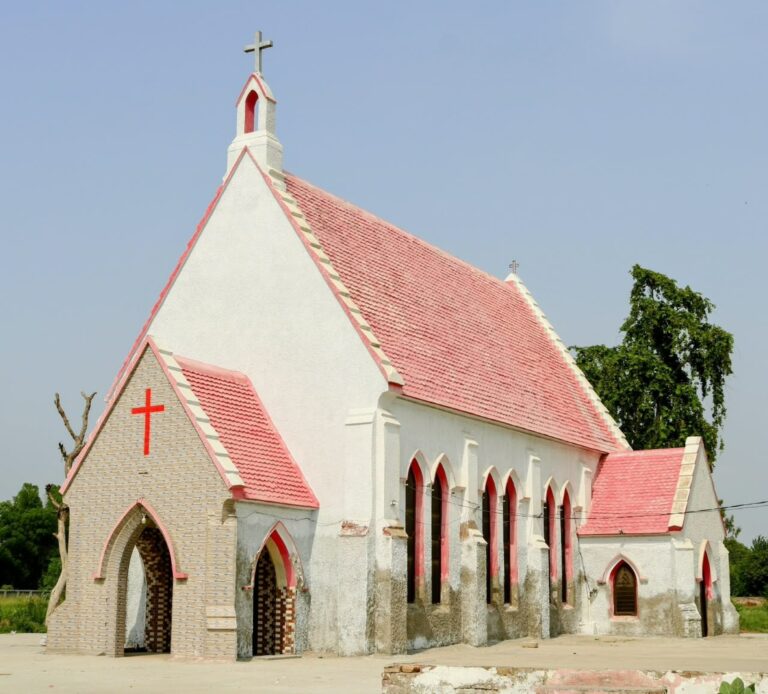
    DI Khan church still guards colonial memories

    There are some places we pass every day without realising how much history they hold. They remain untapped until some visitors put their eyes on them. During summer vacations, I travelled to Dera Ismail Khan, a district situated in southern Khyber Pakhtunkhwa. It takes six hours from Lahore to arrive in this historic city. During my stay there, I came across one such place that immediately captured my attention, and I thought to write about it. It was St Thomas Church, sacred place of worship for Christian community. A large cross standing at the entrance, old rusty walls, and an ambience of spiritualism. But the Church showcased more than that. Its walls contain historical accounts of colonial past, the military campaigns led by British soldiers in this area and a grave of one Lieutenant Governor of Punjab.   St Thomas Church was built in 1856 during British rule in the Indian subcontinent. It is one of the oldest churches in present-day Pakistan. It has survived political changes, the Partition of 1947, and the passing of time. Even today it stands as a symbol of the rich and diverse heritage of Dera Ismail Khan. The church is not only a place of worship but also a reminder that different faiths and communities have long been part of the history of this region. As we walked inside, we met the old priest and caretaker of the church named Chand. He welcomed us warmly and narrated the remarkable history of this place. There are memorials of British soldiers who lost their lives in this region during military campaigns. The priest stood in front of each tablet inscribed on the church wall and briefed about it. One memorial narrates the names, ranks and units of one hundred and 69 British military officers and other ranks who were killed or died due to injuries or disease in Waziristan military campaigns launched between 1919 to 1921.     Another memorial lists details of sixty-eight officers and other ranks who met a similar fate during the 1936-1938 Waziristan military campaigns. Similarly, one tablet erected by friends and fellow officers mourns the death of Herbert Walter Gee, ICS, deputy commissioner of Dera Ismail Khan, who died in 1901. There are other memorials as well, erected by colleagues in memory of the fallen officers. I thought that these names contain historical accounts year by year about what happened in this part of the world at that time. Every sentence of the Priest carried a new story, such as how the church has witnessed a lot of happenings through generations and that it still serves the small Christian community living in Dera Ismail Khan. As we stepped outside, believing our visit had come to an end, the priest said, “Wait. I have to show you one more thing.” He took me to the back of the building, where I saw a large white grave standing quietly among the dusty bushes. Here rests Lieutenant General Sir Henry Marion Durand (1812-1871). Durdand – a quite familiar name for the people of Pakistan and Afghanistan. Sir Durand was a career British military officer, diplomat, and administrator. He served in the East India Company Army, took part in several military campaigns, and later became the Lieutenant Governor of Punjab from 1870 to 1871. His son Sir Mortimer Durand is the one who drew the contours of the border between British India and Afghanistan in 1893. A man who once held such an important position now lies in silence behind an old church, while many people living nearby are unaware that his grave even exists. Henry Marion Durand died in 1871 at the age of 58 from a tragic accident. He was visiting Nawab of Tank Shahnawaz Khan along with his daughter when he fell from an elephant. The elephant was passing through the gateway by the town of Tank with the Nawab on the same elephant and an official (Chaprassy). The gate was too low to cross an elephant with howdah. The howdah struck the walls of crossing and the elephant got frightened resulting in the fall of Durand. He remained unconscious for a few days and never recovered. He was buried beside St. Thomas’ Church in Dera Ismail Khan. The British suspected some conspiracy into this incident. One of descendent of Nawab Shahnawaz Khan says that The British launched an enquiry into it. But the daughter of Durand gave testimony in favour of the Nawab that it was just an accident and there was no fault on his part. However, as a punishment, the British authorities stripped the powers of Nawab Shahnawaz Khan in 1875 and sent him to Lahore under strict watch. He passed away in 1881 while under surveillance. Standing beside the grave of Sir Henry Durand, I felt as if I had stepped into a forgotten chapter of history. The name engraved on the stone reminded me that many important events and personalities of the past remain connected to places that we often overlook. How easily history can fade from people’s memories, even when it is standing right in front of us. As I left St Thomas Church, I felt that I had walked through a chapter of history that few people ever get to read. Sir Henry Durand ruled Punjab from this soil, and his son later sat across a table in Kabul and drew the line that still separates Afghanistan and Pakistan today. That line appears in newspapers and political debates all the time. Yet the grave of the man whose name it carries lies quietly behind a church in Dera Ismail Khan.

  • |

    Mayor shot dead inside town hall in Central Mexico

    Valentín Lavín Romero, the mayor of Temoac in the central Mexican state of Morelos, was shot dead on Wednesday inside the municipal government headquarters. The politician, affiliated with the Green Party, an ally of the ruling Morena party, was targeted in broad daylight when armed hitmen entered the town hall before escaping on a motorcycle. The fatal attack came six months after Lavín Romero survived a previous attempt on his life in late January, when gunmen opened fire on his vehicle at a highway petrol station. His assassination marks the 14th murder of a mayor in Mexico since President Claudia Sheinbaum took office in October 2024, highlighting the persistent vulnerability of municipal officials in regions contested by organised crime networks. Prior to his death, Lavín Romero faced intense local scrutiny and threats. In May, a criminal group left a warning banner in the town center accusing him of protecting rival syndicates. He was also under pressure from community activists who demanded investigations into his alleged links to the homicides of two local campaigners. The state prosecutor’s office confirmed that initial forensic investigations are underway at the crime scene, though no suspects or official motives have yet been formally identified. The killing coincides with broader federal anti-corruption drives under Operation Swarm, which targets collusion between municipal administration members and regional cartels across multiple states.

  • | |

    PAAM finalizes policy draft for independent altern…

    Lahore: An important consultative meeting of the Core Committee of the Pakistan Association of Alternative Medicine (PAAM) was held, in which the “Policy Draft and Working Paper” was finalized to make the country’s alternative medicine sector namely Homeopathy, Herbal, and Unani economically self-reliant and to transform it into an international industry. During this meeting, PAAM Core Committee members Dr. Tariq Mahmood Chaudhry and former Director of Homeopathy at the Punjab Health Department, Dr. Jamil Akhtar Ghauri, met with PAAM President Kashif Aslam Malik and held deep consultations on the framework of the proposed federal ministry. According to the text of the policy draft, more than 80 percent of the world’s population relies on alternative and natural methods of treatment. China earns an annual export profit of 60 billion dollars from this sector, and India earns over 5 billion dollars in valuable foreign exchange. In contrast, despite having abundant natural resources and hundreds of thousands of qualified doctors, Pakistan accounts for less than 0.5 percent of the global market due to the lack of an independent federal ministry. The working paper prepared by PAAM highlights that establishing an autonomous federal ministry could be the fastest way to pull Pakistan out of its economic crisis and boost exports. The PAAM leadership has presented three-year economic targets to the government and parliament, setting the export target at 200 million dollars for the first year, 500 million dollars for the second year, and aiming to exceed 1.5 billion dollars in the third year through international trade agreements and Business-to-Business (B2B) partnerships. Another key feature of this policy draft is that commercial herb farming will be initiated nationwide under the new ministry, directly benefiting the rural economy and local farmers. Furthermore, this initiative aims to eliminate Pakistan’s reliance on expensive imported raw materials for the allopathic industry, making the country truly economically independent. During the meeting, the PAAM leadership emphasized that the alternative medicine sector is facing a severe crisis due to the Drug Regulatory Authority of Pakistan’s (DRAP) hyper-focus on allopathic brands and bureaucratic red tape. They noted that introducing a one-window operation under an autonomous ministry would ensure medicine quality complies with World Health Organization (WHO) and International Herb Pharmacopeia standards, while also reducing public healthcare expenditures at the government level by up to 50 percent through the provision of affordable alternative medicines. Following the completion of the policy draft, PAAM has demanded a joint emergency meeting of the Senate and National Assembly Standing Committees on Health and Commerce, the formation of a dedicated task force, and a special export package for alternative medicine manufacturers. The Chairman and Core Committee of PAAM reaffirmed their commitment to presenting this policy paper to the Prime Minister of Pakistan and the Federal Cabinet very soon to make the country self-sufficient on both economic and medical fronts.

  • | |

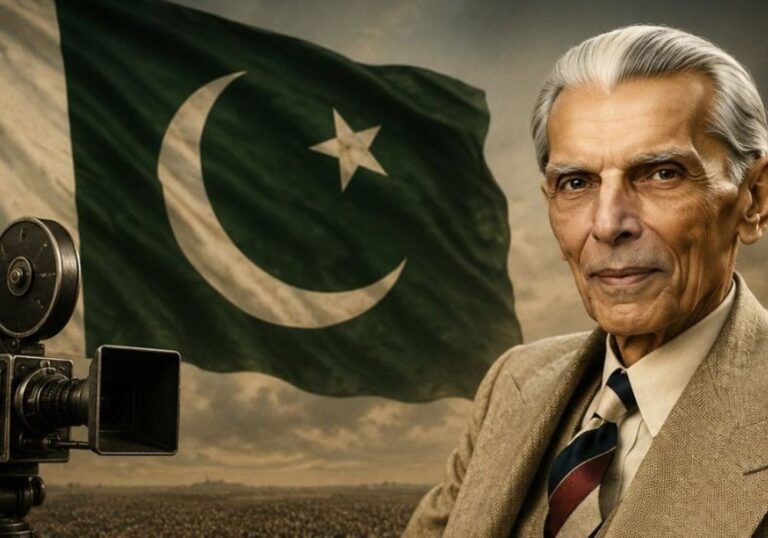
    14 August: Films that bring Quaid-e-Azam’s i…

    Every year on August 14, Pakistan celebrates its Independence Day, marking the day in 1947 when the country emerged as an independent nation. The occasion is a reminder of the struggle, sacrifices and leadership that shaped Pakistan’s journey towards independence. Among the many personalities connected with this historic movement, Quaid-e-Azam Muhammad Ali Jinnah remains one of the most important figures. From his early career as a lawyer to becoming the leader of the Pakistan Movement, Jinnah’s life has continued to inspire filmmakers, writers and storytellers. Over the years, several films, dramas and documentaries have explored different phases of his life, highlighting his political struggle, leadership and the challenges behind the creation of Pakistan. One of the most notable films based on his life is Jinnah (1998), directed by Jamil Dehlavi. The biographical drama stars Christopher Lee as Quaid-e-Azam Muhammad Ali Jinnah and follows his journey from a successful lawyer to the founder of Pakistan. The film focuses on important moments from Jinnah’s political career, including his efforts during the Pakistan Movement and the challenges he faced while working towards the creation of a separate homeland. Written by Akbar S. Ahmed, Farrukh Dhondy and Jamil Dehlavi, Jinnah presents a detailed portrayal of the events that shaped one of South Asia’s most influential leaders. Although the film received mixed responses at the time of its release, it remains one of the most recognised international productions based on the life of Pakistan’s founder. On television, Jinnah Se Quaid Tak became another important drama that introduced audiences to different stages of Jinnah’s life. The PTV production showed his transformation from a successful barrister into a political leader who played a central role in the independence movement. Directed by Mohsin Ali, the drama focused on key historical events and highlighted Jinnah’s dedication towards achieving his political goals. Through television, the series reached audiences who wanted to explore the personal and political journey behind Pakistan’s creation. Another production that explores Jinnah’s legacy is the documentary Quaid-e-Azam: Founder of Pakistan. Unlike fictional portrayals, documentaries use archival footage, historical records and expert discussions to present a closer look at his personal life and political career. These documentaries provide viewers with an opportunity to understand not only the major events surrounding independence but also the leadership qualities and decisions that shaped Pakistan’s early years. Apart from these productions, Pakistani cinema and television have continued to revisit stories connected with the country’s history and independence. Historical films and dramas allow audiences to connect with important moments from the past while introducing younger generations to personalities who played a significant role in shaping the nation. As Pakistan celebrates its Independence Day, these cinematic portrayals offer a chance to revisit the journey behind August 14, 1947. They highlight the determination, political struggle and leadership that contributed to the creation of Pakistan. Through films, dramas and documentaries, the story of Quaid-e-Azam Muhammad Ali Jinnah continues to remain part of Pakistan’s cultural memory, allowing new generations to learn about the man behind the independence movement.

Leave a Reply

Your email address will not be published. Required fields are marked *