euphemism integration kashmir

The Euphemism of Integration: Kashmir Seven Years Later

By Ahmad Hassan

“The convoluted wording of legalisms grew up around the necessity to hide from ourselves the violence we intend toward each other… Elaborate euphemisms may conceal your intent to kill, but behind any use of power over another the ultimate assumption remains: ‘I feed on your energy.’” When Frank Herbert wrote those words in his novel Dune Messiah, he observed that elaborate euphemisms are often used by the state to conceal the raw mechanics of power.
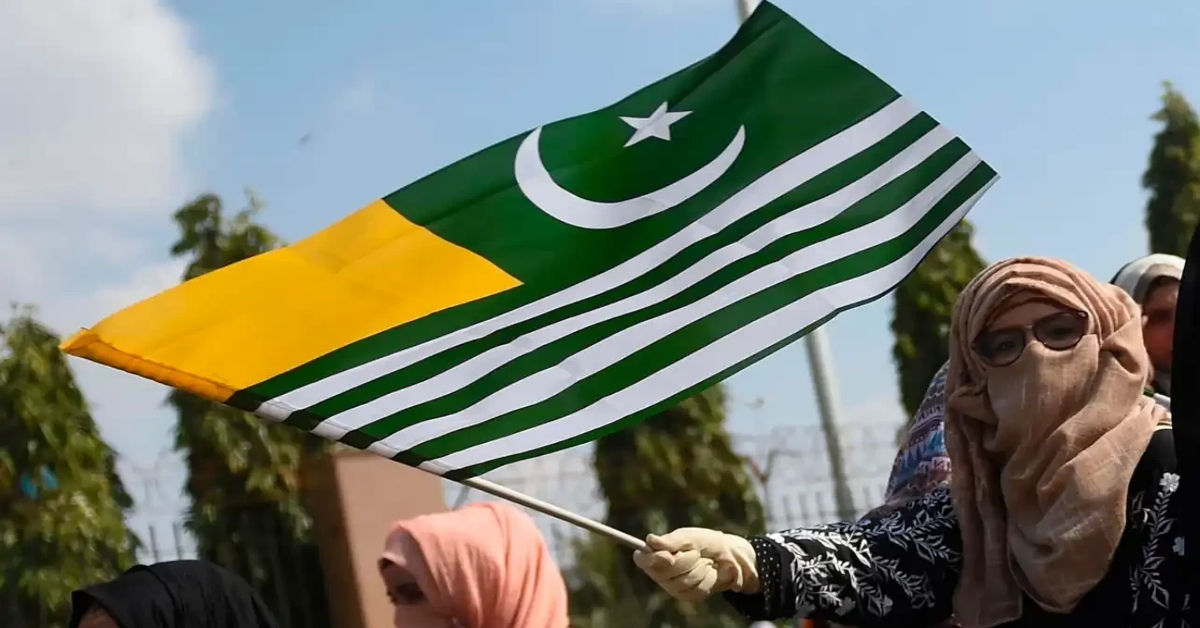
In Pakistan, August 5 is observed as Youm-e-Istehsal to condemn the 2019 revocation of Article 370 and its supplementary provision, Article 35A. This act of the Indian government removed Kashmir’s separate constitution, its flag and its control over its own affairs. Last week marked seven years since that day. What began as a dramatic constitutional rupture has now, by design, become quietly normalized.
Jammu and Kashmir joined India in 1947 on defined terms. The Maharaja handed over defence, foreign affairs and communications. Everything else stayed with the state. The United Nations later called for a plebiscite. It never happened. Instead, over decades, the protections that were supposed to stand in its place were worn down piece by piece, until August 5, 2019, when the government removed what remained in a single stroke.
The method deserves more attention than it usually gets. Article 370 was not directly changed. First, the government reached for Article 367, which was intended to aid in the interpretation of the Constitution, and used it to redefine one phrase: “Constituent Assembly” became “Legislative Assembly.” Kashmir had no sitting assembly at the time, and the state was under President’s Rule. So, the government’s own appointee, the Governor, signed off on the change.
India’s Supreme Court had already ruled, in 1959 and again in 1969, that Kashmir’s constitutional status could only be changed after the approval of the Constituent Assembly of Kashmir. When that body no longer existed, no institution had the standing to give that consent on Kashmir’s behalf. New Delhi decided that its own Governor could stand in for the people he had not been elected by. That is not consent. It is a government consenting to itself.
The Indian government argued that Kashmiris had lived for decades under an insurgency that killed tens of thousands and emptied the Valley of its Pandit community in 1990. It left the region isolated from the investment and policing coordination. That argument would carry more weight if the method had matched it. What followed the revocation was not the language of integration. It was a total communications blackout, landlines and mobile networks and the internet all cut at once. Independent estimates put the troop presence at 600,000 to 800,000, roughly one soldier for every ten Kashmiris. Even pro-India politicians, former chief ministers among them, were placed under detention.
Perhaps a security argument can justify counter-insurgency operations. It cannot by itself justify dissolving a state’s constitutional status, its legislature and its statehood in one move. That too with no elected Kashmiri voice given the chance to object.
Jawaharlal Nehru warned Parliament about exactly this shortcut in 1952, while Article 370 was still being drafted. No clause in a constitution, he said, could substitute for the will of the Kashmiri people. Real integration, in his words, comes from the mind and the heart, not from a clause imposed from outside.
Actually, there is a longer, quieter project behind the legal manoeuvre. Article 35A once barred outsiders from buying land or settling permanently in Kashmir. Since its removal, more than 3.2 million domicile certificates have gone to outsiders, most of them non-Kashmiri Hindus. This alarming thing is that wherever a disputed territory’s demographics are reshaped before its people are asked what they want, the eventual vote, if one ever comes, no longer reflects the population whose future was originally in question.
None of this required an invading army, or an open declaration of intent. It required a redefined word, a signature from an appointee, and a great deal of time. The convoluted legalisms that Herbert warned about have become policy in Kashmir: development, integration, correction. Each euphemism has quietly done the work that an honest admission of purpose could never have achieved.
Seven years on, Kashmir’s assembly has voted decisively against the BJP that carried out the revocation, and passed its own resolution demanding the restoration of its special status. New Delhi can easily ignore them. Yet, that very power to ignore an elected legislature proves, beyond any doubt, that the “consent” obtained seven years ago was always a legal fiction.

Similar Posts

  • The revival of Kathak in the heart of Lahore

    In the quiet underbelly of Lahore’s Alhamra Arts Council, an ancient pulse woke from its slumber. It began with the whisper of clinking of ghungroos. Hundreds of brass ankle bells are braided onto raw cotton strings and then they wait to catch the cadence of a human heartbeat. For decades, the classical movement of Pakistan seemed confined to memories and clandestine. That’s how a heritage has been subjected to silence under the shadow of political conservatism. Yet inside the halls of the Lahore Kathak Festival, the art form proclaimed its victorious home-coming. Kathak derives its name from katha: the Sanskrit word for story. The story starts even before borders were drawn across rivers and plains. Itinerant storytellers wandered the northern expanses of the undivided subcontinent. They combined Hindu mythology, Sufi mysticism and local folklore into rhythmic physical poetry. When these storytellers stepped into the imperial courts of the Mughals, the art form transformed. It absorbed Persian elegance, geometric precision and the subtle emotional nuances of Urdu ghazals. Kathak became a living art created from the shared civilizational fabric of the region. It became an artistic synthesis that belongs as fundamentally to the Indus valley as it does to the banks of the Ganges. To embrace Kathak in modern Pakistan is to reclaim forgotten cultural roots. Post-partition artistic discourse attempted to segregate Pakistan’s creative identity from its ancient subcontinental ancestry. It resulted in treating classical dance with suspicion or elitist detachment. Pioneer icons like Sheema Kermani, Nighat Chaudhry and Bina Jawwad stood as solitary legacies during decades when dancing was criminalized. Their bodies became active spaces of memory when state patronage vanished. Kathak – A Breathing Idiom Now, a dynamic new wave of young performers is stepping into the limelight with devotion and fresh perspective. Organizers like Maan Sayeed and Momina Farooq Khan recently brought together maestros and young aspirants. They proved that classical dance is not a monument preserved, but a breathing idiom. On stage, young artists offered performances that blurred the line between heritage and modernity. Soloist Aliza Khalid, clad in radiant white, set her precise footwork to the haunting melodies of Seraiki folk music. Elsewhere, ensemble dancers whirled in breathtaking pirouettes (chakkars), their skirts flaring like blooming lotus petals in sync with the sudden claps of the tabla.   What makes this emerging movement so profound is its insistence on inclusivity and identity. The overflowing auditoriums where audiences stood shoulder-to-shoulder in the aisles signaled a hungry public desire to reconnect with an art form that speaks directly to the soul. It feels like through every intricate hand gesture (hasta) and rhythmic cycle (taal), these young dancers demonstrate that Kathak is an act of reclamation. It honors the land’s heritage, reminding us that art transcends temporal political boundaries to express the eternal human story.

  • Indian Yoga teacher sets underwater push up record

    An Indian yoga instructor living in Vietnam has set a new world record by completing 86 push ups underwater on a single breath showing remarkable strength and breath control. The record was achieved by 38 year old Kamal Kloi in a swimming pool in Vietnam. He said his training in calisthenics and special breath holding techniques helped him complete the difficult challenge. This is not his first world record. In 2020, Kamal earned a place in the Guinness World Records by performing 21 yoga poses underwater without coming up for air. •Speaking to guinness World records Kamal said he has always enjoyed taking on unique challenges.  He explained that watching other people achieve world records inspired him to push his own limits and try something different. He added that years of practice physical fitness and breath control training played a key role in helping him achieve this milestone. After carefully reviewing the evidence submitted by Kamal Guinness World Records officially.  confirmed his achievement of 86 underwater push ups in one breath making it a new world record.

  • |

    China introduces brain-controlled robot technology

    Several countries are actively developing Brain-Computer Interface (BCI) technology which enables people to interact with devices using only their thoughts without the need for physical movement. Now, a Chinese company is working to integrate this technology into robots. According to BrainCo, the company has developed the world’s first brain-to-robot interface system allowing robots to be controlled directly through human thought. The company said the system works using EEG headsets which are worn by human operators. These headsets monitor brain activity and translate it into commands that are sent to the robot. Like other BCI technologies, the system relies on extensive training data that maps specific patterns of brain activity to corresponding actions. Artificial intelligence (AI) algorithms are then used to accurately interpret a person’s intended action and convert it into the correct robotic response. The technology called the Brain-Controlled Robot AI Platform was unveiled at the World Artificial Intelligence Conference in Shanghai. BrainCo said the system can be used not only to control robots but also to operate robotic arms and other connected devices. The platform continuously collects data which is used to further improve its AI algorithms and enhance performance over time. According to the company, rapid advances in AI have enabled robots to perform many tasks independently. However, it believes the next major challenge is ensuring that robots can effectively understand and collaborate with the humans working alongside them.

  • Solo travel finding its footing in Pakistan

    The image of travel in Pakistan is changing. At bus terminals in Rawalpindi, at Islamabad International Airport, and on trails in Hunza, a growing number of travellers are moving with just one thing in common — they are alone. Solo travel, once seen as unusual, is now a quiet but visible trend among Pakistanis. Industry data and tour operators say bookings by single travellers have risen steadily over the last two years, driven by social media, remote work, and a desire for independence. For decades, Pakistani travel meant family trips to Murree, Nathiagali, or Swat, or group tours arranged through agencies. That model is shifting. Nevertheless, reasons are practical and personal. Let’s say, no need to coordinate leave or budgets with others, or time to navigate new places on one’s own terms. These days , hostels, cafés, and trekking groups in places like Karimabad and Skardu have become meeting points for solo travellers. However, safety remains the top concern, especially for women. That is pushing both travellers and the industry to adapt. Hotels in major tourist towns now offer female-only dorms. Ride-hailing apps provide trip sharing. Also, the Ministry of Tourism has started listing registered guesthouses and guides on its website. Taking about the top destinations, Domestically, the most popular solo destinations of 2026 are, Hunza, Skardu, and Fairy Meadows for trekking and landscapes, Swat and Kalam for short trips, easier access. And Islamabad and Lahore, for weekend culture trips, history, and food walks. Internationally, Pakistanis traveling alone are choosing Turkey, Malaysia, and Saudi Arabia for Umrah-plus-tourism packages. Portugal and Japan are also rising for first-time solo travellers abroad due to safety and transit systems. But I would say Sri Lanka is the must go. For traveling solo, One of the biggest challenge is price. Single rooms and ‘single supplements’ on tours can add 20-30% to costs. However, to counter this, some operators are launching “solo-friendly” departures — group tours where you get your own room but share activities. To combat this, solo travellers usually travel in shoulder months and spend more on local experiences — guides, food, and home-stays. I am a travelwriter, who travels solo weather traveled domestically or internationally, my advise is basic precautions, let say, safe hotels, air travel, authentic agents and no home stays, since for my travel I only prefer top notch hotels, always get the travel plan from reputable travel agencies, and travel with the guide from company. Also, I avoid night life.

  • |

    Pakistan’s health system requires lasting reform

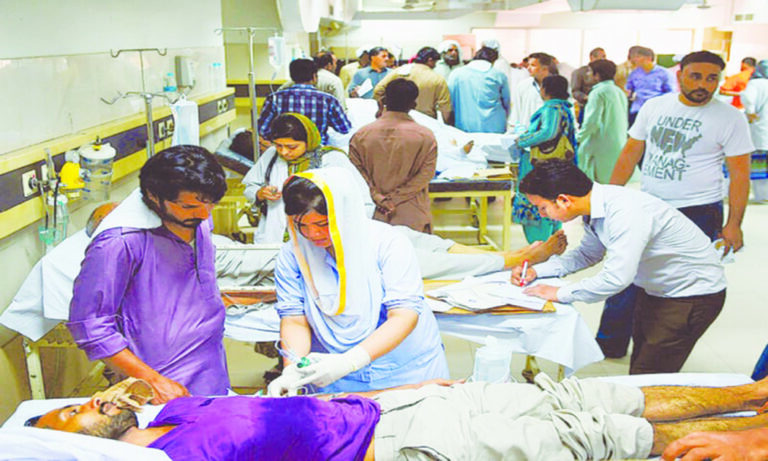
    By Raja Ashraf A country’s healthcare system is judged not only by the number of hospitals it has but also by whether people can access timely, affordable, and quality medical care. In Pakistan, public confidence in the health sector has weakened due to persistent challenges, including shortages of healthcare professionals, rising medicine prices, under-resourced hospitals, and the continued presence of unqualified medical practitioners. These issues require comprehensive and long-term reforms rather than short-term policy responses Healthcare is a fundamental right closely linked to Article 9 of Pakistan’s Constitution, which guarantees the right to life. The Supreme Court has interpreted this provision to include access to essential healthcare services. Pakistan is also a signatory to the International Covenant on Economic, Social and Cultural Rights, which commits the country to progressively ensuring the highest attainable standard of physical and mental health for its citizens. One of the most pressing concerns is the shortage of qualified doctors in rural and underserved regions. Although medical institutions produce thousands of graduates every year, many public health facilities outside major cities continue to face vacant positions. As a result, many communities struggle to obtain even basic healthcare services and are often forced to travel long distances for treatment. The migration of doctors, nurses, and other healthcare professionals to foreign countries has further weakened the healthcare system. Better salaries, improved working conditions, career opportunities, and greater security abroad encourage many skilled professionals to leave Pakistan, creating significant gaps in public hospitals and specialized medical services. The pharmaceutical sector also faces increasing challenges. Some multinational pharmaceutical companies have reduced their presence in Pakistan, raising concerns about future medicine availability and investor confidence. While local pharmaceutical manufacturers continue to meet much of the country’s demand, policymakers must create a stable regulatory and economic environment that supports both domestic production and responsible international investment. The rising cost of medicines has become another major burden for families already affected by inflation. Patients suffering from chronic illnesses such as diabetes, hypertension, and cardiovascular diseases often require lifelong treatment, making affordability a growing concern. At the same time, the continued circulation of counterfeit and substandard medicines highlights weaknesses in regulation and quality control, despite improvements in oversight by regulatory authorities. Public hospitals also frequently experience shortages of essential medicines and emergency supplies, forcing patients to purchase drugs from private pharmacies. This increases treatment costs and can delay critical medical care during emergencies. Ensuring uninterrupted medicine supplies in government hospitals should remain a national priority. Another persistent issue is the presence of unqualified medical practitioners, commonly known as quacks, particularly in areas where licensed healthcare providers are scarce. Tackling this problem requires stronger enforcement of existing laws alongside improved access to qualified medical professionals. Pakistan’s healthcare challenges extend beyond these issues to include inadequate public health funding, ageing hospital infrastructure, weak primary healthcare services, limited mental health facilities, and uneven implementation of health policies across provinces. Addressing these problems requires a comprehensive national strategy focused on increasing healthcare investment, improving working conditions for medical professionals, strengthening medicine regulation, modernizing pharmaceutical oversight, expanding preventive care, and reinforcing primary healthcare services. Investing in healthcare is not merely a public expense—it is an investment in human capital, economic growth, and national development. Pakistan possesses skilled healthcare professionals, reputable medical institutions, and a capable pharmaceutical industry. With sound policymaking, stronger governance, and sustained investment, these strengths can be transformed into a healthcare system that guarantees every citizen safe, affordable, and quality healthcare. The need for reform is no longer in question; the real challenge is ensuring that action is not delayed any further.

  • Find the mistake in 1 to 20

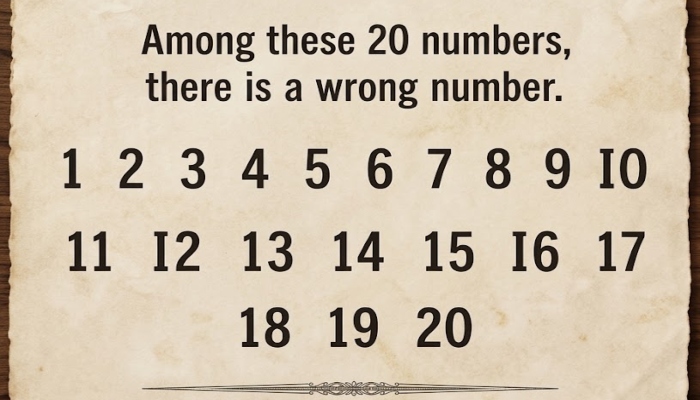
    Today’s puzzle is simple. Just look at the picture carefully and find the mistake hidden in the numbers. The image shows numbers from 1 to 20, but there is a small error that many people may miss at first glance. Puzzles like this require careful observation and a little creative thinking. You need to look beyond what your brain expects to see. The mistake is actually right in front of you.  However because the numbers look almost the same it can be easy to overlook. This puzzle is a simple test of your observation skills. Many people may fail to notice the error because our brains often read familiar patterns automatically. Still cannot find it? Look closely at number 10. The first character is not the number 1. It is the capital letter “I”. Did you spot it?

Leave a Reply

Your email address will not be published. Required fields are marked *