china introduces braincontrolled
|

China introduces brain-controlled robot technology

Several countries are actively developing Brain-Computer Interface (BCI) technology which enables people to interact with devices using only their thoughts without the need for physical movement. Now, a Chinese company is working to integrate this technology into robots.

According to BrainCo, the company has developed the world’s first brain-to-robot interface system allowing robots to be controlled directly through human thought.

The company said the system works using EEG headsets which are worn by human operators. These headsets monitor brain activity and translate it into commands that are sent to the robot.

Like other BCI technologies, the system relies on extensive training data that maps specific patterns of brain activity to corresponding actions. Artificial intelligence (AI) algorithms are then used to accurately interpret a person’s intended action and convert it into the correct robotic response.

The technology called the Brain-Controlled Robot AI Platform was unveiled at the World Artificial Intelligence Conference in Shanghai.

BrainCo said the system can be used not only to control robots but also to operate robotic arms and other connected devices.

The platform continuously collects data which is used to further improve its AI algorithms and enhance performance over time.

According to the company, rapid advances in AI have enabled robots to perform many tasks independently. However, it believes the next major challenge is ensuring that robots can effectively understand and collaborate with the humans working alongside them.

Similar Posts

  • |

    Syria and Russia redefine military ties

    Syria and Russia have reached a new agreement regarding the future of two strategically important Mediterranean military sites, marking a major shift in Moscow’s role in the country after years of close military cooperation with the former Syrian government. According to Syria’s Foreign Ministry, the agreement will bring changes to the way Russia operates at the Hmeimim air base near Latakia and the Tartus naval facility on Syria’s Mediterranean coast. Both locations served as key Russian military positions during the rule of former President Bashar Assad, who relied heavily on Moscow’s political and military support throughout Syria’s long civil war from 2011 to 2024. The Hmeimim air base became one of Russia’s most important overseas military installations, supporting Russian air operations in Syria and strengthening Moscow’s influence in the eastern Mediterranean. Meanwhile, the naval base at Tartus provided Russia with its only major naval facility outside the former Soviet Union, allowing it to maintain a strategic presence in the region. Under the newly announced arrangement, Syria will assume control of the Hmeimim air base and the commercial section of Tartus port as part of its civilian administration. The remaining military areas at both locations will reportedly be transformed into joint training and qualification centers rather than serving as traditional Russian military outposts. Syria’s Foreign Ministry described the agreement as a “reorganization of the Russian presence” along the country’s coastline. The ministry said the deal represents the most significant step forward in negotiations that have continued for around 18 months and could open the door to a new stage in Syrian-Russian relations. Russia has not yet issued an official public response to the announcement. However, Moscow’s position in Syria has changed significantly since the fall of Assad’s government. During the uprising and subsequent conflict, Russia was one of Assad’s strongest supporters, providing military assistance that helped his government remain in power. After Assad was removed from office, Russia allowed him and his family to seek asylum, while many remaining Russian forces gradually withdrew from Syria. Despite these changes, Syria’s new leadership has attempted to maintain diplomatic relations with Moscow. Interim President Ahmad al-Sharaa has met Russian President Vladimir Putin in Moscow on two occasions since taking office, with the future of the Mediterranean bases being one of the main issues discussed during their talks. At the same time, Syria has expanded its diplomatic engagement with Western nations and regional Arab countries. Several states that had distanced themselves from Damascus during Assad’s crackdown on opposition movements have begun rebuilding relations with the new Syrian authorities. The United States has also removed many of the sanctions that had severely affected Syria’s economy, while European countries have increased diplomatic contacts. French President Emmanuel Macron’s visit to Syria in July marked another important step, with both countries announcing plans to appoint ambassadors for the first time in 14 years. The agreement over Hmeimim and Tartus reflects the changing balance of international influence in Syria. While Russia remains an important partner, the country’s new government appears to be pursuing broader relationships with multiple global and regional powers as it seeks to redefine Syria’s future after years of conflict.

  • | | |

    Cristiano Ronaldo hints at retirement, says upcomi…

    Football superstar Cristiano Ronaldo has hinted that his retirement could be closer than expected, saying the upcoming year will probably be the final year of his playing career. The 41-year-old Portugal captain made the comments in an interview with lifestyle magazine Vogue, saying he wants to leave behind a “spectacular legacy” when he eventually walks away from football. Ronaldo has enjoyed one of the most successful careers in football history. Since making his senior debut for Sporting in 2002, he has won major trophies with Manchester United, Real Madrid, Juventus and his current club, Al-Nassr. He has also won the Ballon d’Or five times. Despite his extraordinary list of achievements, Ronaldo was unable to add a FIFA World Cup title to his collection after Portugal fell short at the 2026 tournament. The forward has scored 976 goals for club and country during a career spanning more than two decades. He is now continuing with Al-Nassr as he approaches the remarkable milestone of 1,000 career goals. Ronaldo also acknowledged that retirement would leave a major gap in his life. He said he plans to spend more time travelling, playing and watching padel, and enjoying life away from professional football. His comments have intensified speculation about when one of football’s greatest careers will finally come to an end.

  • |

    British Columbia declares state of emergency as explosive wildfire forces 22,000 to evacuate

    The Canadian province of British Columbia has declared a provincewide state of emergency following a rapidly expanding wildfire that forced nearly 22,000 residents to evacuate their homes, with another 9,700 under active evacuation alerts. Over 100 wildfires are currently burning across the region, nearly half of which remain classified as out of control. The entire community of Summerland, comprising approximately 12,000 residents, received overnight mandatory evacuation orders alongside roughly 8,000 people in and around the neighbouring district of Peachland. Originating on Friday evening, the Bald Range wildfire expanded rapidly to cover roughly 50 square kilometres. The blaze swept through the rural settlement of Faulder before advancing approximately 15 kilometres towards Summerland at high speed. British Columbia Premier David Eby noted that an operational official characterised the rapid growth of the fire as being “like a bomb going off”. “I know many families are facing an unimaginable day today,” Eby stated. “People have lost their homes. And many people have been displaced. Others are waiting for news about loved ones.” Cliff Chapman, director of wildfire operations at the BC Wildfire Service, described conditions throughout the province as “explosive”. Due to fast-moving flames cutting off ground evacuation routes, officials dispatched firefighting helicopters to conduct aerial rescues for trapped residents. The declaration of a emergency grants provincial authorities extraordinary legal powers to enforce travel restrictions, secure emergency temporary housing for evacuees, and coordinate response efforts across affected sectors.

  • China tests giant fusion magnet

    China has successfully tested the world’s largest fusion magnet weighing 582 tons marking a major step toward developing an “artificial sun.” The technology aims to produce clean safe and nearly unlimited energy through nuclear fusion in the future. The giant D-shaped superconducting magnet was developed by the Institute of Plasma Physics under the Chinese Academy of Sciences. It is designed to control extremely hot plasma using powerful magnetic fields which is one of the most important parts of the nuclear fusion process. The magnet measures 21 meters long and 12 meters wide and has been built for the world’s largest fusion reactor. Reports say it is about 1.3 times larger than a similar magnet used in an international fusion project and can store three times more energy. It is capable of containing plasma at temperatures of up to 100 million degrees Celsius allowing scientists to recreate the same fusion process that powers the Sun. Chinese officials said most of the materials and manufacturing were completed within China reducing the country’s reliance on foreign technology and supplies. China hopes to generate electricity from fusion energy by around 2030. Scientists say an “artificial sun” is a nuclear fusion reactor that copies the natural process used by the Sun to produce energy. If successful this technology could provide the world with a reliable source of clean and almost unlimited electricity in the future.

  • | |

    Iran rejects 60-day deadline for talks with US

    The 60-day deadline set under the memorandum of understanding between the United States and Iran for negotiations has expired. Iran has rejected the existence of any such deadline, saying the memorandum did not include a condition requiring Tehran to conclude negotiations within 60 days. Iranian Foreign Ministry spokesman Esmail Baghaei said Iran does not make decisions under pressure from deadlines or ultimatums. Baghaei said the 60-day period mentioned in the Islamabad memorandum was related to negotiations on lifting sanctions and resolving the nuclear issue. He further said talks did not even begin because the United States violated the memorandum. The Iranian spokesman also said Pakistan and Qatar were continuing efforts to reduce tensions between Iran and the United States. He said there were no other mediators involved in the process. Baghaei blamed what he described as illegal US actions for insecurity in the Strait of Hormuz. He added that Iran was working with Oman on mechanisms to ensure safe navigation and shipping through the strategic waterway. The remarks come as tensions between Tehran and Washington remain high, with diplomatic efforts continuing to prevent further escalation in the region.

  • |

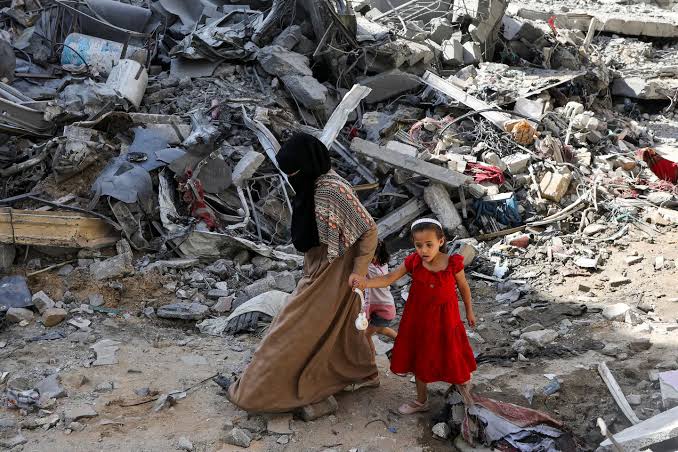
    Israeli airstrikes kill 18 in Gaza as ceasefire hopes face fresh setback

    Gaza: Israeli airstrikes struck multiple areas across the Gaza Strip for the second consecutive day on Sunday, leaving at least 18 Palestinians dead and several others injured, according to Palestinian health officials. The renewed violence came despite recent diplomatic efforts led by the United States aimed at advancing last year’s ceasefire agreement and reducing tensions in the region. Medical officials reported that Israeli fighter jets carried out strikes in Gaza City, Deir al-Balah in central Gaza, and Khan Younis in the south. The attacks marked one of the deadliest days in recent weeks, with residential buildings, tents sheltering displaced families, and civilian vehicles among the locations hit. The escalation occurred only days after US President Donald Trump announced what he described as a significant breakthrough in efforts to revive the ceasefire agreement. His statement suggested that Hamas and other Palestinian armed groups had agreed in principle to disarm, raising hopes of progress toward ending the prolonged conflict. However, Israeli officials quickly expressed skepticism over the proposed disarmament plan. Israeli Energy Minister Eli Cohen, a member of Prime Minister Benjamin Netanyahu’s security cabinet, said Israel was prepared to give Hamas an opportunity to surrender its weapons but doubted the group would follow through. Speaking to Israel’s Army Radio, Cohen stated that no agreement had been reached to halt Israeli military operations in Gaza. He added that if Hamas refused to disarm, Israel could seek full control of the territory, where Israeli forces already maintain control over roughly 70 percent of the enclave. He emphasized that dismantling Hamas remained Israel’s primary objective under its understanding with the United States, describing it as a prerequisite for any lasting political arrangement. Later in the day, Doron Spielman, spokesperson for the Israeli Prime Minister’s Office, confirmed that Israel had conveyed its concerns to US officials regarding the proposed roadmap. According to Spielman, Israel insists that Hamas must completely and verifiably disarm before any further steps toward implementing the ceasefire can move forward. Civilian Areas Among Targets Palestinian emergency services reported widespread destruction following Sunday’s airstrikes. In Deir al-Balah, at least four people were killed after an apartment building was struck. Another Israeli attack in the Mawasi area near Khan Younis injured five people and ignited fires in tents housing displaced families. A Palestinian couple and their nine-year-old son were killed when their home in Mawasi was hit. In Gaza City, another couple and their child lost their lives after an apartment was targeted. Medical teams also reported that two people were killed in a strike on a tent located near the Egyptian representative mission in Gaza City. Later in the day, two more fatalities were reported in the eastern Zeitoun neighborhood following another airstrike. In northern Gaza, one person was killed near Jabalia, while a separate strike targeting a vehicle near Saraya Square in Gaza City claimed at least three additional lives. Israeli Military Defends Operations The Israeli military said one of its operations in Deir al-Balah targeted two commanders belonging to Hamas’ elite “Nukhba” force. It also stated that strikes carried out in Gaza City and Jabalia were aimed at what it described as Hamas military operatives, although officials said assessments were still underway regarding the outcomes of those attacks. US-Led Peace Initiative Continues Despite the renewed violence, diplomatic efforts to preserve the ceasefire remain ongoing. The US-led Board of Peace, responsible for overseeing implementation of the ceasefire agreement, released a 15-point roadmap outlining the final stages required to fully enforce the deal. Nickolay Mladenov, the board’s chief envoy for Gaza, expressed concern over the latest escalation, saying the attacks came while mediators were actively working with Palestinian factions to secure agreement on the proposed roadmap. In a statement posted on social media, Mladenov said discussions with regional partners and international mediators were continuing to reduce tensions and create conditions necessary for implementing President Trump’s peace initiative. He stressed that achieving a lasting peace would require sustained commitment from all parties involved. Hamas Accuses Israel of Undermining Talks Hamas maintained that it remained open to negotiations but insisted Israel must first end its military campaign and withdraw forces from Gaza in accordance with the ceasefire agreement before any discussion on surrendering weapons could proceed. Senior Hamas official Basem Naim said the movement had demonstrated “considerable flexibility” during negotiations but accused Israel of escalating attacks in an attempt to weaken diplomatic efforts and impose new realities on the ground through military force. Meanwhile, former senior Fatah official Mohammed Dahlan, who is based in the United Arab Emirates, claimed that Jared Kushner, President Trump’s son-in-law and a senior adviser involved in the US initiative, had informed him that discussions were underway with Israeli officials to halt the attacks. According to Dahlan, contacts between US officials and regional mediators continue, but the success of the agreement now depends largely on Israel ending its ongoing military operations in Gaza. The US State Department has not immediately commented on Dahlan’s remarks, while Israeli authorities have yet to issue a formal response. Casualties Continue to Rise According to Gaza health authorities, at least 1,230 Palestinians have been killed in Israeli strikes since the ceasefire agreement reached in October. Hamas has not released figures regarding the number of its fighters killed during the same period. Israeli officials, meanwhile, report that four Israeli soldiers have been killed since the ceasefire came into effect.

Leave a Reply

Your email address will not be published. Required fields are marked *