fortress endures pakistan

The Fortress Endures: Pakistan and the Vision of I…

Pakistan stands as a living testament to an enduring spiritual and ideological conviction. From its very inception, the rallying cry that unified millions were both simple and profound: “What does Pakistan mean? La ilaha illallah.” Under this banner of faith in the Oneness of Allah, the nation emerged on the world map in 14 August 1947, as a homeland for Muslims of the Subcontinent, guided by the vision of Quaid-e-Azam Muhammad Ali Jinnah and the philosophical foresight of Allama Iqbal. It was not merely a political endeavour but the realisation of a distinct national identity rooted in Islamic ideals of justice, sovereignty, and unity. Yet the path was fraught with peril. Even before the new state could draw breath, formidable obstacles arose—economic collapse, mass migrations, and external scepticism. Many predicted that its borders would soon dissolve under pressure, but divine will ordained otherwise. Like a ship battling turbulent seas, Pakistan endured and reached the shores of stability through resilience and faith.

As the country gained its footing, a landmark gathering in Lahore in February 1974 marked a turning point. The Second Islamic Summit Conference brought together leaders from 38 Muslim nations, including King Faisal of Saudi Arabia, Anwar Sadat of Egypt, and Muammar Gaddafi. Hosted by Prime Minister Zulfikar Ali Bhutto, this assembly transformed individual aspirations into collective strength. Muslims, like fingers joining to form a mighty fist, stood united on a common platform. The summit addressed the aftermath of the 1973 Arab-Israeli war, supported Palestinian and Arab causes, and elevated Pakistan’s stature as a bridge among Islamic nations. From this unity flowed a shared mission that propelled the country forward.

Throughout its history, Pakistan has answered calls for global security and the stability of the Islamic world. It earned the honourable distinction of the Fortress of Islam, particularly through its longstanding commitment to safeguarding the Haramain Sharifain. Pakistani troops have served in Saudi Arabia since the 1970s, with deployments in training, advisory, and protective roles—often numbering over 10,000 at peaks, including during the 1990-91 Gulf War. This sacred duty reflects not mere strategy but a religious obligation deeply felt by the nation. 

Adversaries, notably neighbouring India, seized every opportunity to portray Pakistan as a failing state. Yet at moments of trial, unseen help arrived. In May 2025, Pakistan demonstrated military prowess that astonished observers, restoring its lost prestige through resolute leadership that honoured the divine trust placed upon it. A landmark Strategic Mutual Defence Agreement with Saudi Arabia, signed on 17 September 2025 in Riyadh by Prime Minister Shehbaz Sharif and Crown Prince Mohammed bin Salman, formalised decades of brotherhood. This pact declares that any aggression against one is an aggression against both, encompassing comprehensive cooperation in defence, training, technology, and joint deterrence. Reports suggest potential deployment of up to thousands of Pakistani personnel and assets, including JF-17 aircraft, underscoring Pakistan’s role as a steadfast guardian. 

Building upon this success, Pakistan has played a constructive mediating role in Gulf tensions, earning widespread appreciation for its balanced diplomacy. Cooperation with Turkey has deepened through bilateral deals in defence and trade, while Kuwait and other regional states have expressed interest in similar partnerships. Pakistan’s armed forces, with approximately 650,000–685,000 active personnel—one of the world’s largest standing armies—alongside an estimated hundreds of nuclear warheads and modern platforms like JF-17 fighters and advanced missiles, provide credible strength to these endeavours. 

Looking to the future, Pakistan’s perspective remains one of hope anchored in unity and good intentions. The day is not distant when an alliance of Islamic countries, forged through mutual respect and shared values, may emerge—bearing precedents in the European Union or NATO yet rooted firmly in Islamic principles of solidarity. Such a framework would face formidable obstacles: historical differences, external influences, and economic disparities. Yet with the spirit that carried Pakistan through partition, the 1971 trials, and recent triumphs, it remains achievable. Pakistan, with its strategic location, military capability, and diplomatic bridges—linking South Asia, the Gulf, and beyond—can serve as a pivotal node in this vision. It continues to champion economic cooperation within the OIC, advocate for peace with justice on issues like Palestine and Kashmir, and promote connectivity that benefits the wider ummah.

Pakistan’s journey, from ideological birth to its current resurgence, exemplifies faith sustained against the odds. As it advances, the nation carries not only the aspirations of its 250 million people but the hopes of many who see in its endurance a beacon for the Muslim world. With trust in Allah, unity among its ranks, and steadfast resolve, Pakistan is poised to fulfil a greater role in fostering stability, prosperity, and brotherhood across Islamic lands. The future beckons with challenge and opportunity alike; guided by its founding principles, the nation shall meet both with honour.
Similar Posts

  • Pakistan’s Courts Are Running Out of Time

    By Qashf Aizdi Justice delayed is justice denied. This phrase has become almost cliché in Pakistan and it unfortunately remains painfully true for millions of litigants who are waiting for their day in court. Every year hundreds of new cases are filed while thousands remain undecided and as a result courtrooms continue to grow more congested and hearings become more infrequent. The unfortunate consequence is that justice moves further out of reach. Time is perhaps the only thing Pakistan’s justice system can no longer afford to lose. The scale of the crisis is reflected in the numbers. According to the Judicial Statistics of Pakistan 2023, more than 2.25 million cases remain pending before courts of Pakistan. During the same year, 4.48 million new cases were instituted while 4.41 million were disposed of, resulting in a 5 percent increase in the overall backlog. The district judiciary alone accounts for 82 percent of all pending cases. With just over 3,100 working judges and judicial officers, each is responsible for more than 700 pending cases, even before accounting for the thousands of new cases filed every year. These figures do not suggest that Pakistan’s judges are idle; rather, they point to a justice system struggling to keep pace with an ever-growing caseload. Civil disputes in Pakistan can often take 10 to 15 years and in some instances even longer, before reaching its conclusion. Court proceedings are routinely delayed by repeated adjournments, cumbersome procedures, paper-based case management and multiple tiers of appeal. Difficulties in serving notices, delays in recording evidence and frequent adjournment requests often leave litigants waiting months before their cases are heard again. Additionally, the consequences of delayed justice extend beyond the courtroom. By the time a case is finally decided, litigants find themselves in a morass of mounting legal costs, lost opportunities and prolonged uncertainty. Every adjournment adds to the financial and emotional burden borne by litigants. A favorable judgment delivered after years of litigation can never fully restore the time, financial stability or peace of mind that has already been obliterated. Article 37(d) of the Constitution of Pakistan obliges the State to ensure inexpensive and expeditious justice. Yet, for many litigants, this constitutional promise often rings hollow. As mounting caseloads continue to overwhelm the judiciary, lengthy delays have become an accepted and vexatious feature of the legal system rather than an exception. Justice that arrives years too late often fails to provide meaningful relief. The immediate explanation is ostensibly straightforward; the number of judges is insufficient to handle the growing caseload. Pakistan has one of the lowest judge-to-population ratios in the region, leaving judges responsible for hundreds and often thousands of matters. Yet the shortage of judges tells only part of the story. Addressing this crisis requires more than appointing additional judges; it demands a more comprehensive approach to resolving disputes. One such reform lies in the greater use of Alternative Dispute Resolution (ADR). Cases can be resolved out of court using processes like mediation and arbitration, whereby judges can focus on cases which require formal adjudication. Consequently, ADR works in conjunction with the courts in solving disputes outside of court. The potential of ADR is perhaps best illustrated by the Morgah Valley dispute. Despite taking over 42 years to be settled via litigation, the same case took only two months to settle after being referred to mediation. Though not all disputes are suitable for mediation, this case is an example of the value that comes with the application of ADR at the right time. More importantly, it shows that timely justice is not an impossible ideal but an achievable one when the right mechanisms are used. However, for countless litigants, delay remains the norm as the judiciary continues to grapple with overwhelming caseloads. Repeated adjournments leave litigants facing prolonged uncertainty and growing frustration. Cases pass from one generation to the next and some litigants never live to see the final outcome of disputes they initiated and fought for. Justice should not become an inheritance passed from parents to children. The longer that reform is postponed, the greater the cost to litigants, businesses and public confidence. Pakistan’s courts are running out of time and so are the people waiting for justice. If Pakistan is serious about fulfilling the constitutional vision embodied in Article 37(d) of the Constitution, reducing judicial delays can no longer remain an aspiration, it must become a national priority. Reforming the justice system will require efficient case management, greater use of appropriate dispute resolution mechanisms and a collective commitment to ensuring that justice is delivered when it is needed most. Until then, Pakistan’s courts will continue to run out of the one resource they cannot recover: time.  

  • Why System Collapsed in Pakistan?

    These days, one phrase echoes throughout our country: “Pakistan’s system has collapsed.” If we translate the word collapse into plain, colloquial language, it means that our so-called system has completely broken down, gone to ruin, or become utterly dysfunctional. Therefore, the argument goes, the country now needs a new system. This, they claim, can only happen if, instead of the existing four provinces, Pakistan is reorganized into thirty or thirty-two new provinces. Such a restructuring, they believe, would push aside the traditional politicians and allow a new generation of political leaders to emerge. Otherwise, they warn, just as in India, there will be an uprising of the “cockroaches”—that is, the youth—which will force this collapsed, rotten system to surrender. At first glance, these words appear attractive and appealing. They express not only frustration and disgust with our current political situation but also offer hope to the younger generation, particularly Generation Z. It is as if they are saying: “Dear frustrated young people! We are opening the doors to your future. You will rise, dominate the scene, and sweep away all the debris of the past—that is, the traditional politicians—with the force of your determination and enthusiasm.” However, this humble writer sees, behind these beautiful words, not a bright future but the same worn-out and ugly mirage of the past. In reality, those who are truly responsible—the real culprits—cleverly distance themselves from blame, divert the attention of the youth toward others, and then present themselves as the young people’s sympathizers and supporters. In our poetry, it is through such tricks that the beloved murderer becomes an innocent beloved, and the criminal appears as the trusted confidant. But this humble writer calls it what it really is: “the thief making the loudest outcry.” Our national poet, Iqbal, once wrote: There is an outcry that Muslims have vanished from the world; We ask: Were true Muslims ever really present? In appearance you resemble Christians, in civilization the Hindus; These are the Muslims before whom even the Jews would feel ashamed. If, in today’s circumstances, you replace the word “Muslims” with “system,” the verses take on a striking new meaning: There is an outcry that the system has vanished from the country; We ask: Was there ever really a system to begin with? If we were to parody the remaining verses, they might be difficult for some to digest. Suffice it to say that those in power never truly allowed a genuine system to develop here. And whenever, after much struggle, some semblance of a system did emerge, there were always certain “respectable gentlemen” who seemed to have taken an invisible oath—or perhaps a vow of deliberate silence—that it must never be allowed to function. In the eyes of this humble writer, our system truly collapsed on 16 August 1946, when, under the guidance of the British establishment, the Direct Action Day was observed, reducing the foundations of any future system to rubble. From that point onward, the struggle was no longer for a functioning system but for personal rule. That struggle strangled democracy, human rights, liberty, and freedom, and instead built a grand highway of coercion and dictatorship. Anyone who dared to step off that path or disagree with it was labeled a traitor, an enemy of the nation, an Indian agent, or part of the so-called “Fitna-e-Hind” (the Indian conspiracy). These labels were then applied to whomever those in power wished. The first victim was Dr. Khan Sahib’s democratically elected provincial government in the North-West Frontier Province (now Khyber Pakhtunkhwa), which was dismissed within the very first week. Soon afterward, the same authoritarian mentality struck the government of Ayub Khuhro in Sindh. It was also decided that any cabinet member who failed to say “Yes, Sir” to the Governor-General would be considered dispensable. Once the founding generation established such principles of governance, why would later generations lag behind in following them? Thereafter, the race for personal power was inevitable. In the end, victory was bound to go to whoever possessed the greater force—whether the power of the stick or the gun. How could it be otherwise? If, instead of making the Constitution and the rule of law your source of authority, you rely on personal superiority, intimidation, prestige, and the power of office, then someone carrying a gun will inevitably dominate the throne of personal power. And once that happens, the cycle simply continues. It is a law of nature that the bigger fish eats the smaller fish. Muhammad Ali Jinnah, Liaquat Ali Khan, Ghulam Muhammad, and Iskander Mirza all played their respective roles. Later, when greater power confronted lesser power, the result was the rise of powerful military rulers such as Ayub Khan, Agha Yahya Khan, Zia-ul-Haq, Pervez Musharraf, Ashfaq Parvez Kayani, and Qamar Javed Bajwa. (To be continued)

  • The Architect of Conscience: Arif Ali Mir and the …

    Reflecting upon the profound vastness of the cosmos and the acute, unyielding solitude of the human condition, the French philosopher and writer Albert Camus once observed that if even a single lamp were to be kindled within the dark, tempestuous ocean of history, the entire fabric of the universe would transform, tearing asunder the merciless veil of night. The annals of history stand as an unshakeable testament to the truth that whenever the fierce gales of material greed, political expediency, and moral decay have threatened to engulf human societies, certain dervish-souled, deeply conscientious, and granite-willed individuals have emerged from the crowd. Swimming resolutely against the powerful, destructive current of their era, these rare souls have stood guard over the invaluable civilizational trusts bequeathed by antiquity. The fertile, history-drenched soil of Gujrat—where the ancient, meandering waves of the Chenab and Jhelum rivers have whispered civilizational sagas for centuries—has long served as the intellectual cradle and practical domain of precisely such a man of extraordinary mettle. Brushing aside the rigidities of legal codes, the demanding, iron-willed disciplinary training of police service, and the glittering, lucrative allure of high-ranking international postings, he made the monumental choice to dedicate his entire terrestrial existence to books, the retrieval of forgotten history, and uncompromised moral dignity. This towering, unyielding personality is none other than Arif Ali Mir, Advocate, whose entire life has stood like an unshakable monolith against the self-serving, shifting winds of his time. Born on December 28, 1949—corresponding precisely to the 8th of Rabi’ al-Awwal, 1369 AH, on a Wednesday—within the historic, time-honored confines of “Mir Manzil” in Mohalla Khyber, nestled deep in the heart of Gujrat’s historic town of Jalalpur Jattan, Arif Ali Mir’s life is far more than a conventional biographical sketch. It is a profound, sweeping narrative capturing the complex post-colonial socio-political contradictions of the Indian subcontinent, an unwavering, almost sacred custodianship of noble familial heritage, and an extraordinary odyssey of letters where every single chapter serves as a luminous metaphor for absolute sincerity, purity of intellectual purpose, and complete self-sufficiency. His esteemed father, Ghazanfar Hussain Mir, was a legendary, fiercely principled, and seasoned lawyer of his generation. His uncommon nobility, profound legal acumen, and distinguished, intellectual circle of acquaintances infused the deepest foundational layers of Arif Ali Mir’s character with a forged-steel morality that would remain his greatest, most unassailable asset throughout his life. Standing gracefully beside him was his mother, Ruqaiya Begum, an affectionate, deeply dignified woman who silently imprinted the enduring values of selfless sacrifice, patience, and unbreakable resilience upon the rearing of her children. Within this vibrant, intellectually charged household comprising four sisters and three brothers, Arif Ali Mir occupies a unique middle vantage: two elder sisters precede him in age, while all other siblings are younger. Driven eventually by the professional demands and expanding horizons of his father’s legal practice, the family made the permanent transition from Jalalpur Jattan to the bustling city of Gujrat, establishing their permanent domestic and intellectual anchor at “Mir Street” on Bhimber Road—a historic domicile that would organically evolve into a cherished sanctuary for scholars, jurists, and discerning bibliophiles alike. A deep, discerning psychological and biographical study of Mr. Arif Ali Mir’s versatile and multifaceted personality reveals that his arrival on December 28, 1949, was far from a mere statistical coincidence. According to the timeless principles of astrological configuration and character alignment, his zodiac sign, Capricorn, functions as a clear mirror to his intrinsic nature. Ruled by Saturn—the planetary archetype of profound gravity, timeless perseverance, and unyielding adherence to principle—these exact traits form the unmistakable, defining hallmark of Mr. Arif’s entire life. While Capricorns are universally recognized across traditions as grounded earth signs marked by relentless, grinding toil, Arif Sahib uniquely channeled this raw elemental energy into cultivating a veritable forest of arts, letters, and historical preservation upon the plains of Gujrat. The crowning virtue of his astrological archetype is structural discipline combined with penetrating foresight—qualities that naturally laid the bedrock of his early success in the legal arena, where he learned to dissect truth from falsehood with microscopic precision. Yet, the most captivating, transcendent facet of his persona is how he decisively transcended the traditional, narrow materialism often associated with his sign through a profound inner spiritual inclination. Operating as a fiercely devoted bibliophile and patron of learning, he redirected the formidable organizational capacity of the Capricorn psyche away from worldly accumulation and entirely toward the preservation of rare texts and the wide propagation of knowledge. Operating with the quiet, unostentatious efficiency characteristic of his sign, his personal dignity, fierce institutional loyalty, and immense intellectual depth render him a towering, sheltering tree on Gujrat’s literary horizon—its roots gripping ancient tradition, its uppermost branches illuminated by the clear light of universal wisdom. Mr. Arif Ali Mir’s educational journey is a rugged, continuous path strewn with dramatic twists, historical upheavals, and personal sacrifices that ultimately refined his character like crucible-tested gold. At the time of his earliest schooling, his father was stationed as the Chief Sanitary Inspector for the Sialkot Municipality, prompting Arif’s first three formative, sensory years of childhood to unfold within the disciplined, historic halls of the Convent of Jesus and Mary in Sialkot. Upon the family’s return to Jalalpur Jattan, he successfully completed his fifth and sixth grades at Islamia Primary School, subsequently transitioning to Islamia High School. When domestic circumstances necessitated a move to Gujrat, where the family initially settled in a rented house near Mohalla Gyanpura / Muslim Abad , he pursued his seventh and eighth grades at Muslim High School on Court Road. This institution was then under the stellar administrative helm of the eminent headmaster Master Ghulam Abbas. For his matriculation, he moved to Public High School No. 1 in Gujrat—administered with strict discipline by Headmaster Mirza Shaukat Ali and school owner Sheikh Shafqatullah—where he successfully passed his Matriculation examination in the watershed year of 1964. Following this, he completed his intermediate education at Sir Syed College on Railway Road, Gujrat, in 1966, before

  • A Habit of Second Thought

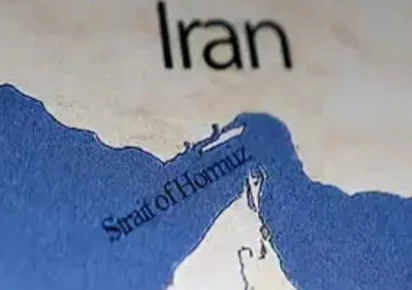
    President Donald John Trump occupies a singular place in the history of American leadership. He is at once a politician, a successful businessman, and an enthusiast of freestyle wrestling. His manner of thinking, planning, and decision-making bears a character distinctly different from that of his predecessors; indeed, many observers contend that it has few, if any, precedents in the annals of modern American politics. Analysts frequently describe him as a man of remarkable flexibility, yet they also acknowledge that a position defended with absolute conviction at one moment may, in the next, be replaced by its very opposite without the slightest hesitation. This characteristic became strikingly evident following the commencement of large-scale military operations against Iran on 28 February 2026. A careful examination of the period, particularly up to the defence of the Memorandum of Understanding concluded in June, reveals no fewer than seven significant shifts in President Trump’s strategic approach. At the outset, he dismissed economic concerns altogether, declaring that the financial difficulties of the American people were of no consequence and that the sole imperative was to prevent Iran from acquiring a nuclear weapon. By the time of the G7 summit, however, his tone had undergone a marked transformation. He began advocating the necessity of an agreement capable of shielding the global economy from a crisis comparable to the Hoover era and the Great Depression, pointing to instability in the financial markets as evidence supporting this revised position. His initial call for regime change in Iran was equally unequivocal. In a video address, he urged the Iranian people to rise against their government, declaring that the moment might represent their final opportunity for generations to come. Yet subsequent statements quietly abandoned this objective. Instead, he began speaking of normalising relations with Iran and cooperating with its existing leadership, occasionally describing those very leaders as more “reasonable” than before. During the early phase of the conflict, the complete destruction of Iran’s missile program, the industries responsible for its production, and the naval forces supporting it was presented as a principal objective. Later, however, his position softened considerably. He observed that while missiles might inflict damage upon limited areas, they were incapable of destroying the world, and since other nations possessed similar capabilities, Iran might also retain a limited missile arsenal. It was for this reason that the Memorandum of Understanding contained no provision requiring the dismantlement of Iran’s missile program. A similar evolution occurred regarding Iran’s nuclear program. Following the military operations of 2025 and again in 2026, it was asserted that Iran’s entire uranium enrichment capability would be eliminated and that the nuclear threat would be extinguished permanently. In time, however, the objective was narrowed simply to ensuring that Iran would not acquire a nuclear weapon. Rather than insisting upon total dismantlement, reliance shifted towards international monitoring and continued negotiations. Control over highly enriched uranium, initially regarded as a non-negotiable and indispensable condition, was subsequently treated as a matter of secondary importance. It was argued that preventing the production of a nuclear weapon remained the essential objective, while questions concerning enriched uranium would be addressed in future negotiations. The instruments of pressure likewise underwent a profound transformation. Economic sanctions and financial restrictions, once regarded as the principal means of coercion, gradually gave way to incentives. Discussions emerged concerning the release of frozen assets, temporary licences for Iranian oil exports, and the possibility of reconstruction assistance amounting to hundreds of billions of dollars, with additional concessions to be granted subject to Iran’s future conduct. Likewise, the original determination to terminate Iran’s support for regional proxy groups gradually receded into the background. In its place, greater emphasis was placed upon securing a direct ceasefire and addressing the broader requirements of peace and stability throughout the Middle East. These strategic adjustments were accompanied by repeated tactical oscillations, in which stern threats were frequently followed by the postponement or cancellation of military action. A chronological review compiled up to 3 August reveals numerous announcements of major strikes that were ultimately abandoned. The latest example occurred on 1 and 2 August, when military action was suspended following requests from Iran and several regional parties, together with the emergence of preliminary outlines for a possible understanding involving the reopening of the Strait of Hormuz and measures aimed at removing the nuclear threat. On 7 April, shortly before the expiration of an ultimatum in which President Trump had threatened strikes against bridges and power stations, a two-week ceasefire was agreed. He had warned that such attacks could extinguish an entire civilisation. On 21 April, at the request of international mediators, the ceasefire was extended indefinitely, although hostilities resumed at a later stage. On 18 May, a major military operation was deferred to allow serious negotiations to proceed, but when those negotiations faltered, military action recommenced. On the night of 11 June, President Trump threatened an overwhelming assault upon Iran together with the seizure of its oil and gas resources. Yet only hours later, citing what he described as a significant diplomatic breakthrough, he cancelled the operation, thereby paving the way for the Memorandum of Understanding. Signed on 17 June, the Memorandum provided for a ceasefire, the temporary reopening of the Strait of Hormuz, limited economic relief, and a framework for sixty days of negotiations. It nevertheless expressly reserved the right to resume bombing should its provisions prove unsatisfactory. At the beginning of July, following attacks upon commercial shipping, the ceasefire was declared terminated. Military strikes were launched against dozens, and subsequently scores, of targets. Congress was formally notified, and the Administration adopted an increasingly uncompromising public tone. Yet negotiations continued simultaneously. The naval blockade was reimposed, retaliatory operations persisted, and on 27 July the intensive daily bombardment was once again suspended in order to afford diplomacy another opportunity. Even in early August, fresh threats eventually yielded to renewed consideration of a possible political framework. Oil sanctions followed a similarly fluctuating course. Temporary export licences were granted, only to be withdrawn as sanctions were reimposed.

  • Muzaffarabad was more than a rally — It was Nawa…

    The Pakistan Muslim League (N)’s power show in Muzaffarabad during the Azad Jammu and Kashmir election campaign was far more than an ordinary political rally. To me, it marked the re-emergence of Nawaz Sharif as the central figure in Pakistan’s political landscape. The message from Muzaffarabad was unmistakable. Nawaz Sharif spoke of development rather than division, construction rather than confrontation, and public welfare rather than political vendettas. His interaction with the crowd was genuine and heartfelt. One symbolic moment that captured public attention was his light-hearted remark expressing a desire to become the Prime Minister of Azad Jammu and Kashmir. It reflected his affection for the region and the deep emotional bond he has always maintained with the people of Kashmir, whose support has remained consistent throughout his political career. Having covered Pakistani politics for nearly three decades and followed Nawaz Sharif closely since his arrival in London from exile in 2006, I have witnessed every major phase of his political journey. From Duke Street in London, where he addressed party workers during years of political exile, to the massive public gathering in Muzaffarabad, I saw the same determination and resilience that has defined his politics for decades. Few political leaders in South Asia have experienced the highs and lows that Nawaz Sharif has endured. His elected government was overthrown by General Pervez Musharraf in 1999. He was prosecuted, imprisoned and later forced into exile. Years later, he returned to Pakistan and regained political power, only to face another period of legal and political challenges following the Panama Papers case. In my view, elements within the state establishment and parts of the judiciary played significant roles during different phases of these political confrontations. Regardless of differing opinions on those events, what remains remarkable is that every major attempt to end his political career has ultimately been followed by his return to the centre of national politics. Many analysts predicted that the 2024 general elections would mark the end of Nawaz Sharif’s political dominance. I never shared that assessment. Throughout my television appearances and reporting, I consistently argued that he remained the principal decision-maker within the PML-N and that no major political decision was taken without his approval. One of the defining strengths of the Sharif family’s politics has been continuity of leadership. Shehbaz Sharif has repeatedly demonstrated exceptional political loyalty to his elder brother. On several occasions, he chose party unity over personal ambition. Following the difficult electoral environment of 2024, he assumed the office of Prime Minister at a time when Pakistan was facing severe economic and diplomatic challenges. In my assessment, his government helped restore economic confidence, improved macroeconomic stability and steered Pakistan away from a potentially deeper financial crisis. His administrative style has always been focused on governance and delivery rather than political rhetoric. Maryam Nawaz’s rise represents another important chapter in the party’s evolution. During the years when Nawaz Sharif faced political disqualification and exile, she emerged as one of the PML-N’s most visible campaigners. She endured political pressure, remained active throughout the party’s most difficult period and gradually established herself as a national political leader in her own right. As Chief Minister of Punjab, Maryam Nawaz has sought to build her political identity around governance, administrative reforms and public service delivery. Whether one agrees with her politics or not, she has brought energy and visibility to the office and has made rapid implementation of development initiatives a defining feature of her administration. Her speeches continue to energise party workers, while her governance record is increasingly becoming central to the PML-N’s political narrative. When I met Nawaz Sharif and Maryam Nawaz at Jati Umra earlier this year, I observed the same resolve that I had seen nearly two decades earlier during the London exile years. The determination to continue serving through politics appeared unchanged. The Muzaffarabad rally reinforced what I have believed for years: Nawaz Sharif has entered another active phase of his political career. His message is no longer about political survival—it is about political continuity, stability and development. Whether one supports him or opposes him, it is difficult to deny one reality. More than forty years after entering politics, Nawaz Sharif remains one of Pakistan’s most enduring and influential political figures. His resilience has become part of Pakistan’s political history, and Muzaffarabad demonstrated that his political story is far from over. The views expressed in this article are solely my personal observations and political analysis based on decades of reporting on Pakistan’s politics.

  • Every Year, Same Old Fight

    Every August, right on schedule, my phone starts buzzing. Friends send me lists. WhatsApp group start heated debates. Neighbours stop me at the corner shop. Someone always has an opinion about who made it onto Pakistan’s civil awards list this year, and someone always has an even louder opinion about who got left off. I have seen this happen so many times now that I could almost set my watch by it. The list comes out, the arguments start, and by the time the dust settles, nobody remembers what the fuss was even about. The award list carries the names which we like the most, and unfortunately, it carries those names, which do not like. I want to tell you something I have come to believe after watching this cycle play out year after year. This debate we keep having, about who deserved a medal and who did not, is about as useful as arguing over which cloud looks more like a rabbit. It never ends, and it never really goes anywhere either. People pick their favourites, defend them like family, and forget the whole point of what an award is supposed to mean in the first place. Here is the real point, plain and simple. An award is not a popularity contest. It is not a reward for showing up. It is meant for something extraordinary. Something exceptional. A person who did work so far above the ordinary that the state felt it had to stand up and say thank you in front of everybody. Now here is where the story gets interesting, and honestly, a little strange. An economist named Zehra Farooq sat down and did something most of us never bother to do. She pulled together every single civil award given out over nine years, all 2,209 of them, and looked at the pattern. What she found should stop us all in our tracks. Back in 2018, only 73 people received awards. By 2026, that number had climbed to 372. That is five times as many people being called extraordinary in less than a decade. Think about what that actually means. If we are handing out that many more awards for exceptional service, it should follow that we have more and more exceptional people walking among us. Teachers going beyond the call. Officers solving problems nobody else could touch. Scientists, engineers, public servants, all rising to meet the moment. That is what a growing list of honourees is supposed to tell us. But here is the part that keeps me up at night. If we truly have this many extraordinary minds working for the good of the country, why does the country not feel more extraordinary? Why do our institutions still creak and groan the way they always have? Why does public service still feel, for so many ordinary citizens, like an uphill climb rather than a smooth road paved by all this supposed excellence? Something does not add up. Either the definition of extraordinary has quietly loosened over the years, or the excellence being honoured is not translating into the everyday experience of the people it is meant to serve. Farooq’s numbers also show something else worth sitting with. Women still make up only around ten to sixteen percent of recipients, a share that has barely moved in nine years, and their share shrinks even further at the highest levels of honour. So the next time the list comes out and the arguments start flying, I hope we can steer the conversation somewhere more useful. Instead of fighting over names, let us ask why the growth in awards has not translated into a more exemplary, more ideal society. That is the debate worth having. That is the one that might actually change something.

Leave a Reply

Your email address will not be published. Required fields are marked *