cant isolate iran
| | |

US can’t isolate Iran without China, NYT says

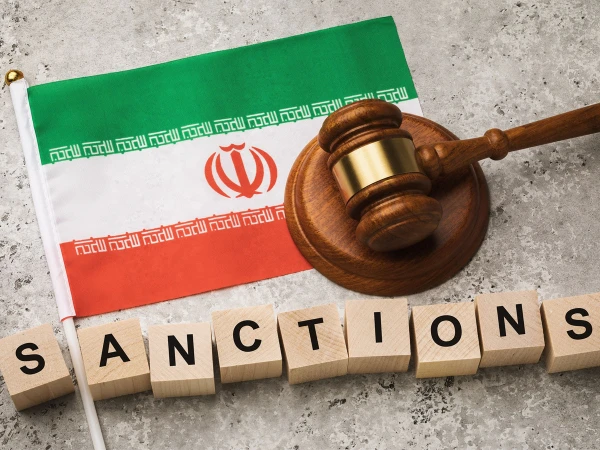
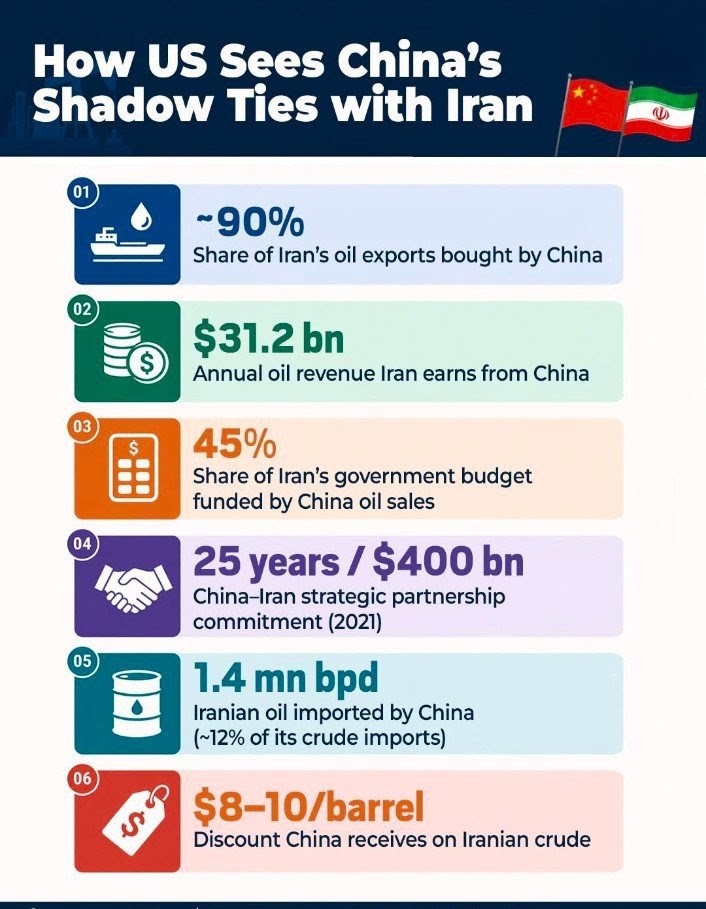
WASHINGTON: The United States may find it difficult to economically isolate Iran completely unless China cooperates with Washington, according to a New York Times analysis, which highlights Beijing’s growing role in Iran’s oil exports and trade.

China is Iran’s largest trading partner and a major buyer of its crude oil, giving Beijing considerable influence over the effectiveness of any US campaign aimed at cutting Tehran’s access to international revenue.
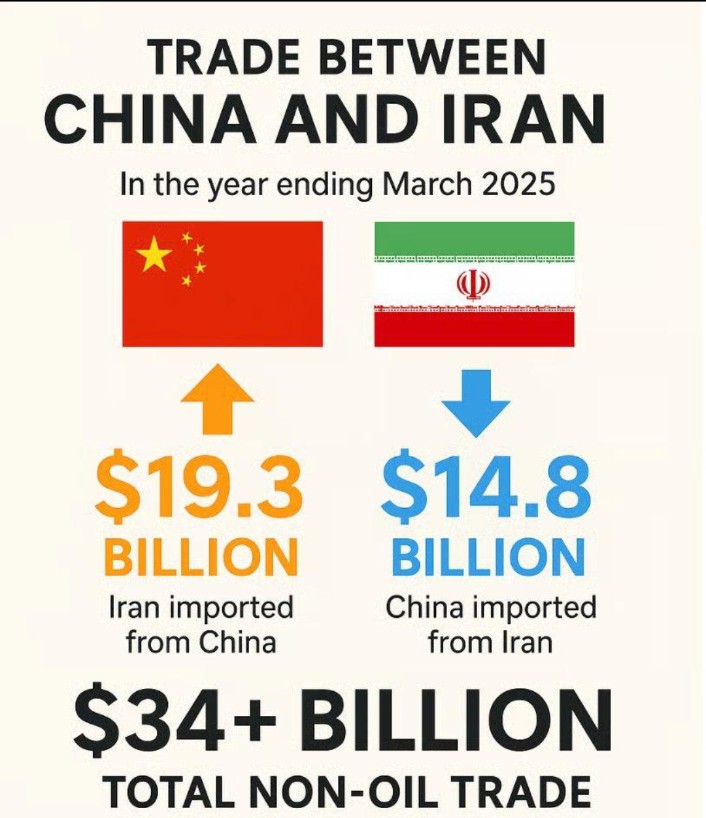
According to figures cited in the analysis, China and Iran conducted around $41.2 billion in trade in 2025, while Chinese buyers imported approximately $31.2bn worth of Iranian crude during the same year. At times, Chinese customers have accounted for as much as 90 per cent of Iran’s total oil exports.
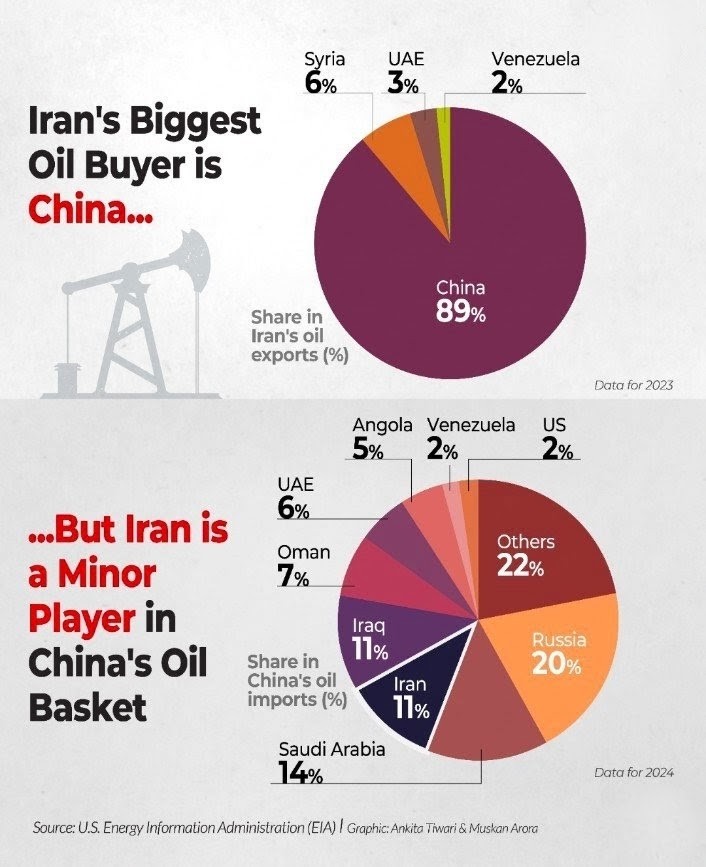
That dependence creates a significant challenge for Washington. The United States can impose sanctions on Iranian banks, companies, oil traders and vessels, but cutting off those channels may not be enough if Chinese businesses continue buying Iranian crude.

A particularly important role is played by China’s small independent refineries, commonly known as “teapots”. These private operators have relatively limited exposure to the global financial system, potentially making them less vulnerable to traditional US sanctions.
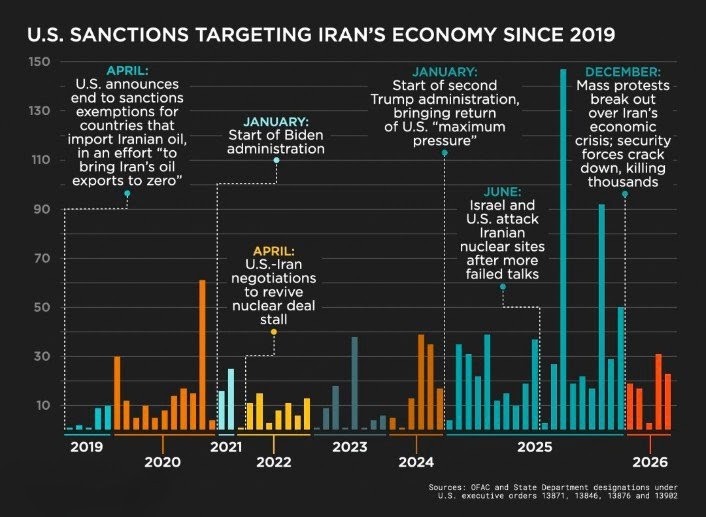
The arrangement has allowed Iran to maintain an important source of revenue despite years of American restrictions. Continued Chinese purchases could therefore provide Tehran with the financial breathing room needed to withstand additional economic pressure.

But Beijing has its own economic leverage over Washington.

The New York Times analysis noted that China could potentially restrict exports of critical minerals needed by American technology and defence industries. Beijing has previously used restrictions on strategic minerals during periods of trade tension with the United States, demonstrating the potential economic cost of confrontation.
That creates a difficult calculation for Washington. Increasing pressure on Iran could put the United States in a position where it also has to confront China, potentially widening an already complicated economic rivalry.

The geopolitical equation is further complicated by developments in the Middle East. The analysis pointed to US military activity in the region and the movement of some American military assets from the Pacific. Chinese observers have interpreted such moves as potentially creating vulnerabilities in America’s strategic position in Asia.

For Washington, the central question is therefore not simply how many sanctions can be imposed on Tehran. It is whether those measures can succeed while Iran retains access to one of its most important economic partners.

If China continues purchasing Iranian oil and maintaining commercial ties with Tehran, Iran is unlikely to become completely isolated economically.

The analysis suggests that Beijing’s decisions could ultimately determine how far the US pressure campaign can go — and whether Washington can tighten the economic screws on Tehran without opening another front in its increasingly complex relationship with China.
Similar Posts

  • |

    China rejects Pakistan’s waiver request

    Chinese lenders and Independent Power Producers (IPPs) have turned down Pakistan’s request to write off nearly Rs 170 billion in late-payment surcharges. The refusal highlights the growing friction between the two long-standing allies as Pakistan struggles to navigate a staggering power-sector circular debt that continues to drag down its broader economy. The unpaid dues owed to 18 Chinese-backed power generation projects established under the CPEC have now increased to approximately Rs 423 billion. The financial bottleneck stems from a combination of structural inefficiencies within Pakistan’s domestic energy distribution network and systemic delays in clearing operational invoices. Under the original 2015 CPEC Energy Framework Agreement, Pakistan was legally obligated to ensure full and timely payments to power producers, backed by a designated revolving fund to cushion investors against domestic liquidity shortfalls. As payment deadlines were repeatedly missed over recent years due to severe foreign exchange constraints, contractual interest penalties accumulated to the tune of Rs 170 billion. While local power suppliers previously accepted debt-restructuring deals and fee write-offs to ease the burden on state coffers, Chinese energy firms have maintained a strict stance, citing global precedent and financial commitments to their own institutional lenders. This refusal creates an immediate impasse for Pakistan’s Ministry of Energy and financial regulators. The federal government had structured a massive Rs 1.225 trillion banking facility intended to retire the country’s broader circular debt stock. However, disbursement terms mandated that power producers accept renegotiated terms or offer discounts on late-payment fees before receiving principal clearances. Because the Chinese IPPs declined to waive the surcharges or offer similar concessions, billions in funds remain locked, leaving power plant operators facing severe liquidity squeezes that threaten regular fuel procurement and plant operation. Total Outstanding Dues: Rs 423 Billion. Requested Surcharge Waiver (Rejected): Rs 170 Billion. Principal Energy Cost Owed: Rs 253+ Billion. Pakistani negotiators are exploring alternative financial maneuvers to manage the expensive debt burden. Seeking low-interest bilateral funding including potential long-term loan packages in the range of $6 billion to $10 billion from partner nations like Saudi Arabia to retire high-cost Chinese energy loans. Requesting cabinet approval for extensions on expiring domestic banking facilities to prevent immediate default claims. Balancing the debt burden through structured tariff pass-throughs, though consumer capacity to absorb higher electricity prices remains extremely strained. The dispute underscores a delicate transition in the CPEC bilateral relationship. While both nations remain deeply committed to long-term strategic partnership and Phase-Two infrastructure development, commercial reality is setting a firmer baseline. Moving forward, resolving the sovereign debt backlog will require transparent structural reforms within Pakistan’s power distribution setup rather than relying on debt waivers from foreign investors.  

  • |

    Indian activist Sonam Wangchuk ends 26-day hunger strike

    Indian environmentalist and social activist Sonam Wangchuk has ended his 26-day hunger strike after holding discussions over the ongoing nationwide protests against alleged examination paper leaks. However, demonstrations demanding the resignation of Education Minister Dharmendra Pradhan are continuing across India. Wangchuk announced his decision through a post on social media, saying he ended the fast after lengthy negotiations and concerns that the situation could lead to further violence. He said he would soon explain the conditions that led to his decision in a separate video message. The 59-year-old activist had been fasting since June 28 in support of a youth-led protest movement that accuses the government of failing to prevent repeated examination paper leaks. Protesters have demanded the resignation of the education minister after alleged leaks in medical college entrance examinations forced millions of students to retake the tests. Shortly before Wangchuk’s announcement, Prime Minister Narendra Modi addressed the nation and pledged stronger legal action against those responsible for examination fraud. He described the paper leak scandal as a serious issue affecting the future of hundreds of thousands of students and said the government would introduce tougher legislation to combat such crimes. Modi also announced plans to speed up court proceedings against those involved in examination fraud, adding that the issue would be discussed by the federal cabinet. While outlining the government’s response, he did not comment on demands for the education minister’s resignation. Despite Wangchuk ending his fast, thousands of protesters continue to gather at New Delhi’s Jantar Mantar and in several other cities. Demonstrators say they will maintain their peaceful campaign until the education minister steps down and comprehensive reforms are introduced to restore transparency and fairness in India’s examination system. The protests have become one of the biggest public challenges faced by Prime Minister Modi’s government since beginning its third term. Tensions have risen in recent days after clashes between police and protesters. Security forces used tear gas and batons to stop demonstrators attempting to march towards parliament, leading to widespread criticism from rights organisations over the handling of the protests.

  • |

    The dual catalyst of changing climate and human

    France is confronting unprecedented environmental devastation as wildfires swept across the nation’s forests and countryside. The fire burned over 300,000 acres. A level of destruction not witnessed in the country since the aftermath of the Second World War. The communities assess ruined homes, scorched ecosystems and degraded air quality. The French public and authorities are left with an urgent question: what is driving these catastrophic blazes? A Perfect Storm of Climate Conditions At the root of the crisis is a changing global climate driven by greenhouse gas emissions. Rising regional temperatures, combined with prolonged dry spells, have transformed expansive tracts of woodland into dry tinderbox environments. In these prolonged heatwaves, humidity drops sharply, rendering vegetation prone to rapid ignition. Under such extreme drought, even a minor spark can ignite an uncontrollable inferno within minutes. Environmental scientists emphasize that while climate conditions establish the background vulnerability, they do not act alone. Heat and drought create the ideal environment for fires to spread, but the vast majority require an initial ignition source. The Human Factor: Negligence, Accidents and Arson Official records in France reveal a shocking pattern. Approximately nine out of every ten wildfires originate from human activity.  Public concern often focuses on intentional acts of arson. However, investigators note that deliberate fire-setting accounts for only a fraction of total blazes. The overwhelming majority stem from everyday human negligence or accidents. Common accidental triggers include: Discarded Cigarettes: Unextinguished butts tossed from vehicles or thrown onto dry brush. Fire investigators refer to the rule of 30 conditions where ambient temperatures exceed 30°C (86°F), humidity drops below 30%, wind speeds stay below 30 km/h. A remaining cigarette segment retains at least 30% of its length. Under severe drought, these thresholds lower drastically, making ignition almost immediate. Infrastructure and Equipment: Sparks generated by heavy machinery, ongoing construction projects, or faulty electrical equipment operating near dry grass. Recreational Fires: Unattended outdoor barbecues and small campfires in or around forested boundaries. In response to the scale of destruction, the French Interior Ministry has taken aggressive legal action, detaining over 400 individuals suspected of initiating blazes either through reckless behavior or intentional acts. Among those apprehended are scores of minors, as well as individuals facing immediate judicial sentencing for setting fires in protected woodland zones. Mental health professionals and legal experts point out that intentional fire-starters typically fall into distinct categories, including careless individuals, opportunistic actors seeking financial gain (such as insurance payouts), pyromaniacs, or individuals seeking recognition during emergency responses. Looking Ahead: Reconstruction and Forest Adaptation The unprecedented severity of the blazes has sparked intense public debate over state readiness and resource allocation. Critics question whether preventive measures and response mechanisms were adequate for a summer marked by continuous heatwaves. Addressing the national crisis, French President Emmanuel Macron emphasized the necessity of adapting national forestry policy to match evolving climate realities. Rebuilding efforts will require replanting woodlands with more fire-resistant tree species rather than simply restoring vulnerable pine monocultures. As emergency crews continue to monitor remaining hotspots and brace for subsequent heatwaves, France faces a long-term strategy shift: balancing immediate enforcement against negligence with broad ecological adaptation.

  • | |

    Jamaat-e-Islami protest enters second day

    Jamaat-e-Islami Karachi chief Munim Zafar Khan has called for an immediate reduction in petrol prices, saying the government must end what he described as excessive petroleum levies that are placing an unfair financial burden on the public. Speaking to Geo News, Zafar said the Jamaat-e-Islami’s sit-in outside the Governor House in Karachi had entered its second day. He said the protesters had presented clear demands and would continue their demonstration until the government addressed their concerns. According to Zafar, a large number of women will join the protest at 3pm today, adding further momentum to the demonstration. He said the party plans to maintain pressure on the government over rising fuel prices, electricity bills and other issues affecting ordinary citizens. The JI Karachi chief also demanded a forensic audit of Independent Power Producers (IPPs), arguing that the government should investigate power-sector agreements and costs to identify areas where consumers may be facing unnecessary financial pressure. Zafar said controlling inflation should remain the government’s top priority, as rising prices continue to affect household budgets across the country. He maintained that the public should not have to bear what he termed excessive charges and levies. He further said Jamaat-e-Islami had launched sit-ins in all four provinces and would continue its protests until the government accepted its demands. The ongoing Karachi demonstration focuses on petroleum levies, electricity bills and broader public concerns. The party has vowed to continue the sit-in at the Governor House as part of its campaign for relief from rising living costs.

  • | | |

    Militant facilitator Mufti Zafaryab arrested

    Authorities have arrested self-styled cleric Mufti Zafaryab for allegedly facilitating the banned militant group referred to by the Pakistani government as Fitna al-Khawarij. According to an official statement, the suspect said he completed an eight-year Dars-e-Nizami course at Jamia Nizam-ul-Uloom, Yateem Khana, Bannu, and later completed a three-year specialization in Islamic jurisprudence (Takhassus fi al-Fiqh) at Al-Markaz Al-Islami, Ghoriwala. In a recorded statement, Zafaryab admitted that he had been in contact with militant commander Hikmat Roshan. He said state institutions were aware of his links, which ultimately led to his arrest. The suspect alleged that the militant commander sought religious rulings from him to justify extortion carried out in the name of jihad. He further claimed that he, along with several others, had been offered positions and financial incentives by the group. Expressing remorse, Zafaryab said he regretted his actions and stated that the group has no connection with Islam. He described its activities and ideology as un-Islamic and contrary to Sharia. He also said the militant group promotes extremist beliefs and considers the killing of Muslims to be permissible, rejecting its ideology and distancing himself from its actions. The arrest comes as security forces continue counterterrorism operations against militant groups across the country.

  • |

    Galle Gallants go top with 60-run win over Jaffna …

    Sahan Arachchige’s fifty, backed by a resounding bowling effort, powered Galle Gallants to a 60-run victory over Jaffna Kings in the 10th fixture of the Lanka Premier League 2026 at the Rangiri Dambulla International Stadium on Thursday. Set a daunting 194, Kings were bowled out for 133 in 17.5 overs. Tharindu Ratnayake tore through Jaffna Kings’ batting lineup, leaving them at 50-5 at the end of the powerplay. Kamil Mishara scored 15 while Avishka Fernando managed only six. Seasoned batter Shakib Al Hasan was castled without scoring, while Ibrahim Zadran made 11 before holding out to deep square leg. David Wiese and Dunith Wellalage tried to arrest the slide with a 39-run stand, but Wiese departed after scoring 27 from 20 balls. Kings slipped from 89-6 to 99-8 in 12.3 overs. Wellalage resisted with a half-century and eventually emerged as the top scorer with 56 off 39 balls, hitting four fours and sixes. For Gallants, Eshan Malinga and Tharindu Ratnayake remained impressive with the ball, both picking up three wickets. Earlier, Arachchige’s gutsy half-century and Mohammad Nawaz’s cameo propelled Galle Gallants to a strong total. Asked to bat first, Gallants racked up 193-8 in 20 overs despite a jittery start. They slipped to 16-2 and then 86-5 at the halfway mark. Chris Lynn remained the bright spot in the top order, scoring 46 off 22 balls, including four sixes and three fours. With the side in dire trouble at 110-6 in 14.1 overs, Nawaz and Arachchige added 68 off just 30 balls to put Gallants into a strong position. Arachchige hit 63 from 36 balls, including three sixes and four fours, while Nawaz contributed 27 from 16 deliveries, with the aid of two sixes and two fours. Lizaad Williams and Dilshan Madushanka shared four wickets between them. Earlier in the day, Colombo Kaps secured a 23-run win over Kandy Royals in the ninth match played at the same venue. Set 193, Kandy Royals fell short and could only manage 169-8 in 20 overs. Skipper Angelo Mathews top-scored with 53 off 39 balls, but his efforts were not enough to overcome Kaps’ total. The results have shaken up the LPL standings, with Galle Gallants moving to the top of the table. The tournament continues to provide thrilling cricketing action, with teams battling for supremacy in the competitive league. Fans are eagerly anticipating the upcoming fixtures as the race for the playoffs intensifies. The win for Galle Gallants highlights their strong form and depth in both batting and bowling, making them a formidable side in the competition. As the LPL progresses, the performances of players like Arachchige and Ratnayake will be crucial for their team’s success. The league has showcased the talent of Sri Lankan and international players, contributing to the growth of cricket in the region.

Leave a Reply

Your email address will not be published. Required fields are marked *