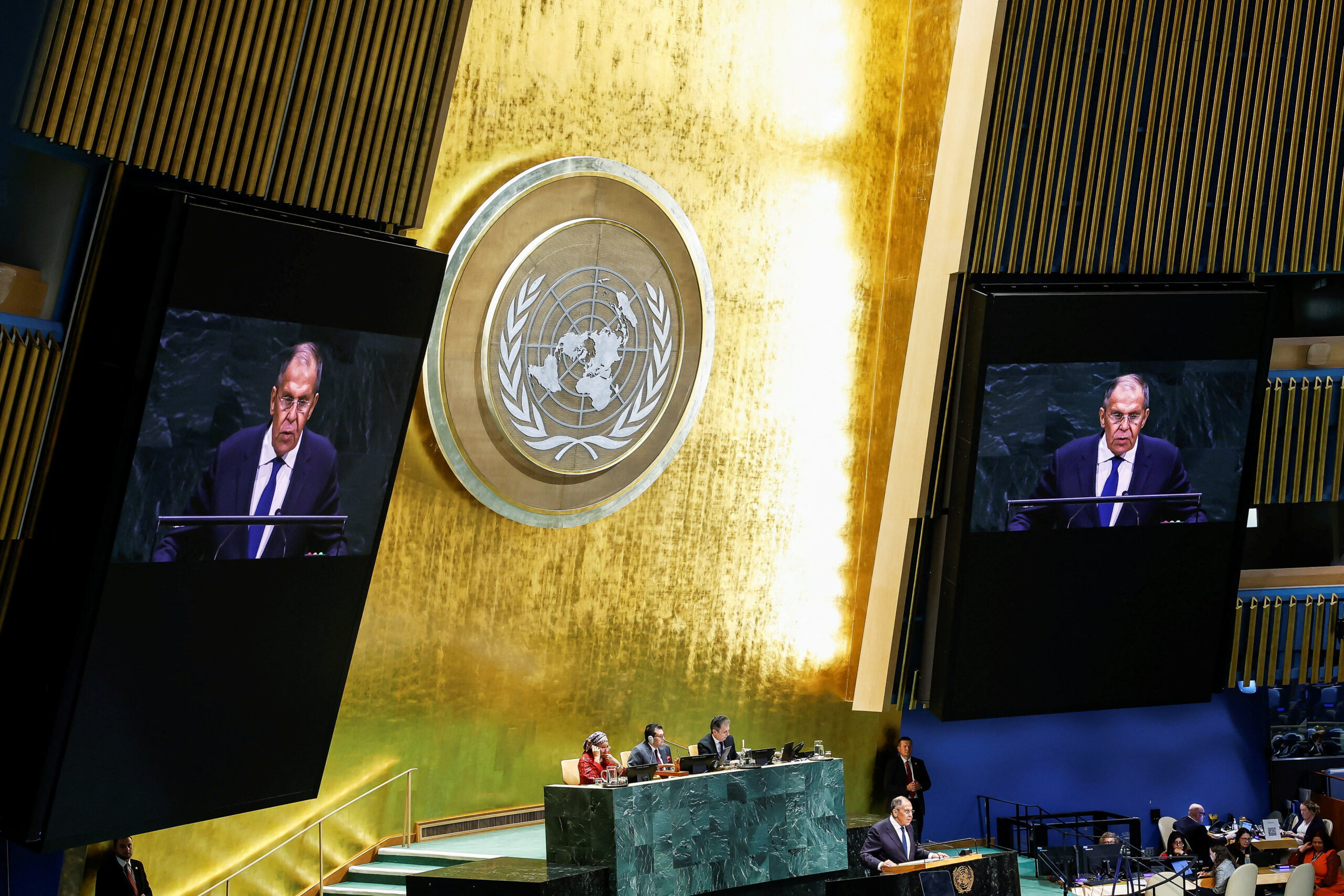
admission orbital weapons
|

US admission of orbital weapons seen as landmark moment in race with China, Russia

The US acknowledgment this week that the Pentagon is operating weapons in Earth’s orbit marks a landmark moment in space militarization aimed at deterring what US officials describe as aggressive orbital activities from China and Russia, officials and analysts said.

US Space Force chief Douglas Schiess said on Tuesday, September 15, that enlisted members of his military branch “operate on-orbit weapons that can defend the Joint Force against space-enabled attacks.” The service will make “disciplined and responsible choices” as it scales its orbital defense arsenal in the coming years, he added.

Schiess’ remarks at a conference near Washington came a day after US Air Force Secretary Troy Meink said the US “has on-orbit space control weapons capable of defending the Joint Force against hostile adversary action.” That was the clearest admission yet by a Pentagon official of US weapons in orbit amid rising space tensions with Russia and China.

The remarks this week by Washington’s top military-space officials are part of “the increasing comfort level of the US government to speak about aggressive actions in space” that has been building up in recent years, said Victoria Samson, chief director of space security and stability at the nonprofit Secure World Foundation.

“We’ve gone from not talking about counter-space capabilities…to now saying flat-out we have weapons in space,” Samson said. “The pendulum keeps on shifting over that way.”

Schiess and Meink declined to say what types of weapons they were referring to when they spoke to reporters after their remarks.

Responding to the US admission of orbital weapons, China’s Foreign Ministry spokesperson Guo Jiakun said on X that Beijing “stands for peaceful use of the outer space and keeping it safe, and opposes any arms race in outer space or any attempt to weaponize it and turn it into a warzone.”

Russia’s Foreign Ministry said the acknowledgement that Washington had deployed orbital weapons ignored the possible consequences of a conflict and threatened long-term stability in space-based activity.

Conflicts could extend into space

The US, China, and Russia — the world’s top three space powers — have raced for years to build and deploy an array of satellite networks and maneuverable spacecraft bearing capabilities that could be used to attack or tamper with other spacecraft.

But as military norms, strategic precedent and laws of war in the relatively unfamiliar battleground of space remain underdeveloped, no nation is known to have taken the more consequential step of physically attacking another’s satellite in space.

Still, the US remarks underscore how quickly developments in spacecraft technologies have escalated into increasingly open preparations for the prospect of conflict extending into space, while battles from Ukraine to the Middle East prove how indispensable satellites have become in supporting modern warfare on Earth.

“The acknowledgment of these space-control capabilities is fundamental to ensuring that we prevent deterrence from failing, and that we are postured and ready should deterrence fail to employ them effectively,” Richard Palmer, the director of the Capability and Resource Integration Directorate at US Space Command, said on Tuesday.

Speaking at a space defence conference hosted by consulting firm Novaspace in Paris, Palmer added that there were “some actors across the globe who are very much interested in undermining the collective interests of the countries and allies gathered here in this audience and across Europe and the rest of the world.” He declined to discuss the nature or capability of those weapons.

“The bottom line is that our joint force and our allied forces require space. Our economies require space,” added Palmer. “We are ready in the US to preserve that.”

Preparing for war in space

For decades, satellites have provided communications, navigation and intelligence services to armed forces on Earth, and once placed in orbit typically remained on fixed paths.

Increasingly, however, militaries view them as active weapons platforms capable of launching attacks by disrupting a satellite’s operations through signal jamming, using lasers to blind sensors, or even capturing enemy spacecraft.

China in 2022 demonstrated it can command a satellite to grapple onto another spacecraft and move it in orbit.

The US recently conducted its largest orbital exercise, called Apollo Maneuvers, designed to demonstrate dynamic space operations. It involved satellites in multiple orbits simultaneously plus participation from international and commercial partners.

Despite the intensifying demonstrations, US officials still have not openly discussed the specific weapons themselves, leaving room for assumptions and interpretations that will shape how US adversaries respond and risk accelerating an arms race in space, said Craig Albert, graduate director of the Master of Arts in Intelligence and Security Studies at Augusta University.

“In the absence of complete information, competitors may assume the systems threaten their own space assets and invest in counterspace capabilities or comparable weapons,” Albert said.

The head of US Space Command has warned that adversaries are developing capabilities to deny the United States access to key systems and reduce military effectiveness, and that adversaries would likely seek to target US space assets early in a conflict.

Some other countries are also looking to develop counter-space weapons. That includes Germany, which has a €35-billion ($40-billion) military space spending plan aimed at countering growing threats from adversaries. – Rappler.com
Similar Posts

  • |

    Eight Palestinians killed in fresh Gaza strikes

    At least eight Palestinians were killed in fresh Israeli airstrikes across the Gaza Strip on Sunday, according to Gaza’s civil defence authorities, as violence continued despite renewed diplomatic efforts aimed at restoring a ceasefire. Officials said the latest strikes targeted several locations across the enclave, including Deir el-Balah, Khan Younis and Gaza City. Among the victims were a man and a woman who were killed when an Israeli helicopter struck a residential apartment in southern Deir el-Balah. Additional attacks claimed the lives of three people in Khan Younis and another person in Gaza City’s Old City. The latest escalation came just days after the United States unveiled a new roadmap intended to revive the stalled Gaza ceasefire agreement. The proposed plan reportedly includes steps toward Hamas’ disarmament and a phased Israeli military withdrawal from the territory. However, both sides remain divided over the conditions for implementing the proposal. Hamas has maintained that it will only place its weapons under supervision after Israeli military operations end and troops withdraw in accordance with the previously agreed ceasefire framework. Israeli officials, meanwhile, have insisted that any withdrawal depends on what they describe as the complete and genuine disarmament of Hamas. Israeli Prime Minister Benjamin Netanyahu has not publicly commented on the latest proposal, while some members of his coalition have rejected the initiative and called for continued military operations against Hamas. Diplomatic contacts are continuing in an effort to reduce tensions and revive negotiations. Former Palestinian official Mohammed Dahlan said discussions involving senior US representatives were ongoing and focused on securing an end to the fighting, although no breakthrough has yet been announced. Meanwhile, another Israeli strike reportedly destroyed a medical supply warehouse in central Gaza, causing extensive damage and raising further concerns over the humanitarian situation.

  • |

    Iran cautions US against military action during regional diplomatic calls

    Iran has warned that it will respond firmly to any future military action by the United States, with Foreign Minister Abbas Araghchi delivering the message during separate conversations with senior officials from Pakistan, Turkiye and Saudi Arabia. The diplomatic outreach comes as tensions in the region remain high amid growing speculation about possible American military action against Iran. According to statements released through Iran’s Foreign Ministry, Araghchi held separate telephone discussions with Turkish Foreign Minister Hakan Fidan, Saudi Foreign Minister Prince Faisal bin Farhan Al Saud and Pakistan’s Field Marshal Asim Munir. During the conversations, he stressed that Iran would react decisively to what he described as any new act of aggression by the United States or its allies. He said Tehran would respond proportionately to any attack targeting the country’s territory or critical infrastructure. In his discussion with Turkish Foreign Minister Hakan Fidan, both sides reviewed the latest developments in regional diplomacy and ongoing negotiations related to the current crisis. Fidan later confirmed the conversation on social media, saying the two officials exchanged views on recent diplomatic efforts and the evolving regional situation. Araghchi also used his conversation with Saudi Foreign Minister Prince Faisal bin Farhan to repeat Iran’s warning that any military action by the United States, Israel or other regional actors would receive a strong and direct response. Iranian officials have consistently maintained that the country’s defence policy is based on responding to attacks with equal force rather than initiating conflict. Last week, Araghchi reinforced this position through a social media post, describing Iran’s defence strategy as an “eye for an eye” approach. He said any strike against Iranian infrastructure would be met with a comparable response, signalling that Tehran remains prepared to retaliate if its security is threatened. The latest statements come as reports continue to circulate about possible military planning in Washington. Michael Doran, a former senior official on Middle East affairs at the US National Security Council, said President Donald Trump is reportedly close to deciding whether to authorise a large scale military operation against Iran. Citing an Israeli official quoted by Israel’s Kan 12 television channel, Doran said the US military has reached its highest state of readiness, although no final decision has been made. Neither the White House nor the Pentagon has publicly confirmed the reports. However, the speculation has added to concerns that the already fragile security situation in the Middle East could worsen if diplomatic efforts fail. Regional governments have been closely monitoring developments, with many countries urging restraint and encouraging dialogue to prevent a wider conflict. Analysts say continued communication between Iran and neighbouring states reflects growing efforts to avoid further escalation while preparing for the possibility of increased military tensions. Iran has repeatedly said it prefers diplomacy but insists it will defend its territory and national interests if attacked. As uncertainty continues over Washington’s next move, the exchange of warnings and diplomatic contacts highlights the delicate balance facing the region, where any military confrontation could have far reaching consequences beyond Iran and the United States. Focused keyword:

  • | |

    Pentagon faces shortage of missile defense interceptors

    The US Department of Defense is facing a growing shortage of missile defense interceptors after months of sustained military operations in the Middle East, raising concerns among American defense planners about the Pentagon’s ability to maintain its current pace of operations and protect US forces in the event of another major conflict. According to a report by Fox News, data compiled by the Center for Strategic and International Studies (CSIS) indicates that US stocks of Patriot air defense interceptors have fallen sharply. Before the recent escalation in regional conflicts, the United States reportedly held around 2,300 Patriot interceptors. That figure has now dropped to fewer than 827. The Pentagon has also seen a significant reduction in its stockpile of interceptors used by the Terminal High Altitude Area Defense (THAAD) system. CSIS data cited in the report shows that the number of THAAD interceptors has declined from approximately 452 to fewer than 278. The decline in these critical missile defense stocks has prompted questions about the US military’s ability to respond to multiple threats at the same time. Defense planners are particularly concerned about the possibility of a new crisis emerging in another strategic region, such as the Indo-Pacific, while American forces remain engaged in the Middle East. CSIS has warned that rebuilding depleted interceptor inventories could take at least three years. The lengthy replenishment timeline reflects the difficulty of rapidly expanding production of sophisticated missile defense systems, which require specialized components, advanced manufacturing capabilities and extensive testing. The shortage could create additional pressure on US military leaders as they balance the need to defend American troops and military installations overseas with the requirement to maintain sufficient reserves for future conflicts. To address the growing gap, the Pentagon has included $18.2 billion in its broader $67 billion emergency funding request for fiscal year 2026. The proposed funds would support the replenishment of Patriot interceptors, Tomahawk cruise missiles used by the US Navy and additional interceptors for the THAAD missile defense system. The Pentagon’s spending plans also highlight a broader effort to rebuild weapons inventories that have come under pressure from sustained military operations and rising global security demands. US defense officials have increasingly focused on expanding domestic production capacity and ensuring that the military can replace weapons at a faster rate. According to the report, nearly half of the weapons included in the Army’s preliminary fiscal year 2027 budget requests fall into the relatively lower-cost category, with each weapon costing $600,000 or less. The approach reflects efforts to strengthen stockpiles of systems that the military can procure in larger quantities while continuing to invest in more advanced and expensive defense technologies. The interceptor shortage underscores a wider challenge for the United States as it seeks to prepare for potential conflicts on multiple fronts. While missile defense remains a key component of US military strategy, the depletion of interceptor stocks could limit Washington’s flexibility if it faces simultaneous threats in the Middle East, Europe or the Indo-Pacific. Defense analysts say the issue also highlights the importance of maintaining adequate reserves during prolonged conflicts. Replenishing stocks may take years, meaning decisions about the use of missile defense interceptors could become increasingly important as the Pentagon seeks to protect US personnel and strategic assets while preserving its ability to respond to future crises.

  • | |

    Iranian photojournalist Yalda Moayeri sentenced to…

    An Iranian court has reportedly sentenced prominent photojournalist Yalda Moayeri to 15 years in prison in absentia, in a case involving allegations of activities against Iran and working in the interests of Israel and the United States. According to reports, the case was brought under an Iranian espionage-related law introduced in 2025. The allegations reportedly include giving interviews to foreign media outlets and providing photographs to organizations allegedly connected with the United States and Israel. Authorities also accused Moayeri of using her journalistic work and material published online to advance what they described as the interests of Israel and the United States. However, Reuters reportedly noted that the contents of the court documents could not be independently verified. The court handed down the 15-year sentence while Moayeri was not present at the proceedings. She has reportedly been given 10 days to appeal the decision. In addition to the prison sentence, the court ordered the confiscation of her cameras, mobile phones and other electronic equipment. The ruling also reportedly restricts her from participating in cultural and media activities, holding public office and posting on social media. Moayeri has disputed the circumstances of the proceedings. She said she was unable to attend the trial because she had not received formal notification about the hearing. According to her account, when she went to Tehran’s Revolutionary Court, she was not given complete case documents, while a colleague had to copy details of the charges by hand. The photojournalist also said Iranian security forces raided her Tehran home in February and confiscated her mobile phone, laptop, cameras and other equipment. A press freedom organization reported that personnel affiliated with the Islamic Revolutionary Guard Corps searched her home on February 3 and seized electronic devices. Moayeri has previously faced legal action in Iran because of her journalistic work. She was arrested in September 2022 while covering nationwide protests that followed the death of Mahsa Amini in police custody. Her arrest occurred during the protests that became associated with the “Woman, Life, Freedom” movement. She was released on bail in December 2022. She has continued documenting political developments and protests in Iran. In early 2026, her photographs from protests were published by the French newspaper Le Monde, while reports indicated that authorities subsequently searched her home and continued legal proceedings against her. The latest sentence has drawn attention because of its potential implications for press freedom and the ability of journalists to document events in Iran. The case remains subject to appeal, while independent verification of the Iranian court’s allegations remains limited.

Leave a Reply

Your email address will not be published. Required fields are marked *