rappler recap ends
| | |

Rappler Recap: PH ends ASEAN chairship with gains, but Myanmar and COC unresolved

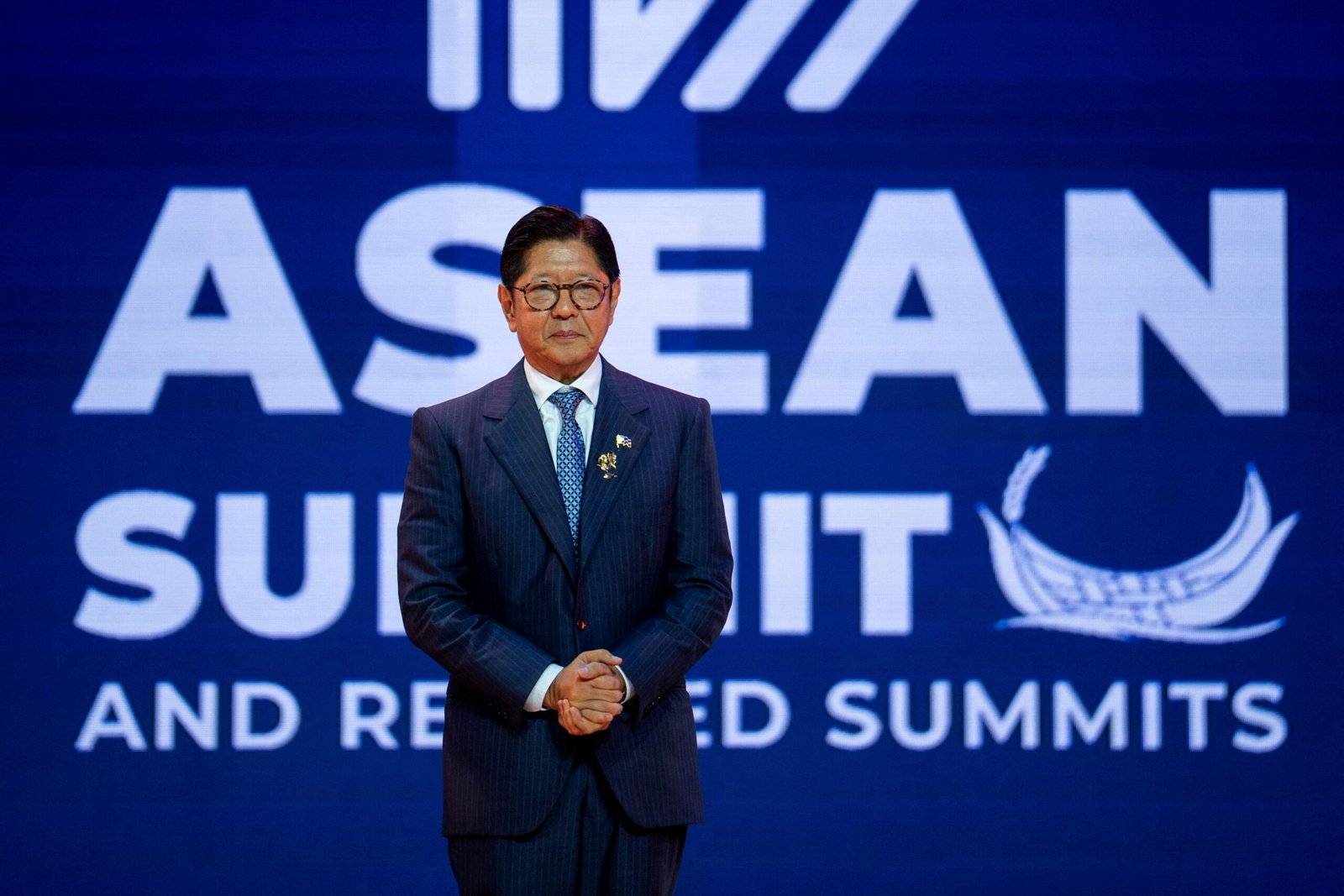
MANILA, Philippines – The Philippines’ turn to lead the Association of Southeast Asian Nations ends as the 49th ASEAN Summit and Related Summits officially closes.

President Ferdinand Marcos Jr. has some new landmark agreements to tout, but the Myanmar crisis and the proposed Code of Conduct or COC in the South China Sea remain unresolved.

Rappler’s Lance Spencer Yu takes you through the final day of the summit. – Rappler.com

Similar Posts

  • |

    China introduces brain-controlled robot technology

    Several countries are actively developing Brain-Computer Interface (BCI) technology which enables people to interact with devices using only their thoughts without the need for physical movement. Now, a Chinese company is working to integrate this technology into robots. According to BrainCo, the company has developed the world’s first brain-to-robot interface system allowing robots to be controlled directly through human thought. The company said the system works using EEG headsets which are worn by human operators. These headsets monitor brain activity and translate it into commands that are sent to the robot. Like other BCI technologies, the system relies on extensive training data that maps specific patterns of brain activity to corresponding actions. Artificial intelligence (AI) algorithms are then used to accurately interpret a person’s intended action and convert it into the correct robotic response. The technology called the Brain-Controlled Robot AI Platform was unveiled at the World Artificial Intelligence Conference in Shanghai. BrainCo said the system can be used not only to control robots but also to operate robotic arms and other connected devices. The platform continuously collects data which is used to further improve its AI algorithms and enhance performance over time. According to the company, rapid advances in AI have enabled robots to perform many tasks independently. However, it believes the next major challenge is ensuring that robots can effectively understand and collaborate with the humans working alongside them.

  • | | |

    Iran says Pakistan ties gaining greater importance

    TEHRAN: Iran has described its relationship with Pakistan as increasingly important, saying Islamabad has played a significant role as a mediator since the outbreak of the regional conflict. Iranian Foreign Ministry spokesperson Esmaeil Baghaei said the two neighbouring countries were maintaining close diplomatic contacts. He also confirmed that Iranian Foreign Minister Abbas Araghchi and Parliament Speaker Mohammad Bagher Ghalibaf had been invited to visit Islamabad. Baghaei said the two officials would travel to Pakistan at a suitable time. He did not announce a specific date for the visit. He described reciprocal visits between the two countries as a natural part of their growing bilateral relationship. The Iranian official also played down concerns that the recently signed defence agreement between Pakistan, Saudi Arabia and Turkiye was aimed at Tehran. Pakistan, Saudi Arabia and Turkiye signed the Makkah Joint Defence Agreement on August 7. The agreement seeks to strengthen collective defence cooperation and provides for a joint response if any member comes under attack. Baghaei said Tehran did not consider the agreement a direct threat to Iran. He said regional countries were increasingly seeking security arrangements based on their own regional realities rather than relying entirely on external powers. He maintained that regional cooperation could contribute to stability if such arrangements remained inclusive and focused on preventing conflict. Baghaei also said Iran was not prepared to resume direct negotiations with the United States while Tehran believed Washington was violating an interim agreement. The Iranian government has also linked the reopening of the Strait of Hormuz to a number of demands. These include compensation for damage caused during the conflict and an end to the US naval blockade of Iranian ports. Meanwhile, Iran and Oman are continuing discussions on arrangements for commercial shipping through the Strait of Hormuz. Baghaei said the talks were progressing in a constructive manner. He said the two sides had reached an understanding on a proposed map for shipping traffic and were working on several technical details. According to the Iranian official, the proposed arrangement would establish mechanisms for safer maritime movement. It would also address environmental protection and maritime crimes. He stressed that the discussions with Oman were focused on ensuring safe international shipping and were separate from broader political disputes. Baghaei nevertheless reiterated that Tehran would not allow the full reopening of the strategic waterway unless its conditions concerning Washington were addressed. In a separate development, Iran has appointed former Islamic Revolutionary Guard Corps commander Mohsen Rezaei to a senior position in the Supreme National Security Council. Rezaei has replaced Mohammad Baqer Zolqadr as secretary of the body responsible for coordinating Iran’s security and foreign policy. No official reason was immediately given for the change. It also remains unclear whether the appointment will lead to any major shift in Iran’s security policy. Rezaei, 71, commanded the Revolutionary Guards from 1981 to 1997. He later served for more than two decades as secretary of Iran’s Expediency Discernment Council and also held the position of vice president for economic affairs. Iran’s Supreme National Security Council brings together senior military, intelligence and government officials. It is formally chaired by the president, while the supreme leader retains ultimate authority over major state matters. A separate decree appointed Rezaei as the supreme leader’s representative on the council. Zolqadr was instead named as a political adviser. The developments come as Iran faces heightened regional tensions and continues efforts to manage its relations with neighbouring countries and major international powers.

  • | |

    Hamilton leads Ferrari One-Two in Hungarian grand …

    Lewis Hamilton led teammate Charles Leclerc to a Ferrari one-two in Friday practice at the Hungarian Grand Prix, signaling strong form for the Scuderia at the Hungaroring. Hamilton was 0.148 seconds ahead of Leclerc, with McLaren’s Lando Norris third, 0.499 seconds off the pace, and Red Bull’s Max Verstappen fourth. Ferrari looked in good shape on a track that lends itself to the car’s strong cornering performance. Mercedes, however, appeared to have some work to do, with George Russell in fifth, 0.933 seconds off the pace, and championship leader Kimi Antonelli in 13th. Antonelli did not complete a qualifying simulation lap in the second session after his first attempt was abandoned when Franco Colapinto crashed his Alpine at the last corner, and his second came to grief after an error at the chicane. Antonelli was complaining throughout the session about his car’s balance. Fernando Alonso ended the day 19th fastest in the new Aston Martin, 2.990 seconds off the pace. Team principal Adrian Newey described the first outing for the car, which is new apart from its engine, gearbox, and front suspension, as “promising.” Alonso had a lap nearly 0.4 seconds faster ruled out for track limits at the final corner, but the team made a significant step forward from where they have spent most of the season. Newey said: “Provisional results are promising. It’s only part of the package, so we’ll have some more steps in Zandvoort and then further in Monza and Baku. It’s the first part of our planned upgrade. We’re very short on parts, so we’re being careful with it and trying to learn all about it.” Engine partner Honda is introducing a new engine at the Dutch Grand Prix after the summer break. The day was not all positive for Aston Martin, however, as Alonso’s teammate Lance Stroll spun out of the first session with what initially appeared to be a rear suspension failure. He was unable to take part in the second session because there was not enough time to repair the car. Team representative Pedro de la Rosa confirmed: “It is a suspension failure. We were confident it would not happen in Fernando’s car. That’s why we sent him out. Because of the lack of spares we couldn’t repair his car on time.” Ferrari’s strong performance in practice positions them as the team to beat heading into qualifying, with Hamilton looking comfortable in the car and Leclerc close behind. McLaren and Red Bull will need to find improvements if they are to challenge the Ferraris, while Mercedes face a significant task to unlock pace for qualifying and the race. Aston Martin’s upgrades offer hope for the future, but they remain off the pace of the frontrunners. The Hungaroring, known for its twisty nature, often rewards cars with strong downforce and cornering ability, which played to Ferrari’s strengths. As the weekend progresses, teams will be fine-tuning their setups for qualifying and race day, with the battle for pole position and victory set to be a closely contested affair. The weather conditions could also play a role, with forecasts suggesting the possibility of rain, adding another layer of unpredictability to the Hungarian Grand Prix weekend. Fans are eagerly anticipating the action, with the Hungaroring historically producing exciting races. Ferrari will be looking to convert their practice pace into a strong result, while their rivals will be working hard to close the gap and challenge for the top step of the podium. The stage is set for a thrilling weekend of Formula 1 action in Hungary.

Leave a Reply

Your email address will not be published. Required fields are marked *