woman allegedly killed
|

Woman allegedly killed in Lodhran

Police in Lodhran have registered a case against three people, including the woman’s husband, over the alleged murder of a woman.

According to the victim’s father, his son-in-law allegedly killed his daughter after he refused to provide money for a motorcycle rickshaw. He accused the husband of attacking his daughter following a dispute over the money.

The family reported the incident to police, who registered a case against the husband and two other suspects. Police have launched an investigation and are working to determine the circumstances surrounding the woman’s death.

Police officials said they are making efforts to arrest all three suspects. Further action will follow once investigators establish the facts and gather evidence related to the alleged murder.

Similar Posts

  • Thailand Asks Israeli Envoy To Remind Nationals To Respect Thai Laws

    BANGKOK, Thailand – Thailand has formally requested that the Israeli ambassador to Bangkok remind her nationals that, while the country welcomes tourists and values the income they bring, visitors must respect Thailand’s dignity, honour, culture and laws and cannot simply do whatever they want, Foreign Minister Sihasak Phuangketkeow said on Tuesday following talks with Ambassador […]

  • | |

    52 life-saving drugs clear major approval hurdle

    ISLAMABAD: A federal cabinet subcommittee has approved the prices of 52 newly registered life-saving medicines, including treatments for cancer, diabetes, haemophilia and Parkinson’s disease, in a move aimed at improving access to essential medicines across Pakistan. The meeting was chaired by Finance Minister Senator Muhammad Aurangzeb in Islamabad. The committee reviewed pricing proposals for newly registered medicines and approved the prices for all 52 products. Officials said the approved medicines include several advanced treatments for serious and chronic illnesses. Among them is Keytruda, a modern immunotherapy drug used globally to treat more than 20 types of cancer. Other approved medicines include Nivolumab, Dasatinib, Meropenem and insulin, which are widely used to treat cancer, severe infections and diabetes. The pricing decision will now be sent to the federal cabinet for final approval. Once endorsed, the Drug Regulatory Authority of Pakistan (DRAP) will issue an official price notification, allowing the medicines to be legally marketed and sold in the country. Health Ministry officials said early approval of medicine prices was necessary to address the difficulties faced by patients. Delays in pricing had prevented several newly registered medicines from entering the local market, forcing many patients to rely on unregistered, smuggled or costly imported alternatives. Authorities believe the approval will improve the availability of high-quality medicines and reduce dependence on illegal supply channels. They said the move will also help ensure that patients have access to safe and regulated treatments through authorised healthcare providers. During the meeting, the finance minister stressed the importance of transparency and protecting the public interest in decisions related to medicine pricing. He called for a fair pricing mechanism that balances patient affordability with the availability of essential medicines.

  • | |

    Gaza funeral held for 112 bodies retrieved from ru…

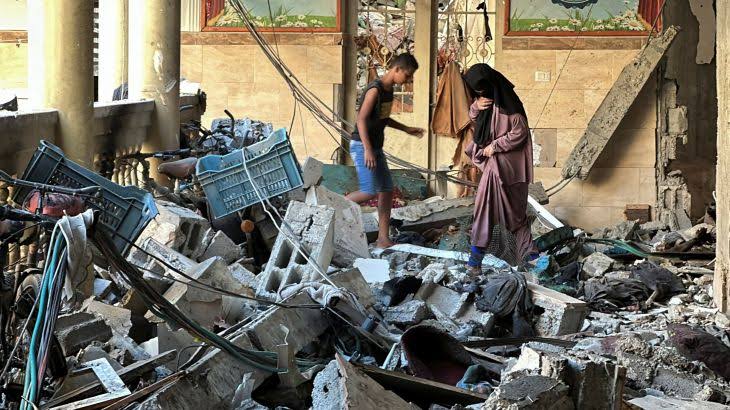
    Palestinians in Gaza held funeral prayers on Tuesday for 112 people whose remains were recovered from the rubble of homes destroyed during the war between Israel and Hamas. Thousands of mourners gathered for the funeral in Gaza City’s Sabra neighborhood, where the bodies, draped in Palestinian flags, were laid out near the ruins of the destroyed homes before the procession began. The victims are set to be buried afterward at the Baptist Cemetery in the Zeitoun neighborhood, south of Gaza City. The dead belonged to the Al Hasayneh and Abu Sharia families, who were killed when their homes were bombed while they were sheltering inside on November 23, 2023. Given the scale of the casualties, the funeral ranks among the largest recorded in Palestinian history. Civil defense teams recovered the bodies from the rubble on Saturday. A Civil Defence statement said the victims included 40 children, 38 women and seven people with disabilities. Civil Defence official Mohammad Abu Dan said search teams have so far been unable to locate 157 additional bodies still believed to be buried under the rubble. More than 73,000 people have been killed and over 174,000 injured in Gaza since the war began in October 2023, according to local health authorities. Despite a ceasefire agreement that took effect on October 10, 2025, Israeli forces have continued carrying out attacks across the territory, killing 1,250 Palestinians and injuring 4,110 others since the truce began, Gaza’s Health Ministry said. Palestinian authorities estimate that around 9,500 people remain missing under the rubble of buildings destroyed across the territory. A day earlier, at least 19 Palestinians were killed by Israeli fire over a 24 hour period, pushing the overall death toll since October 2023 to 73,375, according to the Health Ministry. Officials said the toll included 18 people killed directly by Israeli forces and one person who died from wounds sustained in an earlier attack. The ministry reported that 35 additional injured people were taken to hospitals during the same period, bringing the total number of injuries to 174,220. The ministry said Saturday that 152 people were killed in Gaza during July, the highest monthly death toll recorded since the start of the year, despite the ceasefire that took effect in October 2025. The truce followed nearly two years of war that began on October 8, 2023, and caused widespread destruction across the territory, affecting an estimated 90 percent of civilian infrastructure. The United Nations has put the cost of reconstruction at approximately 70 billion dollars, underscoring the scale of rebuilding that lies ahead even as sporadic violence continues despite the formal end of large scale hostilities.


  • | |

    Imran Khan receives eight books in jail

    PTI founder Imran Khan has been provided with eight books in jail following directions from the Islamabad High Court. A deputy superintendent of the jail said the prison authorities received the eight books from the Islamabad High Court. The court had directed the authorities to provide the books to Imran Khan. The jail administration subsequently handed all eight books over to the PTI founder. However, Khan returned four of the books to the jail authorities. He reportedly told officials that he had already read those books. The remaining books were kept with him after being delivered by the prison administration. The development comes after the Islamabad High Court issued directions regarding access to reading material for the former prime minister. The jail authorities confirmed that the court’s instructions regarding the books had been followed. Officials did not provide further details about the titles of the books that were delivered or returned. The provision of books gives Khan access to additional reading material during his time in prison.

  • | |

    Evergrande founder handed life sentence as court s…

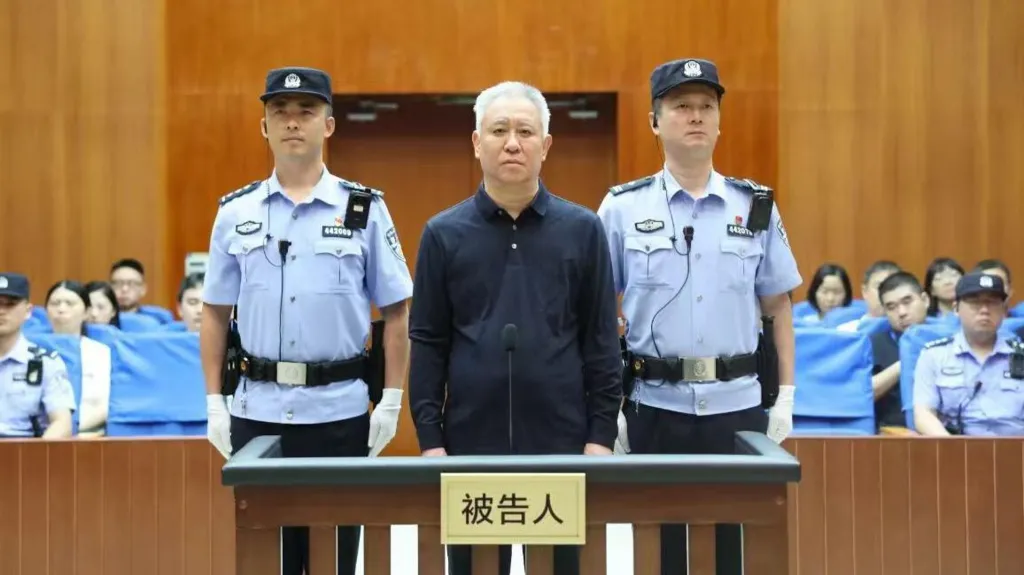
    The founder of Evergrande, the Chinese property giant whose collapse triggered a nationwide housing market crisis, has been sentenced to life in prison and stripped of all personal property. Hui Ka Yan pleaded guilty in April to multiple charges, including embezzling assets and corporate bribery. The Shenzhen Intermediate People’s Court also imposed fines totaling 15.82 billion yuan, roughly £1.73 billion or $2.35 billion, on his former companies over a range of offenses that included falsifying financial records and concealing debt. The sentencing marks a major turning point in the fallout from Evergrande’s collapse, which shook China’s property sector and inflicted heavy losses on investors and domestic banks alike. The court said Hui and his businesses seriously disrupted the Chinese property market, causing significant economic damage. Other former Evergrande executives, including Hui’s two sons Xu Zhijian and Xu Tenghe, received jail terms ranging from 22 months to 18 years, according to Chinese state media. Once ranked as Asia’s richest man, Hui has watched his fortune and influence collapse alongside his company. Also known as Xu Jiayin, he grew up in rural China raised by his grandmother before entering the property industry and founding Evergrande in 1996. He guided the company through a period of rapid expansion fueled by heavy borrowing, eventually building Evergrande into China’s largest real estate developer with a stock market valuation exceeding $50 billion, roughly £36.7 billion. At his peak, Hui held the distinction of being Asia’s wealthiest individual. The company suffered a major setback when Beijing introduced new measures in 2020 aimed at curbing debt across the property sector. As Evergrande struggled to keep up with interest payments, it began selling properties at steep discounts to stay afloat before ultimately collapsing in 2021. Court proceedings in April revealed that the company had taken in millions of dollars in pre sale funds from prospective homebuyers that were never used for the construction they were intended to finance. Instead, that money was redirected toward new development projects, leaving hundreds of housing projects unfinished. In March 2024, Hui was separately fined $6.5 million and banned for life from China’s capital markets after regulators found the company had overstated its revenue by $78 billion. Evergrande’s stock market value shrank by 99 percent before the company’s shares were delisted from the Hong Kong exchange in August 2025, ending more than fifteen years of trading. The company’s implosion is widely seen as a key trigger for the broader downturn in China’s property market that continues to weigh on the country’s economy. At its peak, Evergrande stood as the largest firm in an industry that accounted for roughly a third of China’s gross domestic product, serving as both a major driver of economic growth and a critical revenue source for local governments. The sector’s ongoing troubles have continued to pressure the world’s second largest economy, with several other major developers facing their own financial distress in the years since Evergrande’s fall.

  • | | | |

    Makkah pact cements Pakistan-Türkiye-Saudi defenc…

    The newly signed defence agreement between Pakistan, Saudi Arabia and Türkiye marks a significant step towards formalising their longstanding security and strategic cooperation, while establishing a framework focused on collective defence and regional stability. The trilateral partnership brings together three countries with strong historical, political, economic and defence ties. Their cooperation has grown over decades and is now being shaped into a more structured security framework amid a rapidly changing regional environment. The agreement comes as conflicts, emerging security threats and evolving forms of warfare continue to reshape the strategic landscape. Supporters of the pact say closer coordination among the three countries can contribute to regional stability and strengthen their ability to respond collectively to security challenges. Focus on defence and deterrence The agreement has been described as defensive rather than offensive. Its central principle is collective security, under which an armed attack against one member is considered a threat to all three. The arrangement is aimed at strengthening deterrence and reducing the possibility of conflict by demonstrating that aggression against one country could trigger a coordinated response from the other two. The framework is not intended to target any particular country, according to the explanation of the agreement. Instead, it seeks to promote peace, stability and security through stronger defence cooperation. Complementary strengths Pakistan, Saudi Arabia and Türkiye bring different strategic capabilities to the partnership. Pakistan contributes extensive military experience and defence expertise, including experience in managing complex security challenges. Saudi Arabia brings its strategic position in the region, economic strength and political influence. Türkiye contributes advanced defence technology, a growing defence industry and substantial industrial capabilities. Together, these capabilities could provide the three countries with a broader platform for strategic coordination and defence preparedness. The partnership could also encourage greater cooperation in areas such as military coordination, intelligence sharing, defence technology and strategic planning. Pakistan’s regional role The agreement also highlights Pakistan’s expanding engagement with different regional and global actors. Islamabad maintains strategic and diplomatic relations with Saudi Arabia and Türkiye while also engaging Iran, China, the United States and other international partners. This network of relationships could allow Pakistan to play a constructive role in regional diplomacy and help facilitate communication among countries with differing interests. The effectiveness of the trilateral framework, however, will depend on how consistently the three countries translate the agreement into practical cooperation. Not a NATO-style alliance The partnership has also been described as not a Muslim NATO and not a mechanism for providing nuclear protection to its members. Instead, it is presented as a defensive arrangement designed to strengthen collective deterrence and security cooperation while supporting regional peace. The agreement effectively formalises much of the strategic cooperation that Pakistan, Saudi Arabia and Türkiye have developed over the years.

Leave a Reply

Your email address will not be published. Required fields are marked *