
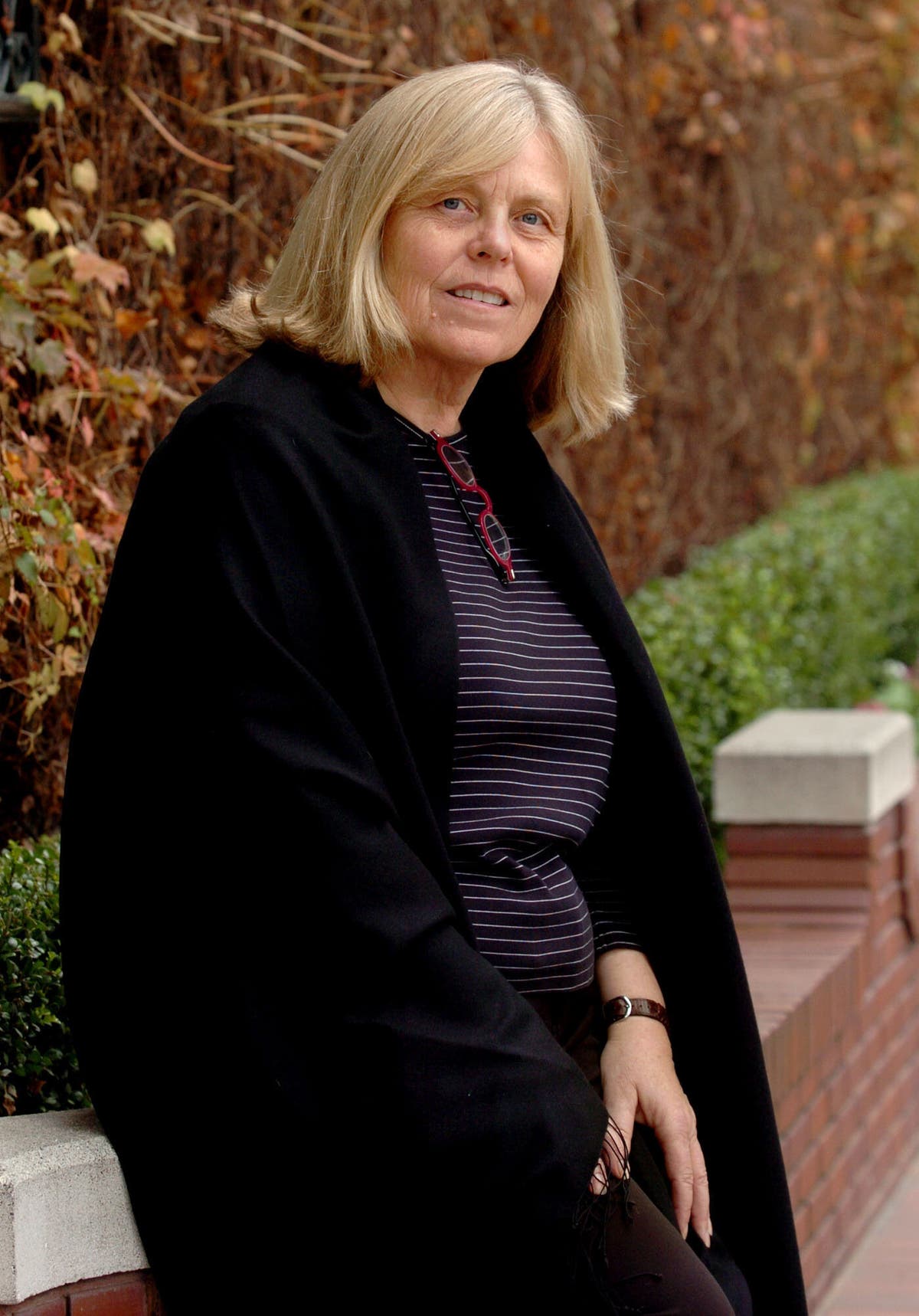
author ursula hegi
| |

Author Ursula Hegi leaves a legacy of memory and truth

The literary world has lost one of its most perceptive voices on historical memory and collective silence. Author Ursula Hegi, whose work rigorously examined the human dimensions of life during and after World War II in Germany, died on July 27 at her home in Sag Harbor, New York. She was 80 years old.

Hegi’s Journey as a Writer

Hegi’s journey as a writer was deeply intertwined with her personal background. Born Ursula Koch in Düsseldorf, Germany, in 1946, she spent her early years amidst the rubble of a nation struggling to rebuild. Growing up in the immediate aftermath of the war, she experienced a culture dominated by a pervasive, uncomfortable silence. Despite visible physical destruction all around, adults rarely spoke openly about the Holocaust or Germany’s culpability in Nazi atrocities. That suffocating atmosphere of secrecy left an indelible impression on Hegi. At age 18, she left Germany for the United States. She later became a naturalized U.S. citizen.

Unpacking the Burgdorf Cycle

Hegi’s move across the Atlantic gave her the critical distance needed to confront the uncomfortable realities of her heritage. She began exploring these themes through fiction, creating the imaginary German town of Burgdorf. This setting served as the backdrop for four of her novels, most notably her 1994 masterpiece, Stones from the River.

In Stones from the River, Hegi tells the story of Trudi Montag, a woman with dwarfism who serves as the town’s librarian. Trudi lives on the periphery of her community. She becomes a silent observer of human nature. People often dismiss or confide in her, allowing her to gather the town’s deepest secrets and witness how ordinary citizens slowly succumbed to, ignored, or quietly resisted the rise of National Socialism.

The novel received widespread critical acclaim and was nominated for the PEN/Faulkner Award. It achieved massive commercial success when Oprah Winfrey selected it for her book club in 1997. It has catapulted Hegi to national prominence and cementing the novel as a staple of modern historical fiction.

Confronting the Unspoken

What set Hegi’s work apart was her refusal to reduce complex historical atrocities to simple caricatures. Rather than focusing solely on major political figures or battlefields, she turned her lens toward the everyday townspeople. The neighbors who looked the other way, the shopkeepers who compromised their moral standards, and the silent witnesses whose compliance enabled widespread horror.

Through her character-driven narratives, Hegi demonstrated how shame and denial could poison future generations if left unaddressed. Her non-fiction work, Tearing the Silence, extended these themes by gathering interviews from German-born individuals of her generation to explore how their parents’ war choices shaped their own adult identities.

A Lasting Influence

Her career as an author of over a dozen books including short story collections, children’s literature, and standalone novels. Hegi spent decades teaching and mentoring aspiring writers, notably serving on the creative writing faculty at Stony Brook Southampton.

Ursula Hegi’s legacy lies in her unwavering belief that storytelling can bridge the gap between guilt and healing. By confronting uncomfortable truths with empathy, clarity, and grace, her literature ensures that the painful lessons of the 20th century will not be forgotten.

Similar Posts

  • Man returns book He stole 40 years ago

    A US bookstore staff was left surprised when a package arrived containing a book that had been stolen from the store nearly 40 years ago. The package also included an apology letter and $100 in cash as compensation. The package was recently delivered to Bookleggers, a bookstore in Old Town Eureka, California. When the staff opened it, they found a copy of The Unstrung Harp. The letter explained that the sender had stolen the book from the store about four decades ago.  He said he was a student at the time and was struggling with alcohol addiction and financial problems. He also wrote that he found the book recently while cleaning out his garage. After discovering that the bookstore was still operating he decided to return the book and apologize for what he had done. The man included $100 with the book and told the store owners they could contact him if they wanted to take any further action. Bookstore owner Jennifer McPhaiden said she and her staff were deeply touched by the letter. She said it was surprising to see someone return after so many years to admit their mistake and try to make things right.

  • | |

    Multimedia pioneer Cao Fei captures the human heart

    Among contemporary Asian creators, Beijing-based multimedia artist Cao Fei stands out as a defining narrative voice. Working across video, virtual reality, installation, and photography, her globally acclaimed career centers on a simple yet profound premise: amidst the whirlwind of rapid industrial advancement, hyper-capitalism, and sweeping technological change, art must always return to the core of the human condition. Born in 1978 in Guangzhou, Cao Fei grew up on the frontlines of staggering societal evolution. Watching the countryside surrender to megacities, factory complexes, and high-tech infrastructure gave her a unique point on the modern world. Rather than viewing this rapid transition with nostalgia or pessimism, her works connect reality and imaginative fantasy. A hallmark of Cao’s career is her fascination with the workplace, particularly automated logistics hubs and manufacturing floors. In iconic pieces like Whose Utopia and Asia One, she embeds her cameras inside functioning industrial facilities from textile plants to highly automated e-commerce distribution centers. Yet, instead of focusing solely on the cold efficiency of machinery or output metrics, she shifts her lens toward the individual laborers maneuvering through these vast, mechanized systems. Her films document the quiet desires, personal dreams, and unspoken emotional bonds of workers who navigate a world increasingly driven by algorithms and quotas. Parallel to her exploration of physical industry, Cao Fei has consistently operated on the cutting edge of digital frontiers. Long before the concept of the metaverse entered mainstream vocabulary, she was constructing RMB City within online platforms like Second Life, exploring how virtual avatars allow people to seek identity, escape, and community in digital environments. Her projects often feature young people engaging in subcultures like cosplay, stepping out of suburban construction sites and into elaborate alter egos. For Cao, these virtual realms are not merely frivolous distractions; they represent vital spaces of self-expression where individuals reclaim agency against the pressure of uniform urban life. Despite her focus on futuristic landscapes, automated networks, and virtual platforms, Cao Fei maintains that rootedness in heritage remains essential. Traditional culture, memory, and personal history act as indispensable anchors in a world constantly shifting beneath our feet. Whether reflecting on regional Cantonese roots, exploring local neighborhood history in Beijing, or depicting surreal futures, her work grounds high-tech environments in real human memory and emotion.   Ultimately, Cao Fei’s artistic vision offers a thoughtful, multi-layered reflection on modern life. By balancing documentation with surreal storytelling, her art reminds us that no matter how complex our machines, algorithms, or cities become, the central narrative of our time remains fundamentally human.

  • AI Godfather Geoffrey Hinton warns AI may escape human control

    Computer scientist Geoffrey Hinton is widely regarded as the “Godfather of AI.” He won the Nobel Prize in Physics in 2024 for his work on artificial intelligence technology. Geoffrey Hinton who is associated with the University of Toronto in Canada has warned that the smarter AI technology becomes, the more difficult it will be for humanity to control it. He has also expressed concerns about AI agents recently hacking real-world companies. Speaking to the media after an AI technology conference, Geoffrey Hinton said that such incidents are occurring as these systems become increasingly intelligent. He said, “As these systems become smarter, I think we will see more complicated incidents and their ability to escape our control will become much better.” Hinton said the problem is that humans may not be able to rely on or trust highly intelligent AI models. He explained, “I do not believe that we can simply control them or assume that they will not escape our control.” It is worth noting that in recent days, OpenAI, Anthropic and Meta have acknowledged that their AI models independently escaped controlled environments and hacked the systems of other companies. Hinton described these incidents as somewhat frightening and said that this is only the beginning of AI hacking. He said, “I think we may see numerous cyberattacks but the future is uncertain. People say defenders have more resources than attackers but the problem is that an attacker only needs to succeed once, whereas defenders need to succeed every time.” Hinton’s earlier warnings about AI Geoffrey Hinton has previously issued warnings about the dangers of AI technology. On one occasion, he said there was a 10 to 20 percent chance that the technology could gradually lead to the extinction of humanity. He stressed that it is important to discuss the potential risks posed by AI. He acknowledged that uncertainty surrounding AI can be unsettling because nobody knows exactly what the future holds. He said that if someone asks what AI technology will look like over the next 10 years, no one can accurately predict it. Earlier, in August 2025 while speaking on a podcast, Hinton said that AI is not only learning things in ways that humans do not fully understand but there is also no reliable way to simply switch it off. Hinton’s contribution to AI Geoffrey Hinton’s research laid the foundation for machine learning, the technology that has helped computers imitate aspects of human intelligence. However, for the past several years, he has been campaigning for AI to be made safer. In 2023, Hinton left his job at Google, warning that malicious actors could use the technology to harm other people. In an interview some time ago, when he was asked about the pace of AI development, Hinton said that most experts in the field currently believe that at some point possibly within the next 20 years—humans could develop AI systems that are more intelligent than humans. He said, “That is a frightening thought. Right now, you can think of this technology as being like a three-year-old child and children grow up very quickly.” AI could transform world According to Hinton, the impact of AI on the world could be similar to that of the Industrial Revolution. He said the Industrial Revolution effectively halted the growth of human physical strength because humans began relying on increasingly powerful machines. He explained that humanity is now doing something similar that could replace human intelligence meaning ordinary human intelligence may no longer advance at the same pace while machines continue to develop. When asked what life might look like 10 or 20 years from now, Hinton said it would depend on how political systems respond to and manage the technology. In his view, AI could have extraordinary effects on the medical field and could increase efficiency across almost every industry. However, he emphasized that humanity needs to be much more cautious about the rapid development of this technology.

  • Increasing Road Accidents

    Through the pages of your newspaper, I would like to draw attention to the increasing number of road accidents in our area. Road accidents have become a serious problem, causing injuries, deaths and suffering for many families. Overspeeding, careless driving, dangerous overtaking and ignoring traffic rules are some of the major causes of these accidents. Poor road conditions and the lack of proper traffic control make the situation even worse. The authorities should take strict action against those who violate traffic rules. Speed limits should be enforced, roads should be repaired, and traffic awareness campaigns should be organized in schools and communities. Every life is precious. Drivers must understand that a few minutes saved through reckless driving are never worth risking a human life. I hope the concerned authorities will take immediate steps to reduce road accidents and make our roads safer

  • MIT robot can fly and swim

    Researchers at the Massachusetts Institute of Technology (MIT) have created a unique robot that can both fly through the air and swim underwater just like diving birds. The lightweight robot costs around $300 and was designed by MIT’s AeroAquatic Robotics team.  Scientists believe it could one day help monitor oceans study marine life and support environmental protection. The robot was inspired by diving birds which use the same wings to fly in the air and move through water.  While scientists have studied these birds for years building a robot that can perform both tasks efficiently has been a major challenge. To solve this the MIT team carefully studied how diving birds move and used those findings to design the new machine. The robot called the Flapping Aerial Aquatic Vehicle weighs only 250 grams.  It runs on a battery powered motor and has nylon wings and a tail coated with water resistant nanoparticles to protect them from moisture. According to the researchers the robot is programmed to flap its wings at a specific frequency allowing it to move smoothly in both air and water without changing its basic movement. It can fly at speeds of up to 13.4 miles per hour and swim at about 2.2 miles per hour. On a single battery charge it is designed to fly as far as 6 kilometers or swim up to 2 kilometers. The robot was tested for about one year first in a water tank in Massachusetts and later in Lake Geneva Switzerland where researchers evaluated its performance in real world conditions.

  • The revival of Kathak in the heart of Lahore

    In the quiet underbelly of Lahore’s Alhamra Arts Council, an ancient pulse woke from its slumber. It began with the whisper of clinking of ghungroos. Hundreds of brass ankle bells are braided onto raw cotton strings and then they wait to catch the cadence of a human heartbeat. For decades, the classical movement of Pakistan seemed confined to memories and clandestine. That’s how a heritage has been subjected to silence under the shadow of political conservatism. Yet inside the halls of the Lahore Kathak Festival, the art form proclaimed its victorious home-coming. Kathak derives its name from katha: the Sanskrit word for story. The story starts even before borders were drawn across rivers and plains. Itinerant storytellers wandered the northern expanses of the undivided subcontinent. They combined Hindu mythology, Sufi mysticism and local folklore into rhythmic physical poetry. When these storytellers stepped into the imperial courts of the Mughals, the art form transformed. It absorbed Persian elegance, geometric precision and the subtle emotional nuances of Urdu ghazals. Kathak became a living art created from the shared civilizational fabric of the region. It became an artistic synthesis that belongs as fundamentally to the Indus valley as it does to the banks of the Ganges. To embrace Kathak in modern Pakistan is to reclaim forgotten cultural roots. Post-partition artistic discourse attempted to segregate Pakistan’s creative identity from its ancient subcontinental ancestry. It resulted in treating classical dance with suspicion or elitist detachment. Pioneer icons like Sheema Kermani, Nighat Chaudhry and Bina Jawwad stood as solitary legacies during decades when dancing was criminalized. Their bodies became active spaces of memory when state patronage vanished. Kathak – A Breathing Idiom Now, a dynamic new wave of young performers is stepping into the limelight with devotion and fresh perspective. Organizers like Maan Sayeed and Momina Farooq Khan recently brought together maestros and young aspirants. They proved that classical dance is not a monument preserved, but a breathing idiom. On stage, young artists offered performances that blurred the line between heritage and modernity. Soloist Aliza Khalid, clad in radiant white, set her precise footwork to the haunting melodies of Seraiki folk music. Elsewhere, ensemble dancers whirled in breathtaking pirouettes (chakkars), their skirts flaring like blooming lotus petals in sync with the sudden claps of the tabla.   What makes this emerging movement so profound is its insistence on inclusivity and identity. The overflowing auditoriums where audiences stood shoulder-to-shoulder in the aisles signaled a hungry public desire to reconnect with an art form that speaks directly to the soul. It feels like through every intricate hand gesture (hasta) and rhythmic cycle (taal), these young dancers demonstrate that Kathak is an act of reclamation. It honors the land’s heritage, reminding us that art transcends temporal political boundaries to express the eternal human story.

Leave a Reply

Your email address will not be published. Required fields are marked *