sindh lab flags

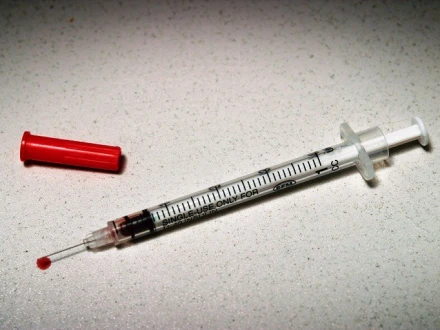
Sindh lab flags faulty syringes

Sindh Drug Testing Laboratory (SDTL) has declared two samples of auto disable syringes as substandard after they failed quality testing.

According to media reports the tested 5 ml and 3 ml auto disable syringes did not meet the required standards.  During testing the auto disable safety feature failed to work properly meaning the syringes did not lock after use as expected.

Because of this both samples were declared substandard under the Medical Devices Rules 2017.

SDTL Director General Adnan Rizvi said the syringes were manufactured by a pharmaceutical company in Khyber Pakhtunkhwa.

He added that both the auto disable and reuse prevention features failed during testing. The laboratory also found that the syringes automatic safety system was not effective.

The test reports have been sent to the Drug Inspector Karachi East and the Secretary of the Quality Control Board for further action.

Health experts warn that substandard auto disable syringes can increase the risk of unsafe injections and may put patients safety at risk.

Similar Posts

  • Back to school tips every parent should know

    As the long summer vacation comes to an end, many parents wonder how to help their children get back into the school routine. After weeks of sleeping in playing and enjoying free time waking up early getting ready on time and returning to schoolwork can be difficult. Experts say that a few simple habits can make this change much easier. One of the most important steps is to fix your child’s sleep schedule. A few days before school starts encourage children to go to bed earlier and wake up at the same time they will on school days. Children aged 6 to 13 should get 9 to 11 hours of sleep each night while teenagers aged 13 to 17 need 8 to 10 hours. Good sleep helps improve both physical health and mental focus. Experts also recommend keeping children away from phones tablets computers and other electronic devices for at least one hour before bedtime. Instead parents can talk with them about their teachers classmates school activities and exciting things they can look forward to. Positive conversations can help reduce anxiety and build excitement. A healthy breakfast is another important part of a successful school day. Foods such as fruit milk eggs oatmeal whole grain bread and other balanced meals give children the energy they need and improve their focus memory and learning. Parents should also make time every day to ask their children about school.  Talking about lessons friends sports and classroom activities helps children feel supported and encourages them to share any concerns. Experts say parents should lead by example.  When the home follows a regular routine for sleeping eating and daily activities children are more likely to develop the same healthy habits. Most importantly school should be presented as a positive experience rather than something stressful. With encouragement patience and support children can adjust more easily and begin the new school year feeling happy and confident.

  • Sindh’s Battle to Bring Every Child to School

    By Irfan Ali The most consequential asset of any province lies neither in its transport systems nor in the natural resources buried beneath its soil. It lies in the intellectual and productive potential of its people. Roads, bridges and public infrastructure may facilitate development, but it is an educated population that sustains it. For Sindh, therefore, the struggle to bring every child into the classroom is not merely an educational undertaking; it is a defining social and economic imperative. For years, the province’s education system has remained under intense public and media scrutiny. Dilapidated school buildings, a large out-of-school population, shortages of teachers, weak attendance mechanisms and the enduring controversy surrounding ghost employees have shaped much of the public discourse. These concerns are legitimate and cannot be dismissed. Yet they constitute only one side of a far more complex picture. Any balanced assessment must also take into account the extraordinary pressures under which Sindh’s education system has operated. Between 2010 and 2022, the province endured successive climate-related disasters that damaged educational infrastructure on an unprecedented scale. International and government-supported assessments indicate that more than 25,000 schools were partially or completely damaged during the catastrophic floods of 2010 and 2022. Approximately 5,655 educational institutions were affected in 2010, while the floods of 2022 damaged an estimated 19,808 schools. The consequences extended well beyond the destruction of buildings. Schools were converted into temporary shelters, access routes were washed away, communities were displaced and household incomes collapsed. For thousands of children, particularly those living in rural and flood-prone districts, the disaster widened the distance between home and classroom. Poverty, displacement and child labour compounded the risk of permanent educational exclusion, while girls faced the additional barriers of restricted mobility, safety concerns and the absence of nearby post-primary institutions. It is against this difficult backdrop that Sindh’s emerging education reforms must be understood. The province has not overcome its educational crisis, nor can decades of structural neglect be reversed within a single political or budgetary cycle. Nevertheless, a discernible change is taking place in the direction of policy. The emphasis is gradually shifting from fragmented interventions towards a broader framework encompassing school financing, teacher availability, institutional expansion, verified enrolment and digital accountability. One of the most notable developments has been the introduction of the School-Specific Budget, a decentralised financing mechanism intended to place limited but meaningful decision-making authority closer to the classroom. Under the initiative, school heads have been granted greater financial autonomy to address institution-specific needs rather than waiting for every minor repair or purchase to pass through layers of centralised administration. The programme was allocated Rs18.67 billion in the 2025–26 financial year. This was increased to Rs22.64 billion for 2026–27, reflecting a rise of approximately 21 per cent. The allocation for school furniture and fixtures was also raised substantially, from Rs3.81 billion to Rs7.62 billion. The significance of this reform lies not merely in the size of the allocation, but in the principle behind it. Schools do not face identical problems. An institution in a flood-affected village may urgently require roof repairs and drinking-water facilities, while an overcrowded urban school may need additional furniture, classrooms or sanitation arrangements. By allowing school administrations to respond to their own priorities, the School-Specific Budget introduces a degree of flexibility that has long been absent from public-school management. Across the province, the initiative has enabled schools to undertake essential repairs, restore classrooms, improve sanitation, purchase furniture and create safer and more welcoming learning environments. Such improvements may appear modest when viewed individually, but collectively they can strengthen parental confidence in public schools and help restore dignity to the learning experience. The battle against educational exclusion, however, cannot be won through infrastructure alone. Recognising the multiple social and economic factors that keep children outside school, the Sindh government, in collaboration with Unicef, has developed a five-year Multi-Sectoral Roadmap for Out-of-School Children and Adolescents. Covering the period from July 2025 to June 2030, the roadmap seeks to reduce the province’s out-of-school population by 50 per cent. Its multi-sectoral character is particularly significant. A child may remain outside school because of poverty, disability, child labour, the absence of identity documentation, inadequate transport or restrictive social norms. These barriers cannot be removed by the Education Department acting in isolation. They demand coordination across social protection, health, local government, civil registration and community-level institutions. The roadmap therefore represents an important conceptual shift. It treats educational exclusion not simply as a matter of insufficient enrolment, but as a broader social challenge requiring sustained and coordinated intervention. In doing so, it places the out-of-school child—not the administrative department—at the centre of policy. Teacher availability has been another persistent weakness of the public education system. A school without teachers may exist on official records, but it cannot function as an institution of learning. Sindh has sought to narrow this gap through one of the largest merit-based recruitment exercises undertaken in its education sector. Nearly 97,000 Primary School Teachers and Junior Elementary School Teachers were recruited through tests administered by Sukkur IBA University. The use of an independent testing service helped establish a more transparent route into public employment and strengthened the principle of merit in a sector historically vulnerable to political influence. The scale of the recruitment is important not only in numerical terms. Thousands of schools that had been operating with inadequate staff received additional teachers, while previously non-functional institutions gained the human resources required to reopen. The process also included women, persons with disabilities and members of minority communities, lending the recruitment exercise a wider dimension of social inclusion. The growing presence of female teachers is particularly consequential for rural and conservative communities. In many such areas, parents are more willing to enrol and retain their daughters when women teachers are available. Teacher recruitment, therefore, is not merely an employment measure; it is also a means of improving access, attendance and public confidence. The province has more recently expanded its focus towards specialised teaching categories. In July 2026, the government approved

  • Electricity problems in kolaho

    Haleema Abdul Rauf I am writing to inform you that, due to the lack of electricity, we are facing many problems in our area. Without electricity, we cannot use fans, lights, the internet, or many other essential facilities. Nowadays, almost everything depends on electricity. Many poor families cannot afford solar panels because they do not have enough money or stable jobs. They also cannot afford appliances such as refrigerators. As a result, many people suffer from extreme heat, and some even become unconscious because of the high temperatures. We are facing many difficulties due to the electricity shortage. Refrigerators, lights, fans, and many modern devices all depend on electricity. Therefore, I request the government and WAPDA to ensure a proper and regular supply of electricity. Reliable electricity is very important for people’s daily lives, education, health, and work. I hope my request will be considered, and the electricity problem in our area will be resolved as soon as possible.

  • Favoritism in Schools

    Hani Rasheed Through the pages of your esteemed newspaper, I wish to draw attention to the growing problem of favoritism in schools. Education is meant to provide equal opportunities to every student, but favoritism is destroying the spirit of fairness and merit. In many schools, some students receive special attention and better opportunities because of their personal connections or background. Meanwhile, hardworking and deserving students are often ignored. This creates disappointment among students and damages their confidence. Favoritism also teaches young people a dangerous lesson: that success depends on connections rather than hard work and talent. If this issue is not addressed, it will negatively affect the future of our education system. The authorities must take strict action against favoritism and ensure equal treatment for every student. Teachers and school administrations should promote merit, justice and fairness. I hope your newspaper will highlight this important issue and urge the authorities to take immediate steps to end favoritism in schools

  • How to get six pack Abs naturally

    Getting six-pack abs is a popular goal for many fitness lovers. However doing hard workouts alone is not enough.  A healthy diet regular physical activity proper sleep and a balanced lifestyle are also important. Reduce belly fat One of the most important steps to getting visible abs is reducing extra body fat. Your abdominal muscles may already be strong but they can remain hidden under a layer of fat. Eating a healthy diet and maintaining a balanced calorie intake can help reduce overall body fat over time. Eat more protein Protein helps the body build and repair muscles. Include protein rich foods such as eggs chicken fish beans and lentils in your diet.  A balanced diet with enough protein can support muscle growth and strength. If your goal is to lose body fat you may need to consume fewer calories than your body uses.  However extreme dieting or skipping meals is not a healthy way to lose weight. Limit unhealthy foods Try to reduce foods and drinks that are high in added sugar unhealthy fats and calories. This includes soft drinks fast food sweets and deep fried foods. Choosing fresh and nutritious foods can make it easier to manage your weight. Drink enough water Staying hydrated is also important during your fitness journey.  Drink water regularly throughout the day. The amount you need can vary depending on your age activity level weather and overall health so there is no fixed amount that everyone must drink. Exercises for stronger Abs Some useful exercises for strengthening the abdominal and core muscles include. •Planks •Crunches •Leg raises •Bicycle crunches Planks can help strengthen the core while crunches work the abdominal muscles.  Leg raises and bicycle crunches can also improve core strength. However doing only abdominal exercises cannot remove fat from the stomach area alone.  To reduce overall body fat combine strength training other physical activities and  a healthy diet. Stay consistent You do not need to spend every day at the gym to work toward six pack abs.  A workout routine that you can follow consistently for a long time is more important than exercising extremely hard for a short period. Good sleep enough rest healthy food and regular exercise all work together to help you become fitter and stronger. Most importantly focus on steady progress rather than expecting quick results.

  • Monsoon eye care tips

    The monsoon season brings welcome relief from the summer heat but it also creates conditions that allow many illnesses to spread more easily. Eye infections are one of the common health problems during this time. According to experts high humidity pollution and the growth of germs during the rainy season increase the risk of bacterial and viral eye infections. Dust dirty rainwater pollution and allergy causing particles can easily irritate the eyes.  These factors may lead to redness swelling and discomfort making daily activities difficult. Common symptoms of eye infections Some of the most common signs of an eye infection include. •Red eyes •Swelling •Eye pain •Watery eyes •Blurred vision •Itching or irritation If these symptoms become severe or do not improve it is important to see a doctor. How to protect your eyes during the monsoon Experts say that good hygiene is the best way to prevent eye infections.  Wash your hands regularly with soap and avoid touching your eyes with dirty hands. Keeping your face and eyes clean can also lower the risk of infection. If your eyes feel itchy or irritated do not rub them. Rubbing can spread germs and make the infection worse. Instead gently clean your eyes with a clean tissue or soft cloth. Applying a clean warm compress over your closed eyes for a few minutes can help reduce discomfort and swelling. This can be done several times a day if needed. Avoid sharing personal items If you have an eye infection avoid using eye makeup until your eyes have fully healed.  If makeup must be used make sure brushes and other beauty tools are cleaned properly. It is also important to wash bed sheets pillowcases and towels regularly with hot water and detergent. Never share towels handkerchiefs or other personal items that come into contact with your eyes as infections can easily spread from one person to another. When to see a doctor If your symptoms get worse or do not improve after a few days avoid self treatment and consult an eye specialist. A doctor may prescribe antibiotic or antiviral eye drops depending on the cause of the infection to help you recover safely and quickly.

Leave a Reply

Your email address will not be published. Required fields are marked *