Typhoon Dolphin hits southern Japan

A powerful weather has disrupted daily life  across East Asia as Typhoon Dolphin batters Japan’s southern islands and advances toward the eastern coast of China. Delivering gale-force winds, high seas, and torrential downpours, the storm has already left behind a trail of power outages, localized injuries, and widespread travel cancellations.

Destruction and Disruption Across Southern Japan

The southern Japanese archipelago felt the initial brunt of Typhoon Dolphin as the storm barreled through Okinawa prefecture and extended its reach toward Amami Island in Kagoshima prefecture. Moving at a steady pace toward the northwest, the cyclone produced maximum sustained winds around 162 kilometers per hour (100 miles per hour), accompanied by intense gusts reaching up to 216 kilometers per hour (134 miles per hour).

Local authorities in Okinawa reported multiple injuries, primarily among elderly residents who were knocked down by strong wind gusts. Beyond the physical toll, the severe weather inflicted substantial damage on regional infrastructure. High wind speeds tore down power lines and damaged utilities, temporarily cutting off electricity to more than 50,000 households and commercial buildings across Kagoshima and Okinawa.

To ensure public safety, major Japanese carriers, including All Nippon Airways (ANA) and Japan Airlines, suspended domestic air service across affected southern island terminals. In total, hundreds of regional flights were grounded, stranding travelers and disrupting commerce. Prefectural governments issued precautionary evacuation warnings for hundreds of thousands of residents living in flood-prone coastal locations and elevated landslide zones.

China Prepares for Severe Coastal Landfall

As Typhoon Dolphin charts a path across the East China Sea, Chinese meteorological authorities have begun executing extensive emergency protocols. The storm is forecasted to make landfall along China’s eastern coastline between Zhejiang and Fujian provinces, with the impact expected to peak between late Sunday and early Monday. Forecasts indicate the storm could bring heavy sustained rainfall through mid-week, with isolated areas in Zhejiang province receiving over 600 millimeters (23.6 inches) of rain.

In response to the imminent threat, regional officials elevated typhoon alert levels to their highest settings. Maritime authorities ordered thousands of fishing vessels to return to port immediately and halted operations across key coastal transportation routes, suspending over a hundred passenger ferry services.

The severe weather has caused major disruptions to the region’s shipping and logistics hubs.

Maritime Shipping: Port operations at key global maritime locations, including Shanghai’s Yangshan Port and terminals in Ningbo, were paused as ships cleared out to safety.

Aviation: Regional hubs, such as Ningbo Lishe International Airport, announced complete groundings and flight cancellations.

Rail Travel: High-speed and freight rail lines operating throughout the Yangtze River Delta were scheduled for temporary suspensions.

Broader Regional and Geopolitical Ripples

The storm’s path has created ripple effects across neighboring waters. In Taiwan, dozens of international flights were grounded due to adverse flight conditions. Additionally, regulatory notices issued for maritime traffic through the Taiwan Strait sparked brief administrative tensions between local authorities and maritime agencies.


As emergency crews in Japan focus on restoring electrical service and clearing debris, officials across eastern China remain on high alert. Local governments in Shanghai and Beijing are activating flood prevention measures. The management is preparing emergency shelters and monitoring water levels in anticipation of heavy rainfall and potential inland flooding over the coming days.
Similar Posts

  • Gen Z rewrote the dawn of the Asia Spring

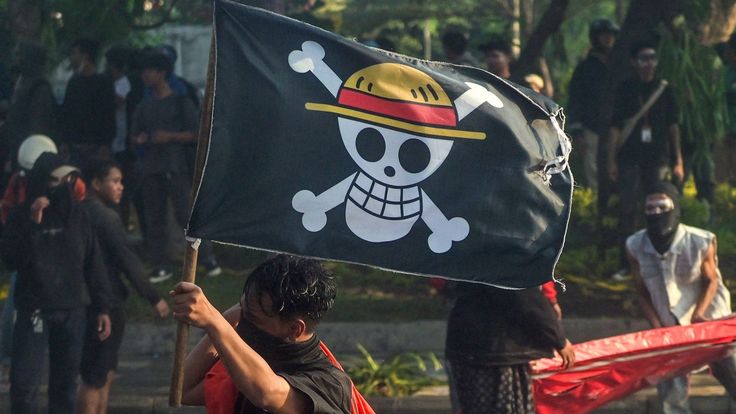
    Across South and Southeast Asia, a quiet frustration has transformed into an unprecedented political wave. Frequently referred to as the “Asia Spring,” this surge of youth-led activism has seen Generation Z step into the political arena. They’re challenging long-standing corruption, economic inequality, and political entrenchment. From the streets of Dhaka to the urban centers of Kathmandu and Jakarta, young citizens are no longer waiting for their voices to be heard. They are actively reshaping their nations’ futures. The modern wave of Gen Z-led movements gained immense momentum in mid-2024 in Bangladesh. What began as a focused student movement opposing controversial public-sector job quotas quickly grew into a nation-wide call for governance reform. Faced with high youth unemployment and shrinking economic opportunities, students argued that reserved civil service positions favored political insiders rather than merit. Mobilizing through social networks and campus coalitions, the movement rallied broad public support. The collective pressure ultimately forced the resignation of long-standing leaders and opened the door to an interim administration tasked with restoring democratic norms. This historic movement demonstrated how digital organization and student unity could fundamentally reset a country’s political trajectory. The momentum generated in Bangladesh  found immediate echoes in neighboring nations facing similar societal pressures. In late 2025, widespread anger erupted after government authorities imposed a blanket ban on major social media platforms. Beyond the digital blackout, young Nepalis were protesting high youth unemployment which stood above 20% and a political system dominated by repeating political dynasties. Organized largely via Discord and alternative channels, massive rallies in Kathmandu demanded accountability and systemic change. Demonstrations led by university students zeroed in on economic disparities and elite privileges, such as controversial housing allowances granted to lawmakers. Activists highlighted the divide between struggling daily wage earners and high-ranking officials, compelling the government to roll back elite perks and re-evaluate policy priorities. Across several of these protests, from Jakarta to Kathmandu, activists raised the iconic Straw Hat Pirate flag from the anime One Piece. The flag became a viral symbol representing resistance against entrenched oligarchies and institutional corruption. Local triggers varied from job quotas in Bangladesh to social media restrictions in Nepal. Post-pandemic inflation, rising living costs, and a scarcity of stable jobs have left millions of educated young adults feeling economically stranded. Young citizens are increasingly impatient with political systems controlled by elite families or entrenched party networks. Unlike traditional political movements led by single figures, Gen Z protests rely on decentralized platforms like Discord, TikTok, and messaging apps to coordinate rapidly without formal hierarchical leadership. While bringing about political change on the streets is a formidable achievement, translating that energy into enduring institutional reform presents its own set of challenges. Emerging interim and newly elected leaderships across South Asia now face the difficult task of reviving sluggish economies, creating sustainable job markets, and rebuilding trust in democratic institutions. The “Asia Spring” proves that Generation Z is not politically indifferent. By demanding transparency, fairness, and accountability, young people across Asia have shown that they are determined to be active architects of their countries’ destinies rather than passive observers.  

  • | |

    Multimedia pioneer Cao Fei captures the human heart

    Among contemporary Asian creators, Beijing-based multimedia artist Cao Fei stands out as a defining narrative voice. Working across video, virtual reality, installation, and photography, her globally acclaimed career centers on a simple yet profound premise: amidst the whirlwind of rapid industrial advancement, hyper-capitalism, and sweeping technological change, art must always return to the core of the human condition. Born in 1978 in Guangzhou, Cao Fei grew up on the frontlines of staggering societal evolution. Watching the countryside surrender to megacities, factory complexes, and high-tech infrastructure gave her a unique point on the modern world. Rather than viewing this rapid transition with nostalgia or pessimism, her works connect reality and imaginative fantasy. A hallmark of Cao’s career is her fascination with the workplace, particularly automated logistics hubs and manufacturing floors. In iconic pieces like Whose Utopia and Asia One, she embeds her cameras inside functioning industrial facilities from textile plants to highly automated e-commerce distribution centers. Yet, instead of focusing solely on the cold efficiency of machinery or output metrics, she shifts her lens toward the individual laborers maneuvering through these vast, mechanized systems. Her films document the quiet desires, personal dreams, and unspoken emotional bonds of workers who navigate a world increasingly driven by algorithms and quotas. Parallel to her exploration of physical industry, Cao Fei has consistently operated on the cutting edge of digital frontiers. Long before the concept of the metaverse entered mainstream vocabulary, she was constructing RMB City within online platforms like Second Life, exploring how virtual avatars allow people to seek identity, escape, and community in digital environments. Her projects often feature young people engaging in subcultures like cosplay, stepping out of suburban construction sites and into elaborate alter egos. For Cao, these virtual realms are not merely frivolous distractions; they represent vital spaces of self-expression where individuals reclaim agency against the pressure of uniform urban life. Despite her focus on futuristic landscapes, automated networks, and virtual platforms, Cao Fei maintains that rootedness in heritage remains essential. Traditional culture, memory, and personal history act as indispensable anchors in a world constantly shifting beneath our feet. Whether reflecting on regional Cantonese roots, exploring local neighborhood history in Beijing, or depicting surreal futures, her work grounds high-tech environments in real human memory and emotion.   Ultimately, Cao Fei’s artistic vision offers a thoughtful, multi-layered reflection on modern life. By balancing documentation with surreal storytelling, her art reminds us that no matter how complex our machines, algorithms, or cities become, the central narrative of our time remains fundamentally human.

  • |

    Destructive earthquake hits Western Colombia

    An omnipotent earthquake hit western Colombia in the early morning hours, leaving destruction, multiple fatalities and dozens of collapsed structures across several municipalities. Emergency responders and local residents are rushing  to pull survivors from beneath piles of heavy rubble. In the heart of the country’s coffee-growing region, Pereira Mayor Mauricio Salazar confirmed that 18 residents lost their lives due to the tragic event. Salazar stated, “The situation is critical.” He addressed Caracol Radio regarding the growing casualty toll and structural collapse. Reports from neighboring municipalities highlighted the widespread reach of the disaster. In nearby Manizales, Mayor Jorge Eduardo Rojas reported three fatalities resulting from the shaking. Along Colombia’s Pacific coastline, the key port city of Buenaventura also suffered casualties. Mayor Ligia del Carmen Cordoba confirmed one death after a building caved in, trapping several individuals inside. Cali, one of the nation’s largest urban centers, was among the hardest hit. The municipal authorities have yet to confirm official death tolls there, though. Mayor Alejandro Eder informed Caracol Radio that at least 30 buildings had completely collapsed. The collapse happened even with rescue crews actively operating at 10 high-priority sites across the city. Speaking earlier to Blu Radio, Mayor Eder detailed the urgency of the ongoing efforts: At this point, two people have already been rescued alive, one elderly woman and one young girl. There are more people trapped, he explained, emphasizing the scale of the emergency. He noted further, We have at least 12 critical points and 25 collapsed structures that we are responding to. In order to handle the overwhelming strain on local resources, the city requested emergency disaster support from authorities in Bogota and Medellin. Cali resident Juan Carlos Osorio described the immediate aftermath while sifting through wreckage: The building completely collapsed. It sounded like a bomb. It was horrible, Osorio told Caracol Television. He added, All of us neighbors are working together, forming human chains. We need heavy equipment. There are many people trapped. The immense intensity of the tremor shook neighboring nations including Ecuador, Panama, and Venezuela. However, Colombian officials confirmed that there was no threat of a tsunami. In the capital city of Bogota, the morning quake caused widespread alarm. They’re prompting frightened residents to run into the streets in their pajamas as emergency sirens echoed. Bogota Mayor Carlos Galan reassured the public via Blu Radio that damage within the capital appeared relatively minor, consisting primarily of cracked building facades. Elsewhere, news footage revealed severe structural damage, including multi-story buildings with their outer walls completely sheared off. In Choco province, the governor posted on X that multiple injuries and severe structural damage occurred in the departmental capital of Quibdo. News outlets broadcast images of destruction across cities in the coffee-growing region, known locally as Eje Cafetero. 66-year-old Eje Cafetero resident Martha Estrada told reporters, “There is no electricity or cell phone coverage. It was strong, really strong. Things fell in my house,” recounting the blackout and sudden movement inside her home. Cali’s mayor, Alejandro Eder, re-emphasized that the city was managing major damage and noted that officials were deploying drones to assess structural integrity across neighborhoods. He reiterated that at least 20 buildings had collapsed with individuals trapped inside, driving the urgent appeal for specialized rescue reinforcement from Bogota and Medellin. Residents in Bogota also recalled the intensity of the event, with 29-year-old content creator Valeria Polo remarking, The quake was very, very strong. To safeguard air travel, Colombia’s civil aeronautics agency announced on X that six regional airports temporarily suspended operations. The affected terminals serve Pereira, Manizales, Quibdo, Armenia, Cartago, and Buenaventura, allowing inspection crews to verify runway and building safety. Geographically, Colombia experiences frequent seismic activity because it is situated across three ranges of the Andean mountains. Historically, however, landslides have proven to be the country’s most lethal natural hazards, such as the 1985 Armero disaster that claimed approximately 25,000 lives. Major earthquakes have also left dark marks on the region; in 1999, a 6.2 magnitude earthquake struck the coffee region, resulting in over 1,000 fatalities in Armenia and Pereira. De La Espriella, a right-wing politician who has not previously held elected office, released a video filmed aboard a flight to Bogota following the disaster. He announced that he was suspending his scheduled activities to personally oversee emergency coordination efforts from the national capital.   This natural disaster follows severe regional seismic activity earlier in the summer, when twin earthquakes measuring 7.2 and 7.5 magnitude struck Venezuela on June 24, leaving over 6,000 dead and causing catastrophic damage along the coast near Caracas.

  • | |

    China leans on AI forecasting tools as Typhoon Dol…

    China has ramped up investment in artificial intelligence powered weather forecasting as the country works to track a rising number of natural disasters and predict extreme weather events such as powerful typhoons, intense rainfall and prolonged heatwaves tied to climate change. The country has positioned itself as a leading force in data driven meteorology, increasingly running AI systems alongside traditional forecasting methods rather than replacing them outright. As meteorologists monitored Typhoon Dolphin’s approach toward China in recent days, a newer generation of AI weather models operated in parallel with conventional forecasting systems, underscoring China’s expanding role in the broader push to improve storm prediction. Unlike standard numerical weather models, which depend on powerful supercomputers to simulate the physics of the atmosphere, AI based systems instead learn from decades of historical weather data. That approach lets them generate forecasts within seconds or minutes while using only a small fraction of the computing power traditional methods require. According to a state affiliated newspaper, some of China’s most prominent AI forecasting tools include Fengwu, built by the Shanghai AI Laboratory, Huawei’s Pangu Weather system, and Fuxi, developed at Fudan University. These models are increasingly being put through real world testing during East Asia’s intense typhoon season, a period when even modest improvements in tracking a storm’s path can help authorities plan flood responses, coordinate evacuations and manage disruptions to transportation networks. Fengwu in particular has shown strong results in predicting storm trajectories, with researchers noting that AI based systems can produce forecasts far faster than conventional models while matching or, in some cases, surpassing them on certain accuracy measures. The rapid progress in AI driven weather forecasting has sparked growing competition among technology firms, research institutions and national meteorological agencies worldwide, with China establishing itself as one of the sector’s most active players. Even so, meteorologists caution that AI tools currently serve as a complement to physics based forecasting rather than a full replacement. These systems still struggle to accurately capture sudden shifts in storm intensity, and they remain largely untested when it comes to long term climate modeling. As a result, traditional forecasting methods are expected to remain a core part of weather prediction for the foreseeable future, even as AI tools continue to mature and take on a larger role alongside them. The push toward AI assisted forecasting fits into a broader global trend, as governments and research institutions increasingly explore machine learning as a tool for anticipating the growing frequency and intensity of extreme weather linked to a changing climate.

  • | |

    Beyond faith and defense

    The historical partnership between Pakistan and the Kingdom of Saudi Arabia stands as one of the most enduring bilateral relationships in the contemporary Muslim world. This history is anchored in shared Islamic values and a profound spiritual connection to the holy sanctuaries of Makkah and Medina. This alliance predates the modern era of Saudi oil wealth. The bond was formalized through the landmark Treaty of Friendship in 1951. It established an early blueprint for solidarity, ideological alignment and mutual support during crisis. Over the past seven decades, this connection has expanded from religious affinity into strategic collaboration. The Art of Strategic Neutrality Defense cooperation forms a central pivot of the bilateral relationship. Since the 1960s, the Pakistani military has played an instrumental role in advising, training, and building the infrastructure of the Saudi armed forces. Contingents of Pakistani troops have historically been deployed inside the Kingdom for defensive purposes, notably safeguarding the Holy Mosques during regional upheavals such as Operation Desert Storm. Moreover, thousands of Saudi defense personnel have undergone advanced training in Pakistani military institutions over the decades. However, the military relationship has also required careful navigation.  When conflict erupted in Yemen (2015), Pakistan’s parliament adopted a stance of strict neutrality to avoid inter-state Middle Eastern disputes, particularly while its domestic forces were actively engaged in counter-terrorism campaigns like Operation Zarb-e-Azb. Despite initial friction, Riyadh acknowledged Islamabad’s geopolitical constraints. This mature understanding was demonstrated when former Pakistani Army Chief General Raheel Sharif was appointed to lead the Islamic Military Counter Terrorism Coalition (IMCTC), focusing strictly on combating global extremism rather than taking sides in regional power struggles. Economic Interdependence and Human Capital Beyond defense, economic cooperation has provided crucial stability to Pakistan’s financial landscape. Saudi Arabia has repeatedly acted as a financial cushion. The country delivered multi-billion-dollar bailout packages, balance-of-payment assistance and deferred-payment oil supplies during economic hardship. Historically, this financial dynamic was complemented by administrative leadership. Pakistani economist Anwar Ali served as the Governor of the Saudi Arabian Monetary Agency from 1958 to 1974. He played a pivotal role in organizing the Kingdom’s modern financial infrastructure. Human capital remains another essential driver of this relationship. Over 2.7 million Pakistani expatriates reside and work within Saudi Arabia. Spanning critical sectors such as healthcare, engineering, construction, and information technology, these workers contribute directly to Saudi Arabia’s physical and economic development while generating vital remittance flows that sustain Pakistan’s domestic economy. Furthermore, administrative initiatives like the “Road to Makkah” project and reductions in visa fees have significantly streamlined pilgrimage procedures for millions of Pakistani citizens traveling for Hajj and Umrah. Geo-Economics, Vision 2030, and the Future of CPEC As both nations adjust to global realities, the bilateral partnership is changing into modern geo-economic framework. Saudi Crown Prince Mohammed bin Salman’s Vision 2030. The Kingdom aims to diversify its economy away from oil dependency by investing in global supply chains. A key element of this transformation includes multi-billion-dollar investment commitments in Pakistan. Furthermore, a proposed mega-oil refinery at the deep-sea port of Gwadar.   Ultimately, geopolitical challenges occasionally test bilateral diplomatic alignment. However, the strategic, economic and institutional ties between Islamabad and Riyadh continue to adapt. After all, it’s a dynamic future built on mutual survival and shared prosperity.

  • ​25,000 protesters in Tokyo to defend Japan’s pacifism

    An estimated 25,000 citizens gathered outside the National Diet Building in central Tokyo to voice their opposition to the Japanese government’s recent security direction. The rally organized by civic groups focused on protesting plans to expand military spending, ease restrictions on weapons exports, and revise the nation’s historic pacifist constitution. Participants stretched for kilometers around the parliament complex, brandishing banners inscribed with messages like NO WAR, Protect Article 9, and calls demanding the resignation of Prime Minister Sanae Takaichi. The gathering represents one of the largest public outpourings of political dissatisfaction in Japan in recent months. The protest reflects deep-seated anxieties among a broad cross-section of Japanese society regarding the country’s post-World War II identity. Since 1947, Japan has operated under Article 9 of its constitution, which explicitly renounces war as a sovereign right and forbids the maintenance of land, sea, and air forces with war potential. However, recent legislative pushes and security policy shifts have pushed Tokyo toward unprecedented defense expansion. Protesters expressed alarm over several key policy developments. Efforts to amend Article 9 to formally recognize and empower Japan’s Self-Defense Forces (SDF). Accelerating defense expenditures and softening long-standing prohibitions on exporting military equipment abroad. Public debate over potentially weakening Japan’s traditional Three Non-Nuclear Principles (not possessing, not producing, and not permitting the introduction of nuclear weapons). For many demonstrators, these policy shifts represent a dangerous departure from decades of peaceful diplomacy, threatening to draw Japan into regional conflicts. Beyond geopolitical and constitutional concerns, domestic economic hardship fueled much of the anger on the streets. Protesters pointed out a stark disconnect between government priorities and the daily realities faced by ordinary households. As inflation, rising energy prices, and increasing costs of living continue to squeeze family budgets, many citizens question why billions of dollars are being funneled into long-range missiles and defense procurement rather than social safety nets, public services, and economic relief programs. “While everyday citizens struggle to cope with rising living costs, the government’s primary focus appears to be pouring funds into defense building and strategic councils,” noted one demonstrator at the rally. The rally coincided with a decline in public support for the administration. Recent nationwide polling indicates that approval ratings for Prime Minister Takaichi’s cabinet have dropped significantly. With disapproval figures surpassing approval for the first time since taking office. The movement demonstrates that despite formal parliamentary majorities, the Japanese government faces a vigilant public unwilling to surrender the country’s long-standing commitment to peace without a fight. The thousands who gathered outside have made one message unmistakably clear: Japan’s commitment to peace remains a deeply cherished value among its citizens.  

Leave a Reply

Your email address will not be published. Required fields are marked *