| |

Doctor suspended after performing laparoscopic sur…

Islamabad: The Medical Tribunal has upheld a one year suspension of Dr Irfan Ashraf after finding that he performed laparoscopic surgery despite not completing the required training for independent laparoscopic procedures and operated at a healthcare facility that lacked an Intensive Care Unit and other essential facilities needed to deal with serious complications.

The Tribunal also upheld a Rs100,000 fine and a ban preventing Dr Irfan Ashraf from performing laparoscopic procedures until he completes proper certified training.

The judgment, announced on July 8, 2026, came in an appeal filed by Muhammad Zahid Niaz, whose father Niaz Ahmad died after a chain of medical treatment that began with laparoscopic surgery at Saleem Polyclinic in Mian Channu on December 31, 2016.

The case took a serious turn when the disciplinary inquiry examined the actual training record of Dr Irfan Ashraf. The inquiry found that although he had taken part in laparoscopic procedures during his postgraduate training, most of his experience was as an observer or assistant.

According to the judgment, Dr Irfan Ashraf had not completed the required number of procedures at the higher training levels needed to show independent surgical ability. The record showed that he had not completed even a single Level V procedure, which represents the stage at which a trainee is expected to perform laparoscopic surgery independently without supervision.

The Tribunal said this was not simply a case where a normal surgical complication had occurred. The main concern was that Dr Irfan Ashraf undertook an elective laparoscopic operation without having demonstrated the required independent competence and at a facility that did not have the necessary backup facilities.

The patient, Niaz Ahmad, suffered an injury to the common bile duct and hepatic vascular structures during the surgery. He was later taken to Bahawal Victoria Hospital in Bahawalpur for further treatment. He subsequently received treatment at Sheikh Zayed Hospital in Lahore and underwent an interventional radiological procedure at Lahore Medical Complex. Despite prolonged treatment at several hospitals, he died on March 4, 2017.

The Punjab Healthcare Commission had earlier investigated the matter. It found that Saleem Polyclinic did not have the required infrastructure, qualified human resources and licensing needed for such surgical procedures. The Commission imposed a financial penalty on the owner of the healthcare establishment and referred the conduct of Dr Muhammad Saleem Akhtar and Dr Irfan Ashraf to the medical regulator for disciplinary action.

The medical disciplinary committee later appointed Prof Dr Tanwir Khaliq, an experienced general surgeon, as an independent medical expert. He examined the medical record and assessed the standard of care, the management of laparoscopic complications and the facilities available at the clinic.

Prof Dr Tanwir Khaliq concluded that the operation had been performed at a relatively small healthcare facility without an ICU and other essential backup facilities. He also found that Dr Irfan Ashraf was not sufficiently proficient in laparoscopic surgery, particularly when dealing with complications.

The Tribunal noted that Dr Irfan Ashraf himself acknowledged that Saleem Polyclinic did not have an ICU or the facilities required to manage serious complications from laparoscopic surgery.

The Tribunal also noted that Dr Irfan Ashraf had been working as a Senior Registrar at Bahawal Victoria Hospital, where better surgical support was available. When questioned about why the operation was carried out at the private facility, the explanation was that the patient wanted the surgery there.

The Tribunal rejected this reasoning. It said a patient’s preference cannot remove a surgeon’s professional responsibility to determine whether a healthcare facility is safe enough for the planned procedure.

The case also raised questions about what doctors tell patients about their professional skills. The disciplinary committee found that Dr Irfan Ashraf had represented himself as independently competent to perform laparoscopic surgery even though his training record did not show that he had completed the required independent procedures.

The Tribunal said the evidence supported three major findings against Dr Irfan Ashraf. He performed an elective laparoscopic operation at a facility that could not properly manage foreseeable complications. He represented himself as independently competent despite incomplete training. He also exposed the patient to avoidable risk by choosing a facility without the necessary support instead of a properly equipped tertiary hospital.

However, the Tribunal did not hold every doctor involved in the patient’s treatment responsible. Dr Muhammad Saleem Akhtar, the owner of Saleem Polyclinic, received a warning rather than a disciplinary punishment. The Tribunal found that there was no evidence that he personally performed the operation or took part in the surgical decision making.

The Tribunal said ownership of a healthcare facility alone was not enough to impose the same disciplinary punishment on Dr Muhammad Saleem Akhtar as the operating surgeon. However, the warning required him to ensure that his facility was not used for procedures beyond its capacity.

Dr Khurram Shafiq Khan was also cleared of professional negligence. His involvement came later, after the patient had already suffered complications from the earlier surgery. His role was connected with an embolization procedure to control bleeding from the hepatic artery.

After examining his role, the disciplinary committee found no clear connection between the procedure performed by Dr Khurram Shafiq Khan and the patient’s eventual death. The Tribunal found no reason to disturb that decision.

Muhammad Zahid Niaz had appealed because he believed the punishment against Dr Irfan Ashraf was too weak considering that his father’s treatment ultimately ended in death. He also wanted stronger action against Dr Muhammad Saleem Akhtar and Dr Khurram Shafiq Khan.

The Medical Tribunal, chaired by Justice (Retired) Safdar Saleem Shahid, rejected the request for harsher punishment.

The Tribunal said a tragic medical outcome does not automatically mean that every doctor involved was negligent. It explained that medical procedures can have known complications even when reasonable care is taken. The important question is whether a doctor failed to meet the level of skill and care expected from a competent doctor in similar circumstances.

In the case of Dr Irfan Ashraf, however, the Tribunal found that the disciplinary committee had enough evidence to establish serious professional misconduct.

The punishment included suspension of his medical licence for one year, a Rs100,000 fine, and a ban on performing laparoscopic procedures until he obtains proper certified training. The matter was also sent to the College of Physicians and Surgeons Pakistan for consideration of his laparoscopic training credentials.

The Tribunal said the punishment was not minor because losing a professional licence directly affects a doctor’s ability to work. It also said the restriction on laparoscopic surgery directly addressed the problem identified in the case and was aimed at protecting future patients.

The Tribunal further stressed that advanced surgery should only be performed at healthcare facilities that have the equipment, staff and emergency support needed to deal with possible complications.

The judgment also warned that doctors must honestly represent their training and professional abilities. A medical qualification, the Tribunal said, carries an important responsibility because patients trust doctors with their lives and health.

The appeal was ultimately dismissed and the original disciplinary decision was fully upheld. The one year licence suspension, Rs100,000 fine and ban on laparoscopic surgery against Dr Irfan Ashraf will remain in force until the required certified training is obtained. The warning issued to Dr Muhammad Saleem Akhtar and the clearance of Dr Khurram Shafiq Khan were also maintained.

Similar Posts

  • | |

    Mir Raza allegedly kidnapped and tortured for 12 h…

    KARACHI: The investigation into the death of young businessman Mir Raza has taken a new turn after his family’s lawyer, Jibran Nasir, claimed that the victim was allegedly abducted and tortured for around 12 hours before he was killed. Speaking at a press conference alongside Mir Raza’s parents at their residence, Nasir said information gathered during the investigation had raised serious questions about the circumstances surrounding the businessman’s death. According to the lawyer, CCTV footage showing Mir Raza emerged on July 28, while his body was recovered the following day. Nasir said a chemical analysis report from the University of Karachi found evidence of acid on the victim’s clothing, along with what he described as a bullet mark from the rear side of the shirt. Nasir further claimed that the condition of Mir Raza’s face was not simply the result of decomposition but may have been caused by acid. He also alleged that the victim was given a local anesthetic or another substance that caused him to become unconscious. The lawyer said the body appeared to have been dead for approximately 20 to 22 hours when it was recovered. Based on that estimated timeline, he argued that Mir Raza may have remained in captivity for around 12 hours before his death. Nasir alleged that the businessman was abducted during that period and subjected to torture. These claims have not yet been independently established and remain part of the allegations surrounding the investigation. The lawyer also raised questions about Mir Raza’s digital devices and financial activity. He claimed that someone had accessed the victim’s phone and emptied a cryptocurrency account, allegedly in an attempt to create an impression that Mir Raza had been facing financial difficulties or was in debt. Nasir further questioned the handling of key evidence, claiming that the station house officer was carrying the digital video recorder (DVR), while Mir Raza’s smartwatch and mobile phone were reportedly in the possession of other individuals. The allegations have intensified scrutiny of the investigation as Mir Raza’s family seeks answers about his final hours and the circumstances leading to his death. Investigators are expected to examine CCTV recordings, forensic reports, digital devices, financial transactions and other evidence to establish a detailed timeline. Police have yet to publicly establish the full circumstances of Mir Raza’s death or identify those responsible. The allegations made by his family’s lawyer will need to be verified through forensic evidence and the ongoing investigation.

  • | |

    Pakistan turns 79, leaders call for unity, reform …

    ISLAMABAD: As Pakistan marked its 79th Independence Day on Friday, the country’s civilian and military leadership delivered a common message: the sacrifices that created Pakistan must now be matched by unity, institutional reform, economic progress and opportunities for its people. Independence Day celebrations began across the country with traditional ceremonies. A 31-gun salute was held in Islamabad, while 21-gun salutes were fired at provincial headquarters. At the mausoleum of Quaid-i-Azam Muhammad Ali Jinnah in Karachi, a change-of-guards ceremony was also held to honour the founder of Pakistan. The messages issued by President Asif Ali Zardari, Prime Minister Shehbaz Sharif and the armed forces focused not only on Pakistan’s past but also on the challenges shaping its future. Zardari urges reforms and investment in youth In his Independence Day message, President Zardari paid tribute to the leaders of the Pakistan Movement and millions who made sacrifices for an independent homeland. He described independence as more than a historic achievement, saying each generation had a responsibility to strengthen the country and build on the work of those who came before. Reflecting on the country’s security challenges, the president said the events surrounding last year’s Marka-i-Haq had demonstrated Pakistan’s desire for peace as well as its determination to defend its sovereignty and national interests. He also paid tribute to members of the armed forces, police and law enforcement agencies who had lost their lives while protecting the country. The president stressed that Pakistan’s security was closely connected with peace in the region. He said the country would continue using diplomatic channels to encourage dialogue, reduce tensions and support regional stability. But the strongest part of his message centred on domestic development. Zardari called for economic, social and governance reforms, better education, stronger skills development and greater opportunities for young people. He said Pakistan’s youth represented the country’s greatest strength and that investment in their education and abilities would ultimately determine the nation’s future. For ordinary citizens, he noted, national progress should be visible in everyday life — through better education and healthcare, employment opportunities and greater economic security for families, farmers, workers and businesses. PM Shehbaz highlights economic progress Prime Minister Shehbaz Sharif also called for national unity while highlighting what he described as economic achievements made during the past two-and-a-half years. He said Pakistan had navigated difficult circumstances and moved towards economic stability, while remittances from overseas Pakistanis had risen by $11.3 billion over two years. The prime minister identified information technology, innovation, industrial and agricultural development, employment creation, education and skills training as key priorities for the government. He also praised the armed forces for their role during Marka-i-Haq and reaffirmed Pakistan’s commitment to defending its national interests, including its water resources. Shehbaz pointed to the Makkah Joint Defence Agreement involving Pakistan, Saudi Arabia and Turkiye as evidence of Pakistan’s growing strategic importance. He also reiterated Islamabad’s support for the people of occupied Kashmir and Palestine, while calling for diplomatic solutions to regional disputes. Military leadership calls for unity Chief of Defence Forces and Chief of Army Staff Field Marshal Syed Asim Munir, Chief of Naval Staff Admiral Naveed Ashraf and Chief of Air Staff Air Chief Marshal Zaheer Ahmed Baber Sidhu also issued Independence Day messages. According to ISPR, the armed forces paid tribute to Jinnah, the country’s martyrs, veterans, law enforcement personnel and citizens who had served Pakistan. The military leadership reaffirmed its commitment to defending Pakistan’s sovereignty and territorial integrity, upholding the Constitution and protecting national interests. The message also stressed that Pakistan’s real strength lay in the unity and collective determination of its people. As the green and white flags filled streets, buildings and homes across the country, the leadership’s messages offered a reminder that Independence Day is not only about remembering 1947. It is also about asking what Pakistan can become in the years ahead — a country where security is matched by stability, economic growth by opportunity, and national strength by better lives for its people. The shared call from the leadership was clear: unity, discipline and meaningful reform must turn the promise of independence into progress for every Pakistani.

  • Thai Interior Ministry Issues Storm Alert for April 16–20

    BANGKOK — The Ministry of Interior has ordered provincial governors across the North, Northeast, and Central regions to activate emergency response plans as a powerful summer storm system is forecast to bring thunderstorms, strong winds, isolated hail, and lightning strikes to large swathes of the country over the coming days. Nationwide Flood Alert Issued as […]

  • |

    Kris Jenner shares emotional tribute to late mom MJ Campbell

    Kris Jenner has paid a heartfelt tribute to her late mother, Mary Jo “MJ” Campbell, on what would have been her first birthday since her passing. On Sunday, July 26, the Kardashian-Jenner matriarch shared an emotional post on Instagram to celebrate her mother’s life and legacy. The touching tribute came just 10 days after Kris announced that MJ had died at the age of 91. The Instagram post featured a collection of cherished family photographs, many of which appeared to have been taken during MJ’s 90th birthday celebration. The first image showed the late family matriarch smiling brightly while wearing a colorful floral jacket. Other photos captured precious moments between Kris and her mother, including one of the pair sitting together at a table and another showing them sharing a warm embrace. Kris also included a family portrait featuring several members of the Kardashian-Jenner family, including Kim Kardashian, Khloe Kardashian, Kendall Jenner and other loved ones gathered together. Additional pictures highlighted MJ enjoying special family occasions, with one memorable image showing her flashing a peace sign while smiling for the camera. Accompanying the nostalgic photo carousel, Kris wrote a simple yet emotional message: “Happy Heavenly Birthday Mommy. I love you.” The birthday tribute follows the heartbreaking announcement Kris shared on July 16, when she revealed that her beloved mother had passed away. In her earlier message, the reality television personality reflected on the immense impact MJ had on her life and described the deep sorrow of losing her. “There are no words that could ever capture what she has meant to me or the heartbreak of having to say goodbye,” Kris wrote while announcing her mother’s death. She also praised her mother for the values she instilled in her family, saying MJ was the heart of their household and taught her the importance of unconditional love, kindness and cherishing every moment with loved ones. Mary Jo “MJ” Campbell was a familiar face to fans of the Kardashian family’s reality television shows over the years. Known for her warmth, elegance and close bond with her daughters and grandchildren, she frequently appeared alongside the famous family during special occasions and celebrations. MJ was the mother of two daughters, Kris Jenner and Karen Houghton. Karen passed away in March 2024 due to cardiac arrest and sudden cardiac arrhythmia, making MJ’s final years especially difficult following the loss of her younger daughter. Kris has often spoken about the special relationship she shared with her mother, crediting her with shaping the strong family values that have remained central to the Kardashian-Jenner family. Her latest birthday tribute served as both a celebration of MJ’s life and a reminder of the lasting influence she continues to have on her children, grandchildren and great-grandchildren. The emotional post was met with an outpouring of support from fans and followers, many of whom offered messages of love, prayers and remembrance while honoring the memory of Mary Jo “MJ” Campbell.

  • |

    Harshad Chopda becomes first finalist as Shivangi Joshi exits

    Harshad Chopda has secured the first finalist position in Lock Upp 2, while Shivangi Joshi’s journey on the reality show came to an unexpected end after a dramatic elimination that left contestants and viewers stunned. The latest episode featured an emotional task to determine the season’s first finalist. Several contestants, including Varun Yadav, Shilpa Shinde, Ram Kapoor and Akanksha Chamola, stepped aside, leaving Harshad Chopda and Shivangi Joshi as the final two contenders for the coveted spot. As part of the challenge, the two actors were locked inside the final cell and asked to decide between themselves who deserved to move directly into the finale. However, the decision proved difficult as both contestants hesitated to choose themselves over the other, resulting in an emotional conversation that revealed the strong bond they had formed during the competition. During the discussion, Chopda surprised Joshi by admitting that he had intentionally lost one of the earlier tasks to help her. The revelation caught the actress off guard, especially after he had previously denied making such a sacrifice. “I did lose the game,” Chopda confessed, leaving Joshi visibly confused and emotional. Questioning his decision, Joshi asked why he had given up an opportunity that could have benefited him. Chopda explained that throughout the season he had often put others before himself. This time, however, he felt it was important to focus on his own journey and fight for a place in the finale. Despite his explanation, neither contestant was willing to make the final decision. Their reluctance prompted hosts Farah Khan and Riteish Deshmukh to intervene and encourage them to settle the matter. Chopda remained firm, saying that for the first time in the competition he wanted to prioritise himself. Realising his determination, Joshi eventually stepped out of the final cell, allowing Chopda to claim the title of the season’s first finalist. The emotional moment was followed by another dramatic twist that changed the course of the game. Earlier in the episode, Shreya Kalra had earned a special advantage after winning a crucial task. The reward gave her the authority to eliminate one contestant from the competition. Most contestants believed Kalra would use her power against either Yogesh Rawat or Akanksha Chamola, making her eventual decision all the more surprising. Instead, Kalra chose to evict Shivangi Joshi, bringing the actress’s journey on Lock Upp 2 to an abrupt end. The unexpected elimination shocked fellow contestants, many of whom had not anticipated Joshi’s exit at this stage of the competition. Viewers also reacted with surprise, as the actress had been widely considered one of the strongest contenders for the title. With Chopda becoming the first confirmed finalist and Joshi leaving the show in a dramatic fashion, the race for the Lock Upp 2 trophy has become even more intense. As the finale draws closer, the remaining contestants will continue battling for the remaining spots in the final, promising more emotional moments, strategic gameplay and unexpected twists before the winner is crowned.

  • |

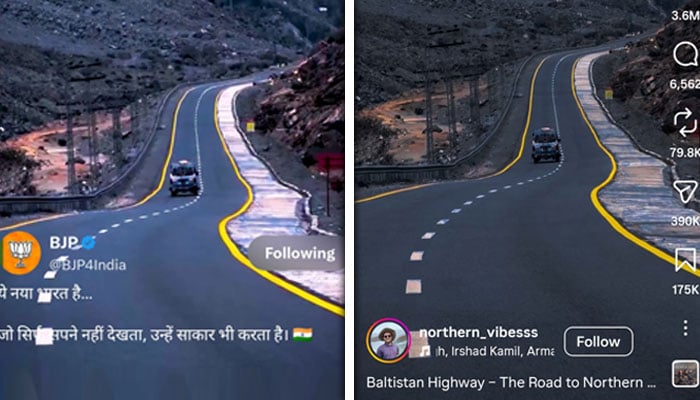
    BJP removes misattributed Pakistan highway video

    India’s ruling Bharatiya Janata Party (BJP) faced criticism after sharing a video from Pakistan’s Gilgit-Baltistan region to highlight India’s development achievements. The video was posted on the BJP’s official social media account. It was presented as an example of the progress of a “new India.” The caption claimed that India was not only dreaming of development but also turning those dreams into reality. However, social media users quickly identified the footage as a highway located in Gilgit-Baltistan, a region administered by Pakistan. The video was not related to any Indian development project. The footage was originally created by Pakistani digital content creator Northern Vibes. The creator has a large following on Instagram and regularly shares travel and landscape videos from northern areas of Pakistan. After noticing that the BJP had used the video, Northern Vibes shared a screenshot of the post on social media. The creator questioned how a road in Baltistan was being shown as part of India’s infrastructure progress. The content creator also alleged that the video had been used without permission and described it as unauthorized use of original content. The issue quickly gained attention online, with many users criticizing the BJP for sharing unverified material. Several social media users accused the party of using misleading content to promote its political message. The criticism intensified as more users pointed out the actual location shown in the video. The controversy also sparked discussions about digital copyright, content ownership and the need to verify online material before publishing it through official accounts. Following the growing backlash, the BJP removed the video from its official social media platform.

Leave a Reply

Your email address will not be published. Required fields are marked *