textile industry urges
|

Textile industry urges govt to end transport strike, warns of export disruptions

ISLAMABAD: Pakistan’s textile industry has called on the government to take immediate measures to resolve the ongoing goods transporters’ strike, warning that a prolonged suspension of freight services could disrupt export shipments, restrict the supply of cotton and affect the operations of textile mills across the country.

The All Pakistan Textile Mills Association (APTMA) has formally approached Federal Minister for Communications Abdul Aleem Khan, seeking urgent government intervention to restore the movement of goods and industrial cargo.

According to the association, the All Pakistan Goods Transport Ittehad began an indefinite strike on August 8, creating significant logistical challenges for export-oriented industries, particularly the textile sector.

APTMA Chairman Kamran Arshad said the strike had severely affected the availability of vehicles and containers required for transporting textile-related cargo. Export consignments awaiting shipment, imported cotton arriving through ports and locally purchased cotton being transported from markets to textile mills have all been affected by the disruption.

The association said the lack of transportation was creating difficulties at multiple stages of the textile supply chain. Export containers cannot be moved efficiently, while imported raw materials face delays in reaching manufacturing facilities. At the same time, locally sourced cotton is also experiencing transportation constraints.

APTMA cautioned that the timing of the strike was particularly concerning because cotton inventories at textile mills were already at relatively low levels following the end of the cotton season.

Any prolonged interruption in the movement of cotton, it said, could eventually affect manufacturing activity as mills depend on a steady supply of raw materials to maintain production.

The association warned that a slowdown in textile production could have broader economic consequences, including delays in export orders, disruption to employment and reduced foreign exchange earnings.

Pakistan’s textile sector remains one of the country’s most important export-oriented industries, generating a significant share of the country’s foreign exchange through shipments of garments, textiles, yarn, fabrics and other related products. Industry-wide logistical problems could therefore have repercussions beyond individual mills and exporters.

APTMA noted that the textile industry had faced similar transportation disruptions in the past, resulting in delays in export consignments, additional financial costs and interruptions to factory operations.

The association stressed that cargo movement is an essential component of export activity and that any prolonged blockage could make it more difficult for exporters to meet delivery schedules agreed with international buyers.

It urged the Communications Ministry to facilitate the immediate movement of essential industrial cargo while efforts continue to settle the dispute between transporters and the government.

APTMA specifically called for priority arrangements for export containers, imported cotton and other raw materials, as well as locally procured cotton destined for textile mills.

The association maintained that ensuring uninterrupted logistics was essential not only for the textile industry but also for protecting Pakistan’s export commitments and broader economic activity.

APTMA has consequently appealed to the government to intervene on an urgent basis and establish arrangements that would allow the movement of critical industrial and export cargo until the transporters’ strike is brought to an end.
Similar Posts

  • |

    Pakistani climbers reopen historic Hindu Kush pass after 27 years

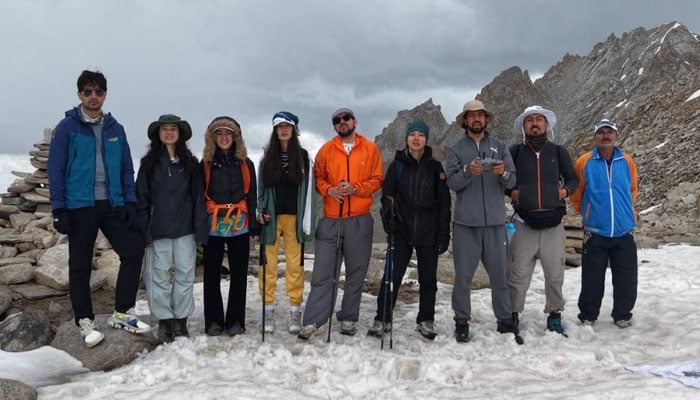
    CHITRAL: A team of Pakistani mountaineers has successfully crossed the historic Phargam An Pass in the Hindu Kush mountain range for the first time in 27 years, marking a major achievement for the country’s mountaineering community. The expedition successfully reached the 5,100-metre-high Phargam An Pass, completing a challenging journey through one of the most remote and difficult mountain routes in northern Pakistan. The expedition also made history as female climbers reached the summit for the first time, highlighting the growing participation of women in Pakistan’s adventure and mountaineering sector. The mission was organised in Upper Chitral with the support of the Khyber Pakhtunkhwa Culture and Tourism Authority. During the expedition, the team also discovered the memorial of Austrian mountaineer George Kronberger, who lost his life in the area in 1975. Despite facing dangerous glaciers, steep snow-covered slopes, rocky terrain and the constant threat of avalanches, the team completed the expedition safely. Expedition guide Zamrud Khan said the route to Phargam An Pass has changed significantly over the years due to the effects of climate change, making the journey more challenging than in the past. Three sisters from Chitral—Mehrosh Akhtar, Ismail Roz and Madhu Shala Akhtar—took part in the historic expedition, setting a new milestone for women in Pakistani mountaineering. Other members of the expedition included Kamran Khan, Samar Khan, Nauman Khan, Noorul Rahman, Zohaib Khan, Umar Khattab Sherani, Sohniya Babar, Amina Shabbir and Madiha Syed. The successful expedition is being seen as an important milestone for adventure tourism and mountaineering in Pakistan, while showcasing the country’s growing potential as a destination for high-altitude exploration.

  • | |

    Security forces eliminate militants in KP intellig…

    Security forces have intensified intelligence-based operations across Khyber Pakhtunkhwa over the past two months, resulting in the killing of multiple militants and the destruction of several militant hideouts, according to security sources. The operations were conducted under Operation 11 Gurj, which is aimed at dismantling militant networks and preventing terrorist activities in the province. During the campaign, security forces carried out a series of targeted raids based on intelligence reports in different districts. According to the sources, several militants were killed during these operations, while their hideouts were successfully destroyed. The forces also apprehended a number of suspected facilitators believed to have been providing logistical and operational support to militant groups. Security personnel recovered a large quantity of weapons, ammunition and other military equipment during the raids. Officials said the seized material was intended to be used in future terrorist attacks. One of the major operations was conducted in the Shakro area of Bajaur district, where security forces targeted militant hideouts after receiving credible intelligence. Reports indicated that several militants were killed, while others sustained injuries during the operation. The forces also located and destroyed multiple improvised explosive devices (IEDs) found in the area. Officials said eliminating these explosives helped prevent potential attacks and improved the safety of local residents. Ground troops, supported by quadcopter surveillance, were used throughout the operations to identify militant positions and monitor movements before launching precise strikes. Security officials said the use of modern surveillance technology enhanced the effectiveness of the operations and reduced risks to security personnel. According to security sources, the operations form part of an ongoing campaign to eliminate militant infrastructure, disrupt terrorist networks and strengthen peace and stability across Khyber Pakhtunkhwa. Authorities reiterated that intelligence-based operations will continue until all militant elements are dismantled and the security situation is fully brought under control.

  • |

    Child’s refusal to buckle up leads to flight cancellation in Canada

    A Porter Airlines flight from Victoria to Toronto was cancelled after a young child refused to sit in the assigned seat and fasten the seat belt. The incident happened on flight PD444 at Victoria International Airport in British Columbia. The aircraft had already left the terminal. It was preparing for takeoff when crew members noticed the child standing on the seat. Flight attendants tried to resolve the situation. The child’s parents also attempted to convince the youngster to sit down. However, the child continued to resist. The crew could not proceed with the flight while the safety issue remained unresolved. Aviation safety rules require passengers to remain seated and use seat belts when instructed. The aircraft therefore had to return to the terminal. The family was removed from the plane. Their baggage also had to be taken off the aircraft. Airport and airline staff then had to complete the required travel and security procedures. The process took considerable time. The procedures continued beyond 12:30am. Victoria International Airport closes its main runway at 12:30am every night. Because the runway had already closed, the aircraft could not take off again that night. The cancellation caused further inconvenience for the other passengers. They were forced to spend the night in Victoria. Porter Airlines apologised to the affected passengers for the disruption. The airline arranged alternative flights for them the following day. The incident highlights how even a seemingly minor safety issue can cause major delays when an aircraft is preparing for departure. Airlines are required to ensure that all passengers follow safety instructions before takeoff

  • | |

    Sindh IGP calls for proper investigation into Mir …

      Sindh Inspector General of Police (IGP) Javed Alam Odho has said that the death of Mir Raza is a tragic and deeply concerning incident, stressing that the case must be investigated and resolved properly  Speaking at a press conference in Sukkur, the Sindh police chief said that a committee had been formed to investigate the case and that a new investigation team would now carry out the inquiry. Commenting on the circumstances surrounding Mir Raza’s death, Odho said he believed that a communication gap or miscommunication had emerged in the case. He described the incident as unfortunate and said that the authorities were committed to ensuring that the matter was investigated in a proper and transparent manner. “We are not the policymakers; we are responsible for implementing the law,” the IGP said, adding that the investigation would eventually establish the facts surrounding the incident. Javed Alam Odho described the Mir Raza case as sensitive and said that both the police and the Sindh government wanted to ensure that it was handled appropriately. He said that much of the confusion surrounding the case had emerged because of the medical-legal report. According to him, an earlier report prepared by one doctor had presented in different findings, which contributed to uncertainty surrounding the case. The IGP said that a new committee had now been formed to investigate the matter and restore public confidence in the process. He explained that the previous committee had continued its work on the basis of the evidence that had been provided to it at the time. However, according to Odho, the evidence available to investigators had subsequently changed significantly. In light of the new evidence, he said, there was a need to restart the investigation using a different approach. The new investigation team has also been instructed to maintain open communication with the victim’s family and the media throughout the investigation, he added. Earlier, reports emerged that an attempt had allegedly been made to burn Mir Raza’s body with acid. According to forensic sources, traces of acid were reportedly found on his shirt, adding another dimension to the investigation. Meanwhile, the Sindh government had decided to have the Mir Raza case investigated through a judicial commission involving High Court judges. Sindh Law Minister Zia Lanjar said that a meeting had been held with the Chief Minister regarding the case. He said the government had decided to establish a judicial commission to investigate the circumstances surrounding Mir Raza’s death. Mir Raza Ali Khan went missing on July 28 from the Pakistan Employees Cooperative Housing Society (PECHS). According to reports, he left his home at around 4:09am in an online taxi. His body was recovered two days later from the Gulistan-e-Johar area. Police officials said that the body was found in a severely damaged condition and that Mir Raza had suffered a gunshot wound to the chest. Authorities also said that all of his social media accounts had been deactivated one day before his body was recovered, a development that investigators are expected to examine as part of the case. Mir Raza’s family has been seeking answers about the circumstances surrounding his death. His father previously said that Mir Raza was scheduled to get married on August 30 at Bait-ul-Mukarram Mosque in Gulshan-e-Iqbal. According to his father, Mir Raza had been extremely happy about starting a new chapter of his life and was looking forward to his upcoming marriage. The formation of a new investigation committee and the proposed judicial commission are expected to bring greater clarity to the case and address concerns raised by the victim’s family and the public.

  • | | | |

    Makkah pact cements Pakistan-Türkiye-Saudi defenc…

    The newly signed defence agreement between Pakistan, Saudi Arabia and Türkiye marks a significant step towards formalising their longstanding security and strategic cooperation, while establishing a framework focused on collective defence and regional stability. The trilateral partnership brings together three countries with strong historical, political, economic and defence ties. Their cooperation has grown over decades and is now being shaped into a more structured security framework amid a rapidly changing regional environment. The agreement comes as conflicts, emerging security threats and evolving forms of warfare continue to reshape the strategic landscape. Supporters of the pact say closer coordination among the three countries can contribute to regional stability and strengthen their ability to respond collectively to security challenges. Focus on defence and deterrence The agreement has been described as defensive rather than offensive. Its central principle is collective security, under which an armed attack against one member is considered a threat to all three. The arrangement is aimed at strengthening deterrence and reducing the possibility of conflict by demonstrating that aggression against one country could trigger a coordinated response from the other two. The framework is not intended to target any particular country, according to the explanation of the agreement. Instead, it seeks to promote peace, stability and security through stronger defence cooperation. Complementary strengths Pakistan, Saudi Arabia and Türkiye bring different strategic capabilities to the partnership. Pakistan contributes extensive military experience and defence expertise, including experience in managing complex security challenges. Saudi Arabia brings its strategic position in the region, economic strength and political influence. Türkiye contributes advanced defence technology, a growing defence industry and substantial industrial capabilities. Together, these capabilities could provide the three countries with a broader platform for strategic coordination and defence preparedness. The partnership could also encourage greater cooperation in areas such as military coordination, intelligence sharing, defence technology and strategic planning. Pakistan’s regional role The agreement also highlights Pakistan’s expanding engagement with different regional and global actors. Islamabad maintains strategic and diplomatic relations with Saudi Arabia and Türkiye while also engaging Iran, China, the United States and other international partners. This network of relationships could allow Pakistan to play a constructive role in regional diplomacy and help facilitate communication among countries with differing interests. The effectiveness of the trilateral framework, however, will depend on how consistently the three countries translate the agreement into practical cooperation. Not a NATO-style alliance The partnership has also been described as not a Muslim NATO and not a mechanism for providing nuclear protection to its members. Instead, it is presented as a defensive arrangement designed to strengthen collective deterrence and security cooperation while supporting regional peace. The agreement effectively formalises much of the strategic cooperation that Pakistan, Saudi Arabia and Türkiye have developed over the years.

  • | | |

    Karachi weather update: Surjani Town records highe…

    Surjani Town recorded the highest rainfall in Karachi on Saturday as monsoon activity brought light to moderate showers to several parts of the city. According to the Pakistan Meteorological Department (PMD), similar weather conditions are expected to continue today and tomorrow, with cloudy skies and intermittent rainfall forecast across Karachi. The city experienced highly humid weather during the morning before low-level clouds covered most areas later in the day. Light drizzle and scattered showers were reported in several neighborhoods, while suburban areas including Surjani Town, Gulshan-e-Maymar, and Scheme 33 received light to moderate rainfall. Official rainfall data released by the PMD showed that Surjani Town recorded the highest rainfall at 4 millimeters. Gulshan-e-Maymar received 3.4 millimeters, while PAF Base Masroor recorded 2.3 millimeters. Gulshan-e-Hadeed registered the lowest rainfall among the monitored locations with 1.5 millimeters. PMD spokesperson and Deputy Director Anjum Nazir Zaigham said Karachi is expected to remain mostly cloudy through Sunday and Monday, with chances of thunderstorms accompanied by light to moderate rain. However, he clarified that the current weather system is not expected to produce heavy rainfall in the city. According to the department’s early warning update, the low-pressure weather system has weakened after previously developing into a depression. It is currently located over southeastern Rajasthan, India. Although the system has weakened, monsoon currents from the Arabian Sea and the Bay of Bengal continue to influence weather conditions across Pakistan’s central and northern regions. Meteorologists also noted that a separate western weather system is affecting the country’s northern areas and could strengthen further, bringing additional rainfall to upper and central parts of Pakistan in the coming days. Meanwhile, several districts of rural Sindh are expected to experience thunderstorms, gusty winds, and moderate to heavy rainfall due to ongoing monsoon activity. Authorities have warned that heavy downpours in some districts could trigger urban flooding in low-lying areas. The PMD reported that Karachi’s maximum temperature reached 35.8 degrees Celsius on Saturday, while humidity remained high at 72 percent, contributing to muggy conditions despite the rainfall. Residents have been advised to stay updated with official weather forecasts as monsoon conditions continue to evolve across the region.

Leave a Reply

Your email address will not be published. Required fields are marked *