ukrainian prisoners recount
| |

Ukrainian prisoners recount torture, sexual abuse while in Russian detention

Former Ukrainian detainees and Ukrainian officials accused Russia on Monday, August 11, of systematically torturing prisoners of war and civilian detainees, holding captives incommunicado and subjecting them to beatings, electric shocks and sexual abuse, with thousands still in captivity.

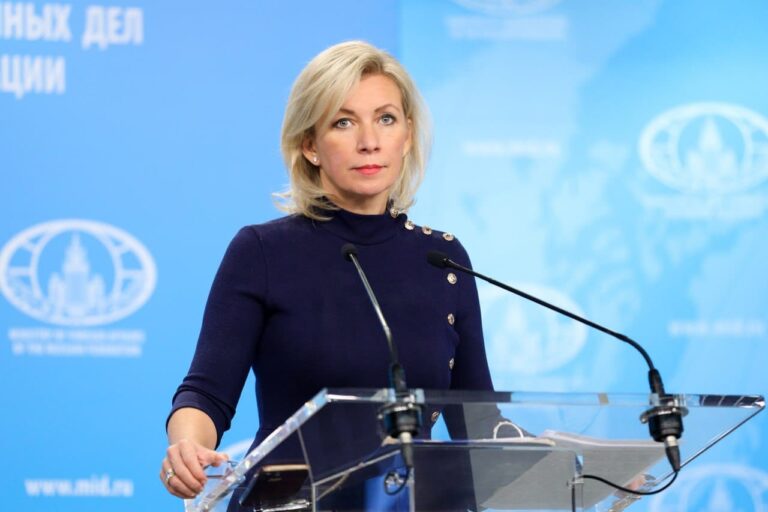
Russia rejected the allegations made at an informal UN Security Council meeting, with its Deputy UN Representative Maria Zabolotskaya calling it “a disinformation campaign” and alleging that Russian prisoners in Ukraine were subjected to “torture and degradation and moral and physical abuse.”

Khuan Alberto Levya Garsiya, still an active member of the Ukrainian military, said his Russian captors subjected him to every imaginable form of torture during 1,183 days in captivity.

“Yes ..I was tortured,” he told reporters after the UN meeting. “Anything you can think of that can be done hurtful, humiliating to a man, unwillingly. Anything that comes to your mind, not only verbal, physical abuse, daily beatings, electrocution, excessive, excessive exercises in freezing cold when it’s minus degrees…sexual abuse. Everything that can be applied to a person into making a person break mentally. It was all applied to me and most of my comrades.”

Garsiya said he was lucky to survive but two of his friends were beaten to death in detention centers in the Donetsk region. Prisoners were held in “overcrowded barracks without adequate conditions,” where “almost all POWs were ill with dysentery” and many were starving, he told the UN meeting.

A Ukrainian with a Cuban father, he said guards targeted him particularly because of his Latino name, accusing him of being “a mercenary and an American spy.”

Crimean Tatar activist Leniie Umerova, released in a prisoner exchange in 2024, said she was detained while trying to visit her seriously ill father in Crimea.

She described being moved through “seven detention facilities” in what she called “a carousel of repression” and accused Russia of using torture against Ukrainians in captivity.

Oleg Gushin of the Ukrainian government’s Coordination Headquarters for the Treatment of Prisoners of War said Ukrainian prisoners were “killed and tortured” in detention.

He said Kyiv had identified “more than 300 places of detention” in Russia and occupied Ukrainian territory and that while more than 9,000 Ukrainians had been returned through exchanges, “thousands” remained in Russian captivity.

Ukraine’s Chargé d’Affaires Volodymyr Pavlichenko called for greater international pressure and accountability for Russia’s treatment of prisoners.

‘Widespread and systematic’

UN Assistant Secretary-General for Human Rights Claudia Fuentes Julio said UN monitoring showed that “widespread and systematic torture and ill-treatment of Ukrainian prisoners of war and civilian detainees by the Russian Federation authorities continues,” including sexual violence.

Since February 2022, the UN Office of the United Nations High Commissioner for Human Rights had documented the execution of 129 Ukrainian prisoners of war at the beginning of their captivity and the deaths of 48 in custody, resulting from torture, denial of medical care, or other inhumane conditions of detention, she said.
Must Read

In Ukraine, February is the month of violent memories


In Ukraine, February is the month of violent memories

She said more than 95% of Ukrainian prisoners of war interviewed reported experiencing torture or ill-treatment.

She said more than half also reported sexual violence, including “rape, gang rape, beating while nude, beatings to the genitals, electric shocks to the genitals and nipples, and degrading treatment of a sexualized nature.”

She said the UN had received “consistent accounts of severe beatings with objects such as batons, heavy belts, and wood, electric shocks, dog attacks, mock executions, and other forms of torture.”

Fuentes Julio said the OHCHR had also documented torture and ill-treatment of Russian and third-country national prisoners of war held by Ukraine, but “on a fundamentally different scale.”

She said about half of Russian and third-country prisoners interviewed reported abuse during initial stages of captivity. – Rappler.com
Similar Posts

  • |

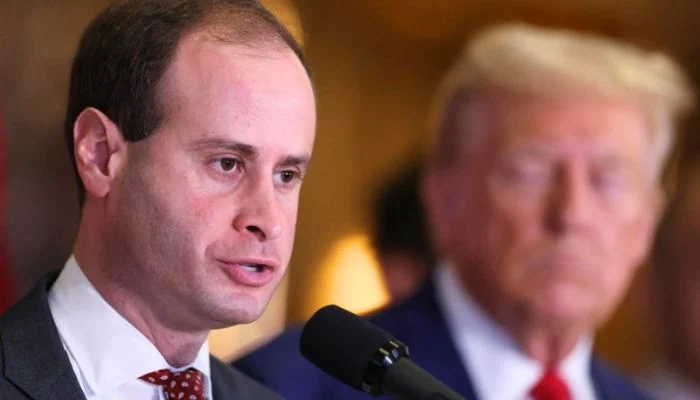
    Will Scharf named Trump’s new White House counsel

    US President Donald Trump has appointed Will Scharf as the next White House counsel and assistant to the president. Scharf, who currently serves as White House staff secretary, will take over the legal post on September 1, 2026. He will replace David Warrington, who is set to leave the administration and enter the private sector. Scharf is a lawyer and political adviser with close ties to Trump. Before joining the White House, he represented Trump in several major legal matters. He was also involved in the presidential immunity case that reached the US Supreme Court. Scharf previously worked as a federal prosecutor. He also served as a law clerk for federal appeals court judges, giving him experience in both government and federal litigation. His new position will place him at the centre of the Trump administration’s legal strategy. As White House counsel, Scharf will advise the president on legal issues and oversee matters involving executive privilege, judicial appointments and relations with the Justice Department. He will also be involved in responding to legal challenges facing the administration. The position is considered particularly important as Trump prepares for growing political and legal pressure ahead of the 2026 midterm elections. Scharf joined Trump’s legal team in 2023. He worked on the federal election interference case brought by former Special Counsel Jack Smith. His involvement continued as the case reached the Supreme Court. In 2024, the Supreme Court ruled that presidents have broad immunity from criminal prosecution for official acts. The decision became a major development in the legal battles surrounding Trump. After Trump returned to the White House in January 2025, Scharf was appointed staff secretary. In that role, he managed documents and other materials sent to the president for review. He also frequently appeared with Trump during executive-order signing ceremonies. Scharf has also chaired the National Capital Planning Commission. During his tenure, he was involved in the approval process for Trump’s proposed White House ballroom project, which has faced controversy and scrutiny. His appointment comes at a politically sensitive time for the administration. The White House is dealing with legal and political challenges while preparing for increased congressional scrutiny before the midterm elections. Trump praised Scharf after announcing the appointment. He described him as “tough, strong, and smart” and highlighted his experience as a federal prosecutor and his work on Trump’s legal cases.

  • |

    Moroccan businessman’s death reignites Italy migration debate

    BOLOGNA: The death of a Moroccan businessman during a police restraint in the Italian city of Bologna has reignited Europe’s heated debate over migration, policing and the treatment of immigrants, with the case exposing the deeply personal human stories often overshadowed by political rhetoric. The incident comes as European governments face mounting pressure over migration policies. Just days after thousands of migrants crossed from Morocco into Spain’s North African enclave of Ceuta, Italian Prime Minister Giorgia Meloni announced plans to suspend a free-movement agreement with Spain, reinforcing her government’s tough stance on immigration. Amid the political storm, the death of Abderrahim Fakir, a 42-year-old Moroccan-born entrepreneur who had spent most of his life in Italy, has become a symbol of the broader tensions surrounding migration and law enforcement. Videos recorded by local residents on July 19 showed police officers restraining Fakir face down on the ground for several minutes after responding to reports of a distressed man behaving erratically in a residential area. The footage, which quickly spread across social media, sparked widespread public outrage and renewed scrutiny of police conduct. Authorities said officers were responding to emergency calls about a man shouting, kicking garage doors and striking a vehicle. An autopsy and official investigations into the officers’ actions remain ongoing, while four Red Cross volunteers who were present are also under review. The tragedy triggered thousands of peaceful protesters to gather in Bologna, demanding accountability and justice for Fakir’s family. However, demonstrations later turned violent when a small group clashed with police, leaving dozens of officers injured and further intensifying political divisions. Friends, relatives and lawyers describe Fakir as far more than the image portrayed in political debates. Having arrived in Italy from Morocco at the age of six, he built a successful life, eventually owning a small metalworking company after years of hard work. Behind that success, however, he had been battling severe anxiety. According to his lawyer, Fakir feared deportation after complications involving his residency permit, despite living in Italy for nearly four decades. He had also been struggling financially as his business declined, forcing him to lay off several employees. Family members said he concealed his emotional pain, insisting everything was fine even as he sought psychiatric assistance weeks before his death. Sociologists argue that Fakir’s story highlights the dangers of reducing migration to political slogans while ignoring the human lives behind the headlines. As Italy awaits the outcome of official investigations, his family says they continue to trust the country’s justice system and hope the full truth surrounding his final moments will emerge.

  • |

    Foreign nationals among victims of Nizhnekamsk attack, Russia says

    At least 13 people were killed in a terrorist attack targeting civilian facilities in Nizhnekamsk, Russia’s Tatarstan region, on August 10, according to the Russian Foreign Ministry. Russian Foreign Ministry spokeswoman Maria Zakharova said most of those killed were foreign nationals. Preliminary information indicated that eight victims were citizens of Uzbekistan, while another victim was from Tajikistan. Around 20 foreign nationals were also reported to have been injured in the attack. Zakharova accused Ukrainian forces of deliberately targeting civilian locations where foreign workers and residents from countries friendly to Russia were present. She claimed the attack was intended to create tensions between Russia and those nations. The Russian official described the incident as a terrorist attack and said such strikes have resulted in the deaths of both Russian citizens and nationals of other countries. The Russian Foreign Ministry expressed condolences to the families and relatives of those killed. It also wished a rapid recovery to those injured. Moscow further urged the international community to condemn what it described as attacks against civilian targets. The accusations were made by the Russian Foreign Ministry as part of its response to the Nizhnekamsk incident. The claims concerning responsibility and the circumstances surrounding the attack could not be independently verified from the statement alone. The incident has raised concerns over the safety of foreign nationals working and living in areas affected by the Russia-Ukraine conflict. Further details about the victims, the extent of the damage and the circumstances of the attack are expected as investigations continue.

  • | |

    Congo tightens grip on mineral exports with ban on…

    The Democratic Republic of Congo has prohibited exports of copper concentrate and cobalt concentrate, according to a government order reviewed on Thursday, marking the latest step in an ongoing push to force more mineral processing to happen inside the country and capture a larger share of the value generated by its mining sector. News of the ban sent benchmark three month copper prices on the London Metal Exchange up by as much as 1.8 percent to $14,369.50 a metric ton, the highest level since January 29, when the metal touched an all time peak of $14,527.50. Prices stood at $14,300 as of 0930 GMT following the report. Congo holds the position of the world’s largest cobalt supplier and ranks among the top sources of copper and other minerals critical to the global energy transition. The government is using that leverage to encourage the build out of domestic processing capacity rather than allowing raw or partially processed materials to leave the country. The order, dated June 29 and signed jointly by Mines Minister Louis Kabamba Watum, Foreign Trade Minister Julien Paluku Kahongya and Economy Minister Daniel Mukoko Samba, states plainly that exporting copper and cobalt concentrates is now prohibited. The prohibition took effect immediately, though the order allows for one year export waivers to be granted under unspecified strategic circumstances. The same order also establishes a new tax structure covering economically significant mining by products, with a three month transition period built in before the new rules take full effect. Officials said the export ban aims to push mining companies toward marketing or exporting higher value processed mineral products rather than raw concentrate. This marks the fourth time Congo has restricted concentrate exports, following similar bans imposed in 2013, 2019 and 2023, each of which included waivers in cases where domestic smelting capacity could not keep pace with output. The new order formally repeals the 2023 measure and its associated exemptions, replacing it with a broader regulatory framework governing both mineral exports and taxation of significant by products recovered during processing. Congo already exports the vast majority of its copper in refined form. During the first quarter of 2026, the country shipped 696,725 tons of copper cathodes, compared with just 53,926 tons of copper concentrate containing roughly 18,863 tons of copper metal, according to official figures. Over the same period, Congo exported 51,940 tons of cobalt hydroxide containing about 17,054 tons of cobalt metal. Christian Geraud Neema, a mining analyst with the nonprofit China Global South Project, said the new ban is unlikely to significantly disrupt most mining operators since the bulk of Congo’s copper and cobalt already undergoes domestic refining before export. He said the operation most likely to feel the impact is the Kamoa Kakula venture, jointly owned by Ivanhoe Mines, China’s Zijin Mining and the Congolese government, which still exports some volume of concentrate under existing exemptions. Neither Ivanhoe nor Zijin responded immediately to requests for comment, and the Congolese chamber of mines also did not respond. The newly introduced tax regime applies broadly across mineral categories, extending to trace and ultra trace minerals recovered during the refining process. These by products will be taxed using a 55 percent valuation coefficient, with royalties applied alongside those already charged on the primary mineral being extracted. The policy fits into a broader pattern across resource rich African nations seeking to move beyond raw material exports and capture more manufacturing and processing value domestically, a shift that has gained momentum as global demand for energy transition minerals like copper and cobalt continues to grow.

  • | | | | | |

    Ramon Ang buys his way into Lopez Inc., which owns what he already builds

    So far, what has actually changed hands is one family branch’s stake in the private company at the very top of the Lopez empire. Whether it leads to a direct ABS-CBN rescue is a question about what Ang, and the Lopez family, do next.

  • |

    Arson suspect charged as catastrophic wildfires devastate Spokane County

    A 37-year-old man has been charged with first-degree arson in connection with one of three uncontained wildfires burning across Spokane County, Washington, as emergency crews continue to combat blazes that have destroyed hundreds of structures and forced tens of thousands to flee their homes. Spokane County Sheriff John Nowels confirmed that Aaron F. Farinacci was arrested on Monday in relation to the Old Trails Fire and is being held on a $1 million bond. According to law enforcement officials, a witness reported seeing Farinacci kneeling near the location where the fire originated on Saturday, shortly before smoke was observed rising from the brush. Responding officers subsequently located the suspect carrying waterproof matches and a butane lighter. Investigators utilised body-worn camera footage to obtain an official arrest warrant. The Old Trails, Autumn Lane, and Fairview fires have collectively scorched more than 10,000 acres across the region. None of the three blazes has been contained, presenting an ongoing challenge for emergency personnel navigating difficult weather conditions and dry vegetation. Washington Governor Bob Ferguson described the emergency in stark terms during a broadcast interview, characterising the destruction across urban and suburban zones as severe. He noted that entire residential neighbourhoods within the city of Spokane have been largely wiped out by the advancing flames. Local authorities estimate that more than 700 structures have been completely destroyed, with an additional 10,000 properties remaining under immediate threat. Roughly 65,000 residents across Spokane County have been ordered to evacuate as containment efforts proceed. Emergency services confirmed that no fatalities or injuries have been verified to date.

Leave a Reply

Your email address will not be published. Required fields are marked *