palace fears harry
|

Palace fears Harry could reach King Charles while Camilla’s away

Prince Harry’s ongoing push to rebuild ties with the royal family may be approaching a pivotal moment. A new development has insiders within the Firm reportedly on edge.

The concern centres around Queen Camilla’s upcoming girls’ trip, which happens to overlap with King Charles’s time at Balmoral in Scotland. According to celebrity reporter Rob Shuter and a Palace insider, this overlap has become a genuine point of worry.

Camilla is widely believed to play a key role in tempering Charles’s emotional responses when it comes to Harry. She’s even reportedly rearranged her own schedule in the past just to be present during Harry’s summer meeting at Highgrove.

A Palace source told Shuter that Harry is well aware of exactly when his father is most emotionally vulnerable. With Camilla away, one of the strongest steadying influences on Charles would temporarily be missing.

The source explained that Harry understands his father on a deeply emotional level. According to the insider, Harry knows Charles misses him and senses that beneath the tension, the King still wants his son back.

The source added that while Charles can be firm and composed in his role as monarch, Harry knows exactly how to reach him as a father. That emotional vulnerability is reportedly what worries palace insiders the most.

Shuter noted that no dramatic gesture would even be necessary to make an impact. Even a simple phone call, he suggested, could open a door that officials would then struggle to close again.

The timing adds another layer of complexity to the already delicate relationship between Harry and his father. With Camilla’s steadying presence temporarily out of the picture, palace insiders appear to be bracing for the possibility of an unplanned reconciliation attempt.

Whether Harry chooses to act during this window remains to be seen, but the concern within palace circles suggests his opportunity is being taken seriously behind the scenes.
Similar Posts

  • | | |

    Justice for Kashmir begins with implementing UN re…

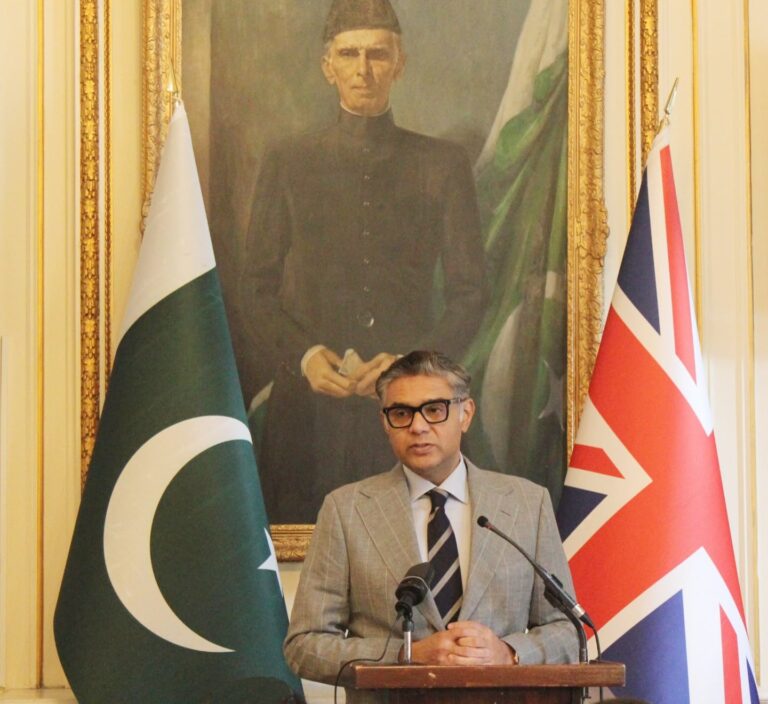
    Pakistan’s High Commissioner to the UK, Tipu Usman, has urged the international community to play a more proactive role in resolving the Kashmir dispute, declaring that “justice for Kashmir begins with implementing United Nations Security Council resolutions” and reaffirming that Pakistan’s support for the people of Jammu and Kashmir “remains unwavering and unconditional.” He was addressing a seminar organised by the Pakistan High Commission in London to observe Youm-e-Istehsal Kashmir, marking the anniversary of India’s August 5, 2019 decision to revoke the special status of Indian Illegally Occupied Jammu and Kashmir (IIOJK). The event brought together British parliamentarians, diplomats, community leaders and members of the British Pakistani and Kashmiri diaspora, who condemned India’s revocation of Article 370 and reiterated support for the Kashmiri people’s right to self-determination. In his keynote address, Tipu Usman called upon the international community, particularly the United Kingdom, to stand on the side of justice by urging India to reverse the unilateral measures introduced on August 5, 2019, restore the rights and special status of Jammu and Kashmir, and honour the relevant United Nations Security Council resolutions. “Pakistan’s support for the people of Jammu and Kashmir remains unwavering and unconditional,” he said, adding that a peaceful and lasting settlement of the dispute must be achieved in accordance with the wishes of the Kashmiri people as reflected in the UN resolutions. The seminar was attended by Lord Qurban Hussain, Baroness Nosheena Mobarik, Afzal Khan MP and Adnan Hussain MP, alongside prominent community figures including Councillor Yasmine Dar, UK-Pakistan Kashmiri Councillors Forum Chairman Liaqat Ali MBE, Jammu Kashmir Self Determination Movement International Chairman Raja Najabat Hussain and former Deputy Mayor of Peterborough Mohammad Nadeem. Speakers strongly criticised India’s constitutional changes of August 2019, describing them as illegal and unconstitutional. They expressed concern over the human rights situation in IIOJK and called for an immediate end to alleged rights violations. Participants stressed that the Kashmir dispute remains an internationally recognised issue that should be resolved through dialogue and in line with UN Security Council resolutions. The seminar also proposed a strategic roadmap to enhance engagement with policymakers, parliamentarians and international stakeholders to build support for a just and lasting resolution of the Kashmir dispute. Messages from the President of Pakistan, the Prime Minister and the Deputy Prime Minister and Foreign Minister were read out during the event, reiterating Pakistan’s continued diplomatic, political and moral support for the people of Jammu and Kashmir. The ceremony concluded with participants observing a minute’s silence in memory of those who lost their lives in the Kashmir conflict.

  • | | |

    Pakistan receives $3.6 billion in remittances in J…

      KARACHI: Pakistan received $3.6 billion in workers’ remittances from overseas Pakistanis during July 2026, marking a significant increase compared with the same period last year, according to data released by the State Bank of Pakistan (SBP). The central bank reported that remittance inflows increased by 13% year-on-year in July and also recorded a 4.5% rise compared with the previous month. The latest figures highlight the continued importance of overseas Pakistanis in supporting the country’s foreign exchange position and overall economic stability. Saudi Arabia remained the largest source of remittances during the month, sending $913.9 million to Pakistan. The United Arab Emirates (UAE) followed with $737.3 million, while overseas Pakistanis in the United Kingdom contributed $555.5 million. The United States also remained an important source, accounting for $317.2 million in remittance inflows. Prime Minister Shehbaz Sharif welcomed the increase and expressed satisfaction over the $3.6 billion received in July. In a statement issued by the Prime Minister’s Office, he said the 13% year-on-year increase in remittances was encouraging and reflected the continued contribution of overseas Pakistanis to the national economy. The prime minister also highlighted the 4.5% month-on-month growth, saying that the consistent financial support provided by overseas Pakistanis was playing an important role in strengthening Pakistan’s economy. He described overseas Pakistanis as a valuable and integral part of the country’s economic mainstream. The latest figures have also generated positive expectations regarding Pakistan’s remittance outlook for the ongoing financial year. Topline Research estimated that remittances could reach around $40.1 billion during FY27 if the current trend continues. Economist Dr Khaqan Najeeb said remittances were becoming increasingly important as a source of foreign exchange, particularly at a time when Pakistan’s export sector continued to face difficulties. According to him, the country’s weak domestic economic conditions, limited employment opportunities and significant differences between local and international wages were encouraging more Pakistanis to seek employment abroad. He noted that the movement of workers overseas was resulting in a corresponding flow of foreign exchange back into Pakistan. The economist said these inflows were helping the country manage its balance of payments and reduce pressure on its external accounts. However, he also warned that the growing dependence on remittances highlighted deeper structural weaknesses within the domestic economy. Dr Najeeb pointed out that Pakistan’s increasing reliance on overseas employment reflected the country’s inability to generate enough productive and well-paying jobs at home. While remittances provide valuable financial support and strengthen foreign exchange reserves, he argued that sustainable economic growth requires stronger domestic employment opportunities and a more competitive export sector. The July figures therefore present both an encouraging development and a broader economic challenge. Rising remittances are providing Pakistan with much-needed foreign exchange, but policymakers also face the task of improving domestic economic conditions so that overseas employment becomes a choice rather than a necessity for a growing number of Pakistanis.

  • | | |

    PM Shehbaz orders scientific system to assess tax …

    Prime Minister Shehbaz Sharif has directed the Federal Board of Revenue (FBR) to develop a scientific and comprehensive method to assess tax potential in different sectors of the economy. The new system is aimed at improving tax collection. It will also help identify sectors with untapped revenue potential. The government wants to strengthen tax administration and reduce tax evasion. The prime minister issued the directives during a meeting on FBR reforms in Islamabad on Wednesday. He directed the FBR to work with the power sector to identify businesses and individuals involved in the informal economy. Authorities will also identify those suspected of avoiding taxes. Shehbaz instructed officials to take legal action against people and businesses found involved in tax evasion. The prime minister said improvements in the FBR’s monitoring system were already producing results. He pointed out that sugar production data had matched FBR records for the first time in Pakistan’s history. He described the development as an important sign of improved monitoring and tracking. Shehbaz praised FBR Chairman Rashid Mahmood Langrial and his team for their efforts. He also appreciated taxpayers and businesses that were following tax laws. The prime minister said the government had provided maximum possible support to export-oriented and domestic industries. He said the government would continue facilitating businesses while ensuring compliance with tax regulations. He directed the FBR chairman and senior officials to spend the first week of every month in Karachi. They will meet business representatives and address their concerns. Shehbaz also ordered the expansion of digital production monitoring. He directed officials to make tracking systems operational in the textile, beverages, steel, poultry, edible oil and ghee, and tyre sectors by December. He also stressed that appointments and transfers within the FBR must be made strictly on merit. The prime minister praised the new system for evaluating officers. He said merit and transparency must remain central to FBR reforms. He directed authorities to prepare a list of high-performing officers. The best-performing officials will be considered for awards on Independence Day. Shehbaz also ordered an immediate third-party audit of customs bonded warehouses. The audit will examine the warehouses and identify possible irregularities. Officials will then be required to take corrective measures where necessary. The meeting was informed about progress on production tracking systems and human resource reforms. Officials said tracking systems were already fully operational in the sugar, cement, tobacco, tiles and fertiliser sectors. Work in five additional sectors was also nearing completion. These sectors have an estimated tax potential of more than Rs700 billion. Officials said tracking systems were also being developed for nine other production sectors. These sectors are estimated to have an additional tax potential of around Rs560 billion. The prime minister directed authorities to complete indirect tax tracking across the production sector by the end of the year. The meeting also reviewed reforms in the FBR’s workforce. Newly recruited officers are receiving specialised training. Existing officers are also undergoing training. The programmes have been designed around merit and performance. Officials said the training modules were aligned with international standards and Pakistan’s tax requirements. A new performance evaluation system has also been introduced. Under the system, high-performing officers can receive recognition. Officials who fail to meet performance standards can face penalties. The government has also appointed 957 third-party auditors. The move is intended to improve transparency and strengthen tax-related processes. Recruitment of 280 goods evaluators is also under way. The evaluators will work under the customs faceless assessment system. The meeting also discussed measures to reduce unnecessary tax disputes. A Case Scrutiny Committee is being established for this purpose. The committee will determine whether tax cases should proceed based on their merits. Officials also provided an update on Alternative Dispute Resolution Committees. By June 2026, 152 out of 377 applications had been resolved within 90 days. The process resulted in the recovery of Rs54 billion in tax revenue. Digital reforms also reviewed Prime Minister Shehbaz Sharif separately reviewed progress on the national digital vision. He ordered immediate measures to make the newly established Sky47 AI national central data centre available to federal government institutions. The prime minister said the initiative would help modernise government services. He said citizens would eventually be able to use a single digital identity to access multiple public services. These services could include government document verification, banking, healthcare and transfers. The prime minister said a central national data centre would bring information from federal institutions together. He said this would reduce the need for separate data centres. It could also help save public resources. Shehbaz said the national digital vision was important for building a more integrated society. He highlighted three key areas of the programme. These include the digital economy, digital citizen services and digital government services. He directed authorities to initially focus on health, agriculture, utilities, housing and small and medium-sized enterprises. The aim is to ensure that citizens begin receiving improved digital services as quickly as possible. Officials said digital implementation was already under way in agriculture, food, health, energy, housing and SMEs. Work has also started in 14 additional priority sectors. The housing component will introduce a central identification number for public and private properties. The SME component will create an integrated system of unique legal identities for businesses. The government believes these measures can improve transparency and economic activity. Shehbaz also ordered an early meeting of the National Digital Commission. The meeting will include key stakeholders. Provincial governments will also be consulted. The commission was established under the Digital Nation Pakistan Act 2025. It is chaired by the prime minister and includes the chief ministers of all provinces. The prime minister said consultation with federal and provincial institutions was essential for effective implementation. He also stressed the importance of international standards and global best practices.

  • | | |

    17-year-old killed after trailer hits motorcycle i…

    A tragic road accident involving a heavy vehicle claimed the life of a 17-year-old boy and left another person injured in Karachi on Tuesday, raising fresh concerns over road safety and the movement of heavy traffic across the city. According to rescue officials, the accident occurred near Gulshan Hadeed Turn in the Steel Town area when a trailer collided with a motorcycle carrying two riders. The impact of the crash proved fatal for one of the riders, who died at the scene, while the second rider sustained injuries. The deceased was identified as 17-year-old Usman, a resident of Shah Latif Town. Rescue teams responded promptly to the incident and shifted both the victim’s body and the injured person to Jinnah Postgraduate Medical Centre (JPMC) for legal formalities and medical treatment. Authorities have not yet released the identity or condition of the injured individual. Police officials from Steel Town stated that the trailer driver was taken into custody immediately after the accident. The trailer involved in the collision has also been seized as part of the investigation. A case is being processed, and authorities are examining the circumstances that led to the crash. The latest incident adds to a growing number of fatal accidents involving heavy vehicles in Karachi, where trailers, dumpers, and trucks have frequently been linked to deadly road crashes. Such incidents have repeatedly sparked public concern over traffic management, enforcement of road safety regulations, and the operation of heavy vehicles on busy roads. Residents and road safety advocates have urged authorities to implement stricter measures, including better monitoring of heavy transport vehicles, improved driver training, and stronger enforcement of traffic laws. Many believe that regulating the movement of heavy vehicles during peak traffic hours could significantly reduce the risk of similar accidents. The investigation into the Gulshan Hadeed accident is ongoing, and police are expected to determine whether negligence or traffic violations contributed to the fatal collision. Meanwhile, the loss of another young life has once again highlighted the urgent need for comprehensive road safety reforms to prevent further tragedies on Karachi’s roads.

  • | |

    Maduro set for new US court hearing in trafficking…

    Venezuela’s ousted President Nicolas Maduro and his wife Cilia Flores are scheduled to appear back in a US courtroom Wednesday for a hearing focused on the upcoming schedule in their drug trafficking case, including discussion of a possible trial start date in June 2027. The hearing before US District Judge Alvin Hellerstein is set to begin at noon Eastern time in Manhattan federal court and could offer insight into the next steps in what has become one of the most high profile and consequential criminal cases in recent US history. Lawyers for both sides indicated in a filing that Maduro’s first round of legal motions seeking to have the case dismissed would come due on September 2. Those motions are expected to include an argument that Maduro should be immune from prosecution based on his position as head of a sovereign state. During Maduro’s first court appearance on January 5, his defense attorney Barry Pollack suggested the defense could also challenge the indictment by arguing that Maduro’s capture may not have been carried out legally. Maduro, a socialist leader who maintained an antagonistic relationship with Washington throughout his time leading Venezuela from 2013 until his capture, referred to himself as a prisoner of war during that January appearance. He has long accused the United States of seeking to remove him from power in order to gain greater influence over Venezuela’s substantial oil reserves. The United States describes Maduro as a corrupt dictator whose economic mismanagement led to Venezuela’s economic collapse, and accuses him of rigging reelection victories in 2018 and 2024. Washington stopped recognizing him as Venezuela’s legitimate president in 2019. Ahead of the January operation that led to his capture, the Justice Department’s Office of Legal Counsel issued an advisory opinion stating that it would be lawful for Trump to authorize the operation unilaterally, arguing it served an important national interest without rising to the level of a war requiring congressional approval. According to Tuesday’s filing, lawyers for both sides said Maduro could submit a second round of legal motions by January 11, 2027, following the prosecution’s handover of any classified evidence for defense review. Maduro last appeared in court on March 26 for a hearing concerning a US government restriction that barred Venezuela’s government from covering his legal fees. That dispute was resolved about a month later, when Washington agreed to adjust its financial sanctions on Venezuela to permit the government to pay those fees. Venezuela has been governed since Maduro’s capture by his former vice president, Delcy Rodriguez, who has cultivated closer ties with the Trump administration. Washington has eased sanctions on Venezuela’s oil sector, and foreign companies have expanded oil and gas operations within the country. The US military has also provided relief assistance following two earthquakes that struck Venezuela’s coast last month, killing more than 5,000 people. The case continues to unfold against the backdrop of a broader thaw in relations between Washington and Caracas under Rodriguez’s leadership, even as Maduro’s legal team prepares to mount a defense built partly around questions of sovereign immunity and the legality of the operation that led to his capture.

  • | |

    Gold prices surge by Rs13,700 per tola in Pakistan

    Gold prices in Pakistan surged sharply on Thursday, rising by Rs13,700 per tola as international bullion prices recorded a strong increase. According to the All-Pakistan Gems and Jewellers Sarafa Association (APGJSA), the price of gold increased to Rs471,936 per tola, compared with Rs458,236 recorded on the previous day. The price of 10 grams of gold also climbed significantly, increasing by Rs11,746 to Rs404,609. The sharp increase in local gold prices came alongside a major rally in the international bullion market. International gold prices rose by $137 per ounce to $4,495, providing strong upward momentum to domestic prices. The latest increase follows significant fluctuations in Pakistan’s gold market over the past several trading sessions. On Wednesday, local gold prices had declined by Rs3,700 per tola despite a strong rise in international prices. The rate had fallen to Rs458,236 per tola, while 10 grams of gold were priced at Rs392,863. On Tuesday, gold prices remained unchanged at Rs461,936 per tola. Earlier on Monday, the precious metal had gained Rs2,000 per tola, reaching Rs461,936. The latest movement highlights the volatility currently being witnessed in the precious metals market. International bullion prices remain a key factor influencing gold rates in Pakistan, while local prices can also be affected by currency movements and domestic market conditions. Silver prices also recorded a substantial increase on Thursday. According to APGJSA figures, the price of silver rose by Rs317 per tola to Rs7,169. The price of 10 grams of silver also increased by Rs317 to Rs6,146. The sharp rise in gold prices is likely to attract renewed attention from investors, jewelers and consumers who closely monitor precious metal rates. Gold is often considered a store of value, making significant price movements particularly important for investors and households. With international gold prices reaching $4,495 per ounce and the local rate crossing Rs470,000 per tola, market participants will be closely watching the next trading sessions for signs of whether the rally will continue or prices will experience another correction.

Leave a Reply

Your email address will not be published. Required fields are marked *