nadra launches special

NADRA launches special registration facility for minorities

The National Database and Registration Authority (NADRA) has introduced a special facility for members of minority communities. As part of activities marking National Minorities Day, NADRA has launched a special registration campaign from August 10 to 13.

Under the campaign, special teams accompanied by mobile registration vans are visiting areas with large minority populations and providing citizens with identity-related services close to their homes.

NADRA has urged members of minority communities to take advantage of the services being provided by these teams in their respective areas and ensure that they have valid legal identification.

The mobile registration vans are also equipped with iris-scanning facilities. NADRA has strongly appealed to all citizens to make full use of this facility and get their iris scans completed without paying any additional fee.

Similar Posts

  • CCPO orders foolproof security for Eid Milad-un-Nabi ﷺ

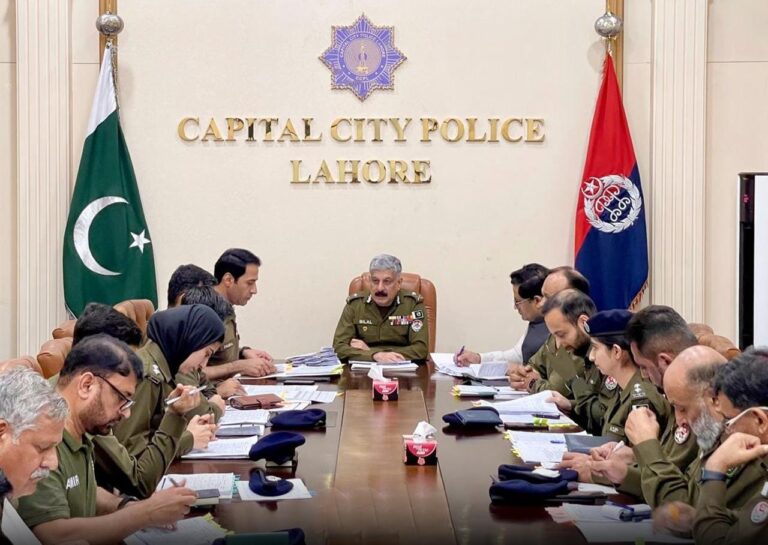
    LAHORE: Capital City Police Officer Bilal Siddique Kamyana chaired a high-level performance review meeting of the Model Town and Cantt divisions, issuing directives for a comprehensive crackdown on social crimes, display of arms and the culture of hooliganism. The meeting evaluated crime prevention strategies, the quality of police investigations, the overall law and order situation and public service delivery across both divisions. Ordering the formulation of a foolproof security plan for the upcoming Eid Milad-un-Nabi(SAWW) processions and religious gatherings, the CCPO directed officers to deploy robust security measures along sensitive locations, gathering spots, and traditional procession routes. Assigning the task of eradicating social crimes directly to SSP (Operations) Abdullah Ahmed, CCPO Lahore emphasized a stern, across-the-board crackdown against lawbreakers. He issued strict instructions to target aerial firing, brandishing of weapons and the so-called “Dalla culture” , reiterating a zero-tolerance policy against anyone disrupting public peace. “Protecting the lives and property of citizens remains the foremost duty of the police force. Field officers must personally oversee field operations to eradicate crime,” he said, directing officials to accelerate action against proclaimed offenders and habitual criminals using all available resources. Underscoring procedural compliance, the CCPO stated that the timely registration of First Information Reports (FIRs) is a fundamental right of every citizen and must be ensured without exception. He warned that negligence or delay in addressing public grievances would not be tolerated, directing supervisory officers to rigorously monitor cases to raise investigation standards. DIG (Admin) Imran Kishwar, DIG (Investigation) Zeeshan Raza, DIG (Operations) Faisal Kamran, SSP (Investigation) Muhammad Naveed, SSP (Operations) Abdullah Ahmad, alongside divisional SPs, ASPs, circle officers, SHOs and Incharges investigation from the Model Town and Cantt divisions, attended the meeting.

  • | | |

    PM Shehbaz calls Makkah pact a ‘historic milesto…

    Prime Minister Shehbaz Sharif has described the signing of the Makkah Agreement for Joint Defence between Pakistan, Saudi Arabia and Türkiye as a historic step towards strengthening peace, security and regional stability. In a post on X, the prime minister said he had the honour of signing the agreement alongside Saudi Crown Prince and Prime Minister Mohammed bin Salman and Turkish President Recep Tayyip Erdogan. Shehbaz said the agreement reflected the unity of the three brotherly countries, which share deep-rooted ties, common values and a commitment to protecting the interests of their peoples. He said the pact represented a shared vision to strengthen the foundations of peace, security and stability and expressed hope that it would become a lasting pillar of cooperation among the three nations. The prime minister prayed that the agreement, signed in the sacred precincts of Makkah, would serve as a strong shield for peace and promote greater cooperation and integration among the three countries for generations to come. He also expressed hope that the pact would contribute to economic prosperity and benefit not only the peoples of Pakistan, Saudi Arabia and Türkiye but the wider Muslim world. Shehbaz Sharif particularly praised Field Marshal Syed Asim Munir for his role in making the agreement possible. He described Asim Munir’s efforts, commitment and dedication as instrumental in turning the shared vision of the three countries into a concrete agreement. The prime minister said the agreement would further strengthen regional security and stability while advancing the common interests of the three partner nations.

  • | | |

    President delays assent for 19 high court judges

    The appointment of 19 additional judges to four high courts remains pending as President Asif Ali Zardari has yet to approve the summary. The Judicial Commission of Pakistan (JCP) approved the nominations during meetings held on July 20 and 21. The proposed appointments involve the Lahore High Court, Sindh High Court, Balochistan High Court and Islamabad High Court. Nine days have passed since the JCP approved the nominations. However, the president has not yet given his assent to the summary. The delay has caused concern within the government. A senior cabinet member questioned why the approval had not yet been granted. The official argued that the summary was initiated by the JCP rather than the prime minister. Therefore, according to the government’s position, the president could not send it back to the prime minister for reconsideration. The official also warned that continued inaction could create further tension within the superior judiciary. The government’s legal team is reportedly examining possible options to address the issue. The matter has also exposed differences between the government and the Pakistan Peoples Party (PPP). According to government officials, the PPP leadership is unhappy with the JCP because some of its preferred nominees were not considered for judicial appointments. The PPP had shown particular interest in securing the appointment of two candidates to the Sindh High Court. However, neither the judicial nor executive members of the JCP supported their nominations. Officials said the candidates were below the age of 45. Both government and judicial representatives reportedly agreed that nominees below that age should not be approved. PPP Senator Farooq H Naek, a senior legal figure and member of the JCP, had proposed 33 candidates for the four high courts. His proposed list included 16 candidates for the Sindh High Court, 10 for the Lahore High Court, five for the Balochistan High Court and two for the Islamabad High Court. A member of the commission said the PPP could potentially have secured appointments for other candidates from interior Sindh. Some of those candidates were considered sympathetic to the party. However, the commission member claimed that the party’s insistence on its two preferred nominees affected the outcome. The dispute comes amid wider political and judicial developments involving Sindh. JCP judicial members have already reached a consensus on the performance of constitutional benches in the Sindh High Court. The judges serving on those benches were given three months to demonstrate their performance. The commission’s judicial members also opposed the confirmation of Sindh High Court Additional Judge Syed Fiaz ul Hassan Shah. The development was viewed by some political circles as another setback for the PPP. The party has historically sought influence over judicial appointments in Sindh and other provinces. Last year, the PPP was able to influence appointments in several high courts, including the Sindh High Court, Peshawar High Court and Lahore High Court. The judicial landscape has also changed following the 27th Constitutional Amendment. After the amendment, Justice K K Agha was elevated to the newly established Federal Constitutional Court. Another judge of the Sindh High Court was transferred to the Islamabad High Court.

  • | |

    Mir Raza’s DNA matches parents as probe team exp…

    The DNA of Karachi businessman Mir Raza has matched samples collected from his parents, officials said on Tuesday. The development is part of the ongoing investigation into his death. Authorities have also expanded the investigation team handling the case. A notification has been issued for the appointment of two additional officers. According to the notification, DSP Sirajuddin and Inspector Muhammad Ali have been included in the investigation team. Their addition has increased the strength of the team to seven members. The latest appointments come as investigators continue to examine different aspects of the case. Police are also reviewing the available evidence as part of the probe. Meanwhile, the former investigation officer appeared before the Judicial Magistrate East in connection with the case. He requested additional time to submit the investigation report. The former officer told the court that the investigation was still in progress. He also informed the court that senior authorities had changed the officer responsible for investigating the case. He said the newly appointed investigation officer would appear before the court at the next hearing. The officer is expected to continue the investigation and submit the required report. The court accepted the request for more time. It directed the former investigation officer to submit the report by August 15. The court proceedings took place as investigators continued their efforts to establish the circumstances surrounding Mir Raza’s death. The DNA match with his parents has also provided an important development in the investigation. Authorities are now expected to continue examining other evidence and findings linked to the case.

  • | | |

    Pakistan foreign exchange reserves rise in the fin…

      Pakistan’s foreign exchange reserves recorded a modest increase during the last business week of July, reflecting a slight improvement in the country’s external financial position. According to the latest figures released by the State Bank of Pakistan (SBP), the nation’s total foreign exchange reserves increased by approximately 32.5 million US dollars during the week ending 31 July. With this increase, Pakistan’s total foreign exchange reserves reached 22.47 billion US dollars. Although the weekly rise was relatively small, it is considered a positive development, as foreign exchange reserves play a vital role in maintaining economic stability, supporting international trade, and strengthening investor confidence. Higher reserves enable the country to meet its external debt obligations, finance imports, and manage fluctuations in the value of the Pakistani rupee. The SBP reported that its own foreign exchange reserves rose by 13.1 million US dollars taking the central bank’s holdings to 17.04 billion US dollars by the end of the reporting week. The increase indicates a gradual strengthening of the country’s official reserve position. Central bank reserves are particularly important because they are used to stabilize the foreign exchange market, ensure adequate liquidity for international transactions, and provide a financial cushion during periods of economic uncertainty. In addition to the improvement in the SBP’s reserves, the foreign exchange reserves held by Pakistan’s commercial banks also recorded an increase. According to the data, commercial banks’ reserves rose by 19.4 million US dollars bringing their total holdings to 5.43 billion US dollars. These reserves consist of foreign currency deposits and other external assets maintained by commercial banks to facilitate international trade, foreign currency transactions, and customer requirements. The combined increase in the reserves of both the State Bank and commercial banks contributed to the overall rise in the country’s foreign exchange holdings. While the increase may appear modest in comparison to the total volume of reserves, it demonstrates stability in Pakistan’s external financial sector during the reporting period. Foreign exchange reserves are closely monitored by investors, international financial institutions, and credit rating agencies because they provide an indication of a country’s ability to meet its international financial commitments. A healthy reserve position also supports economic confidence by reducing pressure on the exchange rate and helping the government manage external payment obligations more effectively. Pakistan’s foreign exchange reserves have experienced fluctuations over the past few years due to factors such as external debt repayments, import payments, remittance inflows, export earnings, and financial assistance from international partners. As a result, weekly changes in reserves are often influenced by routine external transactions, repayments, and foreign currency inflows. The latest increase in reserves suggests that Pakistan’s external account remained relatively stable during the final week of July. Economists note that sustaining and further improving reserve levels will depend on continued growth in exports, higher workers’ remittances, prudent fiscal and monetary policies, and the successful implementation of economic reforms. Maintaining adequate foreign exchange reserves remains essential for supporting macroeconomic stability, strengthening investor confidence, and ensuring the country’s ability to meet its international financial obligations in the months ahead.


  • 28 mine workers killed, Parliament raises safety concerns

    Islamabad: A serious safety crisis in Pakistan’s mining sector came under the spotlight after the National Assembly Standing Committee on Overseas Pakistanis and Human Resource Development questioned why many mine workers remain unregistered even after losing their lives in dangerous mining accidents. The committee expressed concern that families of deceased workers may struggle to receive compensation and welfare support because authorities lack complete records of people working inside mines. Members demanded immediate steps to register all mine workers and ordered a review of mining safety arrangements across the country. The issue was discussed during the meeting of the Standing Committee on Overseas Pakistanis and Human Resource Development, chaired by Syed Rafiullah, following a deadly coal mine accident in Balochistan. Members offered prayers for the workers who lost their lives and said repeated mining accidents show serious weaknesses in monitoring and enforcement systems. During the discussion, committee members questioned officials about whether the workers who died in the accident were officially registered. Officials informed the committee that complete registration details were unavailable, raising concern among members about the protection available to mining workers and their families. The committee questioned how workers could spend their lives working in dangerous conditions while government departments lacked basic information about their employment status. Members rejected the argument that many mine workers are seasonal employees and therefore difficult to register. They said anyone working in a mine, whether permanent, temporary or seasonal, should be counted as a worker and provided protection. The committee stressed that registration should not depend on the type of employment. It said workers who risk their lives underground deserve safety measures, legal protection and welfare benefits. Officials informed the committee that worker registration involves different institutions, including provincial departments and labour related organisations. However, members questioned why coordination gaps continue despite years of discussions. The committee also raised concerns over mine inspections and safety checks. Members asked when mines were last inspected, whether safety rules were followed and how many workers were present at different mining sites. Officials stated that mining safety falls under provincial responsibility, but the federal government cannot ignore the issue and must collaborate with provinces to improve worker protection. The committee directed authorities to conduct a complete survey to identify how many mines are operating, how many workers are employed and how many workers are officially registered. The Federal Minister assured the committee that action would be taken and a long term strategy would be developed to ensure every mine worker is registered. Another major concern raised during the meeting was the lack of emergency facilities near mining areas. Members questioned whether proper trauma centres, ambulances and emergency services were available near mines to save workers after accidents. They pointed out that discussions about emergency facilities had taken place in previous years, but clear improvements were still needed. The committee said safety rules cannot remain only on official documents; they must be visible at mining sites through practical action. Members also suggested reviewing mining leases and ensuring that mine operators follow safety standards before continuing operations. The committee recommended that all provinces and Gilgit Baltistan review mining conditions, worker registration systems and compliance with safety procedures. Officials informed the committee that a survey would be carried out to assess the situation on the ground and identify gaps in the current system. The committee also discussed the Workers Welfare Fund and recommended taking up the issue of its management and distribution at the Council of Common Interests level. Members stressed that workers across Pakistan must receive their legal rights and no labourer should remain invisible in government records.

Leave a Reply

Your email address will not be published. Required fields are marked *