appeals urgent funding
|

UN appeals for urgent funding for Afghan women as Taliban restrictions deepen

The United Nations has appealed directly to international donors not to reduce financial support for women’s programmes in Afghanistan, warning that aid cuts will worsen an already severe humanitarian and human rights crisis.

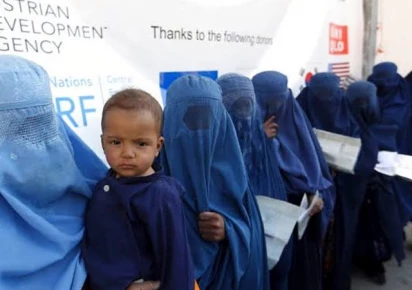
Speaking to reporters in Geneva, Susan Ferguson, the UN Women special representative in Afghanistan, revealed that more than 50% of 74 surveyed women’s organisations expect to suspend operations or close within the next year due to extreme funding shortfalls. She highlighted that the UN’s $1.7 billion humanitarian appeal for the country remains only 25% funded, while nearly three-quarters of local women’s groups saw their budgets slashed in 2025.

The UN reports that the Taliban has issued over 100 discriminatory decrees restricting education, employment, healthcare access, and freedom of movement. Surveys indicate that over half of Afghan women now leave their homes only once or twice a month, with 70% rating their mental health as bad or very bad.

While a coalition of 56 nations, including Britain, France, the US, Japan, and the UAE, issued a joint statement calling on the Taliban to lift these restrictions, key regional neighbours and global powers including Pakistan, Iran, Russia, China, and India did not sign, underlining continued international division over how to engage with Kabul.

Similar Posts

  • |

    Maulana Tariq Jamil’s yoga video sparks mixed reactions online

    Maulana Tariq Jamil, one of Pakistan’s most respected Islamic scholars, has become the center of an online debate after a video of him performing yoga exercises surfaced on social media. Widely admired for his calm demeanor and inclusive approach to religious teachings, Maulana Tariq Jamil enjoys a large following across different schools of thought in Pakistan and abroad. Over the years, he has built a reputation for promoting unity, compassion, and moral values through his lectures. In addition to his religious work, he has also ventured into business with his own brand, a move that has occasionally drawn criticism from some quarters who question the commercialization of religious personalities. The latest discussion surrounding the scholar, however, has little to do with his sermons or business activities. Instead, it centers on a recently circulated video featuring him alongside Dr. Affan Qaiser, in which he demonstrates several yoga-inspired stretching exercises. The clip quickly gained traction across social media platforms, with many viewers expressing surprise at the scholar’s flexibility. Considering his age and previous health challenges, several users praised his physical fitness and commitment to maintaining an active lifestyle. Many described the video as inspiring, saying it highlighted the importance of mobility, exercise, and healthy aging. Others, however, questioned whether the video should have been recorded and shared publicly. Some critics argued that such content was unexpected from a religious figure of Maulana Tariq Jamil’s stature, while others believed it was unnecessary to turn a private fitness session into a public spectacle. The video also prompted reactions from public figures. Among those commenting was politician Hina Parvez Butt, who voiced her disapproval of the clip, adding another layer to the discussion already unfolding online. As the debate intensified, social media users remained sharply divided. Supporters argued that the movements shown in the video were simply physical exercises aimed at improving flexibility and overall health. They maintained that stretching routines and yoga-based movements should not be viewed negatively when practiced solely for fitness purposes. Others defended the scholar by pointing out that maintaining physical health is encouraged and that there was nothing inappropriate about engaging in exercises designed to improve strength and mobility. Many also praised Maulana Tariq Jamil for staying physically active despite his advancing age. On the other hand, critics expressed discomfort with the video, saying they did not expect to see the religious scholar performing such poses. Some users felt the footage should not have been made public, while others questioned whether it aligned with the public image associated with a prominent Islamic preacher. Despite the differing opinions, the video has generated widespread discussion online, with thousands of users continuing to share their views. While some see it as a positive reminder of the importance of health and fitness, others believe the clip has crossed personal or cultural boundaries. The viral video has once again demonstrated how social media can rapidly turn everyday moments involving public figures into nationwide conversations, leaving audiences divided over interpretation, intent, and public perception.

  • | |

    Anas Sarwar joins UK Cabinet as Trade Minister

    Anas Sarwar has resigned as leader of the Scottish Labour Party after accepting the post of Minister of State for Trade in Prime Minister Andy Burnham’s government. The move ends his five-year leadership of the party and opens a new chapter in his political career at the national level. Sarwar confirmed that he will step down from the Scottish Parliament and will receive a life peerage, allowing him to take a seat in the House of Lords. From there, he will serve as a minister in the UK government and take responsibility for trade-related matters. In a statement, Sarwar said it was a great honour to be asked to join the government. He said public service has always been the driving force behind his political career. He added that serving the entire United Kingdom in the new role is a responsibility he accepts with humility and determination. Sarwar also reflected on Scottish Labour’s disappointing performance in the recent Scottish Parliament elections. The party won only 17 seats in the 129-member parliament, its worst result on record. He admitted that he shares responsibility for the defeat and said he was sorry that the party had failed to meet expectations. Despite the setback, Sarwar said the country faces serious political and economic challenges that require strong leadership. He warned that the rise of right-wing politics presents a major test for the United Kingdom. He said the Labour government must succeed in delivering stability, economic growth and better opportunities for people across the country. Following his resignation, Scottish Labour deputy leader Dame Jackie Baillie has taken over as acting leader. She thanked Sarwar for his leadership and praised his commitment to equality, fairness and public service. She said the party’s executive committee will soon announce the timetable for electing a new permanent leader. Sarwar’s departure from the Scottish Parliament will not trigger a by-election because he was elected through the regional list system. Under parliamentary rules, the next eligible Labour candidate on the Glasgow regional list is expected to replace him. His decision has sparked strong political debate. Opposition parties accused him of changing his position after previously supporting the abolition of the House of Lords. Critics also pointed to his earlier statements in which he said his main goal was to become Scotland’s first minister and remain focused on Scottish politics. Political leaders offered mixed reactions to the announcement. Some congratulated Sarwar on his new role and wished him success in government. Others argued that accepting a seat in the House of Lords contradicts his previous promises and could damage public confidence in politics.

  • | |

    OGDC top executives receive monthly salaries rangi…

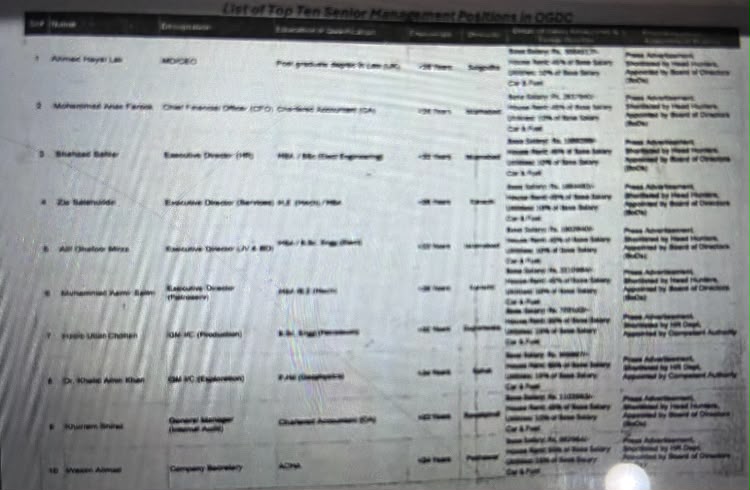
      Islamabad:Details of the salaries and benefits of senior officials at Oil and Gas Development Company Limited (OGDC) were presented before the Senate, revealing that the company’s Managing Director and Chief Executive Officer receives a basic monthly salary of more than Rs. 5.56 million. The information was shared with parliament as part of a disclosure concerning the remuneration packages of senior executives at the state-owned exploration and production company. The figures show significant differences in the basic salaries of OGDC’s top management, with the company’s highest-paid official earning several million rupees each month before allowances and other facilities are added. According to the details presented in the Senate, Ahmed Hayat Lak, OGDC’s Managing Director and CEO, receives a basic monthly salary of Rs. 5,564,171. Chief Financial Officer Muhammad Anas Farooq earns Rs. 2,837,940 per month, while Executive Director Petroleum Muhammad Aamir Saleem receives Rs. 2,211,990. Among other executive directors, Shehzad Safdar, Executive Director Human Resources, has a basic monthly salary of Rs. 1,889,298. Zia Salahuddin, Executive Director Services, receives Rs. 1,849,433, while Atif Ghafoor Mirza, Executive Director Joint Ventures and Business Development, earns Rs. 1,893,434. The salaries of general managers are comparatively lower but still substantial. Khurram Shehraz, General Manager Internal Audit, receives Rs. 1,100,929 per month. Dr. Khalid Ameen Khan, General Manager Exploration, earns Rs. 900,881, while General Manager Production Habib Ullah Chohan receives Rs. 700,443. The company secretary, Waseem Ahmad, has a basic monthly salary of Rs. 607,754. In addition to their basic salaries, the ten senior officials are entitled to several allowances and facilities. These include a house-rent allowance equivalent to 45 percent of their basic salary and utilities allowance amounting to 10 percent of the basic pay. They are also provided with car and fuel facilities. After the applicable allowances are included, the monthly remuneration package of the OGDC managing director exceeds Rs. 8.6 million. The CFO’s overall monthly package is reported to be more than Rs. 4.4 million. The information presented to the Senate also showed that all ten officials have more than three decades of professional experience. Most of the executives were recruited through press advertisements and headhunters before being appointed by OGDC’s Board of Directors. Their educational qualifications include professional and advanced degrees in fields such as law, chartered accountancy, business administration, engineering and geophysics. The MD is based in Islamabad, while other senior executives are posted in Islamabad, Karachi, Quetta and Sukkur. OGDC is Pakistan’s largest exploration and production company and is listed on the stock exchange, with the government holding a majority share. The disclosure has drawn attention to the compensation structures followed by state-owned enterprises. During the Senate proceedings, questions were raised regarding whether OGDC’s remuneration packages are comparable with those offered by private-sector exploration and production companies. Senators also discussed the possible impact of high executive compensation on the company’s overall operational expenses. However, no change to the existing salary and benefits structure was announced during the briefing.

  • | |

    KP CM directs comprehensive review of hospital saf…

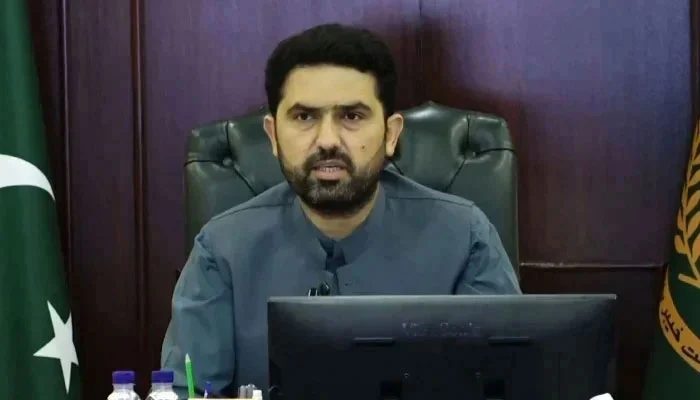
    PESHAWAR: Khyber Pakhtunkhwa Chief Minister Sohail Afridi and Chief Secretary Shahab Ali Shah contacted the provincial Health Secretary and directed him to conduct a comprehensive review of security and safety arrangements at hospitals across the province. During the discussion, it was also decided to establish monitoring teams to inspect and assess safety measures at hospitals. The teams will be tasked with checking whether hospitals are adequately prepared to deal with emergencies and whether the required safety protocols are being properly implemented. According to sources in Peshawar, the monitoring teams will include officials from several departments, including Civil Defence, the Health Department, Rescue services, the Provincial Disaster Management Authority (PDMA), and other relevant departments. The involvement of multiple departments is aimed at ensuring a coordinated assessment of hospital safety arrangements. Sources said the monitoring teams will particularly examine fire safety arrangements and other precautionary measures at hospitals. The teams will assess whether hospitals have adequate arrangements to prevent and respond to fire incidents and other emergencies. The move comes as the provincial government focuses on strengthening safety standards in healthcare facilities and ensuring that hospitals are properly equipped to deal with any untoward incident. The Health Department has also called a meeting to discuss safety arrangements at hospitals across Khyber Pakhtunkhwa. According to sources, the meeting will review the preparations in place to deal with any untoward incident or emergency situation at healthcare facilities. Officials will also examine existing safety procedures and identify areas where improvements may be required. The meeting is expected to focus on ensuring that hospitals follow appropriate safety protocols and that relevant departments are prepared to respond quickly in case of an emergency. Khyber Pakhtunkhwa Health Secretary Fayyaz Ali Shah said that standard operating procedures (SOPs) would be developed for all hospitals across the province. He stressed the importance of ensuring proper safety arrangements at healthcare facilities and said that negligence regarding fire safety measures would not be tolerated. The Health Secretary further made it clear that hospital administrations would be expected to comply with the safety requirements and take all necessary precautions to protect patients, attendants, doctors, nurses and other hospital staff. The provincial government’s decision to establish monitoring teams is expected to provide a mechanism for regularly assessing safety arrangements and identifying shortcomings at hospitals. The teams will inspect facilities and report on the condition of fire safety systems and other emergency preparedness measures. The inclusion of Civil Defence, Rescue, PDMA and other departments in the monitoring process is also intended to improve coordination between institutions responsible for emergency response and disaster management. The government has directed the Health Department to ensure that safety standards are implemented effectively across all hospitals in the province. The development of province-wide SOPs is expected to provide hospitals with clear guidelines regarding fire prevention, emergency preparedness and response procedures. Officials have reiterated that no negligence will be tolerated when it comes to fire safety arrangements in hospitals. The upcoming inspections and departmental meeting will help determine whether existing measures are sufficient and what additional steps may be required to improve safety. The initiative reflects the provincial government’s efforts to strengthen emergency preparedness and ensure safer healthcare facilities throughout Khyber Pakhtunkhwa.

  • | |

    New details emerge about Kelly Osbourne and Sid Wi…

    Kelly Osbourne and Sid Wilson have reportedly ended their engagement after months of relationship challenges, bringing an end to a romance that had captured the attention of fans following their surprise engagement in 2025. According to a new report from People magazine, the television personality, 41, and the Slipknot DJ, 49, recently decided to go their separate ways after experiencing ongoing difficulties in their relationship. An insider claimed the pair had been struggling for several months before reaching the decision to end their engagement.  The couple first began dating in early 2022 after being friends for more than two decades. They welcomed their son, Sidney, later that year and announced their engagement in July 2025 during Ozzy Osbourne’s final Black Sabbath concert in Birmingham. At the time, the proposal was celebrated by family members and fans, making the reported breakup all the more surprising.  A source close to the situation told People that Osbourne “is not happy” and no longer wants unnecessary drama in her life. The insider added that she is currently prioritizing peace, focusing on raising her son, and supporting her mother, Sharon Osbourne, following the death of her father, rock legend Ozzy Osbourne, in July 2025.  In recent days, Osbourne also shared a series of emotional Instagram Stories that appeared to reference the breakup. While she did not mention Wilson by name, she spoke about protecting her son, moving forward with her life, and asked for the return of personal belongings and pets. She also appeared to reference child support, fueling further speculation about the state of their relationship. Neither Osbourne nor Wilson has publicly commented directly on the reported split.  The breakup comes during an especially emotional period for Osbourne. In addition to grieving the loss of her father, she has largely stepped away from the spotlight to focus on her family and personal well-being. Sources say the combination of grief, changing priorities, and ongoing relationship issues placed significant strain on the engagement over the past several months.  Meanwhile, Wilson has also faced professional uncertainty after reports claimed he was removed from Slipknot, although neither the band nor the musician has officially confirmed those reports. The timing has only added to speculation surrounding the former couple’s recent challenges.  Although the engagement appears to be over, both Osbourne and Wilson remain devoted parents to their young son. For now, those close to the family say Osbourne’s focus is on creating a stable environment for Sidney while taking time to heal from a series of personal hardships. While neither star has issued an official statement about the breakup, the latest reports suggest that after months of trying to make the relationship work, Kelly Osbourne and Sid Wilson have chosen separate paths as they begin a new chapter in their lives. 

  • |

    IMF-backed move to End EPZ local sales Quota sparks concerns over textile recycling, jobs

    KARACHI: A proposed move to withdraw the permission allowing factories operating in Pakistan’s Export Processing Zones (EPZs) to sell up to 20% of their output in the domestic market has triggered concerns among exporters, investors and international textile-recycling organisations, who fear the policy could disrupt investment, employment and a wider global circular-economy supply chain. The controversy has emerged after Pakistan committed to the International Monetary Fund (IMF) that it would amend the existing rules governing EPZs and prohibit sales from these zones into the domestic tariff area. According to the IMF’s latest programme review, Pakistan has committed to introduce amendments aimed at ending domestic sales by EPZ-based manufacturers. The report states that the amendments were to be placed before the federal cabinet for approval by September 2026. However, exporters and industry representatives have challenged the move, arguing that the existing 80:20 arrangement was part of the investment and regulatory framework under which many businesses established operations in the zones. Under the existing system, EPZ manufacturers can export 80% of their production while selling up to 20% in Pakistan after payment of applicable duties and taxes. Industry stakeholders say the domestic-sale provision is particularly important for products that have limited commercial demand in overseas markets. The proposed abolition has also attracted attention in the United States because American companies supply raw materials and used textiles to Pakistani businesses operating in the EPZs. The US-based Secondary Materials and Recycled Textiles Association (SMART) has approached IMF Mission Chief to Pakistan Iva Petrova, warning that eliminating the domestic-sales provision could have consequences extending beyond Pakistan’s industrial sector. The association has argued that Pakistan occupies an important position in the global textile circular economy, particularly in the sorting, grading, reuse and recycling of used textiles collected in North America and Europe. According to SMART, used clothing and textile materials collected in the United States, Canada and European countries are sent to Pakistan, where they are sorted and graded before being channelled into reuse, recycling, manufacturing and affordable consumer markets. The association has warned that ending the 80:20 mechanism could reduce demand for recovered textiles and place downward pressure on their prices. Such a development, it said, could weaken textile-collection programmes in North America and reduce the income generated by charitable organisations from donated clothing. Organisations including Goodwill, the Salvation Army and St Vincent de Paul depend partly on revenues generated from donated goods to finance a range of social programmes, including workforce training, employment assistance, food support, recovery services, youth programmes and housing assistance. SMART has therefore cautioned that a major disruption in Pakistan’s used-textile market could have financial consequences for charitable organisations in North America, with potential losses running into tens of millions of dollars. The association also warned that reduced demand for used textiles could ultimately result in a greater volume of reusable material being sent to landfills or incinerators rather than being recycled or reused. US exporters raise objections US exporters have also expressed concern over the proposed withdrawal of the 20% domestic-sale allowance. Their concerns are significant because American suppliers form part of the upstream supply chain that feeds Pakistani recycling and manufacturing units located in EPZs. Abid Iqbal, representing Nashmia Industries, said during Express News programme The Review that US exporters had communicated their concerns to Pakistani counterparts. According to Iqbal, US exporters had also been told informally that the IMF itself had not initiated the proposal to remove the 20% quota. The development has consequently raised questions within the industry about how the condition was incorporated into Pakistan’s commitments under the IMF programme and whether sufficient consultation took place with affected stakeholders. Industry representatives have also warned of possible legal and contractual disputes, maintaining that the 20% domestic-sales provision was part of the regulatory and investment framework under which businesses made their investment decisions. They argue that companies entered the zones with an understanding that they would be able to export the bulk of their production while disposing of a limited portion in the domestic market after meeting applicable tax and customs obligations. EPZ rules and proposed amendment The Export Processing Zones Authority (EPZA) operates under the legal framework established through the EPZ Act of 1980. The law enables the establishment of export processing zones with approval from the federal government. Under Rule 228(5) of the Customs Rules, EPZ-based factories have historically been allowed to sell up to 20% of their production in the domestic tariff area, subject to applicable duties and taxes. A higher limit of 30% had been applicable to the Resalpur area. EPZA has reportedly forwarded a proposal to the Federal Board of Revenue (FBR) to eliminate the 20% quota from October 1 in line with the IMF-related commitment. The proposal, however, has exposed differences within the government over the scope and interpretation of the IMF condition. Proceedings of the Senate Standing Committee on Industries held last month indicate that the Ministry of Industries and Production maintained that abolition of the 20% domestic-sales quota was not included in the original IMF agreement. According to the ministry’s position, the initial IMF requirement was restricted to preventing the introduction of new fiscal incentives, including tax concessions and subsidies, rather than immediately eliminating the existing domestic-sales mechanism. The ministry has reportedly argued that the later addition of the quota-related condition requires further clarification. Assessment of EPZs The issue is also linked to an assessment of Special Economic Zones (SEZs) and EPZs that Pakistan was required to undertake under the IMF programme. The government engaged consultancy firm AT Kearney to assess the zones and determine whether their operations were creating distortions in the domestic market. According to records presented before the Senate Standing Committee on Industries, the assessment completed last year concluded that EPZs were not creating significant market distortions. The report, according to the parliamentary proceedings, did not recommend withdrawing existing fiscal incentives. The issue has therefore become a point of discussion between government officials and the IMF as authorities seek to reconcile the lender’s programme requirements with

Leave a Reply

Your email address will not be published. Required fields are marked *