town without education

A Town without Education

By Zoya Khan Naseer Ahmed

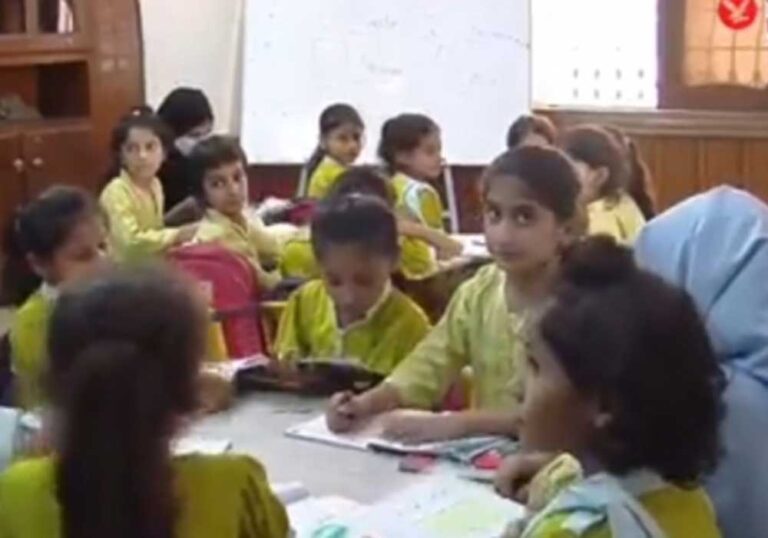
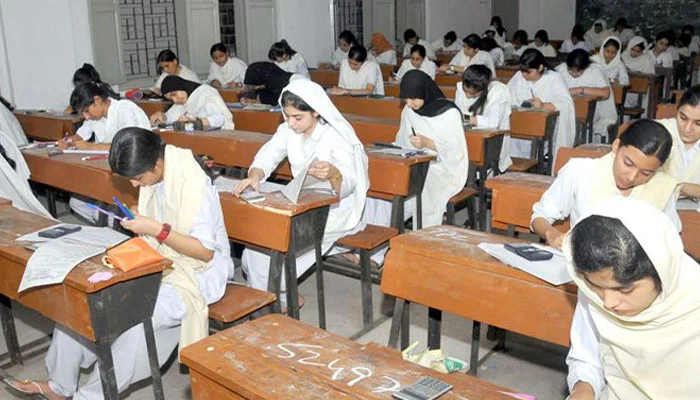
I am writing to bring your attention to a pressing issue at Government Girls High School in Balicha, which is currently facing a severe shortage of qualified teachers. Many teachers from Balicha choose to relocate and teach in cities so that their own children can receive a better education, leaving our local school understaffed. Not every family has the financial means to relocate or send their children to cities for schooling; most of the local population depends entirely on this government institution. When asked why proper instruction is lacking, some educators explain that staying in Balicha compromises their own children’s academic futures due to limited facilities. However, every child deserves access to quality education regardless of their socio-economic status or geographic location. At present, students are deprived of proper instruction in core subjects. While Urdu, Islamiat, and Arabic are taught regularly in some classes, essential subjects like English, Mathematics, Science, and Geography are frequently neglected due to the absence of specialized teachers.
This deficit is particularly critical for students in Grades 9 and 10, where key scientific disciplines—including Biology, Chemistry, and Physics—are not taught properly. Without adequate instruction in these foundational subjects, students are unable to prepare effectively for their board examinations or pursue higher education successfully. Every student deserves an equal opportunity to learn. I urge the relevant authorities to appoint qualified teachers to Government Girls High School, Balicha, ensuring that students can receive a complete education and build a better future.

Similar Posts

  • Poor State of Education in Balochistan

    By Shayhaq Siraj Balochistan, despite being the largest province of Pakistan, continues to suffer from a deeply neglected education system. Thousands of children are still out of school, while those enrolled often face a lack of basic facilities. Many schools exist only on paper, and in several areas, buildings are either in ruins or completely absent. One of the most pressing issues is the shortage of qualified teachers. In rural districts such as Kech and Turbat, students are deprived of quality instruction, leading to poor academic performance and high dropout rates. Additionally, the absence of proper monitoring allows ghost teachers and mismanagement to persist unchecked. The situation is further worsened by a lack of infrastructure. Schools without electricity, clean drinking water, and furniture are a common sight. In extreme weather conditions, students are forced to study in unbearable environments, which discourages attendance and learning. Education is the backbone of any society, yet it remains a low priority in Balochistan. Immediate steps must be taken by the government to improve school facilities, recruit trained teachers, and ensure strict accountability. Without urgent reforms, the future of an entire generation remains at risk.

  • Criminals on Pak Sar Zameen

    We call Pakistan Pak Sar Zameen, “the Land of the Pure.” But pure for whom? Tell me, honestly… pure for whom? For the criminals? For the rapists? For the child abusers? For the killers who walk our streets untouched by iron shackles or jail cells? Because it certainly does not feel pure for our children. The entire country is busy discussing India’s Jantar Mantar, an issue that we have no business obsessing over. Everyone knows what India should do, but everyone forgets what Pakistan must do. On that very same day, while the nation was distracted by a controversy across the border, six-year-old Dua was murdered in Karachi. Where was the collective scream? Where was the demand for change? And where were the changemakers? We have time to argue about borders, about politics, about things that do not touch our homes. But when a child is murdered in our own city, we scroll past, we sigh, we say “Inna Lillahi wa inna ilayhi raji’un,” and we move on. We move on! And Dua is not alone. In 2026, it feels like every other day another child loses their life. Six-year-old Muhammad Wali from Lea Market. Three-year-old Kulsoom from Quaidabad. Tomorrow, another child will be slaughtered. Another name will join the cemetery’s roll call. How many more parents will decorate graves instead of hearing the pitter-patter of their tiny feet? This is the lullaby that replaces safety in our children’s souls. Our children fall into open manholes because nobody bothers to close them. They are thrown from rooftops. They are abused until they cry, raped until they are wounded, murdered until their funerals become routine. Yet we choke on the same bitter question. Why are the murderers not swinging from ropes? Why are the rapists not rotting in cells? Why are the abusers not dragged through the streets until they beg for death? A nation is not judged by how boldly it sings the national anthem. It is not judged by the scale of its army or the height of its flags. It is judged by the number of tiny coffins that leave its homes. So I ask again: if this is truly the Land of the Pure, why are the purest souls in this country the ones who cry alone, die alone, and are forgotten alone?

  • Generation Z and their solitude

    By Umair Ahmed For Gen Z today, their room isn’t just a room. It’s their safe zone.A place where they can find a few moments of peace without any interruption or endless questions.Do Not Disturb Mode (DND) This generation genuinely values solitude. For them, being alone isn’t about feeling lonely it’s about spending time with themselves and finding mental peace.To be honest, their biggest wish is often just to be left in peace, operating smoothly in their own DND mode away from the noise of society.When someone interrupts Gen Z’s solitude, it irritates Gen Z so badly.What does Generation Z want?Gen Z wants solitude and some peaceful hours in a 24 hours cycle. During these hours, Gen Z only thinks and creates ideas, but unfortunately, in today’s modern world, society won’t understand Gen Z.They chose solitude, or perhaps it chose Gen Z,an unspoken pact made in silence during hollow hours where no voices linger but their own. The silence carved spaces with their thoughts, too fragile for the noise of the world.GenZ is always on time their time management skills are superb.They like to read poetry books and listen to poetry, and their music taste is so good—old, but still better than today’s English songs.Gen Z likes to sit in public, but without any conversation. In many restaurants, I see Gen Z sit at a table but not talk to their friends or family members. Even sometimes, they use AirPods and use their mobiles, so imagine from this how Gen Z needs solitude in their life.On a lighter note, I’m also a Gen Z, but at least I don’t wear AirPods at restaurants. I commonly see a group of friends in local restaurants, and literally, they came together, but trust me, they do not even talk a single word or have a conversation. They are all busy on their mobiles. Gen Z wants to sit alone in restaurants or public places. This doesn’t make them feel lonely rather, they are in their comfort zone.And nowadays, when Gen Z wear AirPods, understand that they are in their comfort zone or Do Not Disturb mode.GenZ wants to sit alone in restaurants or public places. This doesn’t make them feel lonely,rather they are in their comfort zone.And nowadays, when GenZ wear AirPods, understand that they are in their comfort zone or Do Not Disturb mode.

  • A Better Tomorrow Starts Today

    By Nazaink Majid Everyone dreams of a better future, but dreams only come true when we take action today. Every good choice we make, every lesson, and every small effort we put in helps build a brighter tomorrow. Instead of waiting for the perfect time we should start making positive changes today. “A Better Tomorrow Starts Today” reminds us that if we want to change our future, we must begin in the present. Every small step taken today brings us closer to the life we aspire to achieve. Every day presents us with countless choices. Some may seem small, such as waking up early, completing our work on time, reading a book, or helping someone in need. However, these small decisions gradually shape our character and determine our future. Success is not the result of one extraordinary action but of many ordinary actions repeated consistently. Those who use today wisely are the ones who enjoy a better tomorrow. A healthy future begins with healthy choices. Eating nutritious foods, exercising regularly, maintaining good hygiene, and getting enough sleep improve both physical and mental well-being. Likewise, avoiding harmful habits such as procrastination, laziness, and excessive screen time helps individuals become more productive. Small healthy routines practiced everyday lead to long-term benefits. Creating a better tomorrow is not only a personal responsibility but also a social one. Every individual can contribute to society by showing kindness, respecting others, and helping people in need. At the same time, protecting the environment is essential for future generations. Planting trees, keeping our surrounding clean, reducing plastic waste, conserving water, are simple action that have a lasting impact. A sustainable future begins with responsible actions taken today. Life is filled with challenges and setbacks, but challenges should not discourage us. Instead, they should inspire us to grow stronger and wiser. Every failure teaches valuable lessons, and every difficulty provides an opportunity to improve. Successful people are not those who never fail but those who continue moving forward despite failure. Determination, patience, and resilience transform today’s struggles into tomorrow’s achievements. A better tomorrow is built not only through success but also through strong values. Kindness, honesty, responsibility create trust and strengthen relationships. Positive values practiced daily create lasting change. A better tomorrow is not a distant dream – it is the result of what we choose today. Every positive action, every lesson learned, every kind word spoken, and every responsible decision contributes to a brighter future. Instead of waiting for the perfect moment, we should begin now. By working hard, caring for others, protecting our environment and believing in our ability to improve, we can recreate a future filled with hope and opportunity. The journey toward a better tomorrow begin with a single step taken today.

  • Dasht is in danger

    By Meer Baloch Through your newspaper, I want to draw attention to the serious situation in Dasht. The people of Dasht are facing many problems, and they do not feel safe in their own area. There is a lack of proper security, police protection, hospitals, and other basic facilities. People are worried about their safety, especially women, children, and elderly people. The government should take immediate steps to improve security and provide basic facilities to the people of Dasht. I hope you will publish this issue in your newspaper so that the authorities can take notice and protect the people of Dasht.

  • Why do children go wrong?

    By Zunaira Karim Letter to the editorChildren are the future of every society. They are born innocent and gradually learn their values, habits, and behavior from the people and environment around them. When a child becomes disobedient, dishonest, or involved in harmful activities, many people ask, “Who is responsible?” The answer is not simple because the responsibility is shared among parents, schools, society, and the child. Parents have the greatest influence on a child’s life. They are a child’s first teachers and role models. Children learn by observing their parents’ actions, attitudes, and behavior. If parents fail to give proper attention, guidance, love, and discipline, children may develop negative habits. Spending quality time with children, listening to their concerns, and teaching them good moral values are essential responsibilities of every parent. Schools also play a vital role in shaping a child’s character. Teachers not only provide academic knowledge but also help students develop honesty, respect, responsibility, kindness, and self-discipline. A positive school environment encourages children to make good decisions and become responsible citizens. Society and the media have a significant impact on children’s behavior as well. Friends, social media, television, and the internet strongly influence a child’s thoughts and actions. Exposure to violence, inappropriate content, or negative peer pressure can lead children in the wrong direction. Therefore, communities should work together to create a safe and supportive environment where children can grow with positive values. At the same time, children must also learn to take responsibility for their own actions as they grow older. They should be taught the difference between right and wrong and encouraged to make wise choices, even when faced with challenges or temptations. If a child goes wrong, no single person or institution is entirely responsible. Parents, schools, society, and the child all have important roles in shaping character and behavior. By working together, they can provide the guidance, support, and education that every child needs. A caring family, a strong educational system, and a positive society can help children become responsible, confident, and successful members of the community.

Leave a Reply

Your email address will not be published. Required fields are marked *