goods transporters postpone
| | |

Goods transporters postpone nationwide strike for …

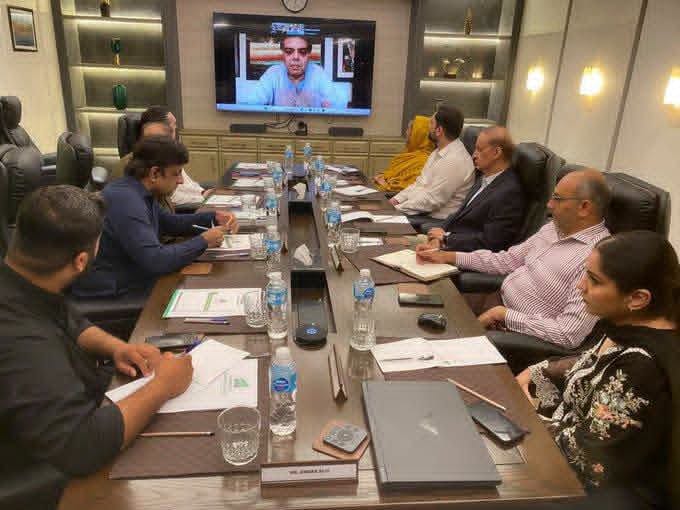
The goods transporters strike has been postponed for 40 days after the government and representatives of the transport industry made progress in resolving several key demands.

All Pakistan Goods Transport Ittehad President Malik Shehbaz Awan announced the decision on Sunday, saying the strike was being deferred in the “broader national interest”. He said some demands had already been addressed, while issues requiring cabinet approval would be considered within 15 to 20 days.

A major concern for transporters is the government’s daily adjustment of petrol and diesel prices. The association has called for fuel prices to be revised on a fortnightly or monthly basis instead.

Transporters also received assurances that overloading would be controlled according to legal axle-load limits. Discussions will continue on withholding tax and other industry-related issues.

Awan said the Sindh government had agreed to shift truck operations to a new truck stand within a year. He also claimed that six of the association’s eight demands concerning Punjab had been accepted.

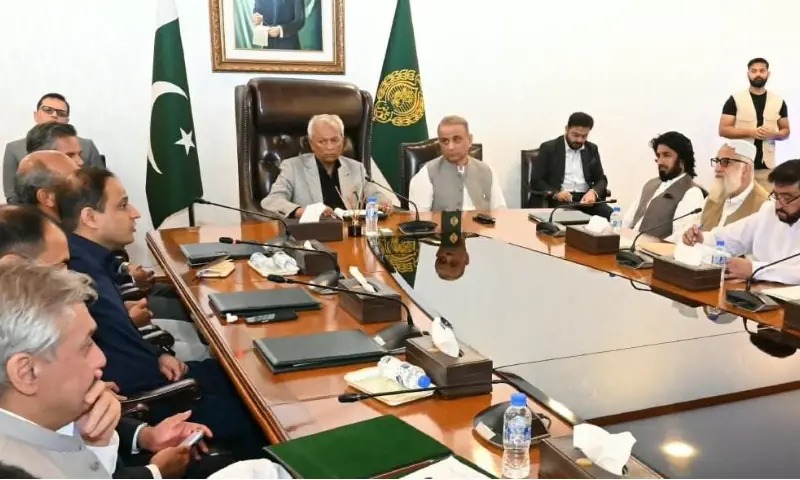
Sindh Governor Nihal Hashmi and Federal Minister for Communications Abdul Aleem Khan welcomed the development and stressed continued dialogue.

The 40-day postponement gives both sides an opportunity to resolve the remaining disputes and avoid further disruption to Pakistan’s goods transportation network.

Similar Posts

  • | |

    Petroleum minister defends daily fuel pricing mech…

    Petroleum Minister Ali Pervaiz Malik defended the government’s new daily fuel pricing system on Thursday, telling lawmakers it has ended a practice under the previous mechanism in which oil companies restricted petrol supplies ahead of expected price revisions. The federal government announced on July 17 that petroleum product prices would now be reviewed and notified daily rather than weekly, a shift introduced as renewed tensions between the United States and Iran continue to unsettle global oil markets and raise concerns about fuel supply security. The daily system followed an earlier move from fortnightly to weekly price revisions that had been introduced during the first phase of the US Iran conflict. The change has faced pushback from transporters, businesses and opposition lawmakers, who argue that frequent price adjustments create uncertainty, push up transport and freight costs, and make it harder for businesses and households to plan their spending. Petrol pump owners had threatened a nationwide strike over the issue before suspending their protest after receiving government assurances that their concerns would be addressed. Speaking at a meeting of the National Assembly Standing Committee on Petroleum, chaired by Umar Farooq, Malik said petrol and diesel prices still rely on a seven day rolling average of international market prices, even though the pricing is now updated daily instead of fortnightly. He said the government has delegated pricing authority to the Oil and Gas Regulatory Authority, which coordinates with stakeholders before finalizing prices, and noted that the pricing methodology and benchmark figures are published on the regulator’s website. He added that Prime Minister Shehbaz Sharif had instructed the regulator to also publish the formula in Urdu to improve transparency. Malik explained that international benchmark prices are drawn from Platts, with government taxes and oil company margins added afterward to determine domestic retail prices. He said the switch to daily pricing corrected a flaw in the earlier weekly system, under which companies could anticipate price movements from an emerging three day average and adjust supply accordingly. Under the new approach, he said, prices are set daily based on the seven day average, removing that predictability. Committee members pushed back sharply on the new mechanism. Senator Saifullah Abro described it as slow poison for consumers, saying the public has no way of knowing what today’s price is, let alone tomorrow’s. He questioned recent price increases, pointing out that international crude prices rose from 76 dollars a barrel on July 11 to 82 dollars on July 17, and asked how domestic fuel prices had climbed by 30 rupees over the same period. Malik responded that the comparison was misleading since domestic fuel prices track refined petroleum products rather than raw crude oil. The minister also defended the existing tax structure, saying the petroleum levy remains lower than the rate imposed during the height of the conflict period. He said reducing the levy further would be difficult without agreement from the International Monetary Fund, though he suggested an alternative revenue source could eventually make a reduction feasible. Ogra officials also addressed the committee in support of the new system. Acting Chairman Nabeel Ahmed Awan said daily prices remain based on the seven day average, meaning that both price declines and increases in the global market are passed on to consumers gradually over a week. He said the new mechanism removes opportunities for short term profiteering by preventing traders from creating false market impressions to turn a profit. Officials also told the committee that customs duty on petrol currently stands at 18.11 rupees per litre. The session grew tense at points, with committee members criticizing Ogra for failing to circulate a working paper ahead of the meeting. When the acting chairman asked what a working paper was, Abro rebuked him sharply, questioning his familiarity with basic regulatory procedure. Malik also told the committee that the process to appoint a permanent Ogra chairman had begun on schedule, but that interviews failed to produce a suitable candidate, prompting officials to restart the search. The government had reshuffled Ogra’s leadership in April, replacing then acting chairman Shahzad Iqbal with Nabeel Ahmed Awan, a senior Pakistan Administrative Service officer and secretary of the Establishment Division, who was appointed to a three month term as the search for a permanent chairman continues.

  • |

    Foreign nationals seek asylum in Canada following world cup

    A total of 175 foreign visitors who travelled to Canada during the FIFA World Cup have formally requested asylum, triggering legal reviews under the country’s refugee protection laws. Canada issued approximately 26,000 visas for the tournament, which saw 13 matches staged across Toronto and Vancouver. While thousands of football fans globally applied for visitor visas to attend the fixtures, strict screening measures resulted in over 50 per cent of those applications being rejected. Immigration officials have not disclosed whether any athletes or team members are among the claimants. However, initial breakdown data indicates that 25 applicants are citizens of Ghana, while Egypt and Colombia account for 15 claims each, with total figures expected to climb further. Canadian authorities had issued warnings prior to the tournament clarifying that temporary visas obtained for the World Cup would not serve as an avenue to bypass immigration standards, remain beyond authorised stays or claim political asylum.

  • | |

    Republic Policy unveils Federal democratic governa…

    ISLAMABAD: The Economic Policy and Business Development Think Tank, founded by former Prime Minister Anwar-ul-Haq Kakar, Gohar Ejaz and Sir Ahmed Nawaz Sukhera, hosted a policy session showcasing the Republic Policy Governance Model, a proposed federal and democratic framework aimed at reforming Pakistan’s existing system of governance. The session brought together policy leaders and prominent figures to discuss four books authored by Republic Policy: Fixing the Executive, Fixing the Legislature, Fixing the Judiciary, and The Bureaucratic Coup. A New Federal Democratic Governance Model According to Republic Policy, the proposed model seeks to establish a governance framework aligned with Pakistan’s federal constitutional structure, democratic representation, parliamentary supremacy and principles of effective public administration. The think tank said the initiative goes beyond criticism of the existing governance system and seeks to offer a practical alternative based on constitutional supremacy, democratic accountability, federalism and stronger parliamentary institutions. The model also addresses longstanding debates surrounding decentralisation, bureaucratic influence and the balance of power among the executive, legislature and judiciary. Reform Agenda Draws Appreciation Sources attending the event said the governance model and the four books received appreciation from participants, including former Prime Minister Anwar-ul-Haq Kakar, Gohar Ejaz and Sir Ahmed Nawaz Sukhera. A representative of Republic Policy said fundamental reforms in Pakistan’s governance system would need to become a central part of the national debate on the country’s future. “The encouragement we received is immensely encouraging for us,” the representative said, stressing the importance of continuing discussions on structural governance reforms. Focus on Constitutional Governance The Economic Policy and Business Development Think Tank was established to promote policy dialogue on economic and governance issues in Pakistan. The presentation of the Republic Policy Governance Model adds a new dimension to discussions on institutional reform, decentralisation, bureaucratic overreach and parliamentary empowerment. Republic Policy maintains that strengthening democratic institutions and ensuring governance within the framework of the Constitution are essential for improving the effectiveness and accountability of the Pakistani state.

  • | |

    Karachi’s 1st silent mourning procession ends pe…

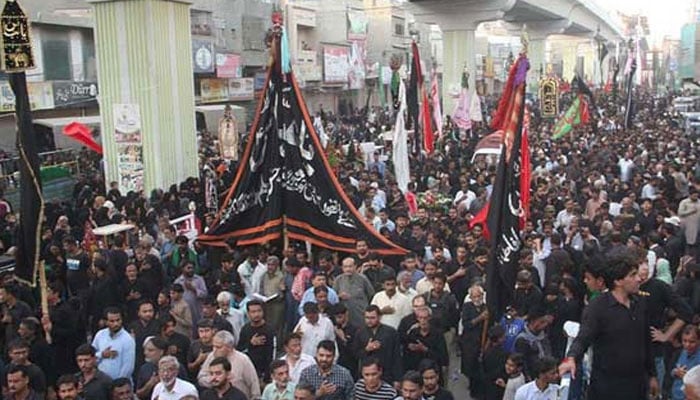
    KARACHI: The first silent mourning procession in Karachi concluded at Hussainiya Iranian Kharadar after passing through its traditional route from Nishtar Park, with authorities enforcing strict security measures throughout the event. A gathering was held at Nishtar Park before the procession began, where Allama Baqir Hussain Zaidi addressed the participants. Police and Rangers personnel were deployed along the procession route, while several roads in the surrounding areas were temporarily closed to general traffic as part of the security arrangements. The affected roads were reopened after the procession passed through the areas. Traffic police also remained on duty to manage congestion and guide motorists toward alternative routes. Meanwhile, the second silent mourning procession is scheduled to begin from Rizvia Society in the afternoon and will conclude at Shah Najaf Imambargah on Martin Road.

  • Kallar Syedan women hold March against inflation and petrol levy

    Kallar Syedan – On the call of Ameer Jamaat-e-Islami Pakistan, Hafiz Naeem ur Rehman, just like across the entire country, the Jamaat-e-Islami Kallar Syedan Women’s Wing also held a march today for the elimination of inflation, unjust taxes on petrol, and the cruel levy. The march started from the Jamaat-e-Islami Kallar Syedan officec and concluded at the NADRA office. Women from across the area participated in large numbers along with their children. The participants were holding placards bearing slogans such as “Reduce Inflation” and “Let the People Live”. Besides this, the women also raised strong slogans against the government. The march was addressed by Qari Qasim-ul-Haq, General Secretary Jamaat-e-Islami Kallar Syedan, Javed Iqbal, Naib Ameer Jamaat-e-Islami Kallar Syedan, and Shahida Javed, Nazima Jamaat-e-Islami Women’s Wing Kallar Syedan. At the conclusion of the march, the speakers said that tomorrow, 7th August, on the instructions of the Ameer-e-Jamaat, we will come out for a massive protest. By blocking the Motorway at 26 Number Chungi, we will compel the government to end its cruel measures and abolish the petroleum levy, and we will secure the rights of the people. Therefore, they appealed to all the people of Kallar Syedan to join this protest. The caravan from Kallar Syedan will depart tomorrow after Friday prayers at 3 PM from the Jamaat-e-Islami Kallar Syedan office.

  • | |

    Shan baig, Roma Michael tie the knot in sweet social media reveal

    Shan Baig and model Roma Michael have officially tied the knot, delighting fans across the entertainment industry with a heartwarming marriage announcement shared online. The newlyweds made their union public through a cheerful photo update, instantly drawing widespread love and congratulations from followers, colleagues, and showbiz portals alike. ​The joyous announcement gained traction after popular entertainment page Galaxy Lollywood highlighted the couple’s milestone, sharing a cozy picture of the duo celebrating their new beginning together. In the picture, a radiant Shan Baig is seen smiling beside Roma Michael, wearing a casual shirt and cap, while Roma looks effortless in a graceful white embroidered outfit. Adding an extra touch of sweetness to the post, Baig tagged his bride on social media with a simple yet affectionate label: “Wifey.” ​The subtle, sweet confirmation quickly sent waves through social media, with fans flooding the comments section to express their surprise and joy for the couple. Many showered the post with red hearts and warm prayers, wishing them a lifetime of love, happiness, and peace in this new phase of life. Fellow fraternity members and media personalities also joined in to extend their best wishes to the newly married couple. ​Both Shan Baig and Roma Michael have built well-recognized profiles in Pakistan’s media landscape through their respective work in acting and modeling. While the couple kept their relationship relatively quiet prior to the big news, their charming reveal offered fans a glimpse into their close bond. As they step into married life together, well-wishers continue to celebrate the pair and wish them endless happiness on their new journey as husband and wife.

Leave a Reply

Your email address will not be published. Required fields are marked *