russia questions reported
|

Russia questions reported US-Türkiye arms transfer to Ukraine

Russia has raised concerns over reports that the United States and Türkiye may facilitate the transfer of a large stockpile of American-made weapons and ammunition to Ukraine.

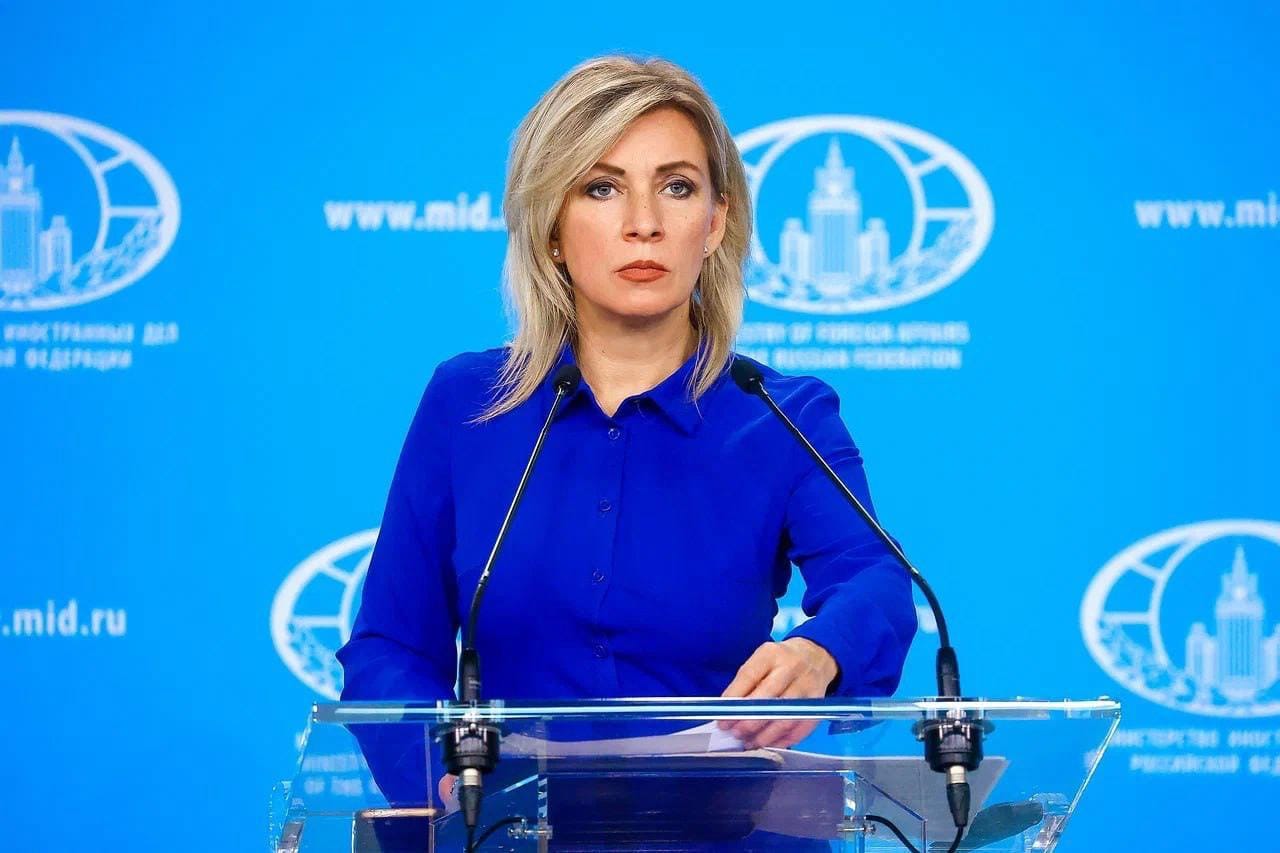
Russian Foreign Ministry spokeswoman Maria Zakharova said recently released documents from the US Congress indicate that the proposed shipment could include a substantial quantity of offensive weapons. According to her, the documents refer to 12 multiple rocket launch systems, more than 2,500 unguided cluster munitions for those systems, around 47,000 203mm cluster artillery shells and 70 ATACMS short-range missiles.

Zakharova said Moscow was particularly concerned about what she described as unanswered questions surrounding the reported re-export arrangement. She questioned who initiated the proposal, how the weapons would be transported and when the reported shipment could reach Ukraine.

The Russian spokeswoman also criticised Washington and Ankara for their alleged involvement, arguing that both countries have previously presented themselves as potential contributors to diplomatic efforts aimed at resolving the Ukraine conflict.

According to Zakharova, supplying additional weapons to Ukraine would not fundamentally alter the military situation but could increase the scale of destruction and casualties. She warned that further arms deliveries could also have broader consequences for Russia’s relations with both the United States and Türkiye.

Moscow also questioned Türkiye’s position because Turkish authorities have previously made assurances about limiting the supply of lethal weapons to Ukraine. Zakharova said that adopting peace-oriented rhetoric while simultaneously facilitating military support for Kyiv could damage mutual trust between the countries involved.

The Russian Foreign Ministry has reportedly sought explanations from both Washington and Ankara following the information contained in the US congressional documents.

Zakharova urged the parties involved to reconsider the situation before any reported transfer moves forward. She said there was still an opportunity for the countries concerned to assess the potential consequences of the proposed arms shipment.

The allegations come as international efforts to address the Ukraine conflict continue alongside ongoing military operations

Similar Posts

  • | |

    Islamabad symposium examines Xi Jinping’s approa…

    ISLAMABAD: A joint symposium on “Xi Jinping Thought on Party Building” was held in Islamabad on Wednesday, bringing together senior Pakistani and Chinese officials, diplomats, parliamentarians, academics and representatives of think tanks to discuss China’s approach to political organisation, governance and institutional development. The symposium was organised by the Embassy of the People’s Republic of China in Pakistan in collaboration with the Institute of Regional Studies (IRS). Chairman Senate Syed Yousaf Raza Gilani attended the event as chief guest. The Chinese delegation included Liu Daxiu, Head of Delegation and First-Class Inspector at the Party Building Research Institute of the Organization Department of the Communist Party of China (CPC) Central Committee, and Zheng Huan, Professor of Party Building at the Central Party School of the CPC Central Committee. Chinese Ambassador to Pakistan Jiang Zaidong also addressed the gathering. While adressing, Pakistani and Chinese representatives reaffirmed the longstanding partnership between the two countries, noting that political and institutional exchanges have expanded alongside cooperation in economic, infrastructure and development-related fields. They further added that dialogue between political parties has become an important pillar of the Pakistan-China strategic relationship. Speakers outlined the evolution of Xi Jinping Thought on Party Building, describing it as a doctrine centred on strengthening the Communist Party of China through disciplined leadership, rigorous internal governance, organisational cohesion and ideological development. They said the framework seeks to ensure the Party’s long-term capacity to govern while maintaining accountability, institutional resilience and public trust. CPC’s efforts to curb corruption and maintain discipline, while strengthening the organisation at different levels were also discussed. The recurring theme throughout the symposium was that China’s development should not be viewed solely through the lens of economic growth. Pakistani and Chinese speakers argued that the country’s transformation has also been shaped by strong political organisation, consistent policy implementation and institutional continuity. At the same time, Chinese experts stressed that these experiences were not being presented as a model for direct replication, noting that every country must pursue its own path according to its national circumstances. Participants also reflected on the broader relevance of the CPC’s experience for political parties worldwide, discussing issues such as governance capacity, organisational resilience, leadership development and the ability of institutions to translate policy into tangible results. Chairman Senate Yousaf Raza Gilani, Ambassador Jiang Zaidong and IRS President Jauhar Saleem affirmed the importance of sustained engagement between the two countries and welcomed continued exchanges on governance, public policy and institutional development. The symposium concluded with an interactive session in which participants discussed the relevance of Party building, leadership and governance reforms to contemporary political challenges and future Pakistan-China cooperation.

  • |

    Petrol prices may bring relief in two days if global oil rates stay stable

    LAHORE: Federal Petroleum Minister Ali Pervaiz Malik has indicated that consumers could receive some relief in petroleum prices within the next two days if international crude oil rates remain stable, while acknowledging that elevated fuel costs continue to place pressure on households and the wider economy. Speaking in Lahore, the petroleum minister said the government was closely monitoring developments in the international oil market and would take the prevailing global prices into account during the next petroleum price review. Malik explained that petroleum prices in Pakistan are linked to international market trends and are calculated on the basis of a seven-day average. He said the Oil and Gas Regulatory Authority (OGRA) is responsible for determining the prices under the existing mechanism. He added that the movement of global oil prices during the next couple of days would be particularly important in determining whether consumers could receive positive news in the upcoming review. Government averts fuel supply crisis The minister said Pakistan had managed to maintain uninterrupted supplies of petroleum products despite severe pressure created by regional tensions and volatility in international energy markets. According to Malik, Prime Minister Shehbaz Sharif and his team took measures on both the economic and diplomatic fronts to ensure that the country did not experience a fuel shortage. He said the government had continued supplying petroleum products across the country even during a period when uncertainty in the region was creating serious risks for energy-importing nations. “There was no shortage of petroleum products in Pakistan during the tension,” Malik said, stressing that maintaining fuel supplies remained one of the government’s key priorities. He acknowledged, however, that preventing a shortage did not eliminate the financial burden caused by high international oil prices. International oil market remains a major concern Malik said the recent regional conflict created extraordinary volatility in global energy markets. He pointed to sharp increases in crude oil, petrol and diesel prices during the period of heightened tensions. He said crude oil prices had at one stage climbed as high as $170 per barrel, while diesel prices reached around $280 and petrol prices also touched $170. The minister further referred to periods when market expectations pointed towards even more dramatic increases, with petrol and diesel prices moving towards levels of around $500. Such volatility, he said, demonstrated the difficulties faced by countries that rely heavily on imported energy to meet domestic requirements. Pakistan, being an energy-importing country, remains particularly vulnerable to sudden increases in international oil prices because changes in global rates can quickly affect domestic fuel prices, transportation expenses and industrial costs. Expensive fuel putting pressure on people The petroleum minister conceded that high fuel prices are creating difficulties for ordinary citizens and businesses. He said an increase in petroleum prices does not remain confined to fuel stations, as higher transportation and energy costs eventually affect the prices of goods and services throughout the economy. According to Malik, expensive petroleum products increase the cost of moving agricultural produce, industrial raw materials and finished goods, thereby adding to inflationary pressure. “The people are suffering” because petroleum products are expensive, he said, while maintaining that the government was making efforts to provide relief within its available financial capacity. Petroleum levy collection exceeds target Malik also disclosed that the government collected around Rs1,900 billion through the petroleum levy during the previous year, exceeding the official target of Rs1,700 billion. The collection represents an important source of government revenue, but the minister acknowledged the broader economic implications of relying on petroleum-related revenues while consumers are already facing high fuel costs. He said the government had to balance revenue requirements with the need to protect consumers from excessive increases in petroleum prices. Prices cut when conditions allowed The minister said the government reduced petroleum prices whenever international market conditions and other relevant factors created room for downward revisions. He said Prime Minister Shehbaz Sharif had ordered reductions when an agreement was reached and circumstances permitted the government to pass on the benefit to consumers. Malik said the administration was attempting to manage fuel prices within the limits imposed by international markets and domestic economic conditions. He also recalled the prime minister’s commitment to introducing greater transparency in the petroleum pricing mechanism. The minister said the government had been required to make difficult decisions as part of broader efforts to stabilise the economy and place Pakistan on a sustainable development path. Heavy reliance on imported energy questioned Malik also raised concerns over Pakistan’s longstanding dependence on imported energy. He questioned why the country had continued relying on overseas energy supplies for decades despite having significant potential for developing domestic oil and gas resources. The minister said Pakistan obtains around 90% of its energy requirements from foreign sources, leaving the economy exposed to fluctuations in global energy prices and geopolitical developments. He argued that reducing this dependence should be treated as a long-term national priority. According to Malik, Pakistan has promising gas resources in areas such as Waziristan and Balochistan, and greater efforts are required to explore, develop and utilise domestic reserves. He said increasing local production could eventually reduce pressure on the country’s import bill and provide greater protection against international price shocks. Focus shifts towards domestic energy development The minister said Pakistan could not continue responding to every international energy crisis after it had already occurred. Instead, he stressed the need for long-term investment in exploration, infrastructure and domestic energy production. He said the government wants to move the country away from a cycle in which international price increases immediately translate into domestic economic difficulties. Malik described development of local energy resources as an important component of Pakistan’s broader economic strategy. He said the government was working towards an environment in which energy availability could support industrial expansion, investment and economic growth. Major energy infrastructure initiative planned Malik also referred to a new infrastructure initiative, saying the prime minister and the field marshal had assigned a major internationally recognised company to undertake energy infrastructure work within a

  • | |

    Russia and Ukraine trade overnight strikes as thre…

    Russia and Ukraine launched a fresh wave of overnight strikes against each other on Saturday, leaving three people dead and ten injured across multiple regions on both sides of the border, according to officials from both countries. Kyiv suburb bears the brunt of Russian strikes Three people died and three others suffered injuries when Russian forces struck three separate locations in the Brovary district on the outskirts of Kyiv, said Tymur Tkachenko, head of the Kyiv City Military Administration, in a statement posted on Telegram. Falling debris from the strikes damaged a private residential building along with several outbuildings and parked cars, while a fire broke out at a nonresidential structure in the area, Tkachenko said. Emergency crews rushed to the scene to contain the damage and assist residents. “Rescuers and all necessary services are working on the ground,” Tkachenko said. “The elimination of the consequences is ongoing.” Russia’s Defence Ministry confirmed carrying out the strike on the Ukrainian capital, stating on Telegram that its forces had targeted a military-industrial facility along with a fuel and lubricants depot located in Kyiv. The ministry additionally claimed that two dry cargo ships, which it alleged were transporting weapons and military equipment bound for Ukrainian ports, came under attack from drones while passing through waters south and east of the port city of Odesa. Russian regions report drone damage and injuries On the Russian side, five people sustained injuries and a fire erupted at the Ilsky Oil Refinery in the Krasnodar region after debris from a downed drone fell onto the facility, regional authorities reported. The Krasnodar Operational Headquarters said on Telegram that the injured were receiving all necessary medical care while emergency and special services worked at the scene. Separately, two people were injured when a drone crashed in the Russian city of Zadonsk, according to Lipetsk Governor Igor Artamonov, who posted details of the incident on Telegram. The crash damaged four private homes, a vehicle and a power line, Artamonov said, adding that power workers had already begun restoration efforts in the affected area. In the Samara region further east, one of the area’s industrial enterprises came under attack from a Ukrainian drone, said regional Governor Vyacheslav Fedorishchev in a post on the Russian social media platform Max. Fedorishchev said authorities were currently working to address the aftermath of the strike but did not immediately provide further details on the extent of the damage. Moscow claims mass drone interception Russia’s Defence Ministry also announced that its air defence systems had shot down and destroyed 397 Ukrainian drones over the course of the strikes, with the interceptions occurring over Russian territory, annexed Crimea and the Sea of Azov. Independent verification of the claims made by both Moscow and Kyiv remains difficult given the ongoing conflict, and neither side’s figures on damage, casualties or intercepted drones could be confirmed through independent sources. Latest strikes reflect continuing pattern of cross-border attacks The overnight exchange adds to a long running pattern of tit-for-tat strikes between the two countries, with Ukraine frequently targeting Russian energy infrastructure, including refineries deep inside Russian territory, while Russia continues to strike Ukrainian cities and industrial sites. Both countries have increasingly relied on long-range drones to strike targets far from the front line, a tactic that has expanded the geographic scope of the war well beyond the immediate combat zones in eastern and southern Ukraine. The strikes come as diplomatic efforts to end the war have shown little sign of producing a breakthrough, with both Moscow and Kyiv continuing large-scale military operations even as international mediators push for a negotiated settlement. Attacks on energy facilities, in particular, have become a recurring feature of the conflict, with both sides accusing the other of deliberately targeting civilian infrastructure and disrupting fuel supplies ahead of the winter months. As the war grinds on, Saturday’s strikes underscore the continued volatility along multiple fronts, from Kyiv’s outskirts to refineries deep inside Russian territory, with civilians on both sides bearing the brunt of the ongoing hostilities.

  • |

    BJP removes misattributed Pakistan highway video

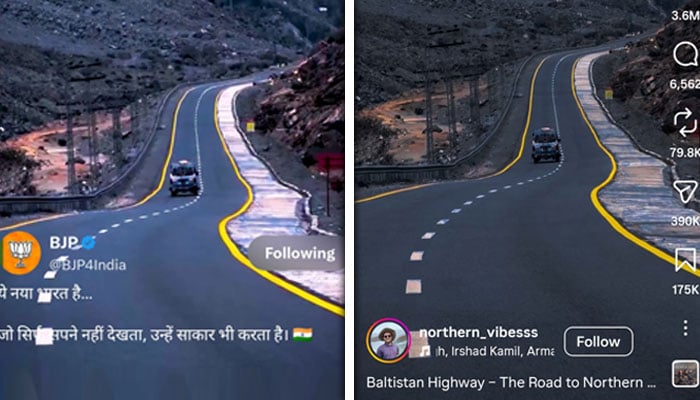
    India’s ruling Bharatiya Janata Party (BJP) faced criticism after sharing a video from Pakistan’s Gilgit-Baltistan region to highlight India’s development achievements. The video was posted on the BJP’s official social media account. It was presented as an example of the progress of a “new India.” The caption claimed that India was not only dreaming of development but also turning those dreams into reality. However, social media users quickly identified the footage as a highway located in Gilgit-Baltistan, a region administered by Pakistan. The video was not related to any Indian development project. The footage was originally created by Pakistani digital content creator Northern Vibes. The creator has a large following on Instagram and regularly shares travel and landscape videos from northern areas of Pakistan. After noticing that the BJP had used the video, Northern Vibes shared a screenshot of the post on social media. The creator questioned how a road in Baltistan was being shown as part of India’s infrastructure progress. The content creator also alleged that the video had been used without permission and described it as unauthorized use of original content. The issue quickly gained attention online, with many users criticizing the BJP for sharing unverified material. Several social media users accused the party of using misleading content to promote its political message. The criticism intensified as more users pointed out the actual location shown in the video. The controversy also sparked discussions about digital copyright, content ownership and the need to verify online material before publishing it through official accounts. Following the growing backlash, the BJP removed the video from its official social media platform.

  • |

    Google yanks Nano Banana from Earth after AI images spark chaos

    It took less than a day for Google’s newest AI experiment to become a lesson in how fast image-based misinformation can spread. On Thursday, Google rolled out its Nano Banana 2 model directly inside Google Earth. The feature allowed users to type any prompt and get back a photorealistic image, layered right onto real satellite, aerial, and 3D map data. The intended uses were fairly harmless. People could visualize their dream home or picture how a location might change decades from now. Within just a few hours, users pushed the tool in a very different direction. People began generating fake disasters, staged terrorist attacks, and fabricated sinkholes. Others created images showing refugees or protest crowds in places where nothing of the sort had actually happened. One researcher used the tool to create a fake blast crater in Los Angeles. Another generated an image showing protesters marching right outside Google’s California headquarters. Since the tool used real Google Earth maps as its foundation, these fabricated images looked disturbingly convincing. At first, Google defended the feature. The company pointed to its SynthID watermarking system as a safeguard. It also noted that tools like Gemini or Google Lens could help users check whether an image had been AI-generated. That response did not satisfy critics. Many pointed out that most people encountering a screenshot online rarely take the time to verify it. Critics also argued that the fake images did not even need to stay inside Google Earth to cause harm. Screenshots alone were already spreading fast across social media platforms. By Friday, Google confirmed it was pulling the feature entirely while working on stronger safeguards. The company maintained that every generated image had carried a watermark. It also said none of the images had appeared within the shared, public version of the Earth experience. This incident has reignited larger concerns around generative AI tools and how easily they can be misused, even when protective measures are already built in. It also raises fresh questions about whether watermarking alone is enough to stop confusion once fabricated content starts spreading widely online. For now, Google says its focus is on rebuilding the feature with tighter controls in place. Whether that will be enough to prevent similar situations going forward still remains to be seen.

  • | |

    Malaysian PM Anwar Ibrahim undergoes medical proce…

    KUALA LUMPUR: Malaysian Prime Minister Anwar Ibrahim is undergoing medical examinations and procedures, with his aide saying he is expected to remain under observation for two days. Anwar’s Press Secretary Tunku Nashrul Abaidah confirmed the development on Monday but did not disclose details about the nature of the medical procedures or the condition that prompted them. In a statement, the aide said Anwar was undergoing examinations and procedures arranged by a team of medical experts. The statement also appealed for prayers for the premier’s health and expressed hope that he would be able to return to his regular duties soon. “Let us pray … that he is blessed with long-lasting health so that he can return to his usual duties in the near future,” the statement said. The news prompted a message of support from Pakistan, with Prime Minister Shehbaz Sharif wishing his Malaysian counterpart a swift recovery. “Wishing my dear brother, Prime Minister Anwar Ibrahim, a swift and smooth recovery during his medical procedures,” Shehbaz wrote in a post on X. He added that the people of Pakistan were joining him in praying for Anwar’s continued good health and well-being, reflecting the close ties between the two countries. Anwar, who turned 79 on Monday, has served as Malaysia’s prime minister since 2022. His current medical observation has drawn attention partly because of previous health issues involving his back and shoulder. The Malaysian leader was hospitalised in 2018 after experiencing shoulder and back pain. More recently, he cancelled a planned visit to Pahang state in November last year because of back discomfort. Despite those previous problems, Anwar received a clean bill of health following a routine medical examination in January, according to a statement from the hospital where the check-up was conducted. The latest announcement has not indicated that Anwar is facing any serious health condition. Officials have also not provided details about when he is expected to leave medical care or resume his full schedule. For now, the Malaysian government and Anwar’s supporters are awaiting further updates from his medical team. His aide’s statement sought to reassure the public while asking for prayers as the veteran politician undergoes the procedures. Anwar’s health is closely watched as he continues to lead Malaysia through a period of economic and political challenges, making his expected return to official duties a matter of considerable public interest.

Leave a Reply

Your email address will not be published. Required fields are marked *