youtube app ends

YouTube app ends support for Android 6 phones

YouTube is the world’s most popular video-sharing service watched by billions of people every day. The YouTube app is widely used on smartphones but some users will soon no longer be able to use it on their devices.

Google is ending YouTube app support and access for smartphones running the Android 6 operating system. After the end of July 2026, Android 7 or later will be required to watch YouTube through the app on Android phones.

It is important to note that YouTube will not suddenly stop working on affected phones nor will all data be deleted.

Instead, phones running Android 6 will gradually begin experiencing problems. When users open the app, they may see a message saying “Switch to YouTube” after which they will be redirected to the mobile YouTube website through their phone’s browser.

The main reason for this change is that YouTube is constantly being updated while new features may not work properly on older operating systems. For this reason, Google is ending YouTube support for Android 6 smartphones.

If you are using an older Android phone and lose access to the YouTube app, you can still watch YouTube through its website using a browser. Another solution is to switch to a newer smartphone that supports the YouTube app.

Similar Posts

  • What do different colours on Google Maps mean?

    Google Maps is a highly useful navigation app. Although users may occasionally encounter some issues, it generally provides accurate directions for most routes. Over the years, Google Maps has undergone many changes and received several new features to improve the user experience. One of its most prominent features is the use of different colours to indicate traffic conditions. Google Maps uses various visual indicators to show different types of roads, highways, underground tunnels, railway tracks and other features. At the same time, specific colours are used to help drivers understand the traffic situation in a particular area. Basic colours on Google Maps Roads and highways are generally displayed as gray lines. There are some differences, however. Light gray is used for streets and smaller roads while dark gray is used for major roads. Railway lines are also shown in light gray but they are represented by thin lines so users can identify them as train tracks. When it comes to traffic conditions, users can turn on the traffic layer through the Layers button in Google Maps. Green indicates that traffic is moving smoothly and that there is little or no congestion. Yellow and orange indicate that vehicles are moving but at slower-than-normal speeds meaning you may experience some delays. Yellow indicates slightly heavier traffic while orange indicates more significant congestion. Red is primarily a warning colour indicating heavy traffic in an area and potentially longer travel times. It may mean that you could encounter a traffic jam. Light red indicates heavy traffic while dark red signals very heavy traffic or significant congestion. Blue is not related to traffic. Instead, it indicates route guidance. Dark blue is used for the preferred or selected route while light blue is used to show alternative routes.

  • Google ends free Android backup storage for users

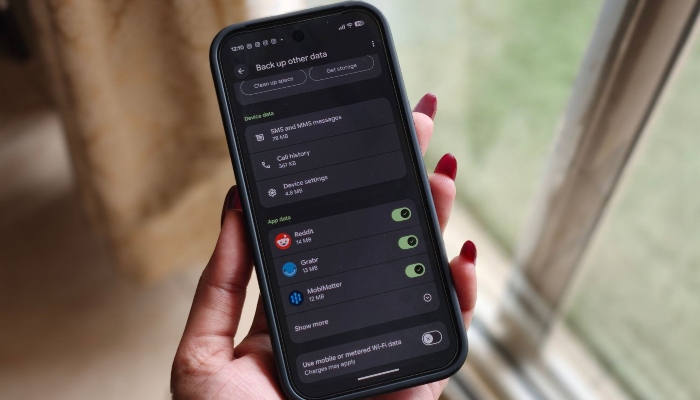
    Google has announced a major change to its cloud storage policy ending a long-standing free benefit for Google account users. Almost every internet user today relies on a Google account which comes with limited cloud storage. When users approach their storage limit, Google typically recommends upgrading to a paid plan for additional space. Until now, a user’s Google storage quota included Google Photos media files, Google Drive files and Gmail emails. Under the new policy, however, Android phone backup data will also count toward the account’s storage limit. Google informed users of the change through email giving them 45 days notice before the new policy takes effect. Once implemented, Android backup data including system settings, app data, SMS messages and call history will be included in the storage quota of a Google account. The company said the advance notice is intended to give users enough time to manage their storage or adjust their backup settings before the policy is enforced. Previously, only certain Android content, such as Google Photos uploads and MMS messages counted toward storage usage. Under the updated policy, complete Android backups are expected to consume a much larger portion of users available cloud storage. Google warned that if Android backups cause users to exceed their storage limit, they will either need to free up space in their Google account or subscribe to a paid Google storage plan for additional capacity. A Google spokesperson previously said that the average Android backup is expected to use around 40 MB of storage. The company also noted that users will have greater control over which data and apps are included in their backups. This marks another change to Google’s account storage policies. Earlier, in May 2026, the company began testing a reduction in free storage for new Google accounts lowering the limit from 15 GB to 5 GB.

  • | |

    Multimedia pioneer Cao Fei captures the human heart

    Among contemporary Asian creators, Beijing-based multimedia artist Cao Fei stands out as a defining narrative voice. Working across video, virtual reality, installation, and photography, her globally acclaimed career centers on a simple yet profound premise: amidst the whirlwind of rapid industrial advancement, hyper-capitalism, and sweeping technological change, art must always return to the core of the human condition. Born in 1978 in Guangzhou, Cao Fei grew up on the frontlines of staggering societal evolution. Watching the countryside surrender to megacities, factory complexes, and high-tech infrastructure gave her a unique point on the modern world. Rather than viewing this rapid transition with nostalgia or pessimism, her works connect reality and imaginative fantasy. A hallmark of Cao’s career is her fascination with the workplace, particularly automated logistics hubs and manufacturing floors. In iconic pieces like Whose Utopia and Asia One, she embeds her cameras inside functioning industrial facilities from textile plants to highly automated e-commerce distribution centers. Yet, instead of focusing solely on the cold efficiency of machinery or output metrics, she shifts her lens toward the individual laborers maneuvering through these vast, mechanized systems. Her films document the quiet desires, personal dreams, and unspoken emotional bonds of workers who navigate a world increasingly driven by algorithms and quotas. Parallel to her exploration of physical industry, Cao Fei has consistently operated on the cutting edge of digital frontiers. Long before the concept of the metaverse entered mainstream vocabulary, she was constructing RMB City within online platforms like Second Life, exploring how virtual avatars allow people to seek identity, escape, and community in digital environments. Her projects often feature young people engaging in subcultures like cosplay, stepping out of suburban construction sites and into elaborate alter egos. For Cao, these virtual realms are not merely frivolous distractions; they represent vital spaces of self-expression where individuals reclaim agency against the pressure of uniform urban life. Despite her focus on futuristic landscapes, automated networks, and virtual platforms, Cao Fei maintains that rootedness in heritage remains essential. Traditional culture, memory, and personal history act as indispensable anchors in a world constantly shifting beneath our feet. Whether reflecting on regional Cantonese roots, exploring local neighborhood history in Beijing, or depicting surreal futures, her work grounds high-tech environments in real human memory and emotion.   Ultimately, Cao Fei’s artistic vision offers a thoughtful, multi-layered reflection on modern life. By balancing documentation with surreal storytelling, her art reminds us that no matter how complex our machines, algorithms, or cities become, the central narrative of our time remains fundamentally human.

  • How to disable YouTube Shorts from your feed?

    For years, YouTube has been considered a hub for videos with long-form content being watched by users for a long time. In 2020, YouTube introduced short-form videos similar to TikTok under the name Shorts. While many people enjoy short videos, not everyone likes them. At the same time, Shorts can be highly addictive and once users start scrolling, it can become difficult to stop for hours. The good news is that you can control your YouTube feed and disable Shorts. After doing so, short videos will no longer appear in the YouTube app on your smartphone. Although YouTube does not currently offer a direct “Turn Off Shorts” option, there is a setting that can be used to disable Shorts videos. This tool is available under the Time Management settings on both Android and iOS devices. How to disable YouTube Shorts? Open the YouTube app on your phone. Tap the “You” tab at the bottom of the app. Tap the gear icon at the top to open Settings. Scroll down and select Time Management. Find the Shorts Feed Limit option. Enable it and select 0 minutes. After this, when you scroll through your Home feed, the Shorts section will no longer appear. The Shorts tab will still remain in the bottom menu but Shorts videos will not open unless you select “Ignore limit for today.” It should be noted that this feature is not available on the desktop version of YouTube.

  • Instagram unveils new logo after 10 years

    Instagram has changed its logo after several years. Yes, Instagram has introduced a new logo which is a text-only logo. The announcement was made in a post by Adam Mosseri, head of the Meta-owned photo-sharing platform. He described the new logo as more refined and modern while maintaining the simplicity of the previous name. Mosseri said that Instagram’s logo was being changed after more than a decade because the previous design had begun to feel outdated. The new font used for the name has also changed the appearance of some of the letters in the word “Instagram.” Instagram last redesigned its logo in 2016, when it replaced the classic brown camera design with a colourful rainbow-style logo. Meta has not yet issued an official statement regarding the change.

  • 29 US states sue Meta over social media’s impact on children

    More than half of the US states have jointly taken Meta, the company that owns apps such as Facebook, Instagram and WhatsApp to court. The trial against Meta is set to begin on August 18. The US states have accused the parent company of Facebook and Instagram of designing its apps in ways that can be addictive and harmful to young people. The case is being heard in a federal court in California and is expected to continue for six to eight weeks. The jury will hear testimony from Meta CEO Mark Zuckerberg, Instagram CEO Adam Mosseri and former Meta employee Arturo Bejar who has since become a whistleblower regarding the company. The lawsuit filed by the 29 states is being led by attorneys general from California, Colorado, New Jersey and Kentucky. The states originally filed the lawsuit in October 2023 submitting 233 pages of documents to the court. They accused Meta of collecting data from children under the age of 13 without parental consent allegedly violating federal and state laws. The lawsuit claims that Meta refused to stop the use of harmful features because its primary objective was to generate profits. The case could have serious consequences for the future of the social media company as the states are seeking $200 billion in damages, an amount equivalent to Meta’s annual revenue in 2025. The states are also demanding that Meta redesign its apps to make them safer for children. Meta, on the other hand, has rejected all the allegations. The company claims that the states filed the lawsuit to obtain billions of dollars rather than based on facts or the law. In a statement, Meta said the case is important for the states but described their allegations as unfounded and their financial demands as inappropriate. The company also said that the attorneys do not have sufficient evidence to support their claims. According to state attorneys, Meta has developed features designed to keep people spending as much time as possible on its apps with young users being among those most affected. The trial comes shortly after a similar case in New Mexico where a court recently imposed a $567 million fine. A similar lawsuit is also currently being heard in the US state of Tennessee.

Leave a Reply

Your email address will not be published. Required fields are marked *