poultry industry linked

Poultry industry linked to foodborne infections

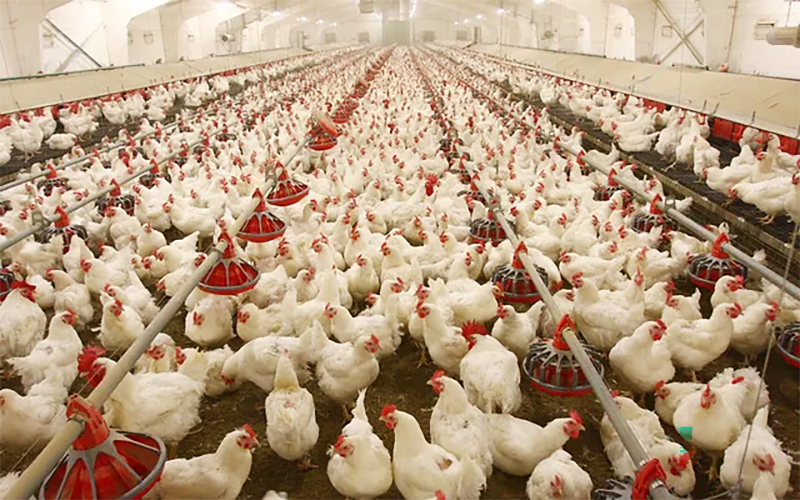
A new study warns that modern large scale chicken farming may be helping dangerous food poisoning bacteria spread more easily creating new risks for human health.

Researchers from the Oxford University found that the rapid growth of industrial poultry farming has created ideal conditions for Campylobacter, a bacteria that causes food poisoning to grow spread and develop new traits.

Campylobacter is one of the world’s leading causes of diarrhea and food poisoning.

In the UK it causes around three and a half times more stomach illness cases each year than all other monitored foodborne bacteria combined.

The researchers said the global chicken population has increased about sevenfold since the 1960s reaching around 31 billion birds.

This growth has made it easier for bacteria carried by wild birds to spread among farm chickens. The team studied nearly 2,800 bacterial genomes collected from chickens and wild birds in 30 countries including the UK and the US between 1979 and 2024.

Genetic analysis showed that the bacteria had developed changes linked to modern farming conditions.

These included genes that help it resist antibiotics and survive more easily in large poultry farms.

Researchers warned that rising antibiotic resistance is making Campylobacter infections harder to treat.

The study’s lead author Sam Sheppard said the findings provide new evidence that human activities and environmental changes can increase the spread of infectious diseases.

He added that understanding how bacteria evolve will be important for reducing future risks of animal to human diseases and antibiotic resistant infections.


Similar Posts

  • Health benefits of eating papaya during monsoon

    Health benefits of eating papaya during monsoon By Tayyba Nazir     The monsoon season brings relief from the heat but it can also increase the risk of infections and digestive problems.   Health experts say that eating nutritious foods can help the body stay strong. Papaya is one fruit that can be a healthy addition to the diet during rainy weather.     Rich in vitamins fiber water and natural enzymes, papaya may support digestion immunity heart health and skin health.     Supports immunity and digestion During the rainy season some people may become more likely to develop colds flu or other seasonal infections.   Papaya contains vitamins A and C which support the normal function of the immune system.     Papaya also contains an enzyme called papain which helps break down proteins and may support digestion.   Its fiber and water content can also help keep the digestive system working properly.     May help with constipation Papaya is rich in fiber and water making it a useful fruit for people who struggle with constipation.   Eating enough fiber and drinking plenty of water can help support regular bowel movements.     What about dengue? Dengue cases can increase during the monsoon because mosquitoes become more common.   Papaya leaves are sometimes promoted as a way to increase platelet levels but there is not enough strong evidence to consider papaya or papaya leaves a treatment for dengue.     People with dengue should follow their doctor’s advice and should not rely on papaya as a replacement for proper medical care.     May support weight and heart health Papaya is relatively low in calories and contains fiber which can help you feel full for longer. This may make it a useful choice for people trying to maintain a healthy weight.     It also provides nutrients such as potassium and fiber that can support overall heart health as part of a balanced diet.   Good for skin and eyes Papaya contains antioxidants and nutrients such as vitamins A and C which can support healthy skin.   Its antioxidants may also help protect cells from damage caused by free radicals. The fruit also contains carotenoids such as beta-carotene lutein and zeaxanthin which are linked to eye health.     Eat It in Moderation Papaya is a nutritious fruit and can be part of a healthy monsoon diet.   However no single food can prevent diseases or replace medical treatment. It is best to eat papaya as part of a balanced diet and consult a doctor before making major dietary changes if you have a medical condition.

  • Indian Yoga teacher sets underwater push up record

    An Indian yoga instructor living in Vietnam has set a new world record by completing 86 push ups underwater on a single breath showing remarkable strength and breath control. The record was achieved by 38 year old Kamal Kloi in a swimming pool in Vietnam. He said his training in calisthenics and special breath holding techniques helped him complete the difficult challenge. This is not his first world record. In 2020, Kamal earned a place in the Guinness World Records by performing 21 yoga poses underwater without coming up for air. •Speaking to guinness World records Kamal said he has always enjoyed taking on unique challenges.  He explained that watching other people achieve world records inspired him to push his own limits and try something different. He added that years of practice physical fitness and breath control training played a key role in helping him achieve this milestone. After carefully reviewing the evidence submitted by Kamal Guinness World Records officially.  confirmed his achievement of 86 underwater push ups in one breath making it a new world record.

  • Brain molecule may improve sleep

    Millions of people around the world struggle with insomnia and other sleep problems. Now scientists in China have identified a natural brain molecule that may help explain how the body knows when it is time to sleep. The discovery could lead to safer and more effective sleep medicines in the future. The study published in Nature Neuroscience found that a natural molecule called tryptamine (TrpA) plays an important role in increasing the body’s need for sleep. Researchers say this molecule sends signals to the brain that it is time to rest. Experts explained that good sleep is essential for overall health. During sleep the brain organizes memories stores information and removes waste that builds up during the day. However many people do not get enough sleep because of insomnia stress depression anxiety or problems with the body’s internal clock also known as the circadian rhythm. To better understand the process researchers studied mice which are active at night and pigs which are active during the day. Using a special fluorescent sensor they measured the amount of tryptamine in the animals’ cerebrospinal fluid at different times. The scientists found that the longer the animals stayed awake the higher their tryptamine levels became. This suggests that the molecule reflects the body’s natural “sleep pressure” the growing need for sleep after spending many hours awake. The team also discovered that active nerve cells release tryptamine while the body is awake. The molecule then attaches to a receptor called GPR139 which activates sleep promoting nerve cells in an area of the brain known as the hypothalamic preoptic area. In the next stage of the study researchers tested experimental compounds that activated the GPR139 receptor. The results showed that the animals slept longer and experienced better quality sleep. Scientists say finding the same results in both mice and pigs suggests that this biological system may also exist in humans. If future studies confirm this the discovery could help develop new treatments for insomnia and other sleep disorders that are safer more effective and have fewer side effects than many current sleep medications.

  • Don’t ignore shortness of breath

    Feeling short of breath  while walking climbing stairs jogging or doing simple daily activities has become a common problem for people of all ages. While it was once mostly seen in older adults many young people now experience it too. Health experts say that if you often become short of breath you should not ignore it. Finding the real cause is important because it may be a sign of an underlying health problem. One of the main reasons is a lack of physical activity. Many people spend hours sitting in front of their phones computers or TVs especially after meals. Over time this inactive lifestyle can reduce fitness and make breathing more difficult during even light exercise. Doctors explain that getting out of breath after only a little effort may sometimes be linked to problems with the heart lungs kidneys or liver. Swelling around the eyes or face may point to liver disease swollen feet may be related to kidney problems and swelling in the hands feet and face together could be a sign of heart disease. Instead of treating yourself at home it is important to see a qualified doctor. Other common causes of shortness of breath include anemia (low blood) weakness asthma seasonal allergies colds cough mucus in the airways lung diseases and long term smoking. Because every person is different only a proper medical check up can identify the real cause. In some people stomach problems such as gas and acid reflux can also make breathing feel difficult. Sitting for a long time after eating may increase these problems causing chest discomfort and a feeling of breathlessness. Eating a balanced diet exercising regularly and taking a short walk after meals may help improve digestion and overall health. Some traditional remedies suggest soaking three dried figs in water overnight and eating them on an empty stomach in the morning to support digestion. Others use basil leaves or basil seeds as an herbal drink.  However there is only limited scientific evidence to support these remedies so they should not replace proper medical treatment. If you experience frequent shortness of breath especially with chest pain severe weakness dizziness blue lips or skin or swelling seek medical care immediately. Early diagnosis and treatment can help prevent serious health problems.

  • The disappearance of Balochi Language

    Written by Abdul QadirAbabakar The disappearance of the Balochi language is a pressing concern that warrants immediate attention. Languages play a pivotal role in shaping a nation’s identity, culture, and heritage. Without languages, nations cannot be considered developed, as they lack a fundamental aspect of their existence. Balochi, the mother language of the Baloch people, is an integral part of their identity and a vital component of their cultural heritage. It’s disheartening to note that Balochi is among the 81% of the world’s 7,000 languages that are at risk of extinction. The main reason behind this alarming trend is that native individuals aren’t prioritizing learning, writing, and reading in Balochi, leading to its decline. The onus is on the new generation and institutions to promote and preserve the Balochi language. Without it, the Baloch people will be left without a distinct identity, culture, and heritage. It’s imperative that institutions take concrete steps to support the Balochi language, such as opening classes and offering courses to boost its usage. Unfortunately, some clubs and bookshops are making resources expensive, hindering efforts to preserve the language. This is a significant obstacle, as it limits access to resources and creates a barrier for those who want to learn and promote Balochi. I urge authorities to take immediate action to address this issue. Making resources accessible and affordable is crucial to promoting the Balochi language. Institutions should prioritize opening Balochi classes, offering courses, and providing resources to support language learners. This will not only help preserve the language but also promote cultural heritage and identity. Institutions offering Balochi language courses and degree programs. Government support for Balochi language development and promotion.c ommunity-led initiatives to promote Balochi language and culture and affordable resources and materials for language learners. Encouraging native speakers to use Balochi in daily life and pass it on to future generations The preservation of the Balochi language requires a collective effort. It’s time for institutions, authorities, and the community to come together to promote and preserve this vital aspect of Baloch culture and identity. — Shared using https://www.writediary.com/getapp

  • Spot the mountain lion in seconds

    It first glance this may look like an ordinary picture of a forest.  But there is actually a mountain lion hiding somewhere in the scene. The picture appears to have been taken in a US national park. A deer can be seen standing in the area with its back facing the camera.  What makes the scene interesting is that the deer has no idea that a mountain lion is hiding very close to it. If you are having trouble finding the mountain lion imagine how difficult it would be for the deer to notice its hidden predator. Only a few people can quickly spot the animal in this picture. Finding it requires careful observation and good eyesight. Take a close look at every part of the image and see if you can find the hidden lion. Did you find it? If not here is the answer. Look carefully toward the right side of the picture.  You can see the mountain lion’s face hiding among the bushes. The animal is so well hidden that it almost blends into its surroundings making this picture a great test of your observation skills.

Leave a Reply

Your email address will not be published. Required fields are marked *