islamabad court rules
| |

Islamabad Court rules in favor of Ahsan Iqbal in d…

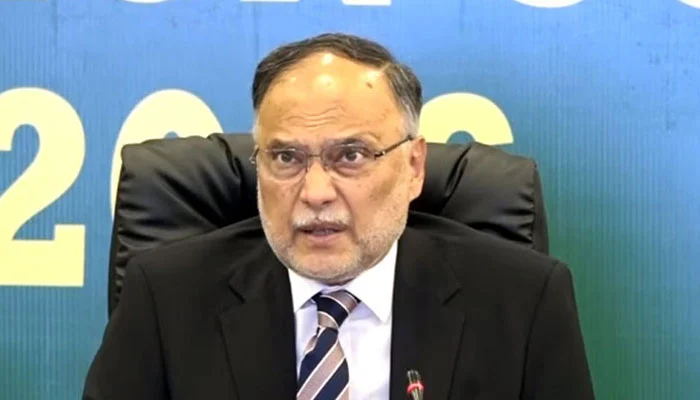
A district and sessions court in Islamabad has ruled in favor of Federal Minister Ahsan Iqbal in a long-running defamation lawsuit, ordering former federal minister Murad Saeed to pay Rs2.5 million in damages for making corruption allegations that the court found to be unsubstantiated.

The judgment was delivered by Additional Sessions Judge Hakim Khan, who concluded that the statements made by Murad Saeed had harmed Ahsan Iqbal’s reputation and amounted to defamation under the law.

According to the court’s ruling, Murad Saeed failed to prove his public allegations that Ahsan Iqbal had been involved in corruption worth Rs70 billion. The court held that the accusations, which included claims of corruption, misuse of authority, and receiving illegal commissions, were not supported by evidence and therefore constituted defamatory statements.

The case originated from remarks made by Murad Saeed in 2019, when he accused Ahsan Iqbal of financial irregularities in connection with the Multan–Sukkur Motorway Project, one of Pakistan’s major infrastructure developments. Ahsan Iqbal strongly denied the allegations and subsequently filed a defamation suit seeking Rs10 billion in damages.

In its written judgment, the court acknowledged that Ahsan Iqbal had claimed Rs10 billion as compensation but determined that the amount sought was excessive in light of the evidence presented during the proceedings. Instead, the court awarded Rs2.5 million in damages, describing the sum as appropriate compensation for the reputational harm caused by the false allegations.

The judgment stated that Murad Saeed’s controversial statements had damaged Ahsan Iqbal’s public image, honor, and dignity. It further observed that the allegations created a negative perception of the federal minister among members of the public, affecting his credibility and standing.

According to the court, the accusations amounted to a direct attack on Ahsan Iqbal’s integrity, character, and professional reputation. Since the allegations involved serious claims of corruption and abuse of public office, the court found that they had the potential to undermine public confidence in him without any factual basis.

The ruling also noted that Murad Saeed neither appeared before the court to defend his statements nor presented any evidence to substantiate the corruption allegations. His failure to support the claims played a significant role in the court’s decision to rule in favor of Ahsan Iqbal.

The verdict reinforces the legal principle that individuals making public allegations of corruption must be prepared to provide credible evidence to support their claims. In the absence of such proof, the court held that the statements amounted to defamation and entitled the affected party to compensation.

The decision marks the conclusion of a legal dispute that has remained pending since 2019 and highlights the growing use of defamation proceedings in Pakistan to address reputational damage arising from political statements.

While the court reduced the amount of compensation sought by Ahsan Iqbal, it nevertheless concluded that Murad Saeed’s allegations were unfounded and had caused measurable harm to the minister’s reputation. As a result, the former federal minister has been directed to pay Rs2.5 million in damages in accordance with the court’s judgment.
Similar Posts

  • |

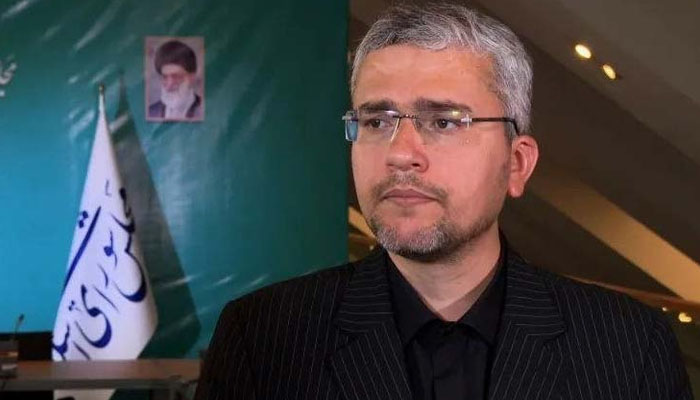
    Iranian lawmaker questions Saudi defence pact with Pakistan, Türkiye

    TEHRAN: Iranian parliamentarian Ebrahim Rezaei has questioned whether Saudi Arabia’s new defence agreement with Pakistan and Türkiye can guarantee the Kingdom’s security. Rezaei, a member of Iran’s Parliament National Security and Foreign Policy Committee, made the remarks in a social media post. He said Saudi Arabia should understand that the agreement with Pakistan and Türkiye would not provide the level of protection Riyadh had failed to obtain despite decades of reliance on the United States. Rezaei described the agreement as a “paper pact” and urged Saudi Arabia to reconsider its policies so that it would not have to seek security guarantees from other countries. His comments came shortly after Saudi Arabia, Pakistan and Türkiye signed a joint defence agreement in Makkah. The agreement was signed amid concerns over potential attacks on Saudi Arabia by Iran-aligned militias in Iraq and Yemen. Saudi officials have reportedly warned of such security threats. Under the new agreement, an attack against any one of the three countries will be considered an attack against all three. The pact aims to strengthen defence cooperation and develop joint capabilities among Saudi Arabia, Pakistan and Türkiye. A trilateral defence summit was held at Al-Safa Palace in Makkah, attended by Saudi Crown Prince Mohammed bin Salman, Turkish President Recep Tayyip Erdogan and Pakistani Prime Minister Shehbaz Sharif. According to Pakistan’s Foreign Office, the three leaders signed the agreement, formally described as the Makkah Defence Joint Agreement.

  • |

    Darwin Test, Bangladesh lead by 228 despite Hazlewood’s six wickets

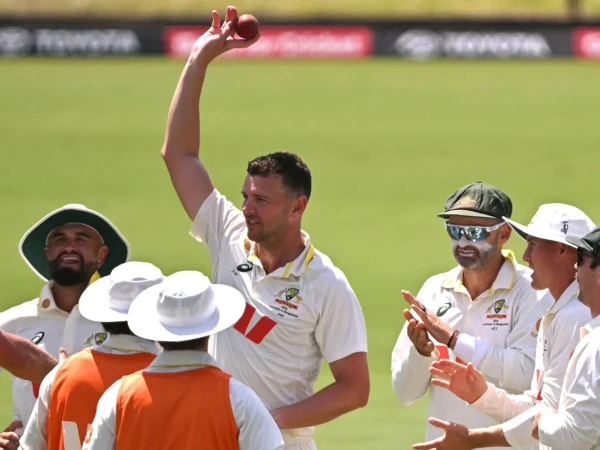
    Bangladesh produced a remarkable batting display against Australia in the Darwin Test, taking a commanding 228-run first-innings lead despite Josh Hazlewood’s six-wicket haul. Bangladesh were bowled out for 426 after showing tremendous resilience against Australia’s pace attack. Mehidy Hasan Miraz played the starring role in the lower order, frustrating the Australian bowlers for nearly 50 overs and completing his 12th Test half-century. Hazlewood eventually ended Mehidy’s stubborn resistance after lunch on the third day before removing Taijul Islam’s partner, completing six wickets in the innings. His performance also brought a major personal milestone as he became only the ninth Australian bowler to reach 300 Test wickets. The fast bowler also claimed his 14th five-wicket haul in Test cricket. Remarkably, all four wickets to fall during the third day belonged to Hazlewood, keeping Australia in the contest despite Bangladesh’s substantial advantage. Mehidy was well supported by Mahmoud, Taijul Islam and Taskin Ahmed as Bangladesh continued to stretch Australia’s bowling attack. The visitors also benefited from Australia’s fielding lapses, with the hosts dropping five catches during the innings. Earlier, Bangladesh had built a strong platform through Tanzid Hasan’s maiden Test century and a determined half-century from captain Najmul Hossain Shanto. Australia’s first innings had already ended in disappointment after Hasan Mahmud claimed six wickets, exposing weaknesses in the home side’s batting. Bangladesh’s huge lead now puts Australia under considerable pressure. With their bowlers needing early breakthroughs, the hosts face a demanding task to recover momentum and keep the Darwin Test within reach.

  • |

    Hina Khan reveals cancer battle tested her marriage deeply

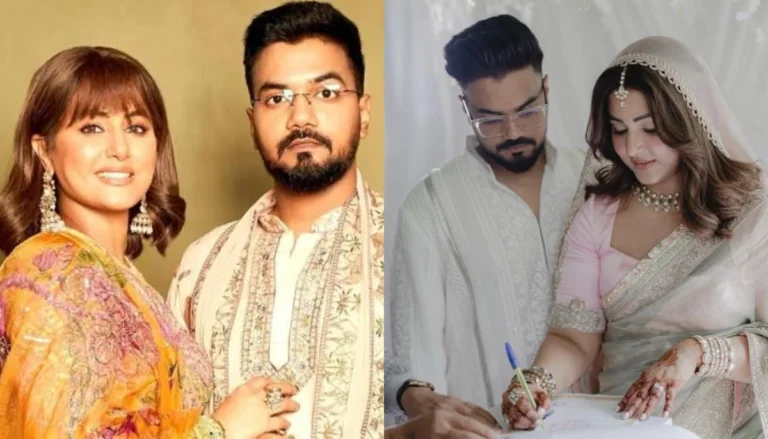
    Indian television actress Hina Khan has opened up about the difficult impact her cancer diagnosis had on her relationship with longtime partner Rocky Jaiswal, revealing that her health battle made her reconsider their future together. Hina and Rocky had known each other for nearly 13 years before taking their relationship to the next level. The couple eventually married in an intimate ceremony in June 2025, during a particularly challenging period in Hina’s life as she was undergoing treatment for stage 3 breast cancer. Speaking about their relationship, Hina admitted that her diagnosis brought an enormous amount of uncertainty into their lives. Rather than questioning Rocky’s commitment, she found herself worrying about whether she could still give him the life and happiness he deserved. The actress revealed that she even encouraged Rocky to move on and consider marrying someone else. According to Hina, she made the suggestion several times because she feared that her illness could permanently change different aspects of their lives. “We are not in that space where we fight; we have been in real-life crises,” Hina explained while discussing their relationship. She recalled telling Rocky that he should marry someone else, believing that he should not feel obligated to stay with her because of her health struggles. For Hina, the decision was not an attempt to test Rocky’s love or loyalty. Instead, she said it came from a genuine desire to ensure that he could have the future he wanted, even if that future did not include her. Her cancer journey brought emotional and physical challenges, but Rocky remained a constant source of support. Hina acknowledged that his presence played a major role in helping her cope with one of the most difficult periods of her life. “Anyone who was around me then knew that I was able to get through that time only because of him,” she shared, adding that Rocky made the difficult circumstances appear much easier than they actually were. Despite Hina’s repeated attempts to convince him to move forward without her, Rocky chose to remain by her side. He supported her throughout her cancer treatment and stood with her through the uncertainty surrounding her health. The couple ultimately married while Hina was still battling cancer, turning their relationship into a story of commitment and resilience during an exceptionally challenging chapter. Hina’s revelations offer a deeply personal look at how serious illness can affect not only an individual but also the relationships surrounding them. While she feared that her condition might prevent Rocky from experiencing the life he deserved, his decision to stay demonstrated his willingness to face the difficult circumstances alongside her. Their journey highlights the strength of a relationship when both partners choose to stand together during moments of uncertainty. For Hina, Rocky’s unwavering support became an important part of her ability to navigate her cancer battle, while their marriage marked another significant chapter in their 13-year journey together.

  • | |

    Sophie Turner names fan-favorite hair color from h…

    Sophie Turner is looking back at the many hair colors she has worn throughout her career, revealing which shade gets the most positive reaction from fans. The 30-year-old actress became internationally famous as Sansa Stark on Game of Thrones, a role that transformed her career and made her auburn-red hair one of her most recognizable features. Turner began dyeing her naturally blonde hair red at just 13 after landing the role in 2009. Since then, she has experimented with several different shades, including platinum blonde, auburn and brunette. (People.com⁠) From natural blonde to Sansa’s signature red Turner’s hair transformation was closely connected to her Game of Thrones journey. Her natural blonde hair had to be changed to an auburn-red shade for Sansa, creating a look that audiences quickly associated with the character. Over the years, Turner has spoken positively about the red color because of what it represents in her career. In a previous interview, she explained that the shade was especially meaningful because it was the first major hair transformation she experienced for a professional role. She also associated red hair with the strong characters she had played. (Allure⁠) However, red is no longer the only color connected to Turner. She has repeatedly returned to blonde, experimented with darker shades and even appeared as a brunette for her upcoming role as Lara Croft in Amazon’s Tomb Raider series. (People.com⁠) Blonde gets the biggest reaction In a recent interview with The Sydney Morning Herald, Turner reflected on how people respond to her different hair eras. According to the actress, blonde has received the most positive reactions. Red, meanwhile, can create strong reactions but does not generate them as consistently. She also explained that brunette hair can make her feel more anonymous because people are less likely to recognize her. The comments show how dramatically hair color can influence the way Turner is perceived. After spending much of her teenage years and early adulthood associated with Sansa’s red hair, returning to blonde has offered her a different sense of identity. A career defined by transformation Turner’s changing hair colors have become a visual timeline of her career. From the red-haired Sansa Stark to her blonde looks and latest brunette transformation, each era has accompanied a different stage of her professional life. While fans may have their own favorite shade, Turner’s latest comments make one thing clear: blonde currently wins when it comes to the most positive public reaction.

  • | | |

    Ishaq Dar offers special prayers for Pakistan in M…

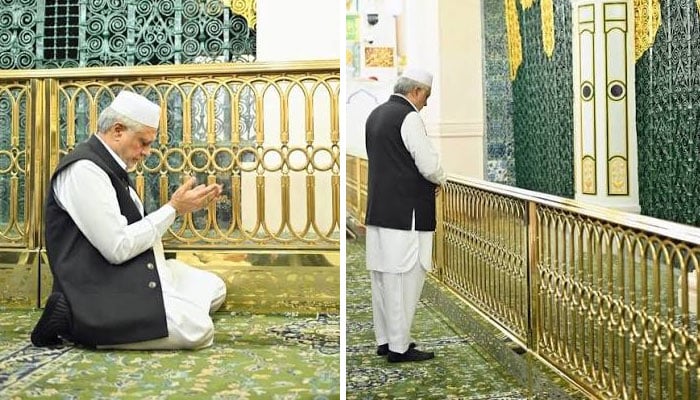
    Medina: Pakistan’s Deputy Prime Minister and Foreign Minister Ishaq Dar visited the Prophet’s Mosque (Masjid an-Nabawi ﷺ) in Madinah, where he offered prayers and prayed for Pakistan’s peace, prosperity and continued progress during his official visit to Saudi Arabia. According to Pakistan’s Foreign Office, the deputy prime minister paid his respects at the Roza-e-Rasool ﷺ and offered Salam. He also performed voluntary (Nafl) prayers at the Prophet’s Mosque, one of Islam’s holiest sites, where millions of Muslims from around the world gather every year to worship and seek spiritual blessings. The Foreign Office said Dar made special prayers for Pakistan’s economic development, national stability and the well-being of its people. He also prayed for unity, peace and prosperity across the Muslim world, expressing hope for harmony and progress among Islamic nations. As part of his visit to Madinah, Dar also travelled to Jabal Uhud, a site of immense historical and religious significance in Islamic history. He visited the resting place of Hazrat Ameer Hamza (RA), the beloved uncle of Prophet Muhammad ﷺ and one of the most revered martyrs of the Battle of Uhud, where he offered prayers and paid his respects. The visit reflects the spiritual aspect of Dar’s Saudi Arabia trip while highlighting Pakistan’s longstanding religious and diplomatic ties with the Kingdom. Senior Pakistani officials traditionally visit Islam’s holy sites during official engagements in Saudi Arabia, where they offer prayers for the country and the wider Muslim Ummah. The Foreign Office noted that Dar’s prayers focused on Pakistan’s future, asking for sustained peace, economic growth and national prosperity. His visit to the Prophet’s Mosque and other sacred sites also underscored the importance of faith and spiritual reflection alongside official diplomatic engagements. The visit comes at a time when Pakistan continues to seek economic stability and stronger cooperation with friendly countries, while reaffirming its commitment to unity and the welfare of the Muslim Ummah.

  • | |

    Female UEFA officials lead pushback against Infantino amid FIFA turmoil

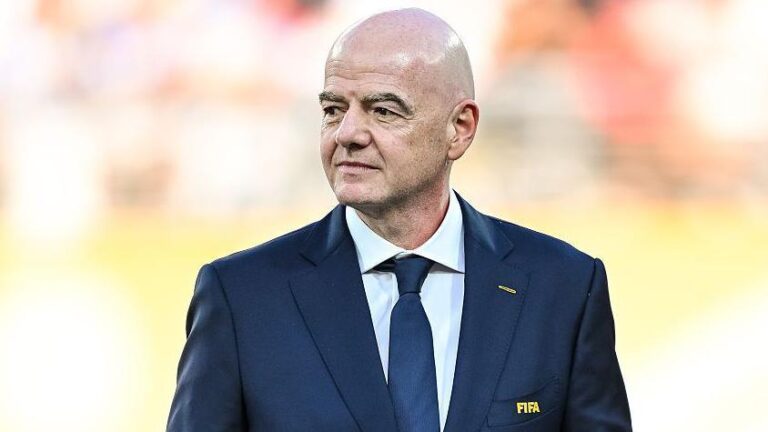
    Two women sitting on UEFA’s executive committee have become the most visible faces of opposition to FIFA President Gianni Infantino as he confronts the toughest test of his ten years leading world football’s governing body, raising fresh questions about whether the sport is ready for female leadership at the top. Laura McAllister of Wales and Lise Klaveness of Norway, the only two women on UEFA’s executive committee, have taken outspoken public stances against Infantino during a crisis triggered by the collapse of his plan to push through a private equity backed venture called FIFA Football Enterprises. The backlash against that failed proposal has opened up a broader conversation about whether football, an industry historically run by men, could realistically be led by a woman. McAllister, who serves as a UEFA vice president, told a foreign news agency that seeing a woman elected FIFA president would be a welcome development, though she cautioned that the path there remains complicated. “I’d like to think we’re not far off having a female president,” she said, adding that she worries football still lags behind broader social progress on gender. The conversation gained additional traction after former FIFA President Sepp Blatter publicly said this week that the time had come for a woman to lead the organization, singling out Klaveness for praise. McAllister welcomed the sentiment but pushed back on the idea that installing a female president would be straightforward. She said a woman could well be the strongest candidate available, but stressed that FIFA’s global politics do not operate as a simple meritocracy. Her comments follow the unraveling of Infantino’s FFE plan, which fell apart after UEFA and several other regional federations mounted fierce resistance. Wales became the first national association to publicly withdraw its backing for Infantino’s re election bid, and opposition quickly spread through other parts of FIFA’s membership. Infantino was scheduled to hold an emergency meeting in Morocco on Wednesday as the fallout continued. McAllister, whose call for national associations to boycott FIFA events won unanimous backing at UEFA’s emergency meeting last week, said the current unrest points to governance failures that run deeper than any single controversy. She said the organization appears to be approaching a genuine crisis point, if it has not reached one already. She cited a string of episodes that have chipped away at confidence in Infantino’s leadership, including FIFA’s connections to the failed European Super League proposal, political controversies tied to the World Cup, and the federation’s decision to overturn a red card issued to American forward Folarin Balogun after President Donald Trump publicly urged Infantino to revisit the call. McAllister said these incidents collectively point to serious flaws in how FIFA governs itself. She framed the standoff as a fight to preserve football’s core principles, tracing her outlook and Klaveness’s back to their shared history as international players for their respective countries before they moved into administrative careers, Klaveness as a lawyer and McAllister as a political scientist. She said both are driven by a strong sense of values, warning that football risks losing its essential character if those values slip away. She added that women in the sport sometimes bring a clearer focus on football’s fundamental purpose rather than getting absorbed in its business side, arguing the game belongs to everyone, from grassroots participants to elite professionals, spanning wealthy and poor countries alike, and should remain free from private capital control or political interference. Only 10 of FIFA’s 211 member associations currently have a woman at the helm, Klaveness among them. Any serious bid for the FIFA presidency would require support stretching well beyond Europe, and McAllister urged patience rather than a rushed push for female leadership. She said building momentum gradually often proves more effective than trying to force rapid change. Michael Payne, a former marketing director at the International Olympic Committee, said football’s governing bodies have historically trailed other sports when it comes to advancing women into leadership positions. He drew a contrast with the IOC, now led by Kirsty Coventry, noting that the Olympic movement has spent roughly two decades pursuing gender equity and has reached full parity between male and female athletes at the Games, a benchmark football’s World Cup has yet to meet. The dispute over FIFA’s direction reflects broader tensions playing out across international sports governance, where longstanding institutions face growing pressure to modernize leadership structures and diversify decision making bodies that have remained largely unchanged for decades. As football’s global profile continues to expand, the question of who holds power at its highest levels, and how that power gets exercised, appears likely to remain a central point of contention well beyond the current crisis surrounding Infantino’s leadership.

Leave a Reply

Your email address will not be published. Required fields are marked *